
Review · HAIFA TOURS
Druzeland – Cultural Private Tour on Mt. Carmel
Small villages, big stories. This private Mount Carmel tour offers a close look at Druze life through local guides, village walks, food, religion, and family stories. I like the personal access to Isfiya and Daliyat al-Karmel, and I like that Daniel Sigalov can tailor the day instead of forcing every group through the same script. The main consideration is the price: at $895 per group, it is strong value for ten people but expensive for a small party.
You get five to eight hours with private transportation, bottled water, tea, coffee, WiFi, and pickup. I also appreciate the back-to-ship on-time guarantee for cruise passengers. The day includes plenty of walking, village streets, cultural conversation, and tastings, so you should choose it for human stories and local food rather than a checklist of grand monuments.
In This Review
- Key points at a glance
- Why Mount Carmel is the right setting
- Isfiya: start with Druze customs and village life
- The Druze Heritage Center and two women’s stories
- Daliyat al-Karmel: art, faith, and local remedies
- Sam Halaby’s House of Colors
- Knaffeh El Amin: finish with a serious sweet tooth
- What the $895 group price really means
- Timing, transport, and cruise-port use
- Who should book this Mount Carmel tour?
- Should you book it?
- FAQ
- How long does the Druzeland cultural tour last?
- How much does the private tour cost?
- Is transportation provided?
- Is lunch included?
- Is the House of Colors visit required?
- What happens if bad weather cancels the tour?
Key points at a glance
- Local guides from Druze villages: Daniel and his selected partners live in the villages and guide in English.
- Two major village visits: Isfiya introduces Druze traditions, while Daliyat al-Karmel adds art, holy places, herbs, and folk medicine.
- Women’s stories at the Druze Heritage Center: Two sisters explain past and present Druze life, including the changing role of women.
- Food is part of the learning: Knaffeh El Amin offers a memorable sweet stop, with five flavors beyond the standard version.
- Flexible private format: Your group alone participates, and the route can be adjusted to fit your interests.
- Good cruise-port planning: Pickup is offered, and the operator promises to return you to the ship on time.
Why Mount Carmel is the right setting
Mount Carmel gives this outing a useful sense of place. Haifa is close by, but the Druze villages have their own identity, customs, religious traditions, and village centers. You are not simply being driven to a museum. You move through places where people live and work.
The tour also connects several subjects that are often separated on standard sightseeing days. You hear about Druze religion, Jewish and Druze connections, Israel, geopolitics, food, geology, death, reincarnation, and village life. That range can make the day feel much more substantial than a quick cultural stop.
The private format matters here. Druze customs and religious ideas can be hard to understand through a short lecture. You have time to ask questions, pause over a detail, or spend longer in one village if that suits your group. Daniel lives by himself in one of the villages, and his partners also live locally. That local link is a major part of the experience.
At the same time, this is not a formal academic seminar. The tone is friendly and conversational, with humor and personal stories. If you want a tightly scripted tour with exact departure and arrival times, the five-to-eight-hour range may feel loose. If you prefer a day that responds to your interests, the flexibility is a real benefit.
A few more Haifa trips worth weighing up
- From Haifa: Guided Day Trip to Nazareth and Sea of Galilee
★ 3.9 · 51 reviews - Haifa Culinary Private Tour
★ 5.0 · 38 reviews - Haifa Port Shore Excursion: Nazareth and Sea of Galilee Day Tour from Haifa Port
★ 4.0 · 36 reviews
Isfiya: start with Druze customs and village life
The first stop, Isfiya, gets the cultural work underway. You spend about two hours in the village, beginning with the old center and learning about the Druze people and their religion.
A guide can explain the basics of Druze belief, but the value here is in the questions that follow. You can ask how religion shapes daily life, how the community understands its place in Israel, and how ancient connections with Jewish history are presented. The tour also covers two archaeological treasures found in the area, described as evidence of a unique Druze and Jewish connection.
The old village center should appeal to anyone who prefers streets and lived-in places to polished attractions. You get a feel for how the village is arranged and how its past remains part of the present. The experience is less about taking a quick photo and more about listening as you move.
The olive press adds a practical piece of local culture. Olive production is not just a food subject here. It opens the door to work, agriculture, household traditions, and the role of the land around Mount Carmel. If you are interested in food, ask how olive oil fits into Druze cooking and hospitality.
A visit to the Druze cemetery brings the most unusual subject of the day: the Druze approach to life, death, and reincarnation. This may be fascinating for some people and uncomfortable for others. You should expect a serious conversation, handled as part of the community’s religious outlook rather than as a spectacle.
The Isfiya visit is not built around admission fees. Admission is free, but the guide’s explanation and access to local people are what give the stop its value. Wear shoes that can handle village streets and be ready to walk for a good part of the morning.
The Druze Heritage Center and two women’s stories
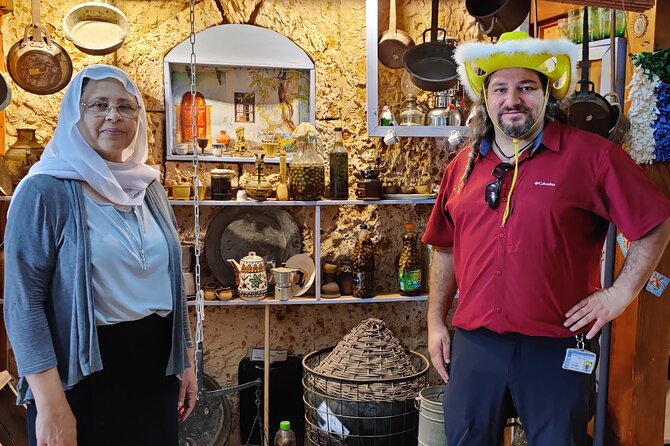
The Druze Heritage Center lasts about 45 minutes and shifts the focus from broad history to personal experience. Two sisters explain Druze life in the past and discuss the position of women in their culture.
This is one of the strongest parts of the program because it gives you a direct human angle. Discussions about women in religious communities can become vague or overly general. Here, you hear from two women who have pushed past traditional limits and can speak about that process from their own lives.
The phrase glass ceiling is part of the tour’s description, but the important point is not the phrase itself. It is the chance to hear how custom, family, education, work, and social expectations can affect women in a small community. Their stories help you see Druze culture as something lived and negotiated, not a frozen set of rules.
The stop is included in the price. Since it is shorter than the village walks, it also provides a natural change of pace. You sit, listen, and think before continuing to Daliyat al-Karmel.
Daliyat al-Karmel: art, faith, and local remedies
Daliyat al-Karmel is the largest Druze village in Israel and receives about an hour and a half of your time. The old center is presented as a place of art, local shops, and welcoming residents.
This portion should suit you if you like wandering through a town while a guide points out details you would otherwise miss. You may see colorful buildings, small businesses, and art connected to the village. The experience depends less on a single famous sight and more on the way the guide introduces the place.
The Herbs and Folk Medicine Center adds another layer. You can learn about plants and traditional remedies, though the supplied details do not specify exactly which products or demonstrations are offered on a particular day. Treat it as a cultural stop, not as medical advice.
The House of Oliphant brings in the area’s broader political and historical connections. The site of Nabi Ibrahim, a holy place, adds a religious dimension. These stops help explain how the village can hold art, faith, memory, and everyday commerce in the same compact setting.
Daliyat al-Karmel is also where the food side of the experience becomes especially important. Several people who enjoyed this tour highlighted the combination of walking, learning, tasting, and eating. That balance is useful: you are not spending the whole day listening, and you are not eating without context.
One practical point is that the village visit may be busy with conversation and stops rather than a single continuous walk. Ask Daniel how much walking is planned for your group, especially if anyone has mobility concerns. The activity is described as suitable for most people, but the details do not promise step-free access at every location.
A completely different sort of day out of Haifa:
- Jerusalem & Bethlehem Tour from Haifa Port 2024 – Small Group
★ 4.5 · 30 reviews - Holy Jerusalem Private Tour
★ 5.0 · 24 reviews - Haifa Highlights Private Tour
★ 5.0 · 20 reviews - In the Footsteps of Jesus – Private Tour of Nazareth & the Sea of Galilee
★ 5.0 · 16 reviews
Sam Halaby’s House of Colors
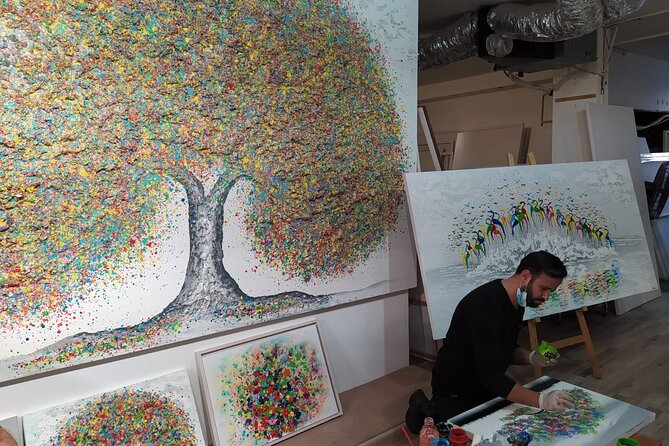
The House of Colors is optional and takes about 45 minutes. It is the former home of internationally known painter Sam Halaby, transformed into a museum filled with color.
This stop will appeal most to art fans and anyone who enjoys unusual homes and personal creative spaces. It also gives you a break from religious and political subjects. After hearing about community identity, belief, and village history, you get something visual and playful.
Because the visit is optional, it can be dropped if your group wants more time for food, conversation, or the village center. That flexibility is one of the private tour’s practical strengths. You do not have to spend part of the day at an attraction that does not interest everyone in your group.
The stop is listed as free, but confirm the day’s exact schedule with the operator. The total tour length varies, and an optional stop can affect the timing.
Knaffeh El Amin: finish with a serious sweet tooth
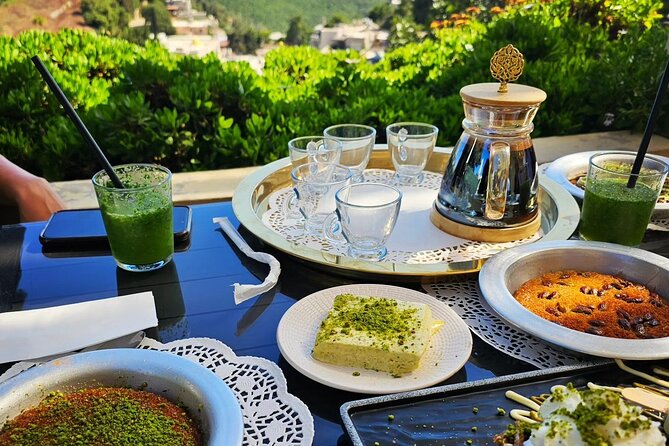
Knaffeh El Amin is the tour’s most obvious reward for anyone who plans trips around food. The stop lasts about 40 minutes and includes the tasting.
Knaffeh is a warm Middle Eastern dessert, and the tour presents it as a subject of local debate. Israelis argue about where to find the best version, which is a good reminder that food can carry pride, rivalry, family memory, and regional identity.
The special feature here is variety. Besides the regular version, the shop offers five additional flavors. That makes this more than a quick sample. You can compare versions and decide which one deserves your personal vote.
The setting also comes with a fine view, adding a pleasant finish to the day. The experience does not specify every flavor, so you should ask what is available when you arrive if you have allergies or strong dietary limits.
Knaffeh is included, along with coffee or tea and traditional Druze tea called Marli. Lunch is not included in the stated price. A Druze hospitality lunch may be arranged as part of the experience, but you should confirm whether it is added separately and what it costs. Several tour formats connected with this operator have included substantial food, including dinner or enough tastings to replace a meal, but you should not assume lunch is covered here.
What the $895 group price really means
The price is $895 for a private group of up to ten people. At the full group size, that works out to $89.50 per person before any extra lunch cost. For ten people, that is a fair price for private transport, a five-to-eight-hour day, local guiding, admission fees, drinks, and a tailored route.
For two people, the same tour costs $447.50 each. That makes the value much harder to defend unless private guiding and direct cultural access are your top priorities. A group of four to six people sits in the middle and may find the cost reasonable, especially if pickup, vehicle time, and a full day of guiding would otherwise need to be arranged separately.
The price includes the vehicle, bottled water, coffee, tea, WiFi, taxes, and listed admission fees. The largest part of what you are paying for is not a ticket. It is the guide’s time, transport between villages, and access to people who can explain the culture in a personal way.
The private arrangement also lets you adjust the day. If your group cares more about food than art, or more about religion than shopping, tell Daniel in advance. That ability to shape the outing improves the value for a group with shared interests.
Timing, transport, and cruise-port use
The advertised duration is approximately five to eight hours, with travel time already included. That is a wide range, so do not book another tight activity immediately afterward unless you have confirmed the schedule.
Pickup is offered, and the vehicle is air-conditioned. Private transportation is especially useful on a route connecting Isfiya and Daliyat al-Karmel, since you are not trying to coordinate local buses between several cultural stops.
The back-to-ship on-time guarantee is important if you are visiting Haifa by cruise. Still, give the operator your ship’s departure time and pickup details clearly when booking. Confirmation is sent within 48 hours, subject to availability.
The tour requires good weather. If poor weather causes cancellation, you receive a different date or a full refund. You can cancel for a full refund up to 24 hours before the start time. Inside that 24-hour window, cancellations and changes are not accepted and the payment is not refunded.
Service animals are allowed, and the experience is near public transportation, though private transport is provided. Most people can participate, but you should ask about walking surfaces and access at specific stops if anyone in your party has limited mobility.
Who should book this Mount Carmel tour?
I would recommend this tour to you if you want to meet local people, ask questions, and understand Druze culture through more than one subject. It works particularly well for families, friends, small clubs, and cruise passengers who can fill much of the vehicle.
Food lovers get plenty to look forward to, especially at Knaffeh El Amin. Art fans may enjoy the House of Colors, while people interested in religion and social customs will find Isfiya, the cemetery, the Heritage Center, and Nabi Ibrahim more rewarding.
This may not suit you if you want a low-cost group excursion, a short photo stop, or a day focused only on famous landmarks. The strongest moments come from conversation and explanation, so the experience works best when you are willing to listen and ask questions.
Should you book it?
Book it if you value a private day with local guides, flexible pacing, Druze village life, and food tied to culture. Daniel’s humor, good advice, and personal connection to the villages are important assets, while the handpicked local partners give the operator backup and wider village knowledge.
For a full group of ten, the price is easy to justify. For a couple, compare it with other private options and ask exactly what lunch includes. I would also confirm the pickup point, final duration, walking expectations, and whether you want the optional House of Colors before paying.
FAQ
How long does the Druzeland cultural tour last?
The experience lasts approximately five to eight hours, including travel time between stops.
How much does the private tour cost?
The price is $895 per group, with up to ten people included.
Is transportation provided?
Yes. Pickup is offered, and the tour includes private transportation in an air-conditioned vehicle with WiFi on board.
Is lunch included?
No. Lunch is not included in the stated price. Druze hospitality as a lunch experience may be available, so confirm the details and any extra cost before booking.
Is the House of Colors visit required?
No. The visit to Sam Halaby’s House of Colors is optional and takes about 45 minutes.
What happens if bad weather cancels the tour?
If poor weather causes cancellation, you are offered another date or a full refund. You may also cancel up to 24 hours before the start time for a full refund.
Just added around Haifa
- Christianity Day Tour: Haifa Port to Nazareth and Sea of Galilee★ 5.0 · 3 reviews
- Full Day Tour to Nazareth and the Sea of Galilee★ 5.0 · 4 reviews
- Haifa Shore Excursion: Private Jerusalem and Bethlehem Day Trip★ 4.0 · 4 reviews
- Haifa Shore Excursion: Private Jerusalem and Dead Sea Day Trip★ 4.5 · 5 reviews
- Full-Day Private Tour from Haifa to Old City of Acre★ 5.0 · 5 reviews
- Haifa’s specials spots★ 5.0 · 6 reviews
- Haifa and Acre Private Tour★ 5.0 · 7 reviews
- Haifa Shore Excursion: Private Nazareth and Sea of Galilee Day Trip★ 4.5 · 7 reviews
Haifa Tours, compared.
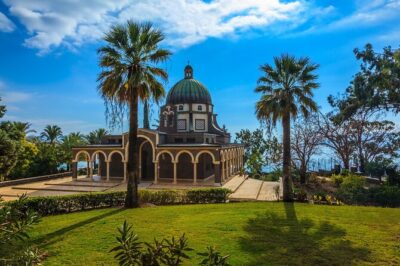
Haifa Port Shore Excursion: Nazareth and Sea of Galilee Day Tour from Haifa Port
Read our review →
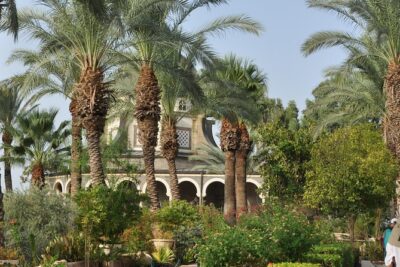
In the Footsteps of Jesus – Private Tour of Nazareth & the Sea of Galilee
Read our review →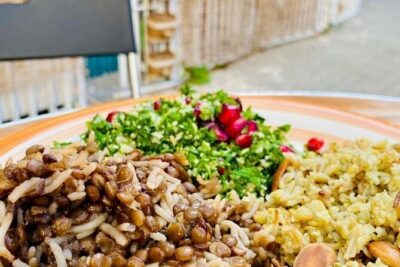
Full-Day Holy City of Jerusalem and Bethlehem Private Guided Tour
Read our review →Browse the lists this tour appears in