
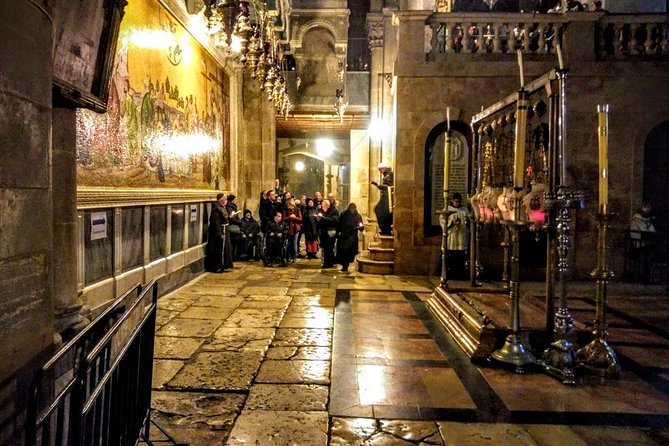
Review · FULL-DAY
Full Day Jerusalem Tour: In Jesus’ Steps
Jerusalem rewards a slower, thoughtful visit. This private, eight-hour tour links major Christian sites from the Mount of Olives to the Church of the Holy Sepulchre, with room to adjust the pace and focus. I especially like the private format, which keeps your group together, and the way guides such as Shimon, Efrat, Eva, and Agustina have used Bible readings and historical context to make each stop easier to understand.
I also like the route itself. It begins with wide views over the Old City, then moves through churches, caves, ancient pools, and the Via Dolorosa before reaching Christianity’s most important shrine. The main caution is practical: $350 per person is a serious price, and the details describe both per-person pricing and a flat rate for up to six people. Confirm the exact total before booking.
In This Review
- Key points at a glance
- Why the private format matters in Jerusalem
- Mount of Olives views and the Church of the Ascension
- Pater Noster and the Lord’s Prayer in many languages
- Dominus Flevit and the view over Jerusalem
- Gethsemane, the Church of All Nations, and the grotto
- Bethesda Pools and the route into the Old City
- Via Dolorosa and the Austrian Hospice
- Finishing at the Church of the Holy Sepulchre
- What the $350 price means for a small group
- Guide style, languages, and personal attention
- Dress, timing, and what to carry
- Who should book In Jesus’ Steps?
- FAQ
- How long does the In Jesus’ Steps tour last?
- What time does the tour start?
- Is hotel pickup available?
- Is this a private tour?
- How many people can join the private tour?
- What is included in the tour?
- What expenses are not included?
- What should I wear?
Key points at a glance
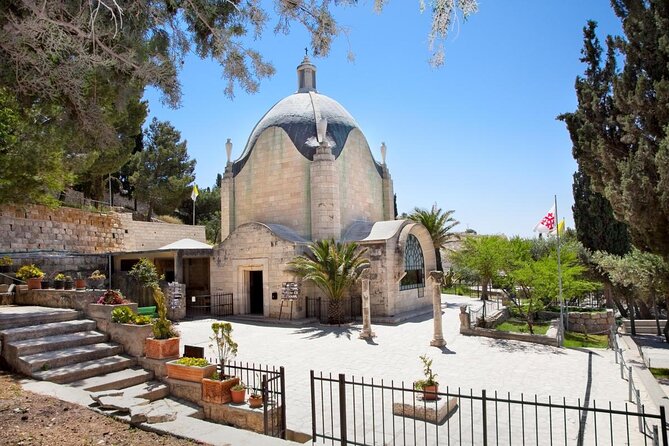
- Mount of Olives opening: Start with the Church of the Ascension, Pater Noster, Dominus Flevit, and Gethsemane, plus broad views of the Old City and Temple Mount.
- Private pace: Only your group takes part, so the guide can adapt the day to your interests, time limits, and physical needs.
- Bible-centered storytelling: Several guides have used Bible passages at the relevant sites, which adds meaning for Christian pilgrims.
- Long walking finish: The route enters the Old City through Lion’s Gate and follows the Via Dolorosa to the Church of the Holy Sepulchre.
- Bring extra money: Food, drinks, the taxi to the Mount of Olives, and entrance fees are not included.
- Dress with care: Knees and shoulders must be covered for places of worship and selected museums. Shorts and sleeveless tops are not allowed.
Why the private format matters in Jerusalem
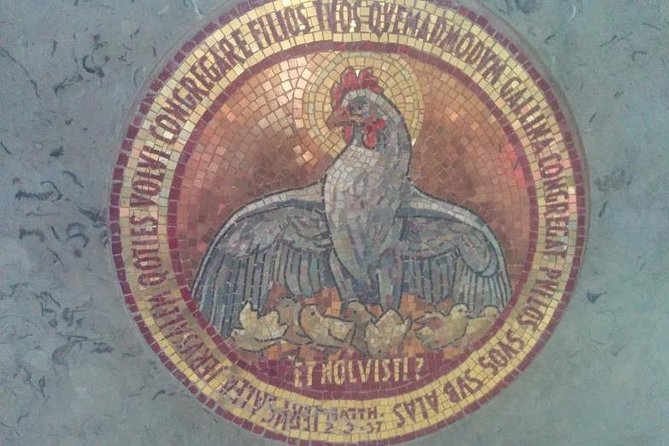
Jerusalem is not a city where a guide’s commentary is easy to absorb from the back of a large group. Streets can be tight, holy places can be crowded, and the meaning of a site often depends on a short explanation at exactly the right moment.
Here, only your group participates. That gives you a chance to ask questions, pause at a church, or move on when a stop has less interest for you. The itinerary is designed around Biblical sites, but it is also flexible, so you can tell your guide what matters most.
That flexibility has been a repeated strength. Efrat adjusted the day to suit her group’s needs, Eva worked around time limits and special requests, and Agustina tailored a Spanish-language tour. One family also appreciated Shimon speaking loudly so a parent with hearing difficulties could follow along.
This is not a fully effortless day, though. Private does not mean leisurely by default. You cover a lot of ground, and the route includes walking through the Old City. The tour asks for a moderate level of physical fitness, so I would think carefully about stamina before choosing it for someone who struggles with hills, uneven paving, or a full day on foot.
A few more Jerusalem trips worth weighing up
- From Jerusalem: Masada & Dead Sea Full Day Tour with Pick Up
★ 4.5 · 815 reviews - Full Day City Tour of Jerusalem
★ 4.1 · 367 reviews - Old and New Jerusalem Full-Day Tour
★ 4.0 · 273 reviews
Mount of Olives views and the Church of the Ascension
The tour begins at 8:00 am on the Mount of Olives, at the Church of the Ascension. The information says hotel pickup is offered, but it also says the taxi to the Mount of Olives is not included. In practical terms, arrange the meeting details clearly in advance and budget for that ride.
The Church of the Ascension marks the place where Jesus is believed to have risen to heaven. Inside is a rock bearing an imprinted footprint, traditionally thought to be where Jesus stood before the Ascension. The footprint is a devotional tradition rather than something that can be proven, and that distinction is worth keeping in mind as you visit.
The first stop also sets the tone for the day. This is not simply a sightseeing route through old buildings. Each location is connected to a Gospel account or to Christian tradition, and the guide’s job is to explain both the religious meaning and the historical setting.
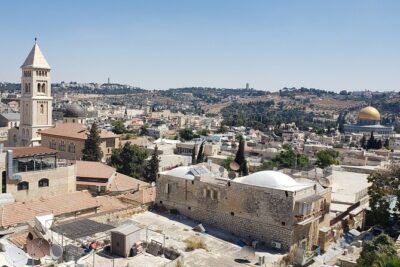
From the Mount of Olives, you get a wide view toward the Temple Mount, the Old City, and the City of David. I consider this one of the most useful moments for orientation. Jerusalem’s walls, domes, valleys, and ridges can seem confusing when you first arrive. Seen from above, the geography begins to make sense.
Pater Noster and the Lord’s Prayer in many languages
The next stop is the Church of the Pater Noster, associated with Jesus teaching the Lord’s Prayer. Its walls carry versions of the prayer in more than a hundred languages.
That detail gives the visit a human scale. You may find your own language among the plaques, or recognize a language spoken by someone in your group. It is a small feature, but it helps turn a theological site into a personal one.
The tour also visits a grotto where Jesus is said to have taught. The site is linked with teachings about the destruction of Jerusalem and the Second Coming. The grotto is important for pilgrims who want to connect the physical place with the words attributed to Jesus, although the traditional associations should be understood as matters of faith and interpretation.
Guides Shimon and Alan Harkavy have been praised for explaining Christian sites with care, while Shimon has also used Bible passages during the day. If that approach matters to you, ask for a guide who is comfortable combining scripture with archaeological and historical explanation.
Dominus Flevit and the view over Jerusalem
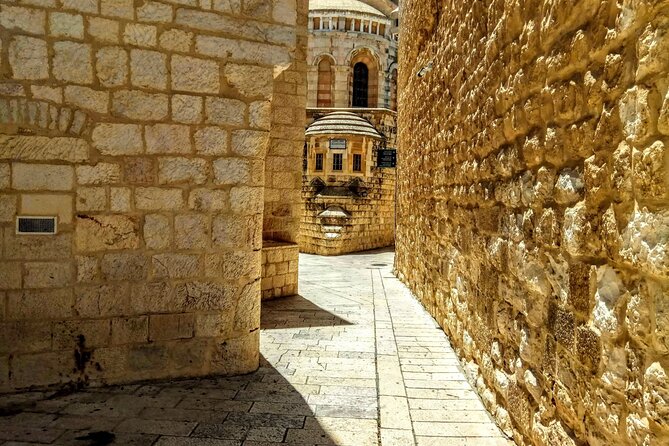
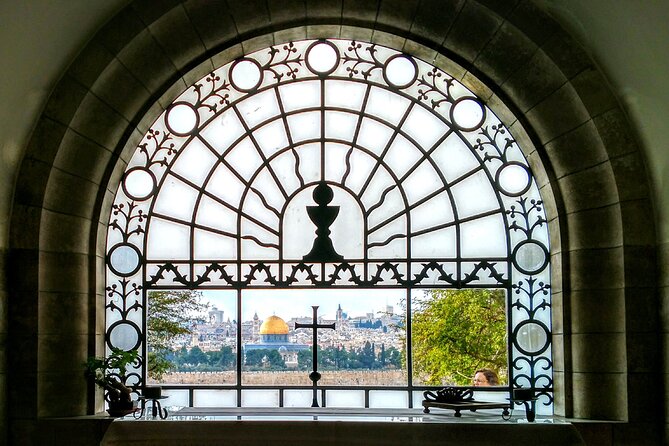
Dominus Flevit commemorates the place where Jesus is believed to have wept over Jerusalem’s fate. The Franciscan church was designed by Antonio Barluzzi, whose churches often use shape, light, and symbols to reinforce the story connected with each site.
The stop works especially well because the setting carries as much weight as the building. From here, the view toward Jerusalem is a reminder that the city seen in the Gospel accounts is also a real place of hills, walls, gates, and densely packed neighborhoods.
I would not rush this part of the morning. The route contains many churches, and without a little time to look carefully, they can blur together. A private guide can help by pointing out what is distinctive about this church rather than giving every stop the same treatment.
A completely different sort of day out of Jerusalem:
- Masada and the Dead Sea Day Trip from Jerusalem
★ 4.5 · 757 reviews - From Jerusalem: Nazareth and Sea of Galilee Tour
★ 4.5 · 588 reviews - Nazareth and the Sea of Galilee Day Trip from Jerusalem
★ 4.5 · 446 reviews - From Jerusalem: Masada&Dead Sea Tour INCLUDING ENTRANCE FEES
★ 4.3 · 392 reviews
Gethsemane, the Church of All Nations, and the grotto
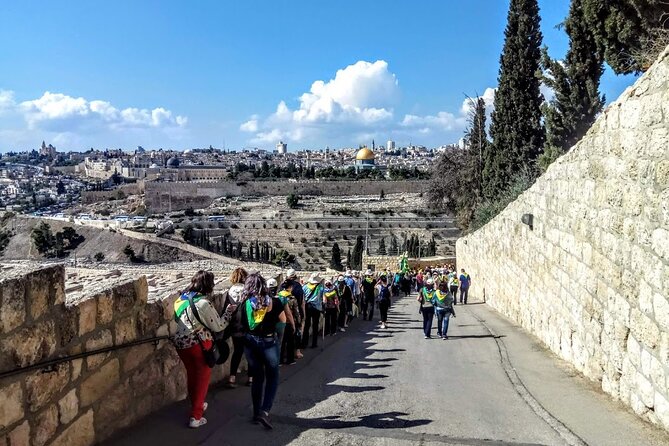
The Church of All Nations at Gethsemane is one of the most moving stops on the route. It commemorates the place where Jesus prayed alone before his arrest. The church is associated with the final days of Jesus, so it carries a different mood from the panoramic view at the Mount of Olives.
Next comes the Grotto of Gethsemane, a cave decorated with Crusader frescoes and graffiti. The setting is more enclosed and intimate than the large churches, and the layers of decoration show how pilgrims returned to the site over many centuries.
You then see the Tomb of the Virgin Mary. The Crusader church was built over a quarried tomb that may date from the first century. Hanging lamps, incense, and the Orthodox Christian atmosphere give this place a distinct character.
There is a lot packed into this section of the tour. If you have a strong interest in Orthodox traditions, Crusader sites, or the final days of Jesus, you will likely want to linger. If your group includes people with different interests, the private arrangement makes it easier to find a reasonable balance.
Bethesda Pools and the route into the Old City
The tour continues to the Pools of Bethesda, associated with the story of Jesus healing a paralytic. What you see today is a series of reservoirs and medicinal pools, excavated in the late nineteenth century.
The site’s interpretation changed as archaeology progressed. It took more than a century for researchers to identify and explain the remains with greater accuracy. That makes Bethesda a useful reminder that biblical geography and archaeology do not always offer instant, simple answers.
From Bethesda, you walk toward the Old City and enter through Lion’s Gate. This is where the day shifts from hilltop churches and open views to narrow streets and a more enclosed urban setting.
The walking route matters. The Old City has uneven paving and a busy feel, and you will need comfortable shoes. The supplied information does not give a precise distance, so I would not plan this as a casual stroll. You should be ready for a substantial day on foot.
Via Dolorosa and the Austrian Hospice
Inside the Old City, you follow the Via Dolorosa, the route traditionally connected with Jesus carrying the cross toward crucifixion. The route is a place of prayer for many Christians, but it is also an active city street rather than a quiet museum corridor.
That mix is part of the experience. You may pass shops, residents, worshippers, and other groups while following a route of enormous religious importance. A guide helps you understand where tradition places each event and keeps the route from becoming a series of unnamed turns.
The Austrian Hospice is another notable stop along the way. Founded in 1863, it was the first national pilgrims’ guesthouse in the Holy Land. Its presence adds a later layer to the route, showing how European religious communities created places to house people making the journey to Jerusalem.
The itinerary does not state that accommodation or refreshments at the hospice are included, so do not assume they are part of the tour. Food and drinks are specifically excluded.
Finishing at the Church of the Holy Sepulchre
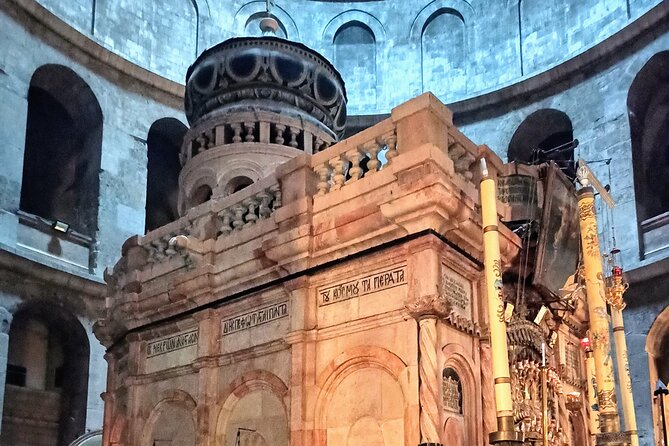
The final stop is the Church of the Holy Sepulchre, where you leave your guide. For most Christian pilgrims, this is the emotional high point of the day. The church is associated with both the crucifixion and the burial of Jesus, making it central to the Christian story.
Ending here makes sense. The tour has moved from the Mount of Olives, through places connected with teaching and prayer, and along the Via Dolorosa to the final shrine. The route has a clear narrative shape rather than a random collection of churches.
You should also expect this church to require patience and attention. The tour data does not promise skip-the-line access or guaranteed entry to every chapel, so the exact experience can depend on conditions at the site. Your guide can explain what you are seeing, but the schedule may need to bend around access and crowds.
Because this is where the guide leaves you, ask any final questions before separating. If you want extra time inside, use the private format earlier in the day to discuss how much time to reserve for the church.
What the $350 price means for a small group
The stated price is $350 per person, but the description also calls the tour a flat-rate option for up to six people. Those two descriptions do not match, so I would get written clarification before paying.
If $350 is the total for a group of up to six, the value could be very strong. Six people would be sharing a private guide for eight hours, which can compare well with several separate private visits or multiple smaller bookings.
If $350 is charged to each person, the calculation changes. The cost may still make sense for a family or church group that wants a private, flexible day with a guide who can explain the Bible passages and adjust the route. For a solo visitor or couple, it is a much larger expense.
The professional guide is included. Food, drinks, entrance fees, and the taxi to the Mount of Olives are not. Group discounts are advertised, but no exact discount is supplied, so ask how they apply to your party.
Guide style, languages, and personal attention
The strongest pattern in the guide feedback is personal attention. Shimon has been praised for using Bible readings alongside historical explanation and for communicating clearly about where to meet. Efrat and Agustina received strong praise for adapting the route and pace, with Agustina also leading Spanish-language visits.
Other named guides include Eva, Nadia, Menno, Alan Harkavy, and Monica. Nadia was appreciated for making the history entertaining, while Menno was praised for explaining Israel’s complex past clearly and answering questions. These are useful signs, but a specific guide is not guaranteed unless you request one and receive confirmation.
The tour can also suit a family with varied interests. A teenager, a parent with hearing difficulties, or someone using a wheelchair may need a more tailored pace. One experience included a family member who needed a wheelchair, with Agustina praised for her care and attention. Still, the published details only promise moderate physical fitness, so confirm route suitability for your particular mobility needs.
Dress, timing, and what to carry
Plan for an early start at 8:00 am and a full day lasting about eight hours. Wear shoes suitable for extended walking and bring water, since food and drinks are not included.
Dress is not optional. Knees and shoulders must be covered for places of worship and selected museums, for both men and women. Shorts and sleeveless tops can lead to refused entry, so light long trousers or a skirt below the knee, plus a shirt covering the shoulders, is the safer choice.
A mobile ticket is available, and confirmation is provided at booking. Service animals are allowed, and the route is near public transportation, although the exact transport plan to the Mount of Olives should be settled before the morning begins.
The cancellation information needs special care. One set of booking terms says cancellation at least ten days ahead receives a full refund minus transaction costs, four to ten days receives 50 percent, and cancellation within three days receives no refund. Another stated policy says the experience is non-refundable and cannot be changed for any reason. Because those terms conflict, ask the provider to confirm the policy that applies to your booking.
Who should book In Jesus’ Steps?
I would choose this tour if you want Christian sites to be the main purpose of your Jerusalem visit, especially if you are traveling with family or a small church group. The private format is a real advantage when you want Bible readings, time for questions, language support, or an itinerary adjusted to your pace.
It is also a good choice for a first full day in Jerusalem. The Mount of Olives gives you orientation, and the route then connects many of the city’s key Christian sites in a logical order.
I would hesitate if you prefer a cheap group outing, dislike churches and devotional sites, or cannot manage a full day with significant walking. I would also avoid booking until the price and cancellation terms are clear.
For the right group, this is a serious and focused day, not a quick checklist. The combination of biblical settings, strong individual guides, and a private pace gives the experience its value. Just arrive prepared for extra costs, strict dress rules, and a long finish in the Old City.
FAQ
How long does the In Jesus’ Steps tour last?
The tour lasts approximately eight hours.
What time does the tour start?
The stated start time is 8:00 am.
Is hotel pickup available?
Pickup at your group’s hotel in Jerusalem is offered. The taxi to the Mount of Olives is not included.
Is this a private tour?
Yes. Only your group participates in the activity.
How many people can join the private tour?
The pricing information describes a flat-rate option for up to six people. Because the listed price is also shown as $350 per person, confirm the exact pricing before booking.
What is included in the tour?
A professional guide is included.
What expenses are not included?
Food, drinks, entrance fees, and the taxi to the Mount of Olives are not included.
What should I wear?
Knees and shoulders must be covered for places of worship and selected museums. Shorts and sleeveless tops are not allowed for men or women, and entry may be refused if you do not follow the dress code.
Just added around Jerusalem
- Private Walking Tour in Jerusalem’s Old City★ 5.0 · 3 reviews
- jerusalem classic tour★ 5.0 · 3 reviews
- Jerusalem and the Dead Sea★ 5.0 · 3 reviews
- Jerusalem Running Tour-Experience the unique vibes of Jerusalem in your sneakers★ 5.0 · 3 reviews
- Jerusalem of 3 Religions in Russian★ 4.4 · 3 reviews
- From Jerusalem: Masada Sunrise, Ein Gedi & Dead Sea★ 5.0 · 3 reviews
- Christian Jerusalem in Russian★ 5.0 · 3 reviews
- Holy Jerusalem Full Day Tour from Jerusalem★ 5.0 · 3 reviews
Full-Day, compared.
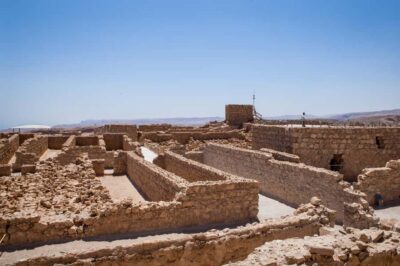
Masada & Dead Sea Full Day Tour with Pick Up
Read our review →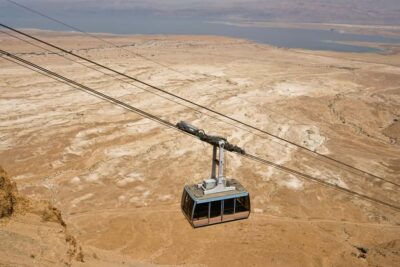
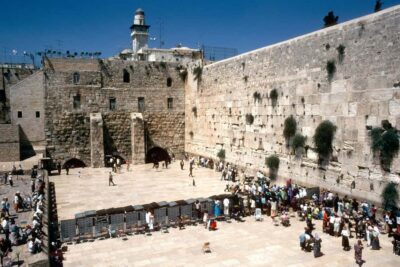
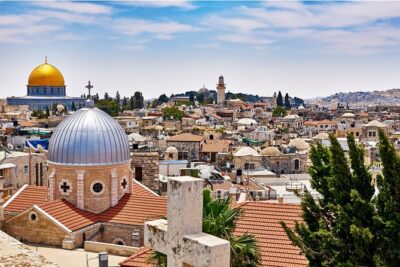
Jerusalem Full-Day Tour from Tel Aviv INCLUDING ENTRANCE FEES
Read our review →
Browse the lists this tour appears in