
Review · HALF-DAY
Jerusalem Half-Day Sightseeing Tour
Jerusalem rewards a well-planned first look. This five-hour outing gives you big city views from Mount Scopus before leading you into the Old City’s tight lanes, where the Western Wall, Via Dolorosa, Church of the Holy Sepulcher, Cardo, and four historic quarters come in one concentrated morning. I like the strong mix of viewpoints and sacred sites, and I like having a guide explain the religious layers instead of leaving you to guess what you are seeing.
The main catch is pace. You cover a lot of ground, often with other people around you, and the tour ends in the Old City rather than returning you to your hotel. A shop stop has also felt unnecessary to some visitors, so this suits you best if your priority is seeing major sights efficiently, not lingering at every corner.
In This Review
- Key points to know before booking
- Mount Scopus gives you the right first picture
- Down the Kidron Valley to Gethsemane
- Entering through the Armenian Quarter
- The Western Wall and the meaning of the square
- The bazaar and the Christian Quarter
- Walking the Via Dolorosa
- Inside the Church of the Holy Sepulcher
- The Cardo and the renovated Jewish Quarter
- What $50 buys you in five hours
- Who will get the most from this tour?
- Should you book the Jerusalem half-day tour?
- FAQ
- How long does the Jerusalem sightseeing tour last?
- What time does the tour end?
- Where does the tour finish?
- Is hotel pickup included?
- Which sites are included?
- Is food included?
- What languages are available?
- Is modest dress required?
- Can children under four join the tour?
Key points to know before booking
- Mount Scopus puts Jerusalem in context: The opening panorama helps you understand the city’s hills, walls, and Old City before you start walking.
- The route covers the essential sacred sites: You visit the Western Wall, Via Dolorosa, Church of the Holy Sepulcher, Garden of Gethsemane, and more.
- The walk crosses several distinct quarters: You move through the Armenian, Christian, and Jewish quarters, with the bazaar linking parts of the route.
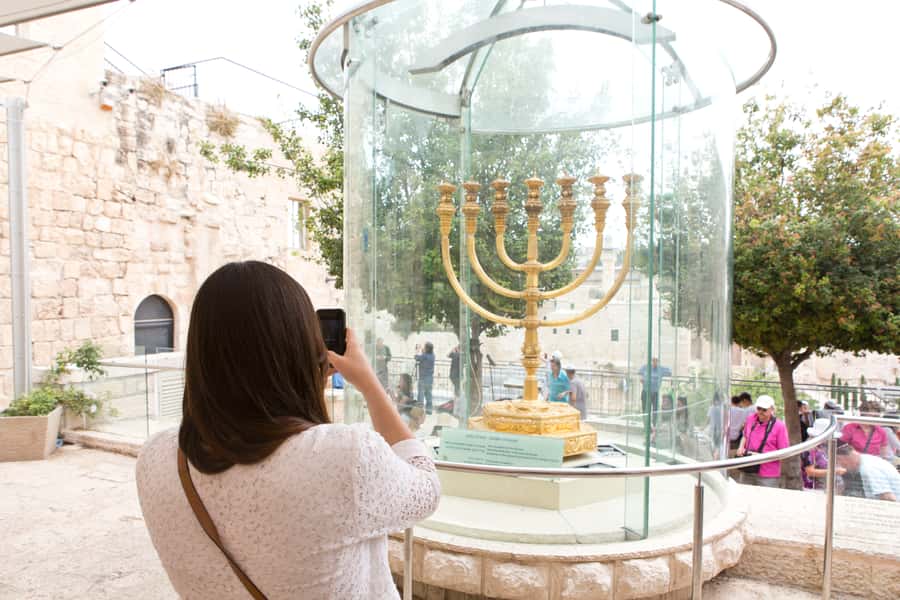
- The Cardo adds a Roman and Byzantine layer: This restored ancient street offers a welcome change from the religious focus.
- Strong guides make the difference: Guides such as Roy, Dorit, Alona, and others have been praised for clear explanations, warmth, and good group care.
- Plan for an independent afternoon: The tour finishes around 13:00 to 13:30 in the Old City, with no hotel drop-off and no lunch included.
Mount Scopus gives you the right first picture
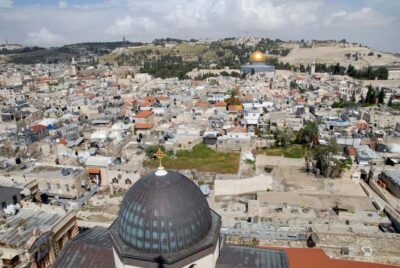
Your morning begins with hotel pickup and an air-conditioned coach ride toward Mount Scopus, one of Jerusalem’s highest points. This is a smart opening. Jerusalem can feel confusing at street level, with walls, valleys, and crowded lanes hiding the shape of the city. From above, you get a broad view before the walking begins.
The panorama is not just a photo stop. It gives you a useful mental map of the Old City and its setting. You can look across the historic center, see the surrounding hills, and begin to understand why Jerusalem has mattered to different communities for thousands of years.
This is also where the guide can set the tone for the day. The city is sacred to Judaism, Christianity, and Islam, and the best explanations connect those traditions without turning the morning into a sermon. Past guides have been praised for doing exactly that. Alona, Roy, and Dorit were singled out for their warmth, clear explanations, and ability to make people feel at ease.
You should still keep your expectations realistic. Mount Scopus is a viewing point, not a long mountain walk. The value lies in the outlook and the introduction, not in spending a large part of the tour there.
A few more Jerusalem trips worth weighing up
- Travel to Bethlehem Half Day Guided Tour from Jerusalem & TelAviv
★ 5.0 · 239 reviews - From Jerusalem: Dead Sea Chill Out Half-Day Trip
★ 4.7 · 165 reviews - Jerusalem Half Day Tour: Holy Sepulchre and Western Wall
★ 4.5 · 80 reviews
Down the Kidron Valley to Gethsemane
From Mount Scopus, the coach travels along the Kidron Valley toward the Garden of Gethsemane and the Old City walls. This portion helps connect the modern city with the biblical and Christian setting you will explore on foot.
The Garden of Gethsemane is an important stop for Christian visitors because of its connection with the final hours of Jesus. It is also one of the places where the tour’s religious focus becomes especially clear. You are not simply ticking off an old garden. You are seeing a site that carries meaning for worshippers, pilgrims, and people interested in the Bible’s setting.
The valley and the walls also provide a useful transition. The Old City is not presented as an isolated museum. Its gates, slopes, and surrounding ground are part of the story. You get a sense of how the city’s physical form shaped movement, defense, worship, and daily life.
Dress matters here and throughout the morning. Modest clothing is required, so cover shoulders and knees and avoid treating this like a casual city stroll. Comfortable shoes are also a sensible choice because the route includes uneven streets, stone paving, and plenty of walking.
Entering through the Armenian Quarter
The walking route enters the Old City through the Armenian Quarter and continues toward the Western Wall Square. Jerusalem’s quarters are not simply themed sections for tourists. They reflect different communities, religious traditions, and layers of urban life within the same walls.
The Armenian Quarter gives the tour a calmer and more residential beginning than the market lanes farther ahead. From there, the route leads toward the Western Wall through the bazaar. The change happens quickly. Quiet stone lanes give way to shops, narrow passages, signs, voices, and the constant need to keep your group together.
This is where a good guide earns the fee. The Old City can be hard to follow on your own during a short visit. You may be looking at an important doorway, a passage, or a stretch of wall without knowing why it matters. A strong guide provides the missing context and keeps the walking route moving.
Group size can affect this part of the experience. One past assessment found that too many people were assigned to one guide, while another praised a guide for repeatedly checking that everyone was still together in crowded streets. If you dislike group movement, expect some waiting and regrouping. If you want to cover the main sights in limited time, that structure is useful.
The Western Wall and the meaning of the square

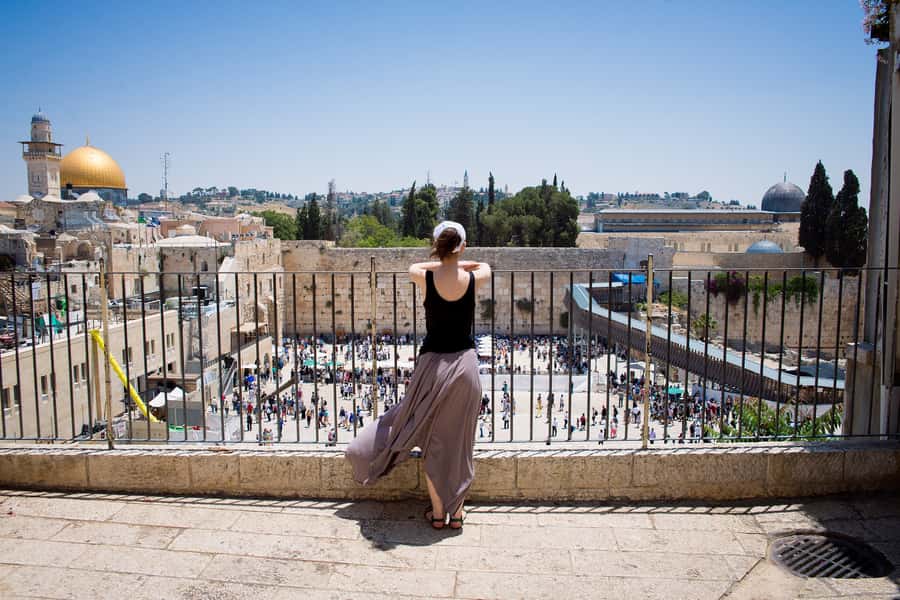
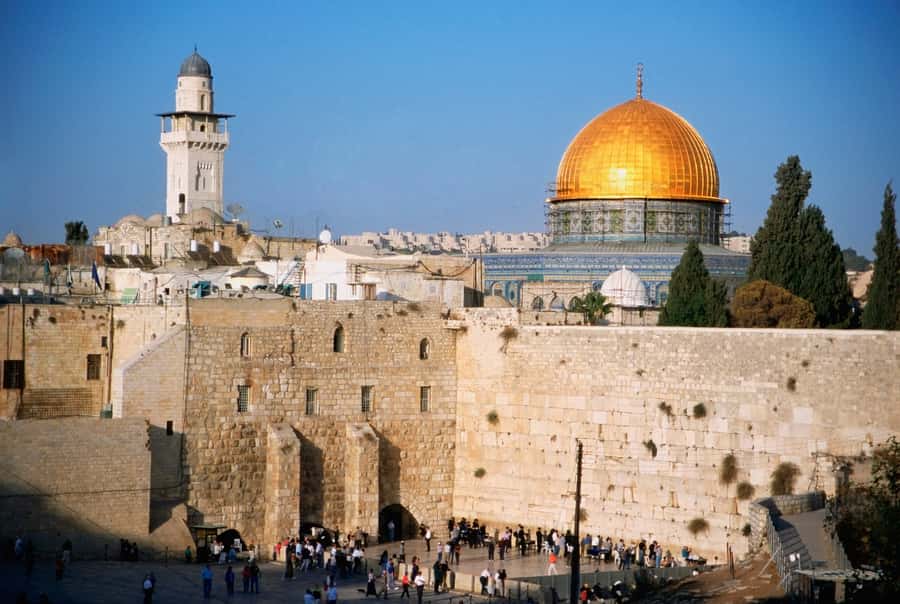
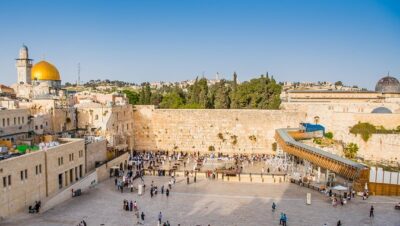
The Western Wall is one of the morning’s central stops. The wall is a surviving section associated with the retaining walls around the Temple Mount, and it remains Judaism’s most important prayer site.
Your guide can explain the religious and historical setting before you enter the square. The experience itself is less about a long formal visit and more about seeing the place, observing prayer, and understanding why the site carries such weight. Be respectful of worshippers, follow local instructions, and remember that this is an active religious place rather than a simple monument.
The tour’s wording uses both Western Wall and Wailing Wall. Western Wall is the preferred modern name, and it is the term you will hear most often in current use.
This stop can feel crowded, especially at popular times. The tour format helps you reach it without spending your morning trying to find the entrance, but it also means you may not have unlimited time for quiet reflection. If the wall is your main reason for coming to Jerusalem, consider using the free afternoon after the tour for a separate, slower visit.
A completely different sort of day out of Jerusalem:
- From Jerusalem: Masada & Dead Sea Full Day Tour with Pick Up
★ 4.5 · 815 reviews - Masada and the Dead Sea Day Trip from Jerusalem
★ 4.5 · 757 reviews - From Jerusalem: Nazareth and Sea of Galilee Tour
★ 4.5 · 588 reviews - Nazareth and the Sea of Galilee Day Trip from Jerusalem
★ 4.5 · 446 reviews
The bazaar and the Christian Quarter

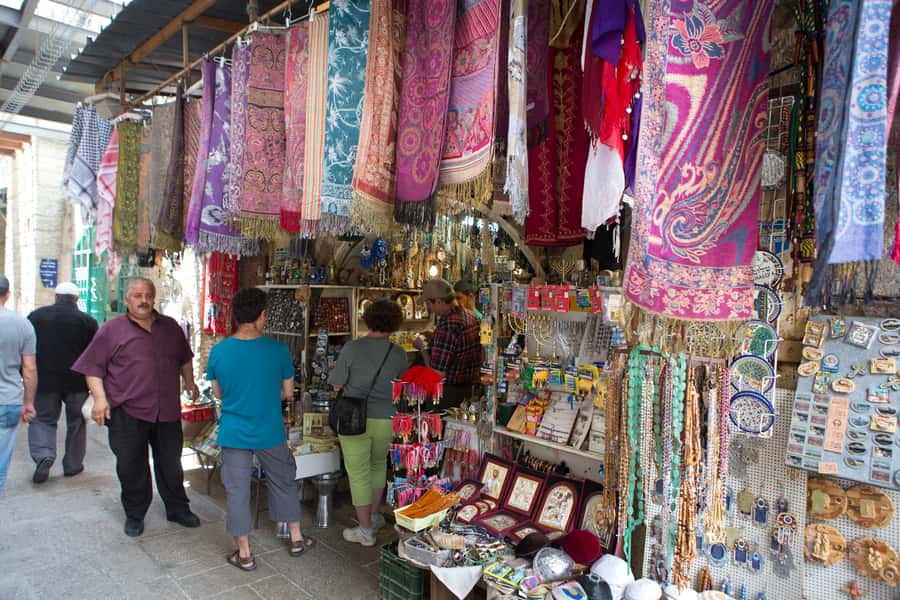
The route continues through the bazaar into the Christian Quarter. This is one of the most atmospheric parts of the morning, but also one of the easiest places to lose sight of the group. Stay close to the guide and pay attention when the group pauses.
The market gives you a taste of Old City life beyond the major monuments. Shops line the passageways, and the route feels more like a lived-in neighborhood than a formal historic site. You will see the city’s commercial side alongside its religious importance.
Some versions of this type of tour include time in a shop, and that has not pleased everyone. A stop connected with a guide’s acquaintance was criticized because the advertised sale prices seemed based on inflated starting prices. You should not feel obliged to buy anything. Treat the market as a place to observe, and save your spending for items you genuinely want.
The Christian Quarter leads you toward the Via Dolorosa and the Church of the Holy Sepulcher. The transition is useful because you see how pilgrimage, trade, worship, and ordinary street life sit side by side.
Walking the Via Dolorosa
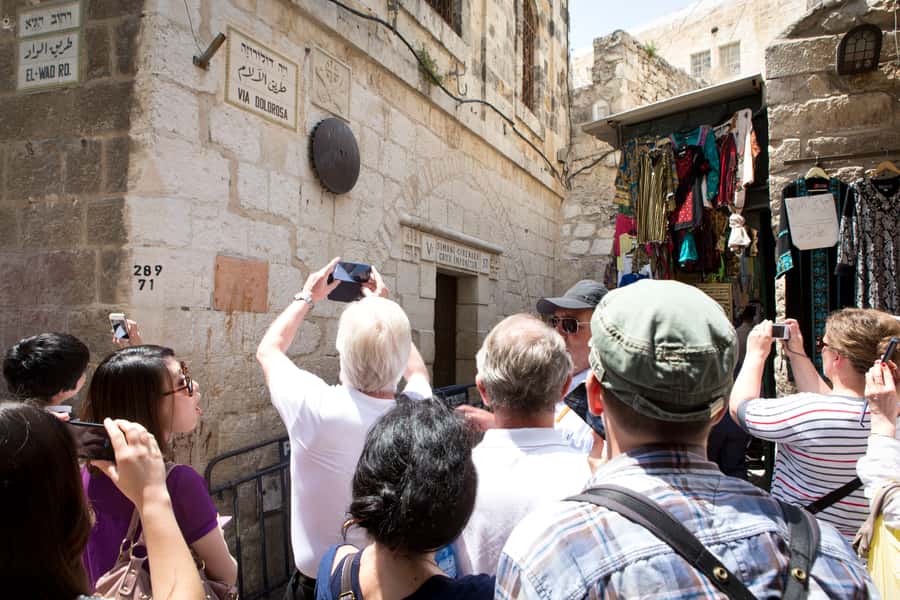
The Via Dolorosa is the route traditionally associated with Jesus carrying the cross to crucifixion. The tour follows the Stations of the Cross through the Old City, with the guide explaining the religious significance of the route.
Do not expect a broad ceremonial avenue. This is a network of narrow city streets, with shops, doorways, stone walls, and everyday activity around you. That contrast is part of what makes the walk interesting. A deeply sacred route runs through a working neighborhood rather than behind museum glass.
The walk can feel intense because the subject matter is serious and the setting is close and crowded. You will get more from it if you listen to the guide’s explanation instead of rushing from station to station for photographs. The quality of the commentary matters a great deal here.
English, Spanish, German, and French tours are available. Make sure you choose the language that lets you follow religious and historical details comfortably. A guide with strong language skills can turn a sequence of stops into a connected story. Past English-language departures have received praise for clear speech and a warm manner.
Inside the Church of the Holy Sepulcher
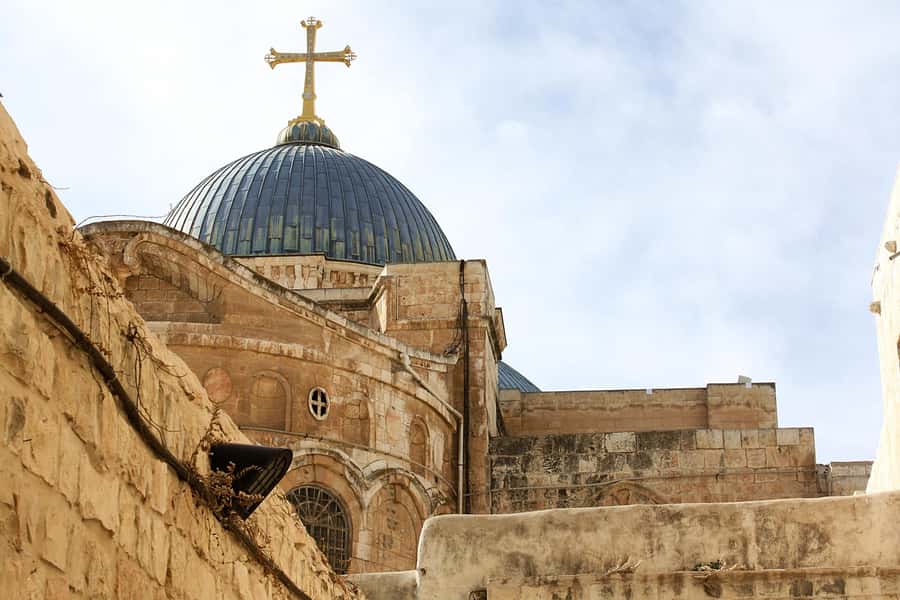
The Church of the Holy Sepulcher is the major Christian site on the route. It is associated with the crucifixion, burial, and resurrection of Jesus, and several Christian communities share responsibility for the building.
The church is best approached with patience. Its interior can feel crowded, layered, and visually complex. Different chapels, shrines, and traditions occupy the same broad religious space, so a guide’s explanation is especially useful. Without context, you may see a series of ornate areas without understanding why each one matters.
The tour gives you an introduction rather than unlimited time for personal worship or study. That is a fair trade for a five-hour program, but it is worth knowing before you book. If you want to pray quietly, examine details, or wait in a particular chapel, you may need to return later on your own.
For many people, this is the emotional center of the morning. For others, the intensity of the crowds and the quick schedule can make it difficult to take in. Both reactions are reasonable. The benefit of the guided format is that you reach the site and learn its importance without spending time working out the route yourself.
The Cardo and the renovated Jewish Quarter
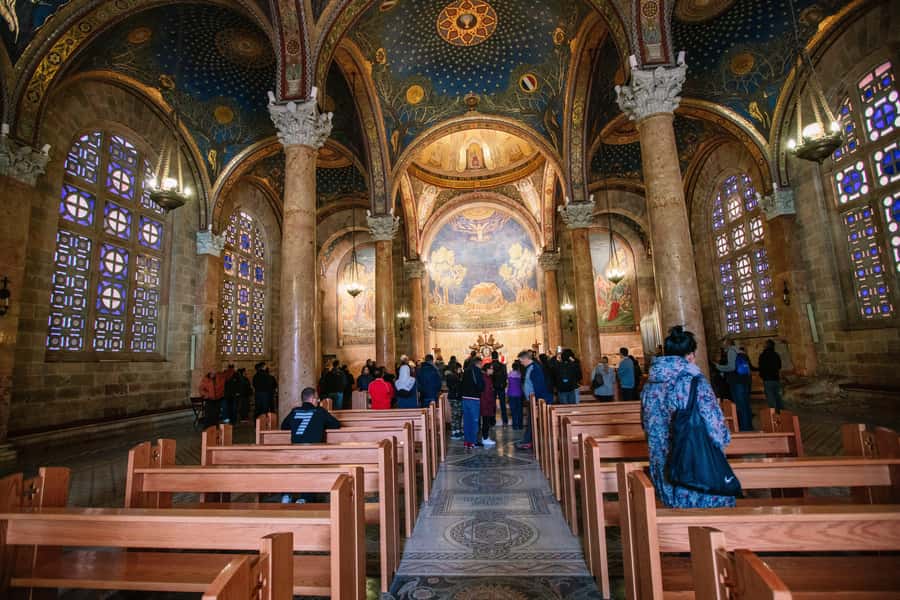
The tour then shifts from Christian pilgrimage to Jerusalem’s Roman and Byzantine past. You walk along the Cardo, the ancient main street restored in recent years, and continue through the renovated Jewish Quarter.
The Cardo is a valuable change of pace. After the Western Wall, Via Dolorosa, and Church of the Holy Sepulcher, you get a reminder that Jerusalem is not only a sacred destination. It was also a major urban center shaped by Roman and Byzantine planning.
The restored section helps you picture the old street as a formal avenue rather than just another narrow lane. It is one of the morning’s best stops for understanding the city’s changing rulers and building styles.
The Jewish Quarter adds another layer, though the tour cannot cover every part of it in detail. The renovated streets and historic setting help round out the visit, particularly if this is your first time in Jerusalem. You see several eras in a small area, which is one reason a guide can be more useful here than a simple map.
What $50 buys you in five hours
At $50 per person, the tour offers solid value if you want transport, a professional guide, and entrance fees bundled together. You also get hotel pickup from main Jerusalem hotels, which saves time at the start of a busy morning.
The price is less attractive if you prefer to walk slowly, choose your own sites, or spend a long time at one shrine. This is an overview tour, not a private pilgrimage or a specialist archaeology visit. You are paying for structure, transportation, interpretation, and access to a large number of key places in a short span.
Food and drinks are not included. The tour ends in the Old City around 13:00 to 13:30, so you can choose lunch there or continue exploring on your own. That ending is useful because the Old City is a good place to carry on, but remember that hotel drop-off is not provided.
Pickup is optional in the booking sense, but main hotel pickup is available. If you stay in an Airbnb or another location outside the regular route, the local operator sends details for the closest pickup point.
Free cancellation up to 24 hours before departure and reserve-now, pay-later terms make the booking less risky. The tour is not suitable for children under four.
Who will get the most from this tour?
I would recommend this tour to a first-time Jerusalem visitor who wants the major religious and historic sights explained in one morning. It is also useful if your time in the city is short, or if you want an organized introduction before exploring alone.
It suits you particularly well if you appreciate history, religious context, and a guide who can connect places that might otherwise feel scattered. The best guides have been praised for kindness, clear English, and careful group management. That personal touch can make a crowded morning much easier.
You may prefer an independent visit if you want silence, long photography stops, or extended time at the Western Wall and Church of the Holy Sepulcher. You should also think twice if you dislike shopping stops or group movement. The tour covers plenty, but it does not linger.
Should you book the Jerusalem half-day tour?
Book it if you want a practical first look at Jerusalem and value expert explanation over complete independence. The combination of Mount Scopus, Gethsemane, the Western Wall, the Via Dolorosa, the Church of the Holy Sepulcher, the Cardo, and the Old City quarters is hard to match in five hours on your own.
Skip it if your visit centers on one site that deserves a full morning, or if returning to your hotel is essential. Plan to stay in the Old City afterward for lunch and more wandering, and you will get better value from the finish.
The strongest reason to go is the guide. Past departures led by Roy, Dorit, and Alona show how much warmth and clear explanation can add. The main caution is the pace and the possibility of a large group. For a well-organized overview at $50, it is a sensible choice, as long as you treat it as an introduction rather than your only time in Jerusalem.
FAQ
How long does the Jerusalem sightseeing tour last?
The tour lasts five hours.
What time does the tour end?
It ends in the Old City at approximately 13:00 to 13:30.
Where does the tour finish?
The tour finishes in Jerusalem’s Old City. Hotel drop-off is not included.
Is hotel pickup included?
Pickup is available from main hotels in Jerusalem. If you are staying elsewhere, such as in an Airbnb, the operator provides the closest pickup point.
Which sites are included?
The route includes Mount Scopus, the Garden of Gethsemane, the Old City, the Western Wall, the Via Dolorosa, the Church of the Holy Sepulcher, the Cardo, and the renovated Jewish Quarter.
Is food included?
No. Food and drinks are not included. You can arrange lunch yourself after the tour ends in the Old City.
What languages are available?
The live guide is available in English, Spanish, German, and French.
Is modest dress required?
Yes. Modest dress is required because the tour visits important religious sites.
Can children under four join the tour?
No. The tour is not suitable for children under four.
Just added around Jerusalem
- Private Walking Tour in Jerusalem’s Old City★ 5.0 · 3 reviews
- jerusalem classic tour★ 5.0 · 3 reviews
- Jerusalem and the Dead Sea★ 5.0 · 3 reviews
- Jerusalem Running Tour-Experience the unique vibes of Jerusalem in your sneakers★ 5.0 · 3 reviews
- Jerusalem of 3 Religions in Russian★ 4.4 · 3 reviews
- From Jerusalem: Masada Sunrise, Ein Gedi & Dead Sea★ 5.0 · 3 reviews
- Christian Jerusalem in Russian★ 5.0 · 3 reviews
- Holy Jerusalem Full Day Tour from Jerusalem★ 5.0 · 3 reviews
Half-Day, compared.
Travel to Bethlehem Half Day Guided Tour from Jerusalem & TelAviv
Read our review →
Jerusalem Half Day Tour: Holy Sepulchre and Western Wall
Read our review →
Jerusalem Half-Day Tour from Tel Aviv: Holy Sepulchre and Western Wall
Read our review →
Bethlehem Half Day Private Tour – Pick up from Jerusalem/Tel Aviv/Ashdod
Read our review →Browse the lists this tour appears in