
Review · RAMON CRATER & NEGEV TOURS
Stargazing Mitzpe Ramon
The desert sky puts on the show. This private stargazing outing near Makhtesh Ramon combines powerful robotic telescopes with mattresses, a fire, hot drinks, and a guide who explains constellations, planets, myths, and galaxies. I like the quiet, intimate setting and the chance to lie back instead of peering over a crowded telescope line. I also like that the $460 price covers up to eight people, making it reasonable for a family or small group.
The main drawback is logistics: you arrange your own transportation to the meeting point, and the exact location and time arrive only on the morning of the activity. Desert nights can also be cold, so bring warm layers even if the day feels hot.
In This Review
- Five things to know before you book
- Why Makhtesh Ramon is the right place for stargazing
- A 1-hour-45-minute evening under the stars
- Telescopes that go beyond the Moon
- A fire, tea, and mattresses make a real difference
- The guide is as important as the equipment
- What the private format adds
- Timing, weather, and the morning message
- Who will enjoy this desert night most
- Should you book Stargazing Mitzpe Ramon?
- FAQ
- Where does the stargazing activity begin?
- How long does the experience last?
- Is transportation included?
- What equipment and refreshments are provided?
- What can I see through the telescopes?
- Can I cancel for a full refund?
Five things to know before you book
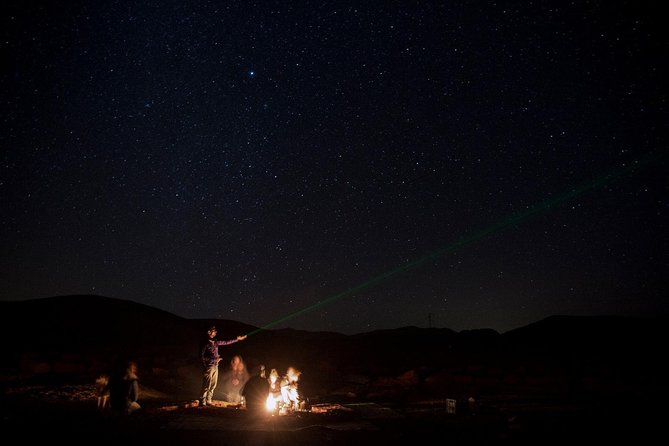
- Remote Ramon Crater setting: You meet your guide in a dark desert location, away from city light.
- Private group pricing: The $460 rate covers up to eight people, not just one participant.
- Robotic telescopes: The equipment is designed for more than a quick look at the Moon.
- Comfort built in: Mats, mattresses, chairs, a fire, tea or coffee, and snacks make the viewing session relaxed.
- More than star spotting: Your guide explains constellations, zodiac signs, asterisms, astronomy, myths, planets, nebulae, clusters, double stars, and galaxies.
Why Makhtesh Ramon is the right place for stargazing
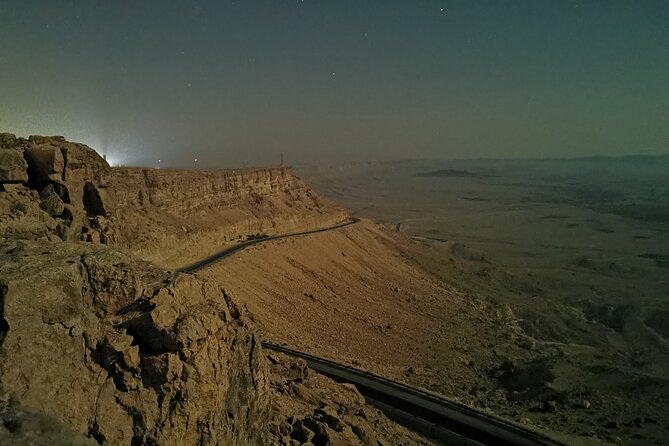
This experience takes place at Makhtesh Ramon, in the desert near Sde Boker. The setting matters. The farther you get from artificial light, the more stars your eyes can pick out, and the better the sky becomes for viewing faint objects through a telescope.
You will not simply arrive at a fixed indoor observatory with a roof and neatly arranged exhibits. Your guide meets you outdoors, in the middle of the desert, with the equipment already prepared. That gives the evening a more direct connection to the place. You are looking up from the actual desert rather than viewing a simulated night sky inside a building.
The darkness is a major part of the experience. One description of the outing paints the scene clearly: a descent into the crater at night, followed by a sky filled with stars, planets, the Milky Way, and even some other galaxies. Exact visibility depends on conditions, but the location gives you the right starting point.
You should also expect silence and open space. That sounds simple, but it changes the mood. There are no city streets, shop signs, or passing crowds to interrupt the guide’s explanations. The desert becomes part of the lesson.
More Negev and Ramon Crater days:
- From Eilat: Timna Park Guided Jeep Tour
★ 4.7 · 68 reviews - Rappelling Down the Ramon Crater Cliff
★ 5.0 · 47 reviews - Two hour guided jeep tour in to and around the Ramon crater
★ 5.0 · 45 reviews
A 1-hour-45-minute evening under the stars
The experience lasts about one hour and 45 minutes, though the description allows roughly one and a half to two hours. Your guide will send the exact meeting location on the morning of the activity and arrange a start time. You then make your way independently to Makhtesh Ramon.
At the agreed hour, the guide waits with the telescope, mats, mattresses, and other supplies. You settle in, look up, and begin with the visible sky before moving to telescope viewing. Since this is a private activity, the pace can feel more personal than a large group presentation.
The first part is about getting familiar with what you can see without equipment. You learn to identify constellations, zodiac signs, and asterisms. An asterism is a recognizable star pattern that may not be an official constellation, such as a familiar shape formed by only part of a constellation.
This part is useful because a telescope can show you a remarkable object, but it does not always explain where that object fits in the sky. By learning the larger patterns first, you gain a better sense of direction. You begin to understand the sky as a map rather than a scattering of bright points.
The guide also covers the history of astronomy, along with myths and legends connected to the night sky. That mix keeps the session from becoming a technical lecture. You get both the old stories people used to explain the heavens and the scientific ideas used today.
Telescopes that go beyond the Moon
The telescopes are one of the strongest reasons to book this outing. The experience uses advanced robotic telescopes, and additional telescopes may be available for an extended activity. This suggests a more serious viewing session than a simple laser-pointer talk.
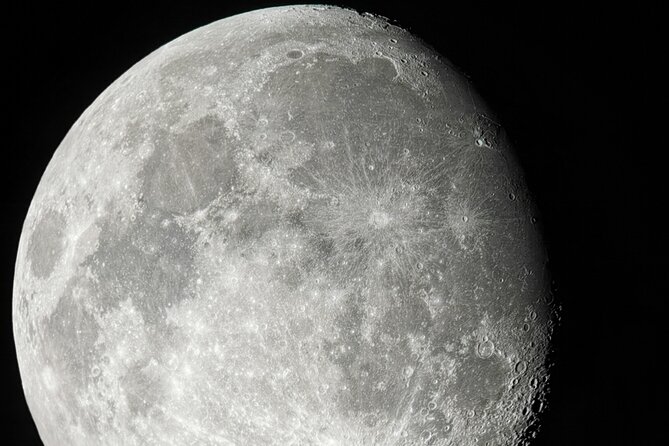
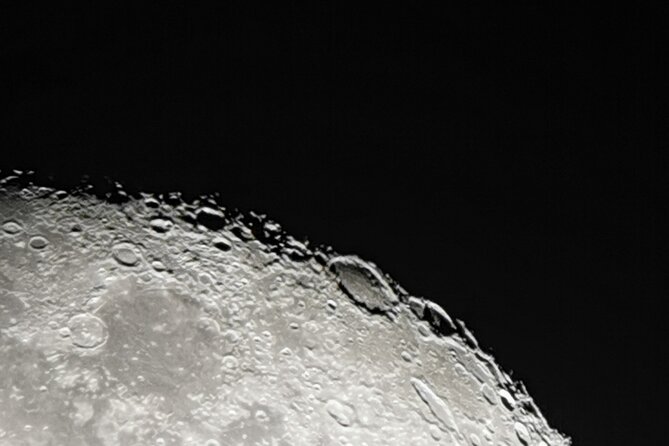
You will have a chance to look at objects in our own solar system, including planets and the Moon. The Moon can be especially striking through a telescope, since its craters and uneven surface become much easier to see. Planetary views depend on what is visible during your visit, so you should not expect a fixed list of targets every night.
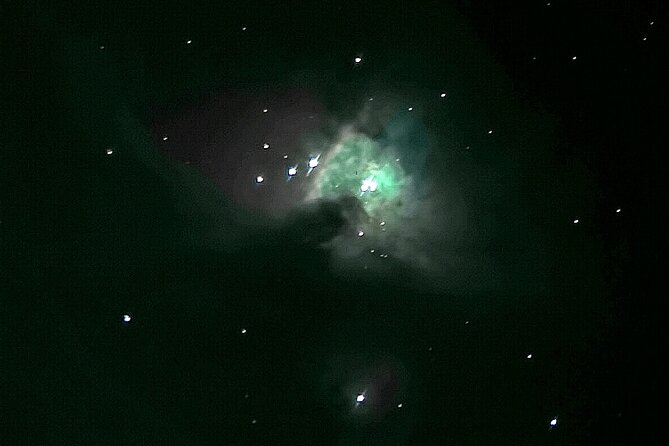
The session also reaches beyond the solar system. Possible deep-sky targets include star clusters, nebulae, double stars, and galaxies. These objects differ greatly in appearance. A cluster may look like a tight gathering of stars, while a nebula can appear as a pale cloud. A double star can reveal two points of light orbiting in the same system, and a galaxy gives you a glimpse far beyond our own stellar neighborhood.
That range is important. You are not paying only for one look at one famous object. The guide can work through several kinds of celestial targets and explain what makes each one different. The exact selection will depend on the date, conditions, and what is visible from the site.
The robotic equipment also matters for convenience. You do not need to spend the evening learning how to manually track every object. Your guide handles the technical side, leaving you more time to look, ask questions, and follow the story of what you are seeing.
A fire, tea, and mattresses make a real difference
Desert stargazing has one practical surprise: it can get cold quickly after dark. The outdoor setting is part of the appeal, but it also means you need to dress for the night rather than the afternoon.
The setup includes a mat and mattresses so you can lie back while watching the sky. That is more comfortable than standing for nearly two hours or taking turns around a single eyepiece. Chairs may also be provided, and the evening includes a fire, tea or coffee, and snacks.
These small comforts are not decoration. They make it easier to stay focused on the sky. You can settle in, warm your hands, and let your eyes adjust to the darkness. One account describes a bonfire, chairs, and tasty tea waiting after a desert hike, which gives you a good idea of the welcoming camp-style feel.
Bring warm clothing anyway. The supplied comforts do not change the temperature, and the cold is the clearest practical warning attached to this experience. A jacket and extra layers are sensible, especially if you plan to lie still on a mattress for long periods.
A few more Israel trips worth weighing up
- Ramon Crater Jeep Tour from Mitzpe Ramon
★ 5.0 · 44 reviews - Get To Know the Ramon Crater tour
★ 5.0 · 39 reviews - In Depth Introduction of the Ramon Crater
★ 5.0 · 11 reviews - Sunset time Ramon Crater Jeep tour, bonfire and stargazing
★ 5.0 · 4 reviews
The guide is as important as the equipment
A good telescope does not explain itself. The guide turns the equipment into an experience by showing you where to look and explaining what you are seeing.
Several guides are associated with particularly warm feedback, including Nadav, Moshe, and Ori, also referred to as Uri in one translated account. The descriptions of these guides emphasize clear explanations, warmth, strong communication, and enthusiasm. Moshe is described as especially articulate and well informed, while Ori is praised for bringing considerable knowledge and personal energy to the session.
You may not receive one specific guide, so I would not book on the assumption that a named person is guaranteed. Still, the repeated emphasis on the human side of the activity is encouraging. Astronomy can become dry when the guide focuses only on facts. Here, the plan includes science, mythology, history, and conversation, which should work well for mixed groups with different levels of interest.
You can enjoy this if you already know the major constellations, but you do not need a background in astronomy. The format is designed to introduce the sky while still offering enough material for people who want more than a basic explanation.
What the private format adds
This is a private activity, so only your own group takes part. That is valuable for families, couples, and friends who want to ask questions without worrying about holding up a large group.
A private format also helps with comfort. If one person wants more time at the telescope, another wants to ask about mythology, or someone would rather stay on the mattress and listen, the evening can adapt more easily than a fixed public program.
The group limit is eight people. That is large enough for a family or a small circle of friends, but still small enough to keep the guide close. At $460 per group, the price works out to about $57.50 per person if eight people attend. For two people, it is a much more expensive evening, at $230 each.
That makes the value depend heavily on your group size. A full group receives private guiding, specialist equipment, desert setup, hot drinks, snacks, and nearly two hours of attention. A couple pays a premium for privacy and flexibility. If you are already planning a desert visit with friends or family, this is the kind of activity that becomes more attractive when the cost is shared.
The price does not include hotel pickup or transportation to and from the attraction. You need to plan your route to Makhtesh Ramon yourself. That is not a minor detail in a remote desert setting, so make sure your group understands the meeting instructions before setting out.
Timing, weather, and the morning message
The exact arrival location is sent on the morning of the activity, along with the scheduled hour. This allows the provider to coordinate the meeting, but it requires you to stay reachable and keep your plans flexible that day.
The activity depends on good weather. If poor conditions force a cancellation, you are offered another date or a full refund. That policy is useful because clouds or bad weather would directly affect the main purpose of the outing.
You should also understand the cancellation deadline. You can cancel for a full refund up to 24 hours before the start time. Changes or cancellations made less than 24 hours ahead are not accepted for a refund. Confirmation is sent within 48 hours of booking, subject to availability.
A mobile ticket keeps the process simple. Most people can participate, and service animals are allowed. The activity ends back at the meeting point, but transportation there and away from there remains your responsibility.
Who will enjoy this desert night most
I would recommend this for anyone who wants astronomy presented as a live experience rather than a short photo stop. You get the appeal of the desert, the comfort of a fire and mattresses, and the added value of a guide who can connect a constellation to a story and then connect that story to modern science.
It suits families particularly well because the session can move between simple explanations and more advanced questions. It also fits couples and small groups who value privacy and do not mind arranging their own transport.
This may not suit you if you want a quick, tightly scheduled activity near your hotel. The location is remote, the exact meeting details come on the day, and the weather can change the plan. You also need to be comfortable spending almost two hours outdoors at night.
If you dislike cold evenings, bring extra layers rather than relying on the fire. If you have mobility concerns, the supplied information says most people can participate, but it does not provide detailed terrain or surface information. Contacting the provider before booking would be sensible if you need specific access arrangements.
Should you book Stargazing Mitzpe Ramon?
Book it if you want a private desert evening with real astronomy, not just a pretty view of the stars. The strongest parts are the dark Ramon Crater setting, serious telescope equipment, warm and personable guiding, and the simple comforts that let you stay outside long enough to enjoy the sky.
The $460 cost is easiest to justify with a group of six to eight. For a smaller party, compare the price with your interest level. If astronomy is a highlight of your trip, the personal attention and equipment make a persuasive case. If you only want to see the Milky Way for a few minutes, you may find the price harder to defend.
Bring warm clothes, watch for the morning location message, and plan your own transportation carefully. With those points handled, this is a memorable way to experience the Negev after sunset.
FAQ
Where does the stargazing activity begin?
The activity begins at Makhtesh Ramon, near Sde Boker, Israel. The exact arrival location is sent on the morning of the activity.
How long does the experience last?
The experience lasts approximately one hour and 45 minutes. The stated activity range is about one and a half to two hours.
Is transportation included?
No. Hotel pickup and transportation to and from the attraction are not included. You need to reach the meeting point independently.
What equipment and refreshments are provided?
Your guide brings robotic telescopes, a mat, mattresses, and supplies for the evening. The setup also includes a fire, tea or coffee, and snacks. Extra telescopes may be available for an extended activity.
What can I see through the telescopes?
The activity may include the Moon, planets, star clusters, nebulae, double stars, and galaxies. What you view depends on the night sky and current visibility.
Can I cancel for a full refund?
Yes. You can cancel at least 24 hours before the experience start time for a full refund. Poor weather cancellations offer either a different date or a full refund.
Just added around Israel
- 4-Day Christian Israel Tour from Tel Aviv★ 5.0 · 3 reviews
- Palm Sunday in Jerusalem: Mass at Bethpage and Via Dolorosa Procession with Transport from Tel Aviv★ 5.0 · 3 reviews
- Jerusalem and the Dead Sea★ 5.0 · 3 reviews
- Private Walking Tour in Jerusalem’s Old City★ 5.0 · 3 reviews
- jerusalem classic tour★ 5.0 · 3 reviews
- Jerusalem of 3 Religions in Russian★ 4.4 · 3 reviews
- Jerusalem Running Tour-Experience the unique vibes of Jerusalem in your sneakers★ 5.0 · 3 reviews
- From Jerusalem: Masada Sunrise, Ein Gedi & Dead Sea★ 5.0 · 3 reviews
Ramon Crater & Negev Tours, compared.
Two hour guided jeep tour in to and around the Ramon crater
Read our review →
Browse the lists this tour appears in