
Review · PETRA & WADI RUM DAY TRIPS
3-Day Petra and Wadi Rum Tour from Tel Aviv
Petra is only the beginning. This fast-moving Jordan trip pairs Petra’s carved sandstone city with a 4WD ride through Wadi Rum, two nights in a Bedouin-style camp, and useful stops at Mount Nebo, Madaba, and Shobak Castle. I like the included meals and entry fees, and I like that the route handles transport across a difficult border. The main catch is the pace: long drives, border procedures, and several hours on foot make this a demanding three days.
The tour costs $670 per person, before Israeli and Jordanian border charges. Guide Ali earned especially warm praise for keeping the trip organized and filling the drives with facts, while the clean, cozy camp added real charm. Still, you should confirm the exact Jerash schedule before paying, since it is mentioned in the tour description but not given a dedicated stop in the detailed day-by-day plan.
In This Review
- Key points at a glance
- Why this three-day route works
- Leaving Tel Aviv before sunrise
- King Hussein Bridge and the first Jordanian views
- Mount Nebo and Madaba add meaning to the route
- Shobak Castle on its lonely hill
- Petra deserves your best shoes and full attention
- Bedouin camp nights bring the human touch
- Four hours across Wadi Rum
- How much value do you get for $670?
- Important schedule questions before you book
- Who will enjoy this tour most?
- Should you book it?
- FAQ
- Where does the tour start?
- Does the tour return to Tel Aviv?
- Are border fees included?
- Do I need a visa in advance?
- Is the tour available to Israeli passport holders?
- What meals and accommodation are included?
- How physically demanding is the tour?
Key points at a glance
- Petra gets a full eight-hour visit: You have time for the Siq, Treasury, Royal Tombs, Great Temple, High Place of Sacrifice, and possibly the Monastery, though good shoes are essential.
- Two nights in Bedouin-style accommodation: Included dinners, campfire time, traditional music, and stargazing give the trip more character than a simple day visit.
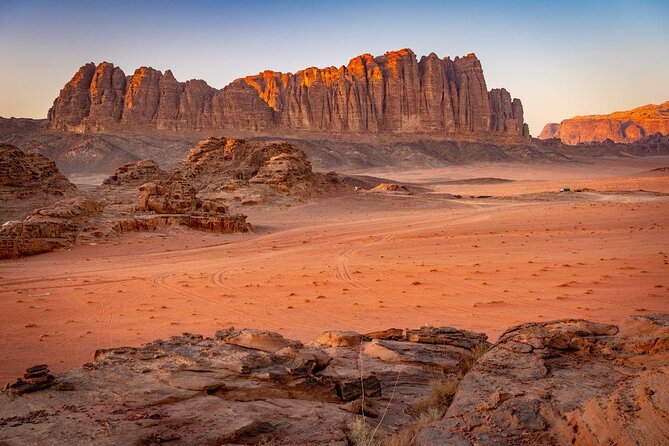
- Wadi Rum includes a 4WD jeep ride: Four hours are set aside for desert scenery, rock formations, valleys, and Bedouin culture.
- The King Hussein Bridge can take time: The crossing is scheduled for about one hour going into Jordan and two hours on the return, with extra fees payable separately.
- The route includes Mount Nebo, Madaba, and Shobak Castle: These stops add religious, artistic, and Crusader-era context before Petra.
- The tour suits active people: Expect long drives, uneven ground, heat, and roughly five hours of walking inside Petra.
Why this three-day route works
This is a useful choice if you are staying in Tel Aviv and want to see Jordan without building the whole trip yourself. The operator supplies an air-conditioned vehicle, a guide, entrance fees, meals, accommodation, and the Wadi Rum jeep excursion. That matters here because the border crossing, Jordanian transport, and timing between far-flung sites can be awkward to arrange alone.
The itinerary is broad rather than relaxed. In three days, you move from the Jordan Valley to Mount Nebo, Madaba, Shobak, Petra, and Wadi Rum, then return to Israel. You get a strong first look at Jordan, but you do not get much spare time for wandering, sleeping late, or changing plans.
The average booking lead time is 16 days, which is a useful hint: reserve ahead during busy periods, but also check your passport rules early. Some nationalities receive a visa at the border, while others must apply before departure. Israeli passport holders cannot join this tour, even if they also hold another passport.
More Petra and Wadi Rum crossings:
- 2 Day Tour to Petra and Wadi Rum from Tel Aviv
★ 4.0 · 154 reviews - Day Tour to Petra by Bus from Tel Aviv
★ 3.5 · 149 reviews - 2-Day Petra Tour from Tel Aviv
★ 4.5 · 49 reviews
Leaving Tel Aviv before sunrise
The meeting point is Abraham Tel Aviv at HaRakevet Street 8, with a 6:30 a.m. start. That early departure is not decorative. It gives the group a better chance of getting through the border and reaching several Jordanian sights in one day.
The vehicle is air-conditioned, a welcome feature for the long road sections. The maximum group size is 47 people, so this is not a small private outing. A larger group can make border movements and head counts slower, but a strong guide can keep the day on track. Ali is specifically praised for clear explanations and good organization, which is valuable when the schedule has little room for delays.
Bring your original passport, not a copy. You also need comfortable shoes, a hat, sunscreen, water, and warm clothing for the night. A scarf or shawl is useful for sun and dust. Certain religious clothing and objects may cause problems at the border, so ask the operator before packing them.
King Hussein Bridge and the first Jordanian views
The King Hussein Bridge crossing is part of the experience, but it is also the least predictable section. The scheduled stop is about one hour on the way into Jordan and about two hours on the return. Those figures do not guarantee a quick passage, so avoid planning a tight evening commitment back in Tel Aviv.
The Israeli border tax is 196 ILS, payable in Israeli shekels, euros, or US dollars by cash or card. The Jordanian border tax is 10 JOD and must be paid in cash. Currency exchange is available on the Israeli side, so do not assume you can handle every payment after crossing.
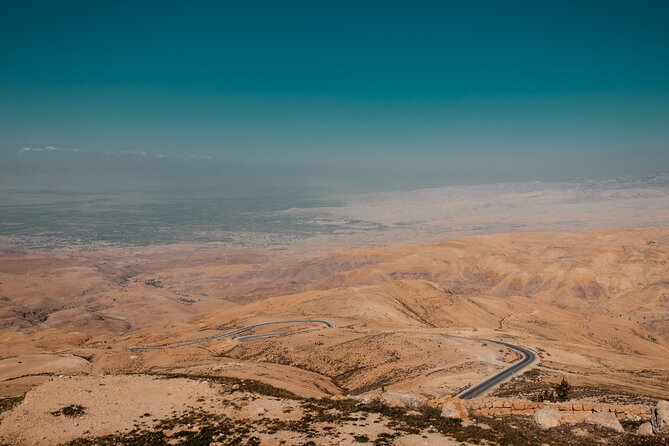
The road into Jordan gives you views across the Jordan Valley, with hills, villages, and open country along the way. The crossing also makes the political geography of the region visible in a practical, sometimes tiring way. Patience helps. This is a guided border transfer, not a quick hop between two neighboring towns.
Mount Nebo and Madaba add meaning to the route
Mount Nebo is a short but worthwhile stop. From the hill, you can look across the Jordan Valley, toward the Dead Sea, and toward distant hills associated with Jerusalem. The site is linked to Moses, who is said to have viewed the Promised Land from here before his death.
You get about an hour at Mount Nebo, enough for the main view and a quiet moment of reflection. The stop works well early in the trip because it gives you a religious and geographic frame for the country before the ancient ruins and desert take over.
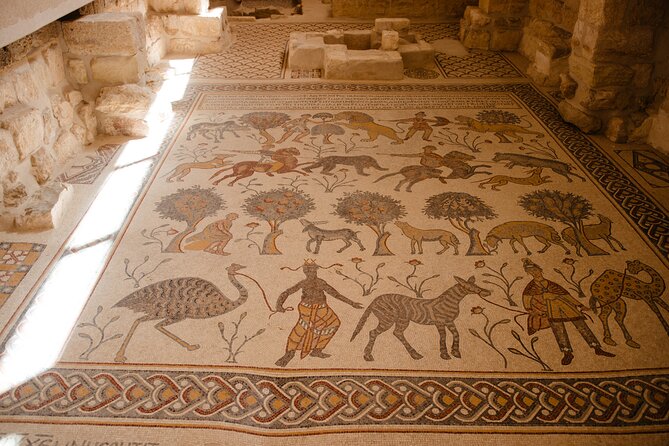
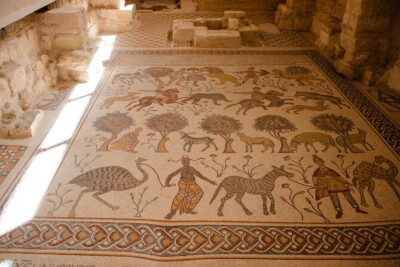
Madaba shifts the focus from wide views to fine detail. The town is known for old mosaic work, especially the sixth-century Madaba Map, a floor mosaic depicting the Holy Land. You have another hour here. It is a compact cultural stop, and it gives you something different from the large monuments later in the journey.
Neither Mount Nebo nor Madaba is likely to satisfy someone who wants hours at one site. Their value comes from variety. You see a sacred viewpoint, then a major piece of early Christian art, without having to organize separate transport.
A few more Tel Aviv trips worth weighing up
- 3-Day Petra and Wadi Rum Tour from Jerusalem
★ 4.5 · 143 reviews - Petra & Wadi Rum 3 Days 2 Tour Nights from Eilat border
★ 5.0 · 3 reviews - 3 Days Petra and Wadi Rum Private Guided Tour
★ 5.0 · 3 reviews
Shobak Castle on its lonely hill
Shobak Castle, also known as Montreal, is the most unexpected stop on the first day. The Crusader fortress sits on a rugged hill, with walls, towers, corridors, and broad views over the surrounding valleys. The setting is part of its appeal: it feels remote and exposed compared with Petra’s better-known monuments.
The visit lasts about an hour and includes admission. You can explore the old defensive structure and imagine the strategic importance of its position, but the short time means you will need to keep moving. If you enjoy ruins more than polished museums, this stop may be one of the day’s pleasures.
The first day then continues toward Wadi Musa, the town beside Petra. Four hours are allotted to this section, which tells you how much road time is built into the schedule. Expect rugged hills, rock formations, small communities, and glimpses of Bedouin camps as Petra approaches.
Petra deserves your best shoes and full attention
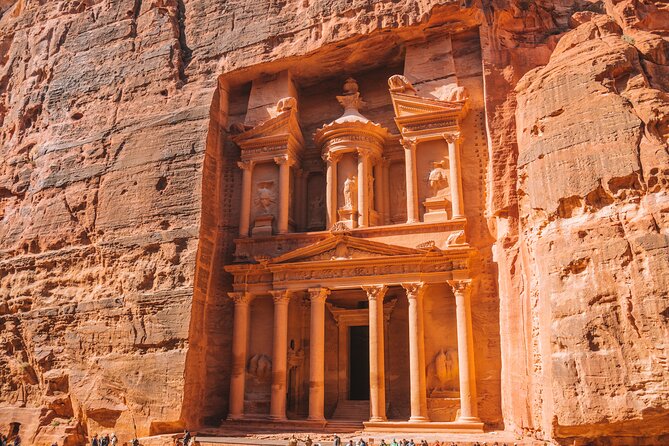
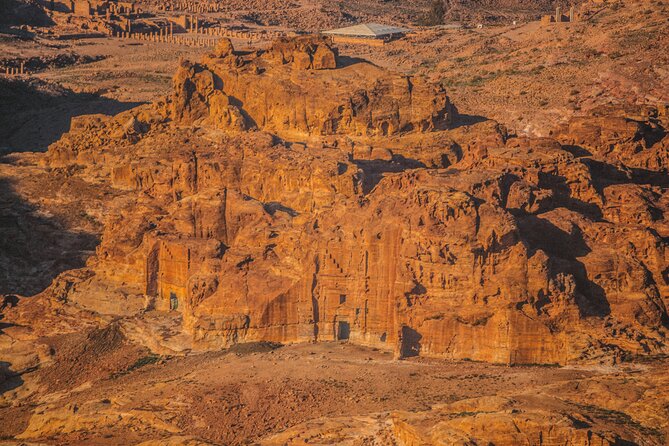
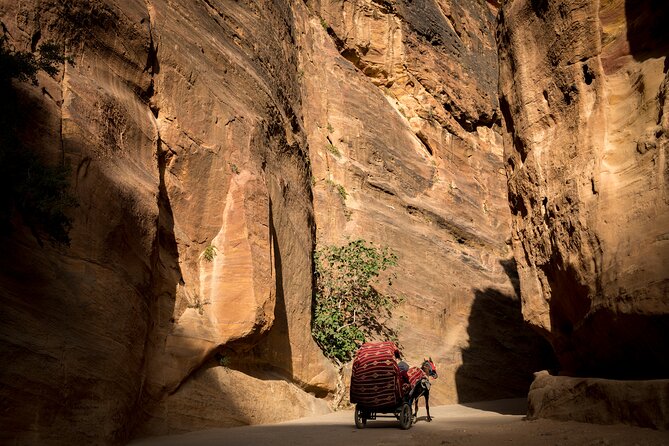
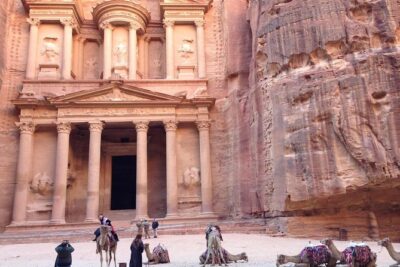
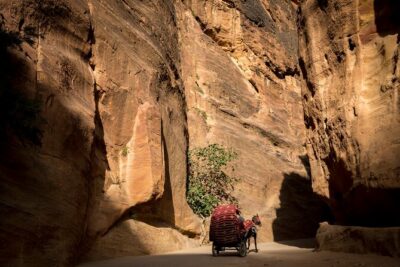
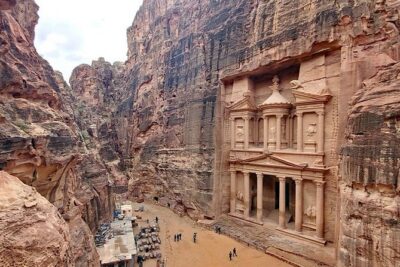
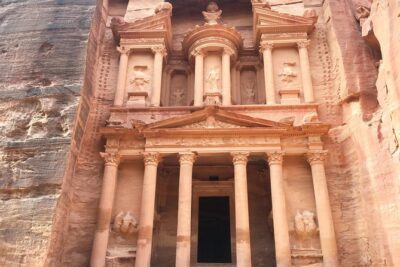
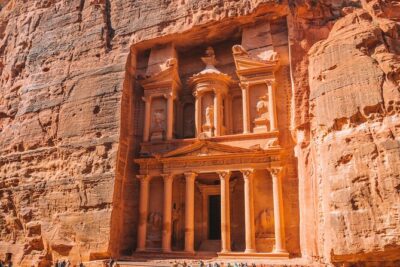
Day two gives Petra about eight hours, the clear centerpiece of the tour. You enter through the Siq, a narrow passage between sandstone walls, with the Treasury appearing ahead as the passage opens. That first view is memorable because the monument arrives gradually, not all at once.
The ancient Nabatean city is much larger than the Treasury. Your time can include the Royal Tombs, Great Temple, and the High Place of Sacrifice, with the Monastery also possible depending on the group’s pace and the guide’s plan. The site is spread across rough ground, steps, slopes, and exposed paths.
One direct tip is worth taking seriously: bring excellent walking shoes. A French-speaking participant described around five hours of walking inside Petra, and that is a sensible expectation even though the official stop lasts eight hours. A prosthesis, joint problem, or low fitness level could make the day uncomfortable. The tour requires moderate physical fitness.
The long visit is a major advantage over short Petra excursions. You have a chance to look beyond the Treasury, where many quick visits end. You can study the tomb facades, see the scale of the city, and take in the rock colors as the sun shifts.
The tradeoff is that Petra can become tiring before the day is done. Carry water, protect yourself from the sun, and pace yourself rather than treating every path as a race. Your guide’s explanations are especially useful here, since the site can otherwise feel like a series of impressive carvings without a clear story.
Bedouin camp nights bring the human touch
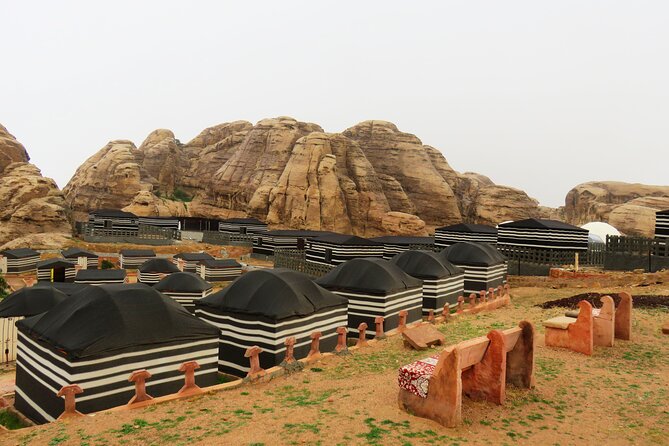
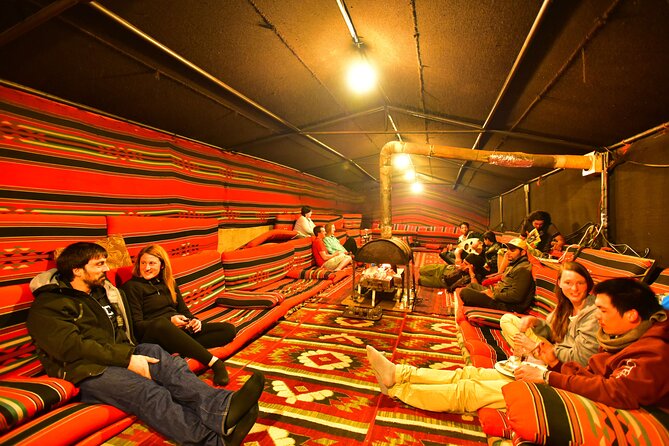
The tour includes two nights in a Bedouin-style campsite, along with two breakfasts and two dinners. The camp is described as clean, cozy, and cute even in the basic tents, which is good news if you want atmosphere without giving up basic comfort.
Evenings may include stargazing, traditional music, Bedouin food, and time around a campfire. These details matter because the desert is not only a place to photograph during daylight. Night changes the mood completely, and the camp gives you a chance to slow down after long hours on the road.
Solo visitors should note that room sharing may be required, usually with someone of the same gender, depending on group size. If that arrangement matters to you, ask for the current setup before departure. The accommodation is part of the tour’s appeal, but it is still campsite lodging rather than a conventional hotel.
Warm clothing is important. Desert nights can feel cold even after a hot day, and the supplied packing advice specifically calls for warm layers. Do not rely on summer clothes simply because Jordan is warm during the day.
Four hours across Wadi Rum
Wadi Rum Protected Area gives the final Jordanian day a different look. Petra is about carved stone and human construction. Wadi Rum is about huge sandstone cliffs, dunes, valleys, canyons, and silence.
The included 4WD jeep trip lasts about four hours. You bounce across rough ground and stop to see natural formations shaped by wind and time. Local Bedouin guides share information about the area and its culture, giving the outing more substance than a fast drive through the sand.
Wadi Rum is also one of the tour’s three UNESCO-related highlights as described in the package, alongside major historic and natural sites on the wider route. The detailed schedule does not clearly identify all three UNESCO sites, so confirm exactly which locations are included if that label is important to you.
The desert portion is active but not described as a technical adventure. You should still expect sun, dust, jolts, and open exposure. A scarf, water, sunscreen, and closed, comfortable shoes are sensible choices. Drones are forbidden in Jordan, as are telescopes and telephoto cameras with zoom lenses higher than 1000mm.
How much value do you get for $670?
At $670 per person, this is not a bargain in the narrow sense. It becomes more reasonable when you count the air-conditioned transport, guide, entry fees, three lunches, two breakfasts, two dinners, two nights of camp accommodation, and the Wadi Rum jeep ride.
You are also paying for coordination. The tour connects two countries, handles a difficult border crossing, and links places that are widely separated. If you value convenience and have only three days, that can justify the price.
The extra charges change the final total. Add 196 ILS for the Israeli border tax and 10 JOD for the Jordanian charge, plus drinks, other food, travel insurance, and gratuities. The Jordanian fee is cash only, so prepare it before reaching that side of the crossing.
I would compare the total cost against the price of arranging transport, hotels, guides, site admissions, and a Wadi Rum excursion independently. For a solo visitor, the package may be especially practical because private transport and single-room arrangements can cost more. For two or more people who are comfortable planning, an independent trip could offer more flexibility.
Important schedule questions before you book
There is one detail I would clarify in writing: Jerash is named as a headline destination, but the detailed schedule lists Mount Nebo, Madaba, Shobak Castle, Petra, and Wadi Rum without giving Jerash its own stop. Ask the operator if Jerash is included on your departure date, or if the general description covers a different routing.
You should also confirm the exact sleeping arrangement for both nights. The supplied details promise two nights in a Bedouin-style camp, while the day plan places much of the second day around Petra and Wadi Musa. That may be perfectly workable, but precise camp locations and room types affect the comfort and driving time.
Muslim holidays, especially Ramadan, can shorten visiting hours or close some sites. The operator also notes that poor weather or failure to reach the minimum group size can lead to a new date, another experience, or a full refund.
Cancellation is flexible up to three full days before the local start time. After that point, the amount paid is not refunded, and late changes are not accepted.
Who will enjoy this tour most?
I would choose this trip if you want Jordan’s major sights in a compact package and do not want to solve the border, transport, and admissions yourself. It suits people who enjoy full days, guided explanations, basic camp accommodation, and a clear route.
It is less suitable if you want quiet mornings, private rooms, a small group, or long independent visits at each place. It is also a poor match for anyone who struggles with extended walking, uneven surfaces, desert heat, or long vehicle journeys.
The strongest parts are the full Petra day, the Wadi Rum jeep ride, the camp evenings, and the organized handling of a complicated route. Ali’s guiding and the clean campsite add confidence. The biggest weaknesses are the border delays, extra fees, group size of up to 47, and the need to clarify Jerash before booking.
Should you book it?
Book this tour if your priority is seeing a lot of Jordan in three days with meals, transport, admissions, and desert accommodation already arranged. The combination of Petra and Wadi Rum is excellent, and Mount Nebo, Madaba, and Shobak keep the route from becoming a two-sight checklist.
Skip it if you need a relaxed pace or want to design every day yourself. Before committing, confirm Jerash, camp locations, room sharing, passport eligibility, visa rules, and the full border cost. With those points settled, the tour offers a practical and memorable first taste of Jordan from Tel Aviv.
FAQ
Where does the tour start?
The tour starts at Abraham Tel Aviv, HaRakevet Street 8, Tel Aviv-Yafo, Israel, at 6:30 a.m.
Does the tour return to Tel Aviv?
Yes. The activity ends back at the meeting point in Tel Aviv after the return through the King Hussein Bridge.
Are border fees included?
No. The Israeli border tax is 196 ILS, and the Jordanian border tax is 10 JOD. The Jordanian charge must be paid in cash.
Do I need a visa in advance?
Some nationalities receive a visa at the border, but others must apply in advance. You need to check your own country’s visa rules and confirm that you can re-enter Israel.
Is the tour available to Israeli passport holders?
No. Israeli citizens cannot take this tour, even if they hold an additional passport.
What meals and accommodation are included?
The package includes two breakfasts, two dinners, three lunches, and accommodation in a Bedouin-style campsite for two nights.
How physically demanding is the tour?
You should have moderate physical fitness. Petra involves several hours of walking on uneven ground, and the itinerary also includes long drives, desert activity, and border procedures.
Just added around Tel Aviv
- 4-Day Christian Israel Tour from Tel Aviv★ 5.0 · 3 reviews
- Palm Sunday in Jerusalem: Mass at Bethpage and Via Dolorosa Procession with Transport from Tel Aviv★ 5.0 · 3 reviews
- Tel Aviv to Tel Aviv Airport (TLV) – Departure Private Transfer★ 5.0 · 3 reviews
- Masada and Dead Sea from Tel Aviv★ 4.5 · 3 reviews
- Jerusalem and Dead Sea Tour from Tel Aviv★ 4.5 · 3 reviews
- Private Transportation From / To Ben Gurion Airport to Tel Aviv Hotels★ 5.0 · 3 reviews
- Tel Aviv: Carmel Market & Neighborhood Guided Walking Tour★ 4.7 · 3 reviews
- Holyland Tour :Jerusalem & Bethlehem from Jerusalem or Tel Aviv★ 5.0 · 3 reviews
Petra & Wadi Rum Day Trips, compared.
2 Day Tour to Petra and Wadi Rum from Tel Aviv
Read our review →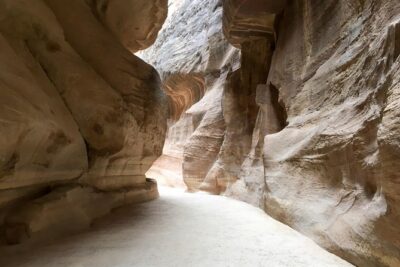
Browse the lists this tour appears in