
Review · EVENING EXPERIENCES
7-Night Israel Highlights and Bibleland Tour
Ancient stones tell the story here. This 8-day Israel tour links Jerusalem, Bethlehem, Galilee, Nazareth, Acre, Haifa, Caesarea, and Tel Aviv in one well-packed route. I especially like the mix of biblical sites and Roman ruins, plus the chance to see modern Israeli life at Mahane Yehuda Market and Tel Aviv’s Jaffa port. The main drawback is the pace: early starts, long days, and limited time at some churches.
The tour also earns praise for guides such as Leah, Boaz, Omer, Suky, Patrick, and Mark, though your guide may differ. Choose your hotel level with care, and budget separately for the optional Dead Sea outing. Four-star hotels appear to be the safer comfort choice, while people focused on prayer or long visits inside religious sites may find the schedule too brisk.
In This Review
- Key points to know before booking
- What the $1,712 price really buys
- Arrival in Tel Aviv, then straight to Jerusalem
- Day two: Dead Sea Scrolls, Yad Vashem, and Bethlehem
- Day three: Jerusalem’s essential holy places
- Day four: Beit She’an, the Golan Heights, and Tiberias
- Day five: Capernaum, the Sermon on the Mount, and Nazareth
- Day six: Crusaders, Haifa, and Herod’s Caesarea
- Day seven: A useful free day in Tel Aviv
- Guides, group size, and the daily rhythm
- Who should book this Israel tour?
- FAQ
- How long is the Israel Highlights and Bibleland tour?
- Where does the tour begin?
- Where does the tour end?
- How many nights are spent in Jerusalem?
- Where are the other hotel nights?
- Is the Dead Sea included?
- Are meals included?
- How large can the group be?
- When can I cancel for a full refund?
Key points to know before booking
- Jerusalem gets three nights and two full touring days, with the Western Wall, Via Dolorosa, Holy Sepulchre, Mount of Olives, Yad Vashem, Bethlehem, and the Israel Museum.
- The route covers much more than Bible sites, including Beit She’an, Acre, Caesarea, Haifa, a Golan Heights winery, and the Roman theater at Caesarea.
- Two nights at a Galilee kibbutz hotel place you near Capernaum, Tabgha, the Mount of Beatitudes, and the Sea of Galilee.
- Day seven is free in Tel Aviv, giving you a needed pause after six active touring days.
- The optional Dead Sea day costs extra, so read the booking details closely before you assume it is included.
- A group of up to 40 people means an affordable shared tour, but also more waiting when someone is late.
What the $1,712 price really buys
At $1,712 per person, the tour offers a practical way to see a large portion of Israel without arranging hotels, transfers, and long-distance transport yourself. The price includes seven nights of accommodation, six breakfasts, six dinners, an air-conditioned vehicle, a professional guide, and airport transfers on the official arrival and departure dates.
That package has real value. Israel is not a place where the major sights sit neatly beside one another. Jerusalem, Galilee, the Golan Heights, the Mediterranean coast, and Tel Aviv require considerable driving. Having one route, one guide, and prearranged hotels removes much of the work.
Still, this is not an all-inclusive holiday. Lunches, drinks, and other food are not included unless specified. The Dead Sea day is optional and costs extra. One person was surprised by an additional charge of about $110 connected with a Dead Sea and Masada outing, so I would confirm exactly what optional day trip is offered and what it costs before departure.
The hotel category matters. The tour lets you choose among several standards. One person who selected four-star hotels was pleased, while people in three-star properties were reportedly less happy. That does not guarantee a particular hotel experience, but it is a useful clue: after full days on the road and on foot, a better room can be money well spent.
A few more Tel Aviv trips worth weighing up
- Guided Pub Crawl Night Tour at Tel Aviv
★ 5.0 · 85 reviews - Explore Old Jaffa by night – Private Tour
★ 5.0 · 13 reviews - 16-Night Israel Jordan and Egypt Tour
★ 4.0 · 6 reviews
Arrival in Tel Aviv, then straight to Jerusalem
Your tour begins with arrival at Ben Gurion Airport. A representative is scheduled to meet you after security with a sign bearing your name, then take you to the Jerusalem hotel. The transfer is included only when you arrive on the designated tour arrival day, so anyone arriving early or staying late must arrange a separate transfer.
Touring begins the following morning, giving you a simple first day. The official duration is about eight days, with seven nights in hotels. The first night is in Jerusalem, followed by three Jerusalem nights overall, two nights in the Galilee area, and two nights in Tel Aviv.
The group can reach 40 people. That size keeps the price reasonable, but it affects timing. One person praised the route but disliked repeated waits for late arrivals. On a tightly scheduled trip, a few delayed departures can reduce your time at important sites, so punctuality matters.
Day two: Dead Sea Scrolls, Yad Vashem, and Bethlehem
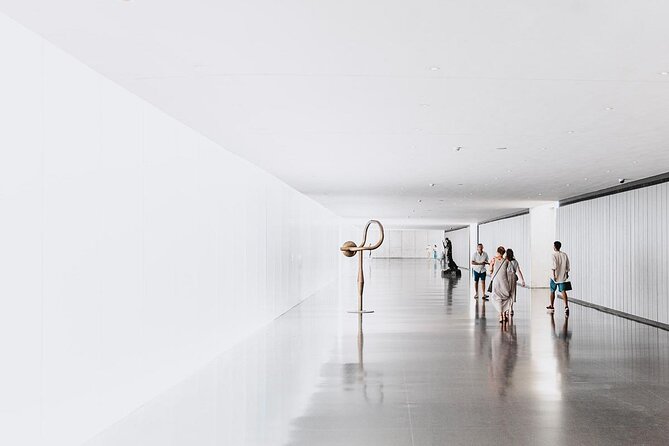
The first touring day begins at the Israel Museum. The Shrine of the Book houses the famous Dead Sea Scrolls, while the nearby model of Herodian Jerusalem shows how the city looked during the Second Temple period. This is a smart opening because it gives you historical context before you walk through the actual Old City.
You have about an hour at the museum. That is enough for the headline exhibits, but not for every gallery. If ancient archaeology is your main interest, you may wish the visit were longer.
Ein Karem follows, a small village on Jerusalem’s southwestern edge associated in Christian tradition with the birth of John the Baptist. The stop lasts about 50 minutes. Its appeal is its quieter village character, a change from Jerusalem’s crowded religious core.
Yad Vashem, Israel’s official Holocaust memorial, brings a very different tone. The visit is listed at about an hour. That is a meaningful introduction, but the subject is vast and emotionally demanding. You may want more time than the schedule allows, especially if you have never visited a Holocaust memorial before.
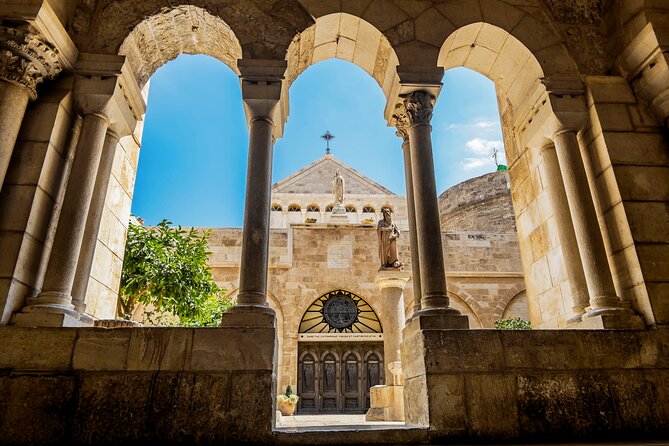
The day ends in Bethlehem, at the Church of the Nativity and Manger Square. About two hours are allotted here. Bethlehem is a major reason many people book this tour, and the visit connects the biblical story to a living Palestinian city rather than treating the site as a museum display.
Keep your expectations clear. The schedule gives you a guided visit to the church and square, not a long personal pilgrimage. If you need extended time for prayer, quiet reflection, or detailed church visits, this pace may feel rushed.
Day three: Jerusalem’s essential holy places
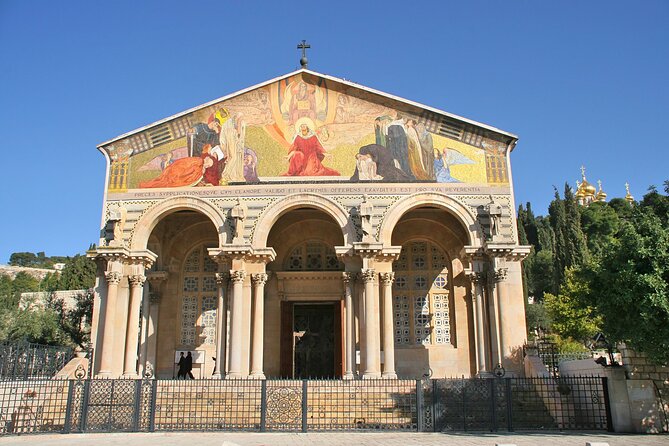
Day three is the spiritual center of the trip. In the Old City, you see the Western Wall and the Temple Mount, traditionally associated with the site of the Second Temple. The schedule then takes you along the Via Dolorosa toward Calvary and the Church of the Holy Sepulchre.
The Church of the Holy Sepulchre contains the traditional sites of the Crucifixion and the Tomb of the Resurrection. This is one of those places where the setting can be crowded, the route can feel confusing, and your time can pass quickly. A guide is particularly useful here, since the meaning of each stop is layered with centuries of Christian tradition.
Mount Zion adds the traditional tomb of King David and the Room of the Last Supper. The visit lasts about an hour and gives you another look at Jerusalem’s many overlapping traditions.
At the Garden of Gethsemane, you spend roughly 50 minutes at the place associated with Judas’s betrayal of Jesus. Then you climb or drive to the Mount of Olives for a wide view over Jerusalem. The panorama is one of the tour’s best visual moments, especially because it helps you understand how the Old City relates to the surrounding hills and valleys.
The final stop is Mahane Yehuda Market. This is where the itinerary becomes less formal and more local. You can see food stalls, hear traders working the crowds, and take in the colors and smells of a major Jerusalem market. It is a good counterweight to churches, walls, and memorials.
The day is full. You walk on uneven streets and move between several sites, so comfortable shoes are essential. People who want substantial time inside every church may be disappointed, but people who want a broad introduction to Jerusalem will cover a great deal.
A completely different sort of day out of Tel Aviv:
- From Tel Aviv: Masada & Dead Sea Full Day Tour with Pick Up
★ 4.5 · 1,496 reviews - From Tel Aviv: Jerusalem and Bethlehem Guided Day Trip
★ 4.3 · 1,316 reviews - Masada and the Dead Sea Day Trip from Tel Aviv
★ 4.5 · 1,014 reviews - Tel Aviv: Jerusalem, Bethlehem & Dead Sea
★ 4.0 · 881 reviews
Day four: Beit She’an, the Golan Heights, and Tiberias
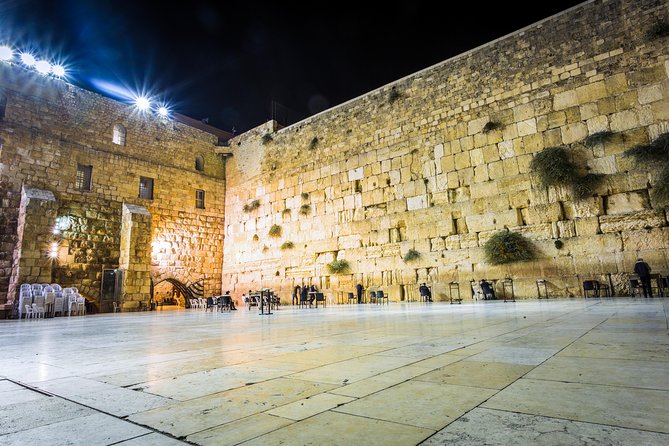
The route leaves Jerusalem and heads north through the Jordan Valley, passing near Jericho before reaching Beit She’an National Park. The Roman ruins here are unusually well preserved, with enough surviving structure to make the ancient city easy to picture.
The visit lasts about an hour. That gives you the main archaeological view, though not an unhurried study of every ruin. For many people, Beit She’an is a welcome surprise because it brings Roman urban life into a tour otherwise centered on biblical places.
The group then climbs to the Golan Heights. The day includes a winery visit, wine tasting, and an explanation of how the wine is produced. You also pass Druze villages and former Syrian fortifications, with views toward Mount Hermon and Syria.
This part of the route adds present-day geography and politics to the biblical story. It also breaks up the church-to-church pattern with food, agriculture, and open views. Wine tasting may not suit everyone, but the stop gives you a different way to understand the northern region.
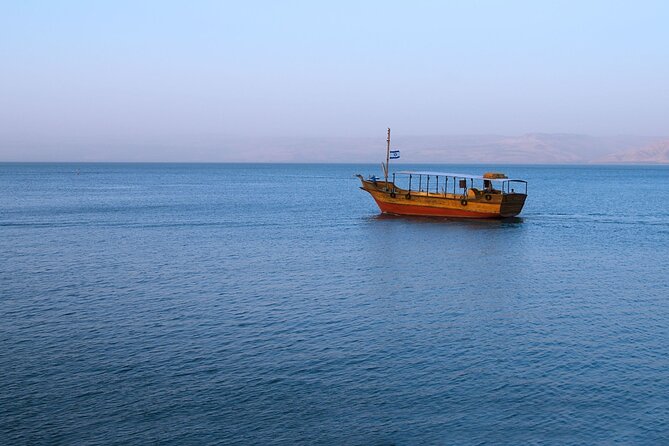
The day ends around Tiberias, on the Sea of Galilee. Tiberias is one of Judaism’s four holy cities and is linked with the compilation of the Talmud. Two nights in the Galilee area, including a kibbutz hotel, make this section less rushed than a simple day trip from Jerusalem.
Day five: Capernaum, the Sermon on the Mount, and Nazareth
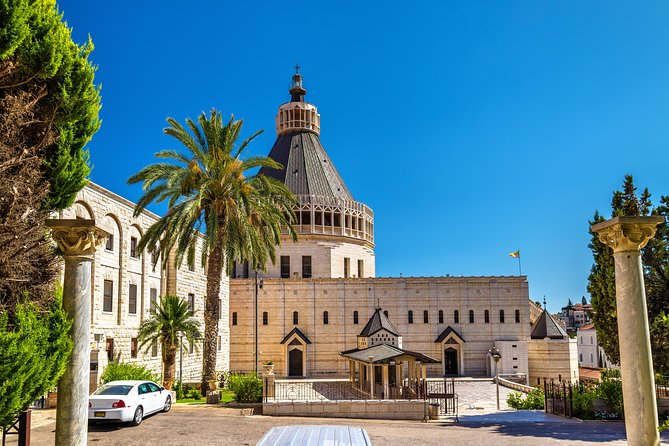
The next morning focuses on the Sea of Galilee’s Christian sites. At Capernaum, or Kfar Nahum National Park, you visit the ruins of an ancient synagogue associated with the period when Jesus may have taught there. The stop lasts about 50 minutes.
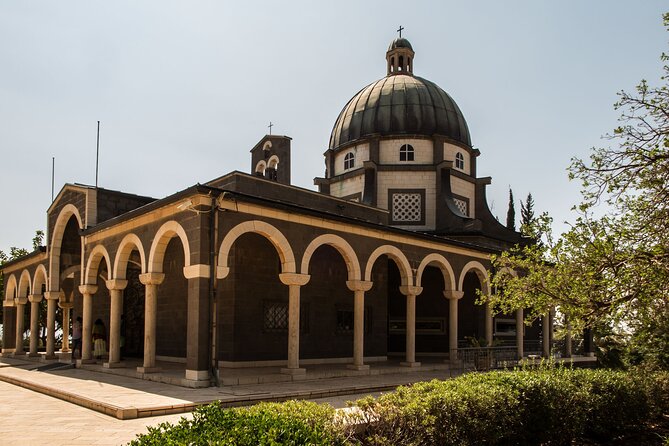
The Mount of Beatitudes follows, the traditional site of the Sermon on the Mount. Tabgha comes next, linked by tradition with the miracle of the loaves and fish. Each stop takes about 50 minutes, so you get a clear introduction, a look around, and some time to absorb the setting, but not a leisurely retreat.
These locations are close enough in theme that the sequence works well. You can connect the Gospel accounts with the geography of the lakeshore, while the guide explains which traditions are certain, which are longstanding, and which remain traditional rather than proven.
Nazareth receives about two hours. The Church of the Annunciation and other Christian holy places are the main focus. Nazareth is also important as the town associated with Jesus’s childhood, so this stop completes the arc from Bethlehem to the Galilee years.
The religious focus is strong, but the time is limited. If your main goal is private worship, tell yourself in advance that this is an overview tour, not a retreat. You will see the major places, but the group schedule controls the length of each visit.
Day six: Crusaders, Haifa, and Herod’s Caesarea
The final touring day moves west through Galilee to Acre, also called Akko. The old city contains a famous Crusader stronghold and medieval fortifications. About an hour is allotted, enough to see the main historic area and hear how this port shaped the region.
Haifa follows, with a climb up Mount Carmel for views over the city, the Baha’i Shrine, the Persian Garden, and Haifa Bay. The stop lasts about an hour. It is mainly a viewpoint visit, so do not expect a long exploration of the shrine and gardens.
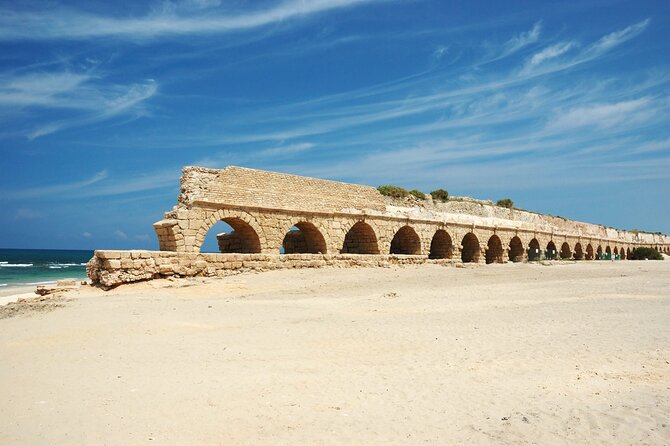
Caesarea National Park is the day’s major archaeological stop. Herod the Great developed the port, and the remains include a Roman theater and a Crusader fortress. The contrast between Roman engineering, later medieval construction, and the Mediterranean setting makes this one of the strongest history stops on the route.
The day finishes with a short tour of Tel Aviv and ancient Jaffa. Jaffa’s old port gives you a final taste of the country’s long connection to the sea, while Tel Aviv shifts the mood toward modern city life.
This is another long day with several stops. You see a lot, but each place receives a limited window. I would treat the itinerary as a carefully chosen introduction, not as a series of sites you can study in detail.
Day seven: A useful free day in Tel Aviv
After six active touring days, a free day in Tel Aviv is welcome. The schedule leaves about ten hours at leisure, with no included sightseeing listed.
You can use this day to rest, revisit Jaffa, explore more of Tel Aviv, or simply catch your breath. That flexibility matters because the guided portion is demanding. Several people praised how much the tour covers, while also warning that you will get up early and walk much of the day.
The two Tel Aviv nights also make departure easier. On day eight, a transfer takes you from the hotel to Ben Gurion Airport, provided you depart on the designated tour departure day.
Guides, group size, and the daily rhythm
The strongest praise goes to the guides. Leah is singled out for her historical knowledge, approachable manner, and ability to explain both ancient sites and current culture. Boaz is praised for making the trip informative and enjoyable, while Omer, Suky, Patrick, and Mark also receive positive comments.
Your guide may be someone else, and guide quality can shape the trip. A good guide helps you understand the difference between a confirmed archaeological site and a place held by tradition. A less organized guide can make the group wait or leave you unclear about the next stop.
The tour uses an air-conditioned vehicle, a major comfort on long transfers. The group maximum is 40, so this is not a private or small-group experience. In return, you get a broad route at a lower price than arranging individual guides, drivers, and hotels.
Most people can participate, and the tour is near public transportation. Passport name, number, expiry date, country, and flight details are required when booking. The cancellation policy allows a full refund if you cancel at least six full days before the start, with smaller refunds possible closer to departure.
Who should book this Israel tour?
I would choose this tour if you want the main biblical and historical sights in one organized trip, prefer having transport and hotels handled, and appreciate a guide who can connect archaeology, religion, and modern Israel.
It suits first-time visitors, people who want a broad route, and anyone who values seeing both Jerusalem and the north. The included dinners and breakfasts also simplify the day, though you still need to budget for lunches, drinks, and optional activities.
I would look elsewhere if you want slow church visits, private touring, or much more free time at every site. The schedule is demanding, the group may be large, and the optional Dead Sea excursion is not included in the base price.
For most people, the decision comes down to pace. If you can accept early mornings and short visits in exchange for seeing a remarkable range of places, this is a strong-value introduction to Israel. Choose the better hotel category, read the optional excursion costs carefully, and arrive ready to keep up.
FAQ
How long is the Israel Highlights and Bibleland tour?
The experience lasts about eight days and includes seven nights of accommodation.
Where does the tour begin?
It begins at Ben Gurion Airport in Israel, where a representative is scheduled to meet you for transfer to the hotel.
Where does the tour end?
The activity ends back at the meeting point after a transfer from the hotel to Ben Gurion Airport on the departure day.
How many nights are spent in Jerusalem?
The tour includes three nights in Jerusalem.
Where are the other hotel nights?
You spend two nights in the Galilee area at a kibbutz hotel and two nights in Tel Aviv.
Is the Dead Sea included?
No. The Dead Sea is an optional day trip available at an additional cost. Confirm the current price and inclusions before booking.
Are meals included?
Six breakfasts and six dinners are included. Food and drinks not specifically listed are not included.
How large can the group be?
The tour can have a maximum of 40 participants.
When can I cancel for a full refund?
You must cancel at least six full days before the experience start time for a full refund. The cut-off uses local time.
Just added around Tel Aviv
- 4-Day Christian Israel Tour from Tel Aviv★ 5.0 · 3 reviews
- Palm Sunday in Jerusalem: Mass at Bethpage and Via Dolorosa Procession with Transport from Tel Aviv★ 5.0 · 3 reviews
- Tel Aviv to Tel Aviv Airport (TLV) – Departure Private Transfer★ 5.0 · 3 reviews
- Masada and Dead Sea from Tel Aviv★ 4.5 · 3 reviews
- Private Transportation From / To Ben Gurion Airport to Tel Aviv Hotels★ 5.0 · 3 reviews
- Jerusalem and Dead Sea Tour from Tel Aviv★ 4.5 · 3 reviews
- Tel Aviv: Carmel Market & Neighborhood Guided Walking Tour★ 4.7 · 3 reviews
- Holyland Tour :Jerusalem & Bethlehem from Jerusalem or Tel Aviv★ 5.0 · 3 reviews
Evening Experiences, compared.
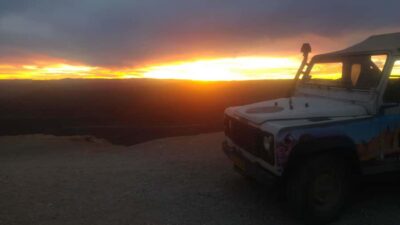
Eilat Mountains: Sunset Jeep Adventure to Mount Joash
Read our review →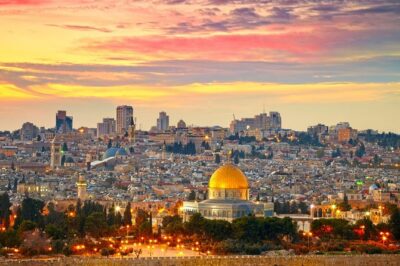
8-Night Israel Tour from Tel Aviv: Jerusalem, Dead Sea, Bethlehem, Nazareth, Northern Israel and Petra
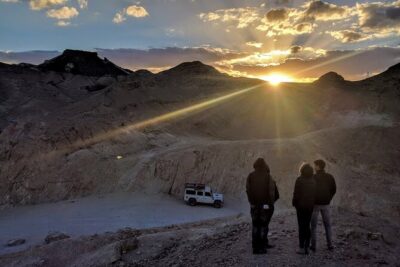
Read our review →Summer Night Guided Tour with Picnic in the Mountains
Read our review →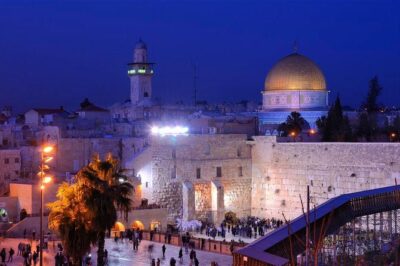
Browse the lists this tour appears in