
Review · CAESAREA, HAIFA & ACRE DAY TRIPS
Caesarea, Haifa & Akko Day Trip from Jerusalem
Ancient ports meet white coastal cliffs. This long northern Israel outing gives you a lot in one day: Roman ruins at Caesarea, Haifa’s Baha’i Gardens, the limestone grottoes of Rosh Hanikra, and the old port of Acre. I especially like the mix of archaeology and sea views, and I like that hotel pickup, a guide, and air-conditioned coach transport are included. The main drawback is the schedule: leaving Jerusalem at 5:50 in the morning and covering so much ground can make the day feel rushed.
The tour is a practical choice if you have limited time in Israel and want to see several major sites without arranging separate buses, trains, and admission tickets. Guides such as Dorit and Abraham have received strong praise for clear explanations and patient help, while one recent experience ran into delays keeping a large group together. That matters on a day when every lost minute can shorten your time at Acre or your meal break.
In This Review
- Key points at a glance
- What this full coastal day is really like
- Caesarea: Roman ruins beside the Mediterranean
- Haifa and the Baha’i Gardens view
- Rosh Hanikra: white cliffs at Israel’s northern edge
- Acre: Crusader remains, markets, and an old port
- The guide can make or break the schedule
- Price, inclusions, and the real value
- Who should book this day trip?
- FAQ
- Where does the tour depart from?
- How long does the tour last?
- What transportation is provided?
- Which places are visited?
- Are entrance fees included?
- Are food and drinks included?
- Which languages are available?
- Should you book it?
Key points at a glance
- Four major stops in one day: See Caesarea, Haifa, Rosh Hanikra, and Acre without changing hotels or planning several connections.
- A very early Jerusalem start: You leave at about 5:50 a.m. and transfer via Tel Aviv before joining the northern route.
- Roman Caesarea comes first: Walk among the ancient port ruins, aqueduct, and Roman theatre.
- Rosh Hanikra reaches Israel’s northern edge: Visit the sea caves and look toward the Lebanon border.
- Acre is the most layered stop: Explore Crusader remains, old walls, market streets, the port, and the Jezzar Pasha Mosque area.
- Budget for about $34 more: The tour price is $105 per person, but entrance fees are paid separately on site.
What this full coastal day is really like
This is not a slow, linger-over-lunch excursion. It is a big sightseeing circuit that uses Israel’s coastal highway to connect four very different places. You spend much of the day moving between sites, but the payoff is range: Roman engineering in the morning, Haifa’s hillside view around midday, sea caves near Lebanon, and a historic Arab port city before returning south.
The advertised duration is 10 to 12 hours. From Jerusalem, your day begins even earlier because the transfer to Tel Aviv leaves at about 5:50 a.m. You are picked up at your hotel, then travel by air-conditioned coach to meet the main tour. If your accommodation is an Airbnb or another place without standard hotel pickup, the local operator provides the nearest meeting point.
That early start is worth considering honestly. It lets you reach the northern coast and fit in all four stops, but it is not ideal if you want a relaxed morning. Wear comfortable shoes, bring a hat, and expect a full day outdoors with walking on archaeological ground, paved streets, and uneven surfaces.
More days up the coast to Caesarea and Acre:
- Caesarea, Acre & Rosh Hanikra Day Trip from Jerusalem
★ 4.0 · 78 reviews - From Jerusalem: Caesarea, Haifa, Acre & Rosh Hanikra Tour
★ 4.2 · 25 reviews - Caesarea, Haifa, Rosh Hanikra, and Acre Tour from Jerusalem
★ 4.0 · 16 reviews
Caesarea: Roman ruins beside the Mediterranean
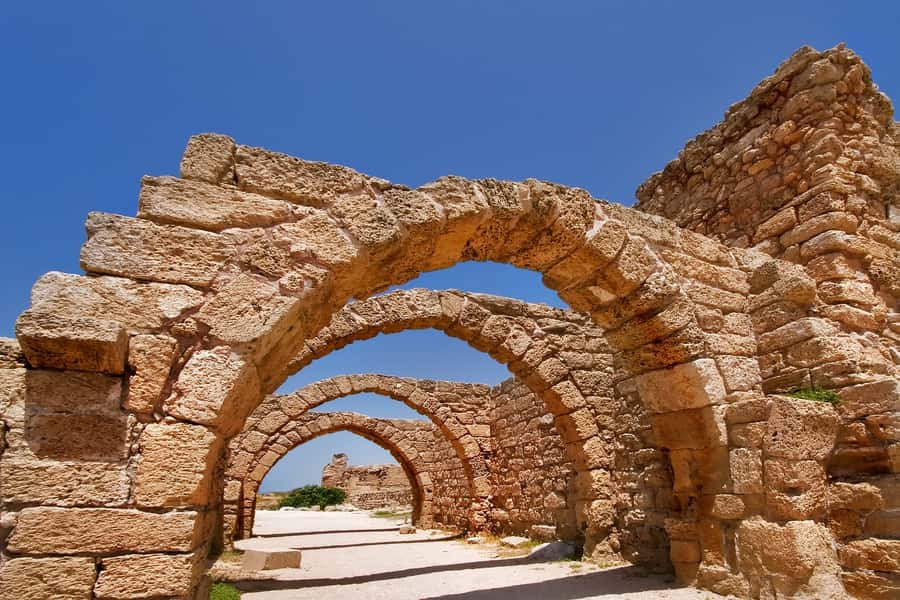
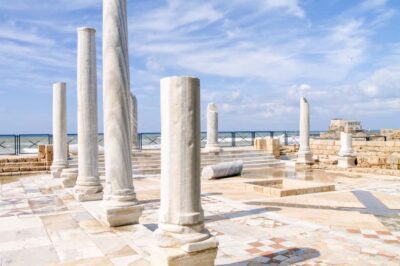
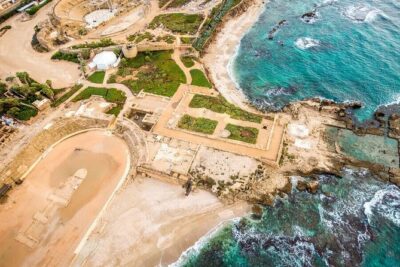
Caesarea is the first major stop, and it sets the tone well. King Herod developed an older Phoenician port into a major city, giving it a harbor and public buildings that helped make it one of the important urban centers of its time. The city later survived into the 13th century before being destroyed by Baybars of Egypt.
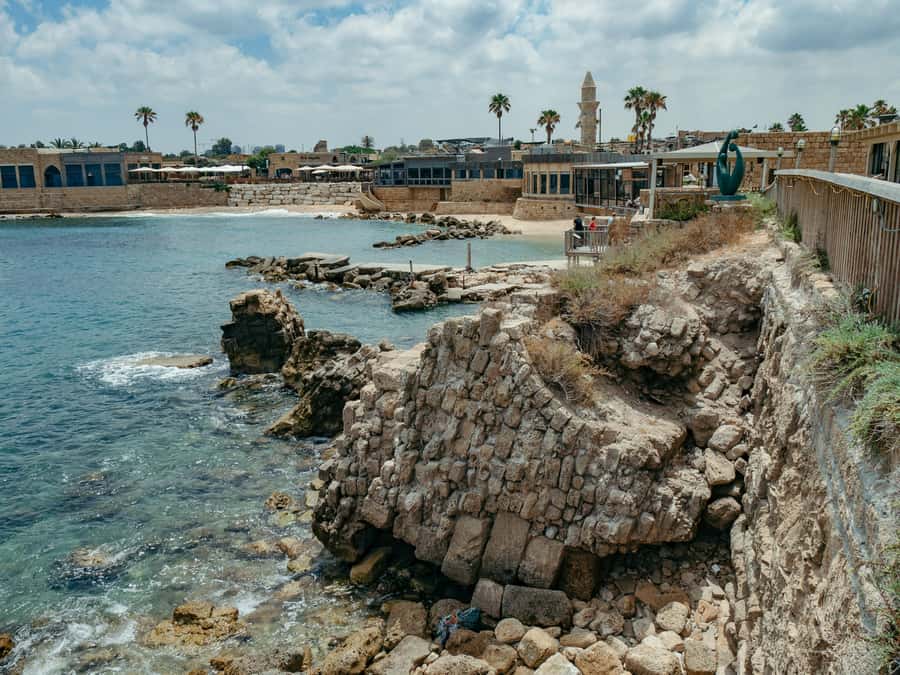
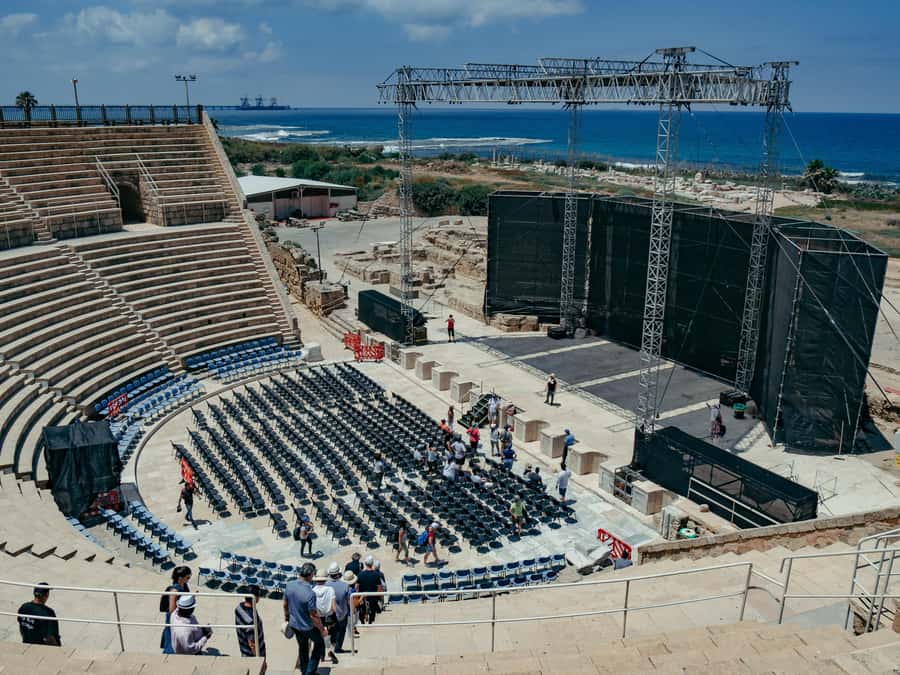
Your walk focuses on the archaeological excavations. The Roman theatre is one of the clearest highlights, giving you a sense of the scale and public life of the ancient city. The aqueduct is another memorable feature. Its long stone structure shows how much planning was needed to supply a coastal city with water.
I like Caesarea because it is easy to read on foot. You are not simply looking at scattered stones. The theatre, harbor area, and aqueduct help you picture a functioning Roman port, even though the stop is relatively brief. The sea nearby also keeps the setting open and bright, rather than making the ruins feel enclosed.
The limitation is time. A guided visit gives you a useful introduction, but it is not a full archaeological study. If Caesarea is your main interest, you may wish you had longer to examine the site. On this tour, it works best as a strong opening chapter rather than the entire story.
Admission is not included in the $105 tour price. The additional entrance cost is approximately $34 per person for the included paid sites, and it is paid directly on site. Keep that extra amount in your budget.
Haifa and the Baha’i Gardens view

From Caesarea, the coach continues north to Haifa, Israel’s third city. The stop centers on the Baha’i World Center and its famous gardens, a UNESCO World Heritage Site. The tour provides a photo opportunity and time to take in the view over Haifa and the Mediterranean.
This is primarily a viewpoint stop, not a long garden visit. You should expect to see the gardens from the designated area and enjoy the carefully ordered terraces running down the slope. From Mount Carmel, the city and Haifa Bay spread out below you.
I find this stop valuable because it breaks up the archaeology with a broad coastal view. After walking around Caesarea, you get a chance to look outward and understand Haifa’s position between the mountain and the sea. The view also gives the day a sense of place that a bus-only itinerary would miss.
The practical point is to keep your expectations clear. The schedule does not describe an extended exploration of every garden terrace or a detailed visit inside the Baha’i World Center. This is a scenic stop with an important cultural setting, and the time is geared toward seeing the view rather than wandering at leisure.
Rosh Hanikra: white cliffs at Israel’s northern edge
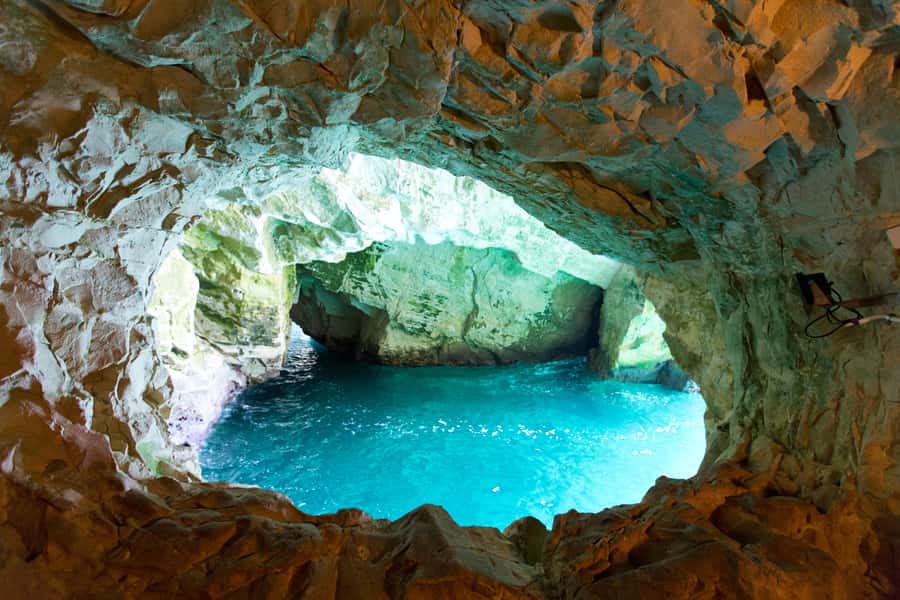
Rosh Hanikra brings the most dramatic natural scenery of the day. At the coast, white limestone cliffs meet the Mediterranean, with sea-carved grottoes cut into the rock. The site sits near the border with Lebanon, so you also get a view toward the northern frontier.
The grottoes are the reason to come. Their pale rock and dark openings create a sharp contrast with the open water. The setting feels very different from Caesarea and Haifa, which is one reason this itinerary works well as a sampler of the coast.
The tour includes exploration of the limestone grottoes and a view of the Lebanon border. It does not list food or drinks, so plan to carry what you need for the day. Admission fees are also separate, and the total extra cost is estimated at about $34 per person for the paid attractions.
Rosh Hanikra can be especially appealing if you like scenery more than monuments. At the same time, your visit is tied to the group schedule. You will not have unlimited time for quiet photography or a long walk along the coast. The cliffs and caves are a focused stop within a much larger day.
A few more Jerusalem trips worth weighing up
- Masada and the Dead Sea Day Trip from Jerusalem
★ 4.5 · 757 reviews - Nazareth and the Sea of Galilee Day Trip from Jerusalem
★ 4.5 · 446 reviews - From Jerusalem: Dead Sea Chill Out Half-Day Trip
★ 4.7 · 165 reviews - Bethlehem, Jericho, and Qasr El Yahud Day Trip from Jerusalem
★ 4.0 · 109 reviews
Acre: Crusader remains, markets, and an old port
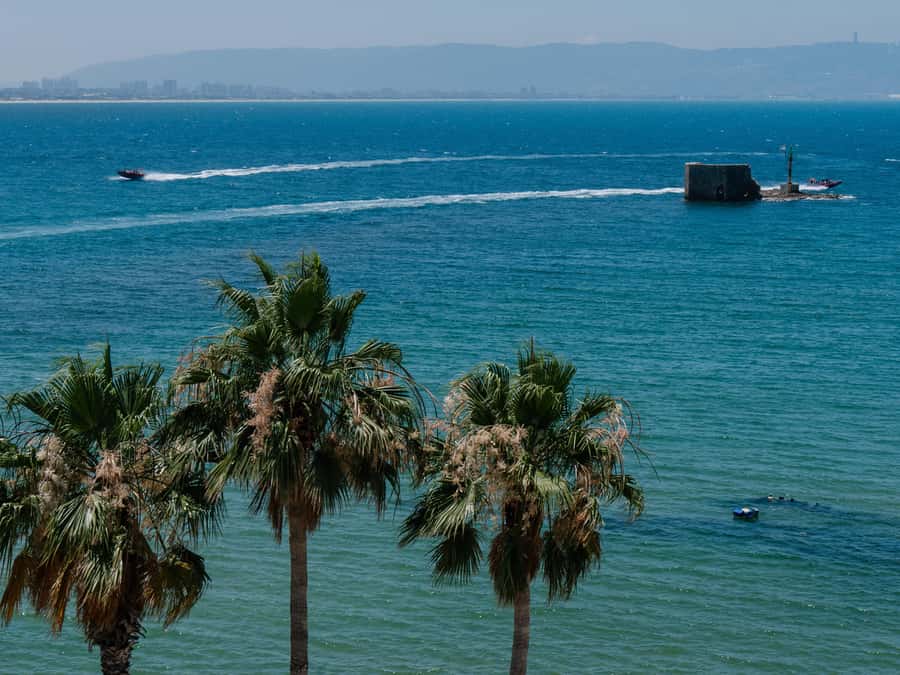
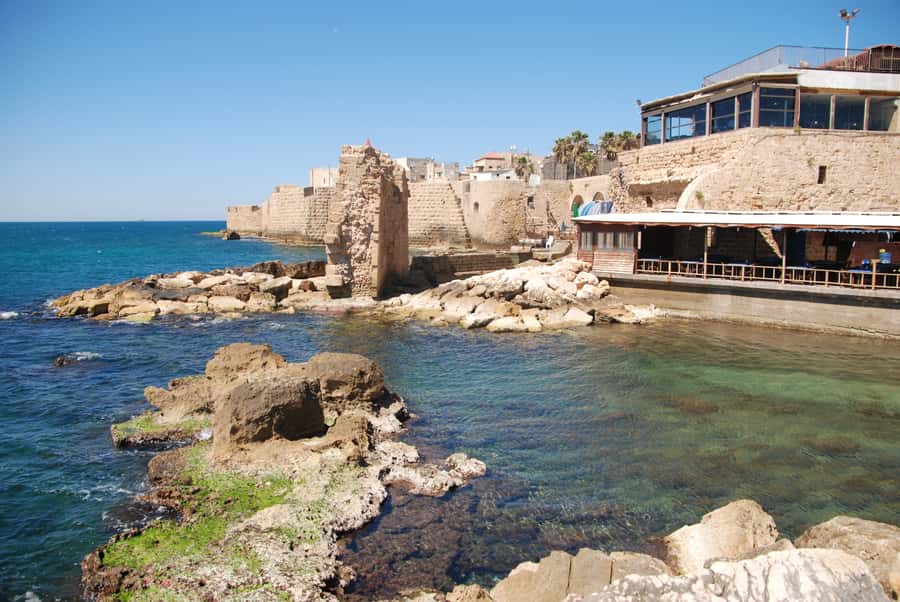
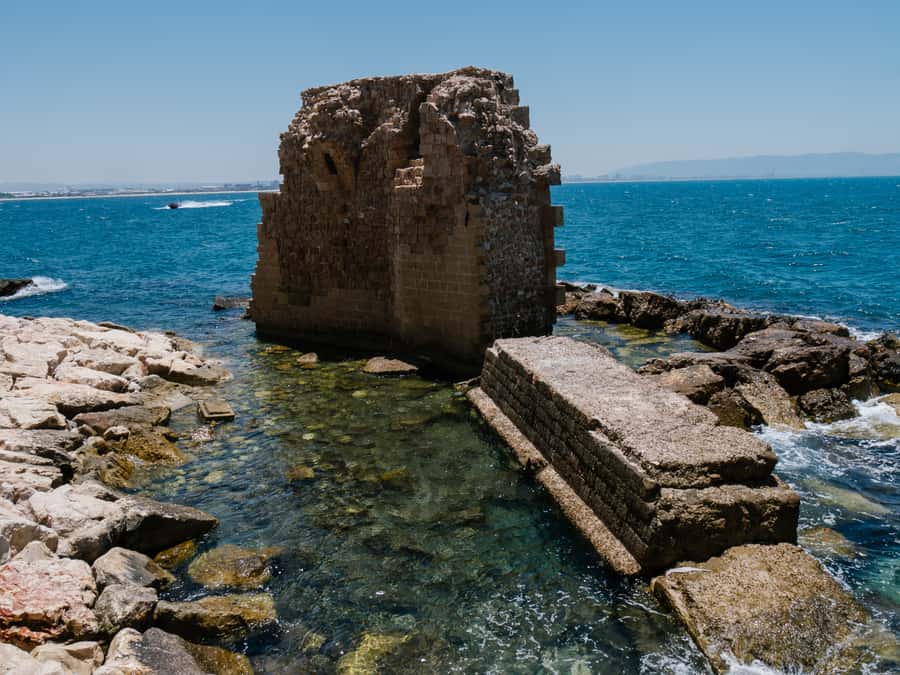
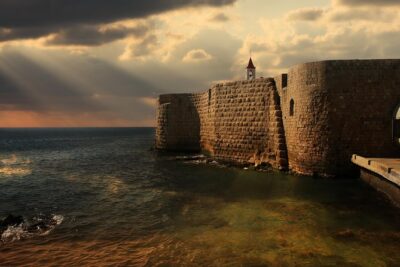
Acre, also called Akko, is the final major destination and perhaps the most varied. This old city at the northern end of Haifa Bay has seen Greek, Byzantine, Arab, Crusader, Ottoman, and British rule. Its Old City is a UNESCO World Heritage Site, and the layers are visible in the streets, walls, port, religious buildings, and underground remains.
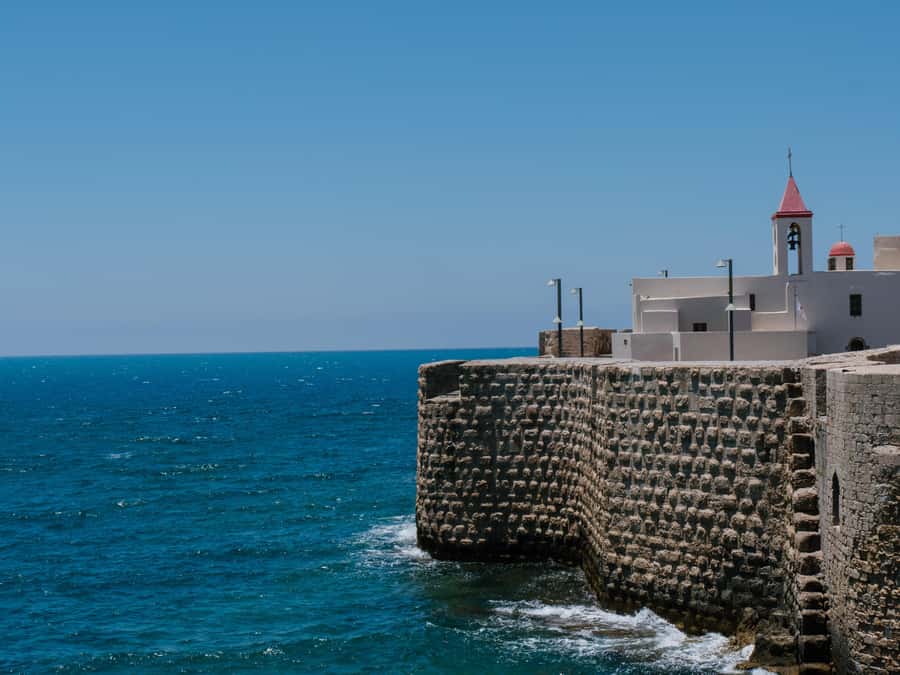
The Crusader underground city and crypt are central to the visit. Going below the modern streets helps explain how much of the medieval city remains hidden beneath today’s Acre. Massive walls and the old harbor add another sense of scale, while the market streets bring the city into the present.
The market is a good place to wander, but do not expect a long independent shopping session. The group must keep moving, and the full itinerary still includes the return journey to Jerusalem. If you stop for food here, watch the time closely. One difficult day involved delays early in the trip, leaving the meal break short so the group could still enter Acre before closing.
The Jezzar Pasha Mosque is another important part of Acre’s story. The site is known for preserving a single hair said to be from the beard of the Prophet Mohammed. The itinerary identifies the mosque as a highlight, but exact access inside religious buildings can depend on operating conditions and the group schedule, so treat the exterior and surrounding Old City as the reliable part of the visit.
Acre is where the itinerary feels most human. Caesarea is an archaeological site, and Rosh Hanikra is a natural attraction. Acre is a living city with daily activity layered over medieval and Ottoman remains. You get walls, a port, religious architecture, and market streets in one compact area.
The guide can make or break the schedule
The guide is important on this particular trip because there is a lot of history packed into short visits. The strongest feedback has focused on guides who explain the sites clearly while keeping the mood friendly. Dorit has been praised for patient explanations and a warm manner. Abraham has also been singled out for strong knowledge of the route and good group leadership.
A guide who can connect Herod’s port, the Baha’i center, the northern border, and Acre’s Crusader remains gives the day shape. Without that context, the stops could feel like a fast collection of photo opportunities. You should listen closely during the introductions, then use free moments for your own looking and photographs.
Group management is the weak point to keep in mind. A group of nearly 30 people can be hard to move through several sites, especially when people stop for pictures, food, or shopping. One delayed departure from Jerusalem led to further time loss, although the guide still managed to complete all the planned stops.
That is not a reason to reject the tour, but it is a reason to arrive at pickup early and return to the coach promptly. On a tightly timed day, your own punctuality protects your time at the next site.
Price, inclusions, and the real value
The listed price is $105 per person. That includes air-conditioned coach transportation, a professional guide, and pickup and drop-off at your hotel. The transfer from Jerusalem to Tel Aviv and the long coastal route would be difficult to arrange as efficiently in one day using public transportation.
You should add approximately $34 per person for entrance fees. Food and drinks are not included, so the final cost is higher than the headline price. The value is strongest for you if you want a guided overview of northern Israel and prefer paying for convenience rather than building a detailed independent plan.
The value is weaker if you want long visits at each site. Four major stops plus transport make this a sampler. You will see the headline sights, but you will not have the same freedom as you would with a private car and several days in the north.
The tour offers free cancellation up to 24 hours before departure and a reserve-now, pay-later option. Those terms give you some flexibility, but the early start and full-day commitment still make it sensible to check your energy and schedule before booking.
Who should book this day trip?
I would recommend it to first-time visitors based in Jerusalem who want to reach the northern coast without arranging several separate journeys. It suits you especially well if you enjoy a balance of ancient ruins, city views, natural scenery, and historic streets.
It is also a good fit for people who prefer a guide to explain what they are seeing. Caesarea and Acre reward background information, and the route covers enough centuries that a clear narrative helps.
I would be more cautious if you dislike early mornings, group schedules, or long coach days. The tour is not suitable for children under four, and it is not suitable for wheelchair users. The walking and site changes may also feel demanding if you need a great deal of unstructured rest.
A private trip would offer more time at Caesarea or Acre, but it would normally require more planning and likely a higher total cost. This organized option is about coverage and convenience, not slow travel.
FAQ
Where does the tour depart from?
Hotel pickup in Jerusalem is included. The transfer departs Jerusalem at approximately 5:50 a.m. and travels via Tel Aviv, where you join the main northern tour.
How long does the tour last?
The full experience takes approximately 10 to 12 hours.
What transportation is provided?
The tour uses an air-conditioned coach. Hotel pickup and drop-off are included.
Which places are visited?
The route includes Caesarea, Haifa and the Baha’i Gardens viewpoint, Rosh Hanikra’s limestone grottoes, and Acre’s Old City.
Are entrance fees included?
No. Entrance fees are paid directly on site and are estimated at approximately $34 per person.
Are food and drinks included?
No. Food and drinks are not included in the tour price.
Which languages are available?
Live guiding is available in French, English, German, and Spanish.
Should you book it?
Book this tour if you want one efficient day covering the Mediterranean coast’s main northern sights from Jerusalem. The combination of Caesarea’s Roman remains, Haifa’s mountain view, Rosh Hanikra’s cliffs, and Acre’s layered Old City gives you an unusually broad introduction to the region.
Skip it if your priority is slow exploration, long meals, or spending half a day at one archaeological site. For everyone else, the $105 price, plus about $34 in admissions, is a fair trade for the transport, guide, and sheer amount of ground covered. Pack water, a hat, comfortable shoes, and patience for the clock.
Just added around Jerusalem
- jerusalem classic tour★ 5.0 · 3 reviews
- Jerusalem and the Dead Sea★ 5.0 · 3 reviews
- Private Walking Tour in Jerusalem’s Old City★ 5.0 · 3 reviews
- Jerusalem of 3 Religions in Russian★ 4.4 · 3 reviews
- Jerusalem Running Tour-Experience the unique vibes of Jerusalem in your sneakers★ 5.0 · 3 reviews
- From Jerusalem: Masada Sunrise, Ein Gedi & Dead Sea★ 5.0 · 3 reviews
- Christian Jerusalem in Russian★ 5.0 · 3 reviews
- Hebron & Ramallah Full-Day Guided Tour from Jerusalem★ 5.0 · 3 reviews
Caesarea, Haifa & Acre Day Trips, compared.
Caesarea, Rosh Hanikra and Acre Day Trip from Tel Aviv
Read our review →
Haifa Shore Excursion: Nazareth and the Galilee – for cruise ship guests only
Read our review →
Caesarea, Acre & Rosh Hanikra Day Trip from Jerusalem
Read our review →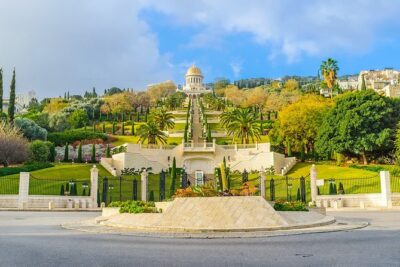
Unforgettable Tour to Caesarea, Haifa, Acre and Rosh HaNikra from Tel Aviv
Read our review →
Tel Aviv/Jerusalem: Caesarea, Haifa & Akko Day Tour
Read our review →
Browse the lists this tour appears in