
Review · CAESAREA, HAIFA & ACRE DAY TRIPS
From Jerusalem: Caesarea, Haifa, Acre & Rosh Hanikra Tour
Ancient ports, sea caves, and hilltop gardens await. This long day from Jerusalem links four very different places along Israel’s Mediterranean coast, from Herod’s Roman harbor at Caesarea to the limestone grottoes of Rosh Hanikra. I especially like the variety of the route and the fact that entrance fees, transport, a guide, and Jerusalem hotel pickup are included. The main drawback is simple: you spend many hours on the road, and the price may feel high if you prefer slow, in-depth visits.
I also like the chance to see Acre as a living old city, not just an archaeological site. Guide Omri received especially warm praise for his historical commentary, although the quality of explanation can depend on who leads your departure. Bring comfortable shoes, a little patience, and food or drinks, since those are not included.
In This Review
- Key points to know before booking
- The 5:40 AM start from Jerusalem
- Caesarea, where Herod built for Rome
- Haifa and the 19 terraces of the Baha’i Gardens
- Rosh Hanikra and the cable car to the sea
- Acre, a Crusader city that still has daily life
- How good is the guide experience?
- What the included cost really buys you
- Who should book this northern coast day?
- Should you book the Caesarea, Haifa, Acre, and Rosh Hanikra tour?
- FAQ
- How long is the tour?
- Where does pickup take place?
- What language is the tour conducted in?
- Are entrance fees included?
- Is transportation included?
- Is food included?
- Can I cancel for a full refund?
Key points to know before booking

- Caesarea combines Roman ruins with a working performance venue: You see the amphitheater, Hippodrome, temple remains, gateways, walls, and moat.
- Haifa offers one of the day’s finest views: The Baha’i Shrine and its 19 terraced gardens run down Mount Carmel toward the city.
- Rosh Hanikra provides the most unusual activity: A cable car carries you down to sea caves formed by waves hitting the limestone.
- Acre feels lived in, not frozen: Markets, homes, walls, and Crusader structures share the same old city.
- The schedule covers a lot of ground: Pickup from Jerusalem begins at 5:40 AM, so this suits early risers who want a full coastal survey.
- The price buys convenience as much as sightseeing: Transport, hotel pickup, entrance fees, and a professional English-speaking guide are included.
The 5:40 AM start from Jerusalem
This is a full-day outing, not a relaxed afternoon excursion. Pickup from Jerusalem’s main hotels begins at 5:40 AM, then the air-conditioned coach heads north toward the coast, passing Herzliya and Netanya along the way.
That early departure makes sense. Caesarea, Haifa, Rosh Hanikra, and Acre are spread across a large stretch of northern Israel, and the tour also has to return to Jerusalem. You get a broad look at the coast in one day, but you should not expect long, unhurried visits at every stop.
The coach is useful here. You avoid arranging several trains, buses, and local transfers, and you can leave the driving to someone else. Still, the road time is part of the bargain. One French guest described the day as involving a lot of driving and found the price extremely high, a fair warning for anyone who prefers a slower pace.
Food and drinks are not included. Carry something for the long day, especially because the schedule is built around sightseeing rather than a supplied meal. Comfortable shoes are essential, since several stops involve archaeological paths, old stone surfaces, or walking around historic walls.
More Rosh Hanikra trips:
- Caesarea, Acre & Rosh Hanikra Day Trip from Jerusalem
★ 4.0 · 78 reviews - Caesarea, Haifa, Rosh Hanikra, and Acre Tour from Jerusalem
★ 4.0 · 16 reviews - Caesarea, Haifa, Acre and Rosh Hanikra Tour from Jerusalem
★ 3.5 · 7 reviews
Caesarea, where Herod built for Rome
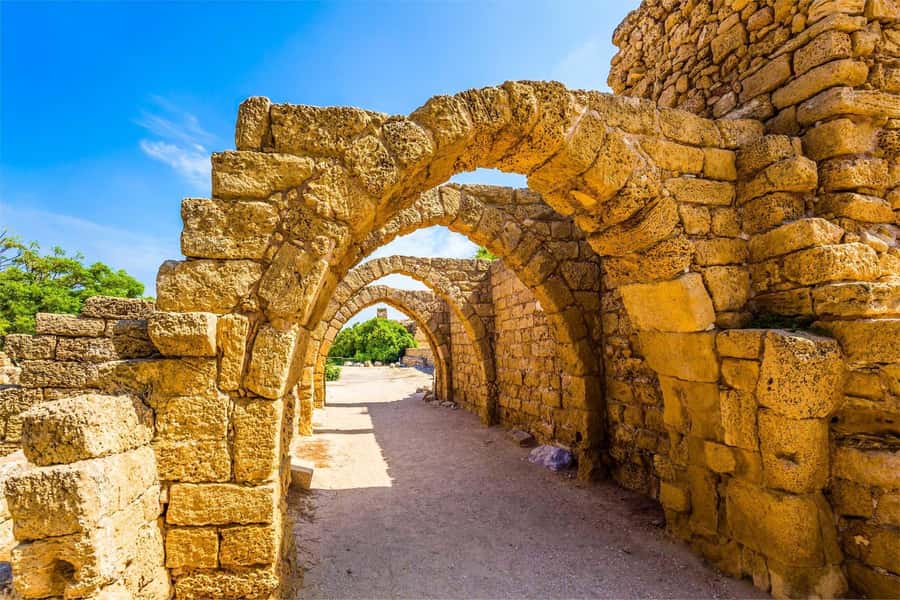
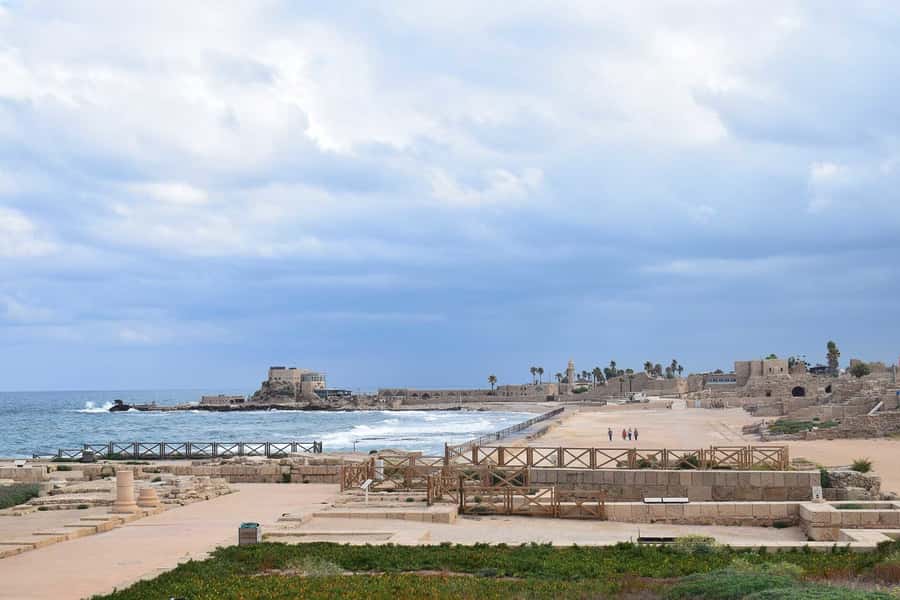
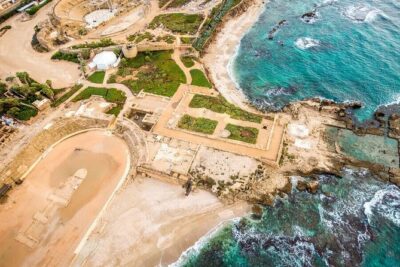
The first major stop is ancient Caesarea, a port city built under Herod and named for the Roman emperor Caesar. Its location beside the Mediterranean helps explain its importance. Ships brought goods from the east, while Nabatean caravans carried treasures toward Rome.
The ruins let you trace the city’s Roman and later medieval life. You can see gateways, a moat, preserved walls, and rooms among the excavated remains. The site is not just a pile of old stones. Its layout shows a carefully planned port city, built to serve trade, power, and imperial ambition.
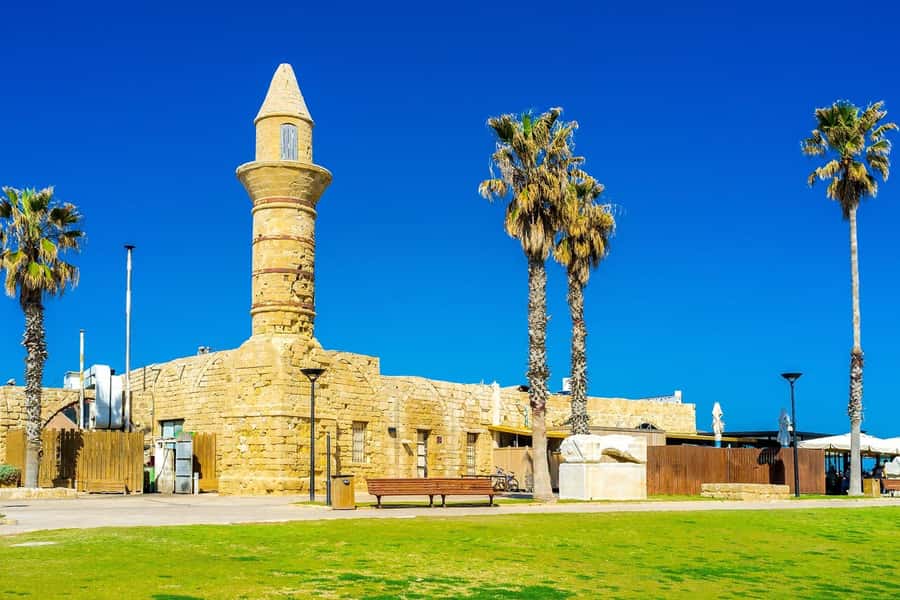
The Roman amphitheater is the clear highlight for many people. It remains remarkably intact and is still used for performances by Israeli and international artists. That modern use gives the structure a stronger sense of place. You are looking at an ancient building that has not been reduced to a museum display.
Next to the amphitheater are the remains of the Hippodrome and a Roman temple. Your guide can connect these structures to the busy port that once lay nearby. The Hippodrome suggests public spectacle, while the temple and monumental buildings show how much civic life was tied to Roman authority.
The visit also covers Caesarea’s later decline. After the Crusader period, the once-prosperous city slipped into obscurity. That change is one of the most useful parts of the stop, since it reminds you that ports can lose their importance when trade routes, political power, and military control shift.
Caesarea rewards visitors who enjoy history in an open-air setting. The tradeoff is that the stop may feel brisk if you want time to examine every section of the archaeological park. The guide’s explanation matters here, and the overall rating of 4.2 from 25 ratings suggests a good but not flawless experience.
Haifa and the 19 terraces of the Baha’i Gardens
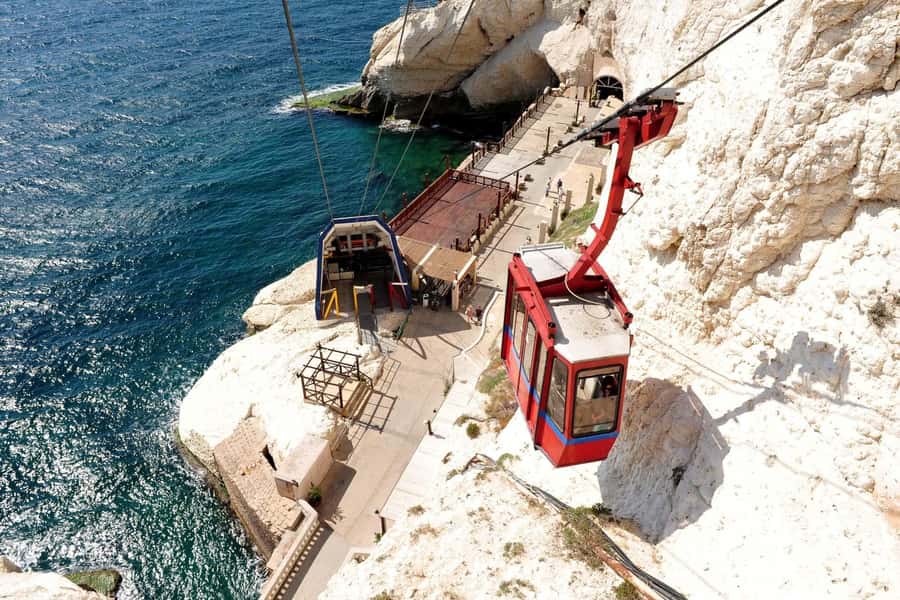
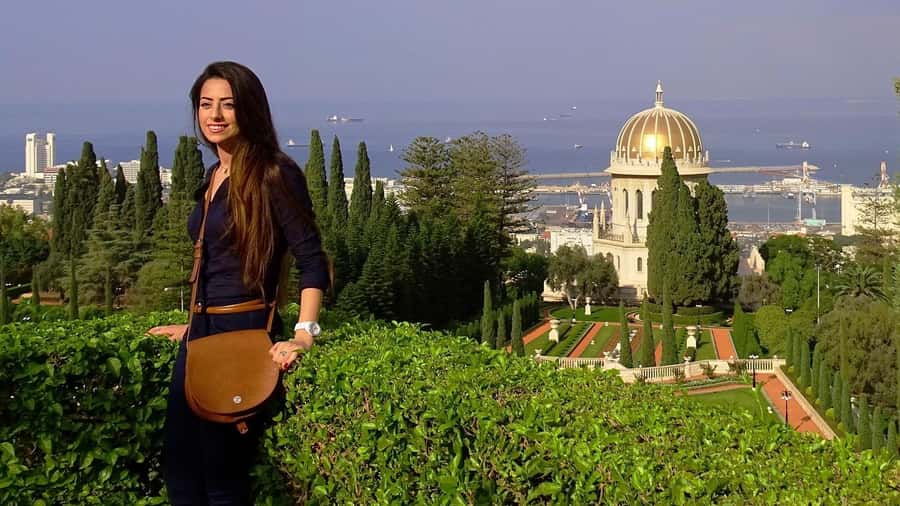
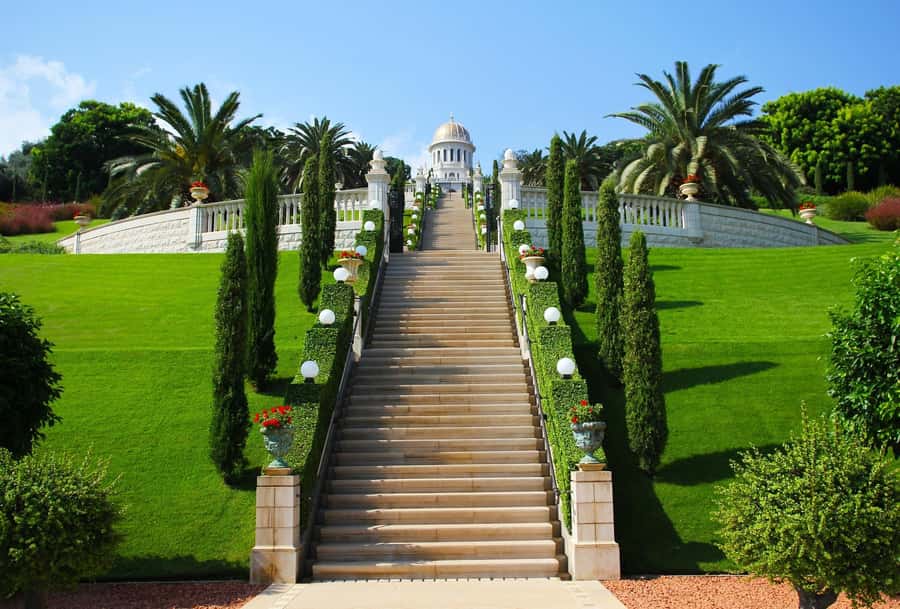
The route continues through Haifa, where you stop at the Baha’i Shrine and gardens on Mount Carmel. The gardens descend in carefully arranged terraces toward the city, with 19 levels of flowers and formal designs.
This is a visual change from Caesarea. Instead of Roman stone and exposed foundations, you get symmetry, color, and a wide view over Haifa. The terraces are the sort of place where a short stop can still feel memorable, because the view and the steep arrangement of the gardens do much of the work.
The gardens are also part of Haifa’s UNESCO World Heritage recognition, one reason this stop carries more weight than a simple photo break. You are seeing a religious site and an important piece of the city’s identity, not only a decorated hillside.
Your time here is likely focused on the main viewpoint rather than a full walk through every terrace. That is worth knowing before you arrive. The gardens stretch down Mount Carmel, but a one-day coach tour cannot offer the same pace as a dedicated Haifa visit.
I like the contrast between Haifa and the other stops. Caesarea looks backward through Roman remains, while Haifa presents an active religious center and a carefully maintained urban setting. The gardens also offer one of the day’s easiest ways to understand the shape of the city, since the terraces point your eyes from the shrine toward Haifa below.
Rosh Hanikra and the cable car to the sea
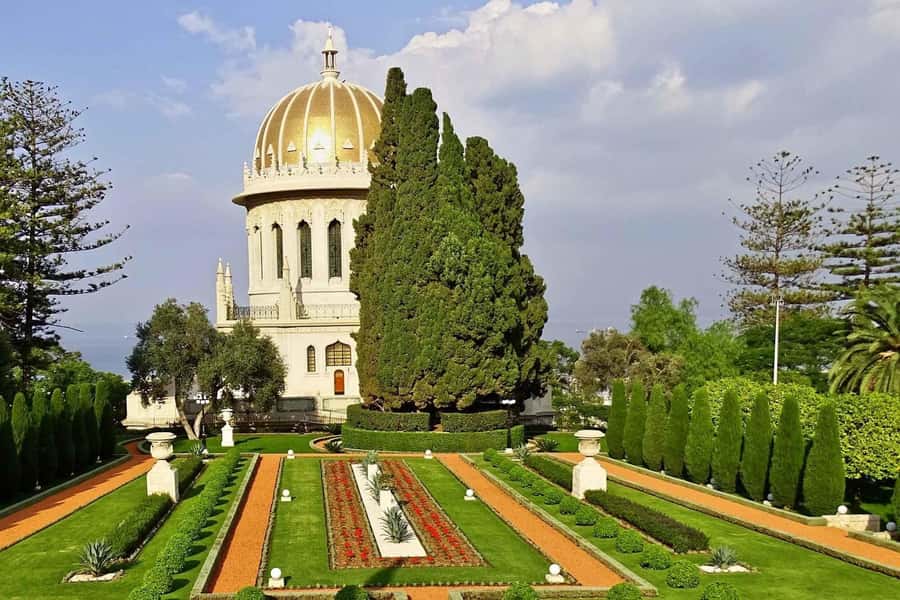
At Rosh Hanikra, you reach the northernmost point on Israel’s Mediterranean coast included in this route. The main attraction is the cable car descending to limestone grottoes carved by the constant force of the sea.
The ride itself is part of the appeal. You move from the coastal cliffs down into the caves, where the rock has been cut into channels and chambers by wave action. The setting feels different from the Roman and Crusader sites because nature, rather than an ancient ruler or army, is the main sculptor.
The caves are sometimes described as magical, and this is one place where that word fits without much effort. The combination of pale limestone, enclosed passages, and water movement gives the stop a strong visual punch. You do not need a long lecture to understand why this is memorable.
The cable car also makes the visit accessible to a wider range of sightseers than a steep descent on foot would be. Even so, wear shoes with a good grip and expect walking once you reach the grotto area. The supplied advice is simply to bring comfortable shoes, but it is advice worth taking seriously across the whole day.
Rosh Hanikra is a strong reason to choose this particular northbound route. The possible weakness is timing. If the visit is short, you may feel that you have only sampled the caves before needing to return to the coach. That is the standard compromise of a four-stop day.
More days up the coast to Caesarea and Acre:
- Caesarea, Haifa & Akko Day Trip from Jerusalem
★ 4.3 · 96 reviews - From Tel Aviv: Caesarea, Haifa and Akko Day Trip
★ 4.4 · 744 reviews - Caesarea, Rosh Hanikra and Acre Day Trip from Tel Aviv
★ 4.5 · 406 reviews - Haifa Shore Excursion: Nazareth and the Galilee – for cruise ship guests only
★ 4.5 · 109 reviews
Acre, a Crusader city that still has daily life
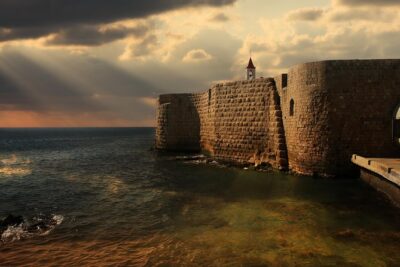
Acre, also called Akko, comes on the return journey south. It is described as the largest Crusader city in the country, and its appeal lies in the way historic structures remain part of an active town.
Here, old walls and monumental buildings sit beside markets and homes. You are not simply walking through a preserved ruin with no modern life around it. People still live in ancient buildings, and the market areas give the old city a human scale that Caesarea does not have in the same way.
The city walls and moat are key sights. They were reconstructed and repaired by El Jazzar at the end of the 1900s, and their strength helped stop Napoleon from taking Acre. That military story gives the walls a practical purpose. They were not built only for display, and their survival shaped the city’s future.
The Crusader remains add another layer. You also learn about the prison used under Turkish rule and the gallows used during the British Mandate. Those gallows are tied to British restrictions on Jewish immigration to Palestine after World War II, and this part of the visit brings the city’s history into the modern political era.
Acre can be the most rewarding stop for you if you enjoy places where history is still part of ordinary life. It may also be the most difficult to absorb quickly. The old city contains several periods and several kinds of buildings, so a concise guide explanation is useful. One French-language review described the commentary as brief, while other ratings praised the guide’s ability to explain the sites. That difference suggests you should keep your own questions ready.
How good is the guide experience?
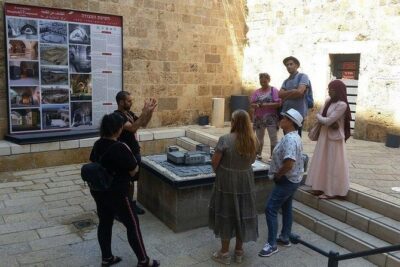
The tour includes a professional English-speaking guide, which is important on a day with four major stops and several historical periods. Without explanation, Caesarea can become a quick look at ruins, and Acre can become a maze of walls and lanes.
The strongest praise went to the guide’s historical storytelling, with Omri singled out by name for an excellent experience. Another rating described the guide as friendly and able to explain a lot. Those are meaningful strengths, especially on a coach tour where the guide helps connect separate locations into one story.
There is some uncertainty because the guide may not be Omri on every departure. The available ratings include a complaint that the commentary was short, so expectations should be measured. You are paying for guided context, but this is not a private tour with unlimited time for questions at each monument.
What the included cost really buys you
No price is provided here, so I cannot judge the exact amount in currency. One rating called the tour extremely expensive, while several others rated the day highly. The value depends on how much you want convenience.
Your fee includes pickup and drop-off from main Jerusalem hotels, an air-conditioned coach, all entrance fees, and a professional guide. That removes several costs and planning tasks. You do not need to arrange separate admission at Caesarea, the Rosh Hanikra cable car, or the historic sites in Acre.
The value is strongest if you have limited time in Israel and want to see the northern coast without changing hotels. You cover four important places in one day, including two sites with UNESCO recognition in Haifa and Acre, plus the cable car and major Roman remains.
The value is weaker if you are already based in Haifa or Acre, or if you want to linger. From Jerusalem, the distance makes the coach practical, but it also means you pay in time. Food, drinks, and insurance are not included, so plan for those separately.
Free cancellation up to 24 hours before departure and the reserve-now, pay-later option make the booking less rigid. Foreign passport holders and people with three-month entry permits may be exempt from VAT under Israeli law, but valid passport details are required.
Who should book this northern coast day?

I would recommend it most to you if you are staying in Jerusalem, have only one free day for the north, and want a broad introduction rather than a deep visit to one city. It suits people who enjoy Roman ruins, religious architecture, military history, and natural formations in the same itinerary.
It also works well for first-time visitors who would rather not manage Israel’s intercity transport. The hotel pickup and included admissions simplify a complicated route.
I would hesitate if you dislike early starts, long coach rides, or tightly arranged sightseeing. Families and older visitors may appreciate the cable car at Rosh Hanikra, but the day still involves walking on historic surfaces. Anyone seeking a quiet, slow visit to Acre or a detailed exploration of Haifa should stay overnight in the north instead.
Should you book the Caesarea, Haifa, Acre, and Rosh Hanikra tour?
Book it if your priority is range. In one demanding day, you see Herodian Rome, Haifa’s terraced Baha’i gardens, wave-cut caves, and a Crusader city that still functions as a town. That is a strong collection of experiences, and the included transport and admissions make the logistics much easier.
Skip it if the idea of spending much of the day on the road bothers you. The tour’s best features are its variety, convenience, and historical scope, while its weak point is the limited time available at each stop. For an efficient first look at northern Israel from Jerusalem, it is a sensible choice. For slow travel, it is too packed.
FAQ
How long is the tour?
The experience lasts one full day.
Where does pickup take place?
Pickup is included from Jerusalem’s main hotels, beginning at 5:40 AM.
What language is the tour conducted in?
The live tour guide provides commentary in English.
Are entrance fees included?
Yes. Entrance fees are included in the tour.
Is transportation included?
Yes. The tour uses an air-conditioned coach, with hotel pickup and drop-off from Jerusalem included.
Is food included?
No. Food and drinks are not included, so you should plan to bring or purchase your own.
Can I cancel for a full refund?
Yes. You can cancel up to 24 hours in advance for a full refund.
Just added around Jerusalem
- Private Walking Tour in Jerusalem’s Old City★ 5.0 · 3 reviews
- jerusalem classic tour★ 5.0 · 3 reviews
- Jerusalem and the Dead Sea★ 5.0 · 3 reviews
- Jerusalem Running Tour-Experience the unique vibes of Jerusalem in your sneakers★ 5.0 · 3 reviews
- Jerusalem of 3 Religions in Russian★ 4.4 · 3 reviews
- From Jerusalem: Masada Sunrise, Ein Gedi & Dead Sea★ 5.0 · 3 reviews
- Christian Jerusalem in Russian★ 5.0 · 3 reviews
- Hebron & Ramallah Full-Day Guided Tour from Jerusalem★ 5.0 · 3 reviews
Caesarea, Haifa & Acre Day Trips, compared.
Caesarea, Rosh Hanikra and Acre Day Trip from Tel Aviv
Read our review →
Haifa Shore Excursion: Nazareth and the Galilee – for cruise ship guests only
Read our review →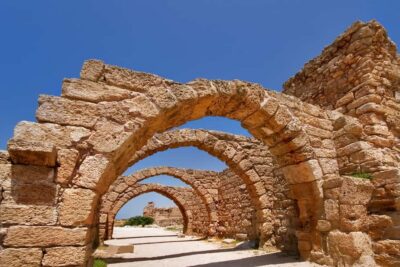
Caesarea, Acre & Rosh Hanikra Day Trip from Jerusalem
Read our review →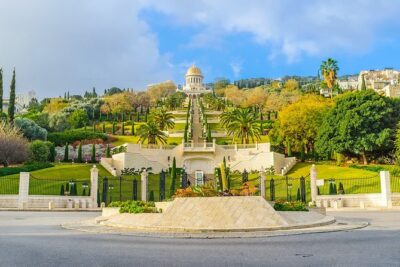
Unforgettable Tour to Caesarea, Haifa, Acre and Rosh HaNikra from Tel Aviv
Read our review →
Tel Aviv/Jerusalem: Caesarea, Haifa & Akko Day Tour
Read our review →Browse the lists this tour appears in