
Review · JERUSALEM OLD CITY TOURS
City of David and Underground Jerusalem Day Tour
Jerusalem’s oldest stones are still being uncovered. I like the wide Mount of Olives view and the chance to see active archaeology at the City of David, not just polished exhibits. I also like the strong mix of sacred places, Roman streets, Jewish heritage, and underground passages in one day.
The main catch is the pace. You will walk and stand for much of the eight-hour tour, and the tunnels can be hot, wet, narrow, and physically demanding. Entrance fees, about $10 per person, are extra, and the morning transfer system can feel confusing.
In This Review
- Key points to know before booking
- Why this full-day route works
- Mount Scopus and the first view of Jerusalem
- Kidron Valley and the Garden of Gethsemane
- Mount Zion: David’s Tomb and the Last Supper Room
- Entering through Zion Gate
- The Armenian Quarter and the Old City lanes
- The Jewish Quarter, synagogues, and the Cardo
- The Western Wall at ground level
- Going below ground in the City of David
- How the guides shape the day
- Price, timing, and what you receive
- Who should book this Jerusalem tour?
- FAQ
- How long does the City of David and Underground Jerusalem tour last?
- Is hotel pickup and drop-off included?
- Is the City of David entrance fee included?
- How much walking is involved?
- What should I wear?
- Can children join the tour?
- What happens if the Four Sephardic Synagogues cannot be visited?
- Can I cancel for a full refund?
Key points to know before booking
- The day moves from high views to underground history: You begin above Jerusalem on the Mount of Olives, then work through Mount Zion, the Old City, the Jewish Quarter, and the City of David.
- The City of David is the main event: About 90 minutes are set aside for excavations and Warren’s underground passages, where the experience becomes more active and atmospheric.
- Expect serious walking: Comfortable shoes, water, and a charged phone or camera matter. Sandals are a poor choice for the steps and wet tunnel sections.
- Sacred sites require proper clothing: Men and women should cover their knees and shoulders. Shorts can lead to refused entry at places of worship and selected museums.
- Guiding quality matters greatly: Guides such as Ziv, Eitan, Danny, Ornit, Moshe, Gil, and Dan have been praised for clear explanations, patience, humor, and enthusiasm.
- The $89 price covers transport and guiding, not every admission: Hotel pickup, drop-off, and an air-conditioned vehicle are included, while entrance charges are not.
Why this full-day route works
Jerusalem can feel like several cities stacked on top of one another. This tour gives you a useful vertical and historical introduction: viewpoints first, sacred buildings next, the Old City streets after that, and ancient Jerusalem below ground at the end.
I like that the route is not limited to one religious tradition. You see Christian associations on the Mount of Olives, Jewish sites on Mount Zion and in the Jewish Quarter, Roman remains in the Cardo, and archaeological remains connected with early Jerusalem.
The coach also solves a practical problem. Jerusalem’s Old City is not a place where you want to spend the day figuring out traffic, parking, and connections between scattered starting points. Hotel pickup and return are included, though the morning arrangement deserves attention.
Pickup begins around 8:30 a.m. Some bookings use a white minibus that takes you to a staging area, where you are sorted into the correct group and coach. That transfer can add time, and the initial route may not head directly toward the first sightseeing stop. If you prefer to meet near the Tower of David or Zion Gate, this may frustrate you because individual meeting arrangements are not offered.
The group can reach 40 people. That is large enough to make the coach efficient, but it may feel less personal than a small private tour. Several guide reports praise smaller groups, while other experiences suggest that the day works best when everyone keeps pace.
More City Tours in Jerusalem
- Jerusalem: Guided Walking Tour of the Old City
★ 4.7 · 386 reviews - Full Day City Tour of Jerusalem
★ 4.1 · 367 reviews - From Jerusalem Small group tour Old&New City ENTRY FEES INCL
★ 4.0 · 135 reviews
Mount Scopus and the first view of Jerusalem
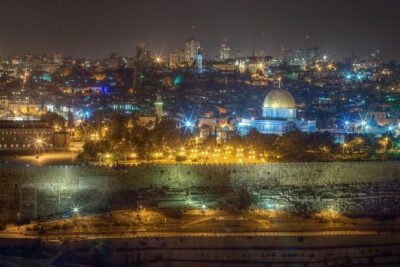
The first listed stop is Mount Scopus National Botanical Garden, where you get roughly 30 minutes to look across toward the Old City. The itinerary also includes views of the Kidron Valley and the Garden of Gethsemane.
The opening view helps you understand Jerusalem’s layout before you start walking. The Old City sits within its walls, Mount Zion lies to the south, the Kidron Valley cuts along the eastern side, and the City of David occupies a narrow ridge just below the Old City.
The Mount of Olives has long been linked with Christian pilgrimage. It is associated with several Gospel events, including the Ascension, and it remains important to Eastern Orthodox, Catholic, and Protestant believers.
This is a scenic stop, but it is not the place for a long visit. Thirty minutes gives you time to take in the view and hear an introduction, not to explore the mountain in detail. Bring a layer if the morning is cool, since the first stop is outdoors.
Kidron Valley and the Garden of Gethsemane
The route continues past the Kidron Valley and the Garden of Gethsemane. The valley creates a natural boundary between the Old City and the Mount of Olives, and it adds physical meaning to the city’s ancient geography.
You will likely pause for views rather than take a long garden visit. That distinction matters if you expect a full visit to every named site. This tour covers many places, but most stops are brief introductions rather than long independent explorations.
The day’s religious setting also calls for modest clothing from the start. Cover your shoulders and knees, even if the weather is warm. A light scarf or overshirt can be useful.
Mount Zion: David’s Tomb and the Last Supper Room
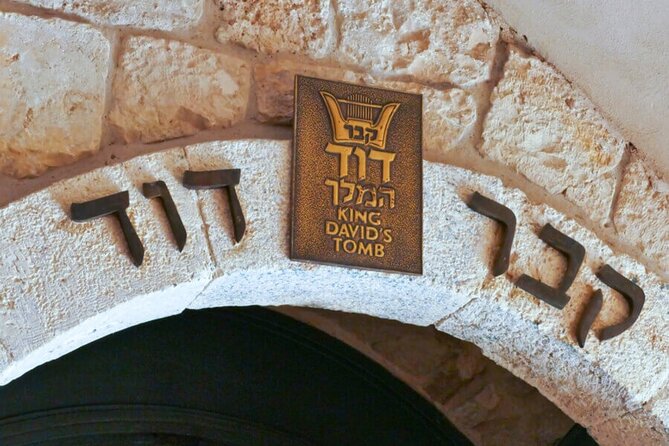
A short drive brings you to Mount Zion, where the tour visits King David’s Tomb and the Hall of the Last Supper. The Tomb of David is a brief stop, listed at about 10 minutes, so you should expect a focused visit rather than quiet time for reflection.
The Last Supper Room is linked by Christian tradition with the meal Jesus shared with his disciples. Its present appearance reflects layers of later use and rebuilding, which gives the guide a chance to explain how sacred places change over time.
These stops work well as a bridge between the panoramic opening and the more detailed Old City walk. They also show why Jerusalem can be hard to read without a guide. A plain room, gate, or wall may carry several religious and historical meanings at once.
More walks through the Old City:
- Best seller! Jerusalem old city four quarters tour
★ 5.0 · 123 reviews - Private Tour Jerusalem Old City
★ 5.0 · 118 reviews - All Inclusive Walking Tour Old City Jerusalem
★ 5.0 · 83 reviews - Jerusalem Half Day Tour: Holy Sepulchre and Western Wall
★ 4.5 · 80 reviews
Entering through Zion Gate
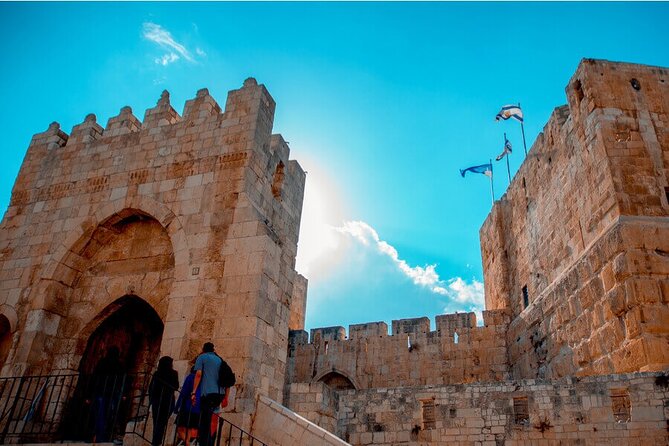
The group enters the Old City through Zion Gate, also known as David’s Gate. The gate carries visible marks from the city’s modern military past, while also serving as a practical entrance into the Jewish Quarter.
The stop itself is short, around 10 minutes. You get orientation, photographs, and context before moving inside the walls. The Old City is compact on a map, but its lanes, steps, and quarters can be confusing when you are seeing them for the first time.
The walking begins to add up here. You may be standing in one place for explanations, then moving through uneven streets and passages. Good shoes are more important than stylish shoes.
The Armenian Quarter and the Old City lanes
About 20 minutes are set aside for the Armenian Quarter, followed by about an hour in the Old City. The Armenian Quarter gives you a glimpse of one of Jerusalem’s distinct communities, while the wider Old City walk ties together the surrounding quarters and sacred sites.
This part of the tour is less about checking off one major monument and more about learning how the city is arranged. The guide can help you notice gates, walls, religious buildings, and changing architectural details that are easy to pass without context.
The Old City portion is also where the tour may feel busiest in terms of information. You are moving through a historic center with several traditions sharing the same small area. If you want hours to wander down side lanes or shop, this scheduled route will feel too structured.
The Jewish Quarter, synagogues, and the Cardo
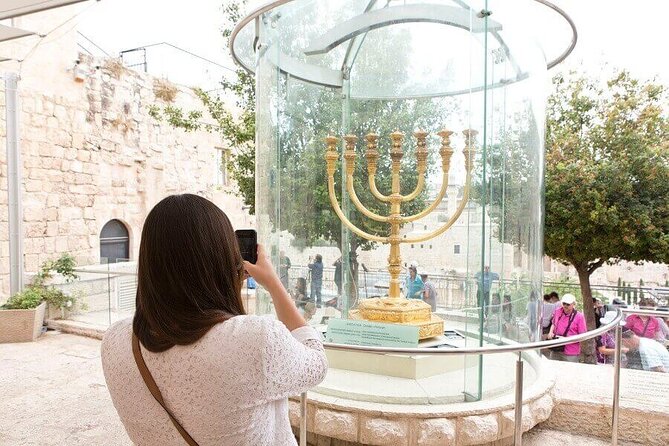
The Jewish Quarter receives about an hour of attention. The route includes the Four Sephardic Synagogues, a group of interconnected synagogues built at different times for Sephardic Jewish communities.
Admission to the synagogues is not included. The additional entrance cost is listed at about $10 per person for the tour, though the exact charges can vary by the sites visited. Carry some flexibility in your budget rather than assuming the $89 price covers every door.
If the Spanish synagogues cannot be visited, the route may substitute the Hurva Synagogue. That gives the tour some flexibility, but it also means the exact interior visit is not guaranteed.
The Byzantine Cardo gets about 20 minutes. This former main street helps you picture Jerusalem as a Roman and Byzantine city, not only as a biblical setting. Columns, street remains, and the shape of the old thoroughfare offer a useful contrast to the later Jewish Quarter around it.
I find this combination especially worthwhile because it connects living religious spaces with archaeology. You are not simply looking at ruins in isolation. You are seeing how the same quarter has been used, rebuilt, and understood by different communities over many centuries.
The Western Wall at ground level
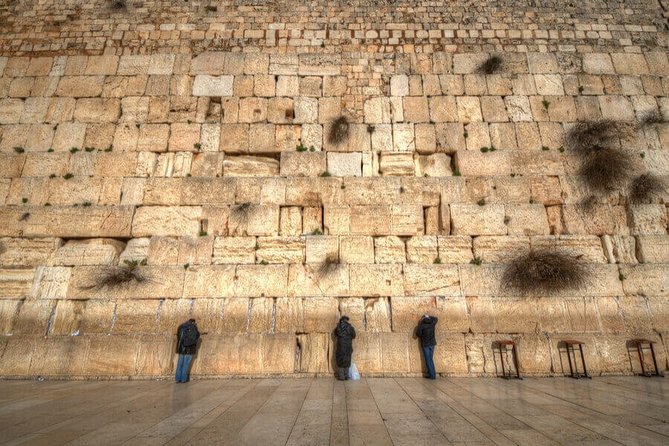
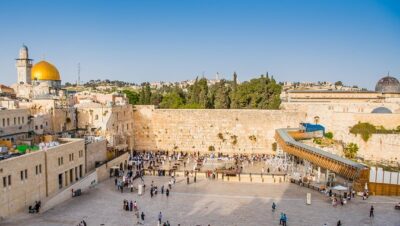
The visit to the Western Wall lasts about 20 minutes. This is a short stop, so you should not expect a long period for prayer or personal exploration.
The Wall is one of the most emotionally powerful places on the route, but it is also a site with clear rules and separate areas for men and women. Dress modestly and follow posted instructions. Your guide can provide context, but you should allow the site its own quiet atmosphere.
This stop comes before the City of David, which helps set up the next part of the day. The Western Wall is part of the retaining structure associated with the ancient Temple Mount. The City of David, just to the south, takes you closer to the earliest core of Jerusalem.
Going below ground in the City of David
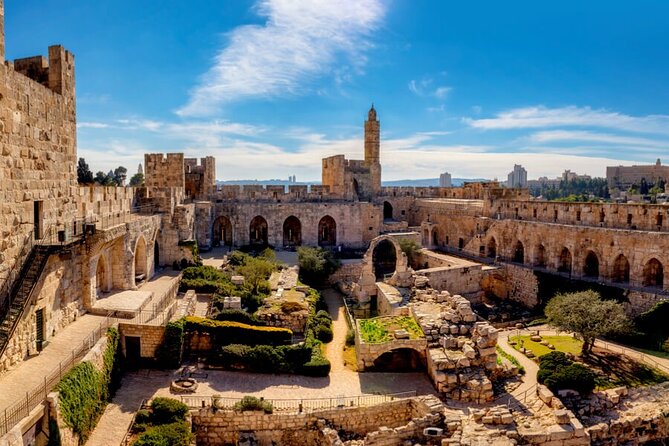
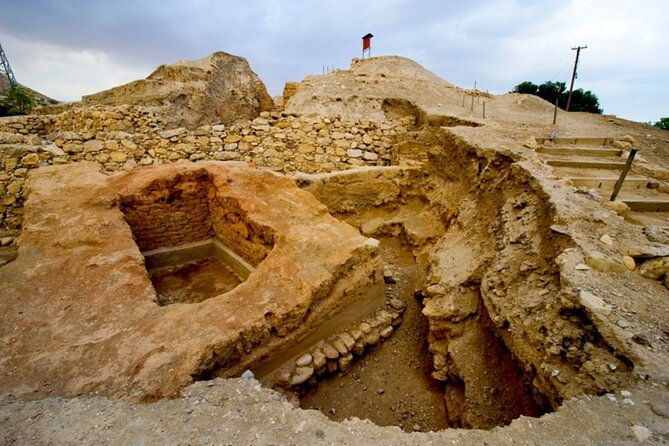
The City of David National Park is the tour’s central archaeological stop. The park sits on a narrow ridge south of the Old City, and archaeological work there began in the mid-19th century. Excavation continues today.
The visit lasts about 90 minutes and includes ongoing excavations and Warren’s underground area. This is where the tour becomes more physical. You may walk through passages that are narrow, damp, warm, and poorly suited to anyone who dislikes confined spaces.
The underground setting is also the reason many people find this portion so memorable. Above ground, archaeology can look like foundations and broken walls. Below ground, the channels, tunnels, and stonework give you a stronger sense of moving through an ancient city.
Bring water in a small backpack. One particularly useful tip is to avoid sandals, even in hot weather. Wet passages and uneven surfaces call for secure footwear, and the heat can build up underground. A fully charged camera or phone is also sensible because the excavations provide many photo opportunities.
The physical demands are not minor. The tour includes stairs, standing, and a substantial amount of walking. One account describes becoming ill from the heat in the passage, while the guide helped with the situation. That is a reminder to pace yourself, drink water, and tell the guide early if you need a break.
The City of David admission is not included in the tour price. Confirm the current entrance arrangements before departure, since the supplied details list an additional fee and specifically exclude the park admission.
How the guides shape the day
The best part of a guided archaeology tour is not the vehicle. It is the explanation that turns stones into a story.
Several guides have earned strong praise for making the history clear and personal. Ziv is described as patient, respectful, funny, and well informed. Eitan is praised for using images and detailed explanations to help the group understand what it is seeing. Danny, Dan, Ornit, Moshe, Gil, and Yoni Dinur are also singled out for strong guiding, enthusiasm, humor, and care.
That said, guide quality can vary. One poor experience focused on unrelated political views and personal stories rather than the historic sites. This appears to be an exception among the supplied accounts, but it is a fair reason to keep expectations realistic. A group tour does not let you choose the guide in advance.
The most useful guides on this route explain the evidence, point out competing interpretations, and keep the day moving. That matters in Jerusalem, where religious tradition, archaeology, and modern politics can overlap quickly.
Price, timing, and what you receive
At $89 per person, the tour offers solid value if you want transport, a professional guide, and a full day of connected sightseeing. Hotel pickup and drop-off are included, as is the air-conditioned coach.
The price is less attractive if you want a relaxed pace or plan to visit only the City of David. In that case, a focused visit may give you more time underground. Here, you are paying for the route and the historical connections between the sites.
Food and drinks are not included. Pack water and food for the day, since the schedule is long and the supplied details do not promise a meal stop. The tour lasts about eight hours, although one account says the day ended around 3 p.m. and did not return to the original pickup place. Confirm the final drop-off arrangement before setting a tight evening plan.
The tour requires at least two participants and accepts up to 40. Children under four cannot join. Most people can participate, but the walking and tunnel conditions make this a poor fit for anyone who needs a very gentle sightseeing day.
Free cancellation is available if you cancel at least 24 hours before the local start time. Changes made later are not accepted, and a tour canceled for failing to reach its minimum may be moved to another date or refunded.
Who should book this Jerusalem tour?
I would choose this tour if you have one full day for Jerusalem and want a guided introduction to the Old City plus the City of David. It is particularly useful for first-time visitors who want the major viewpoints, sacred sites, Jewish Quarter, Western Wall, and underground archaeology connected in one route.
You should book it if you enjoy history, can walk for hours, and like having a guide explain what you are seeing. The strongest experiences come from the combination of clear commentary and access to places that are hard to understand from a quick independent visit.
I would look elsewhere if you want a slow day, extensive free time, or a small private group. I would also hesitate if heat, narrow tunnels, stairs, or long periods of standing are a concern.
For most active visitors, the City of David is worth the extra admission and effort. The route is busy, but it gives you a useful physical map of Jerusalem, from the Mount of Olives view to the city below the city.
FAQ
How long does the City of David and Underground Jerusalem tour last?
The tour lasts approximately eight hours and begins around 8:30 a.m.
Is hotel pickup and drop-off included?
Yes. Hotel pickup and drop-off in Jerusalem are included, along with transport in an air-conditioned vehicle.
Is the City of David entrance fee included?
No. Entrance fees are not included. The supplied information gives an approximate additional cost of $10 per person and specifically lists the City of David National Park entrance as excluded.
How much walking is involved?
The tour includes a reasonable amount of walking, standing, steps, and underground passages. Comfortable walking shoes are recommended, and the experience may be difficult for people who are not in fairly good physical condition.
What should I wear?
You should cover your knees and shoulders at places of worship and selected museums. Shorts may lead to refused entry for both men and women.
Can children join the tour?
Children under four years old cannot join. The activity allows most participants, but the physical demands should be considered for older children.
What happens if the Four Sephardic Synagogues cannot be visited?
If the visit is not possible, the tour may visit Hurva Synagogue instead.
Can I cancel for a full refund?
Yes, if you cancel at least 24 hours before the experience start time. Cancellations or changes made less than 24 hours before the start are not accepted for a refund.
Just added around Jerusalem
- Private Walking Tour in Jerusalem’s Old City★ 5.0 · 3 reviews
- jerusalem classic tour★ 5.0 · 3 reviews
- Jerusalem and the Dead Sea★ 5.0 · 3 reviews
- Jerusalem Running Tour-Experience the unique vibes of Jerusalem in your sneakers★ 5.0 · 3 reviews
- Jerusalem of 3 Religions in Russian★ 4.4 · 3 reviews
- From Jerusalem: Masada Sunrise, Ein Gedi & Dead Sea★ 5.0 · 3 reviews
- Christian Jerusalem in Russian★ 5.0 · 3 reviews
- Holy Jerusalem Full Day Tour from Jerusalem★ 5.0 · 3 reviews
Jerusalem Old City Tours, compared.


Jerusalem Half Day Tour: Holy Sepulchre and Western Wall
Read our review →
Jerusalem Half-Day Tour from Tel Aviv: Holy Sepulchre and Western Wall
Read our review →

Browse the lists this tour appears in