

Review · JERUSALEM OLD CITY TOURS
Jerusalem: Guided Walking Tour of the Old City
Jerusalem rewards a slow walk. This four-hour Old City tour brings you through the Jewish, Muslim, Christian, and Armenian Quarters, linking famous holy places with the stories behind them. I like the strong religious balance and the chance to see major sites in one well-paced morning. The main drawback is simple: this is a demanding walk over old stone streets, and access to the Temple Mount changes with the religious calendar.
I also like the guides’ teaching style. Tania, Shahar, Yoni, Nimrod, and others are praised for clear English, humor, patience, and thoughtful answers. You get much more than a quick photo stop, although four hours can still feel tight when crowds, worship, and security checks slow the route.
In This Review
- Key points to know before booking
- Starting at Jaffa Gate with Jerusalem at your feet
- The four quarters and the value of a guide
- The Western Wall and the Jewish Quarter
- Temple Mount, the Dome of the Rock, and Al-Aqsa
- Via Dolorosa and the Christian Quarter
- The Last Supper and stories placed on the ground
- Four hours on foot: pace, weather, and group comfort
- Is $57 a fair price for this Jerusalem tour?
- What the guide adds to a difficult city
- Who should book this Old City walk?
- Should you book it?
- FAQ
- How long is the Jerusalem Old City walking tour?
- Where does the tour meet?
- What language is the tour conducted in?
- Does the tour visit the Western Wall?
- Does the tour enter the Church of the Holy Sepulchre?
- Can I enter the Dome of the Rock and Al-Aqsa Mosque?
- What should I bring?
- What clothing is not allowed?
- Is the tour suitable for wheelchair users?
Key points to know before booking
- Four quarters in four hours: The route gives you a useful first look at the Old City’s Jewish, Muslim, Christian, and Armenian areas.
- The major holy sites: Expect the Western Wall, Via Dolorosa, Church of the Holy Sepulchre, and a look toward or visit to the Temple Mount.
- Guide quality matters: Guide assignments vary, but Tania, Shahar, Yoni, Nimrod, Alex, and several others have earned praise for clear explanations and good pacing.
- Temple Mount access is limited: The Dome of the Rock and Al-Aqsa Mosque are closed on Fridays, Saturdays, and various Muslim and Jewish holidays.
- Bring the right clothing: Comfortable shoes, water, a sun hat, a scarf, and a passport or copy are important. Shorts and sleeveless shirts are not allowed.
- A strong introduction, not a complete Jerusalem course: You will see the central sights, then still have plenty to explore independently.
Starting at Jaffa Gate with Jerusalem at your feet
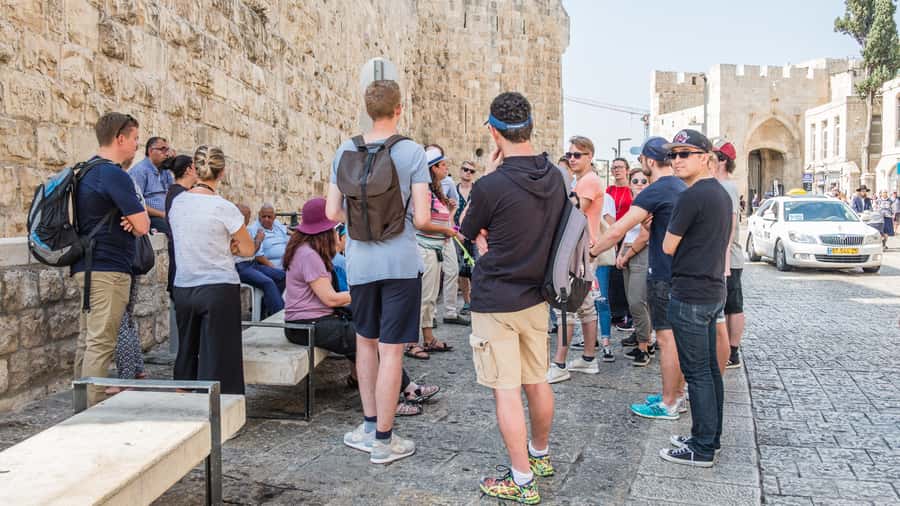
The meeting point is easy to recognize, but do not arrive at the last second. Go to the stone bench just outside Jaffa Gate and look for a guide wearing a green shirt with Guide written in yellow on the back.
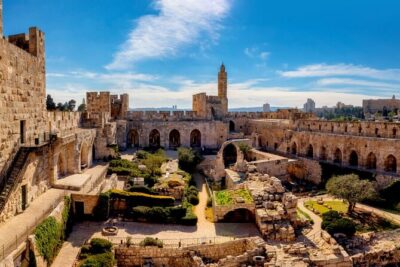
Jaffa Gate is a sensible place to begin. It is one of the best-known entrances to the Old City, and it gives your guide a natural opening to explain the walls, gates, quarters, and layers of Jerusalem. From here, the tour moves on foot, so the first practical question is not how much history you want, but how well your feet handle uneven paving.
The route is not a gentle stroll through a modern pedestrian district. You can expect narrow passages, steps, crowded lanes, and old stone underfoot. Comfortable shoes are essential. The tour is not suitable for wheelchair users or people with mobility impairments, and anyone who dislikes prolonged walking should think carefully before booking.
The atmosphere is part of the lesson. Religious processions, shopkeepers, worshippers, school groups, and people simply crossing the city all share the same tight lanes. That mix can feel intense, but it also helps you understand why Jerusalem is not just a collection of monuments. It is a living city where sacred places and ordinary daily life sit side by side.
More City Tours in Jerusalem
- Full Day City Tour of Jerusalem
★ 4.1 · 367 reviews - From Jerusalem Small group tour Old&New City ENTRY FEES INCL
★ 4.0 · 135 reviews - Best seller! Jerusalem old city four quarters tour
★ 5.0 · 123 reviews
The four quarters and the value of a guide
One of the tour’s best features is its effort to connect the Old City’s different quarters rather than treating each holy site as an isolated stop. You move through the Jewish, Muslim, Christian, and Armenian areas while your guide explains how communities, faiths, and political events have shaped the city.
That broad view is especially useful if Jerusalem is new to you. Without a guide, it is easy to walk through the Old City and see only signs, souvenir shops, and impressive stonework. A good guide gives you a map in your head and explains why one lane leads to a place important to one faith, while a few minutes later you are standing somewhere sacred to another.
The guide’s approach can shape your day. Tania is repeatedly praised for balancing religious and historical meaning without turning the tour into a political speech. Shahar is praised for humor and clear explanations, while Yoni receives strong marks for his command of the sites and his ability to answer questions. Nimrod is described as especially good at helping people understand how the different communities interact.
Those names do not guarantee who will lead your group. They do show the level of guide-led interpretation you can hope for. The strongest feedback centers on patient answers, fluent English, steady pacing, and storytelling that makes difficult material easier to follow.
One useful detail from the tour’s feedback is the lack of forced shopping stops on at least some departures. That matters because four hours disappears quickly in Jerusalem. You may pass shops and have opportunities to buy things, but the tour’s stated focus is the Old City and its sacred places, not retail.
The Western Wall and the Jewish Quarter
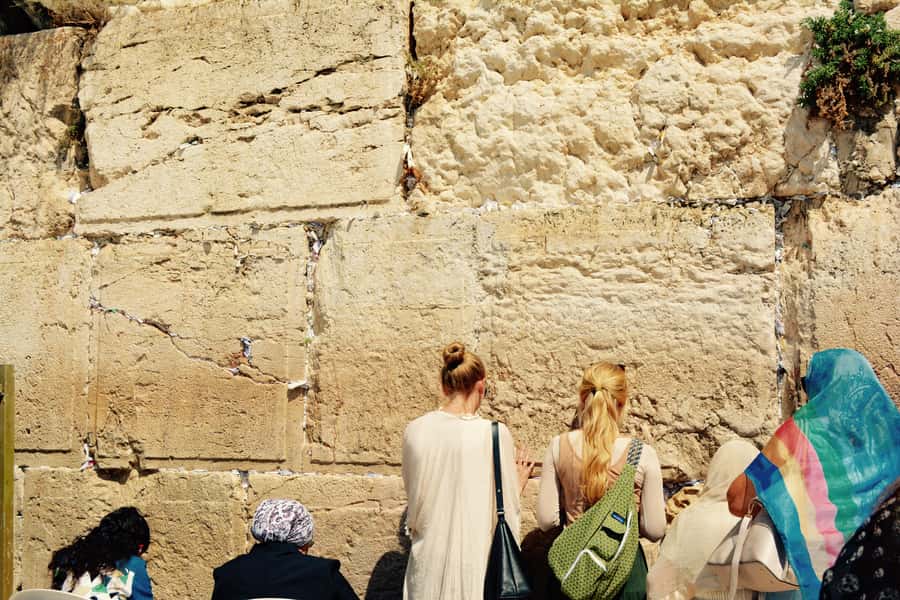
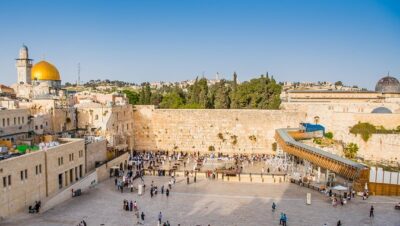
The Western Wall is one of the tour’s essential stops. It is described as the last remaining part of the Jewish Temple complex, and the guide places it within the story of the Jewish people and the long religious importance of the Temple Mount.
At the wall, your guide can help you understand what you are seeing beyond the familiar image of people praying beside large stones. The space has a serious, personal atmosphere, and it is still an active place of worship. You should be ready to follow local expectations for behavior and clothing.
The tour also includes King David’s Tomb in the Jewish Quarter. The site adds another layer to the story of Jerusalem, linking the city to the biblical foundations of the Jewish nation. The value here is not just the stop itself, but the way the guide connects the place to the larger sequence of Jerusalem’s religious and political past.
If you have a particular interest in Jewish history or worship, you may wish you had more time at the wall. That is one tradeoff of a four-hour group walk. You receive context for several major places, but the schedule is designed for an overview rather than a long private visit at every site.
Temple Mount, the Dome of the Rock, and Al-Aqsa
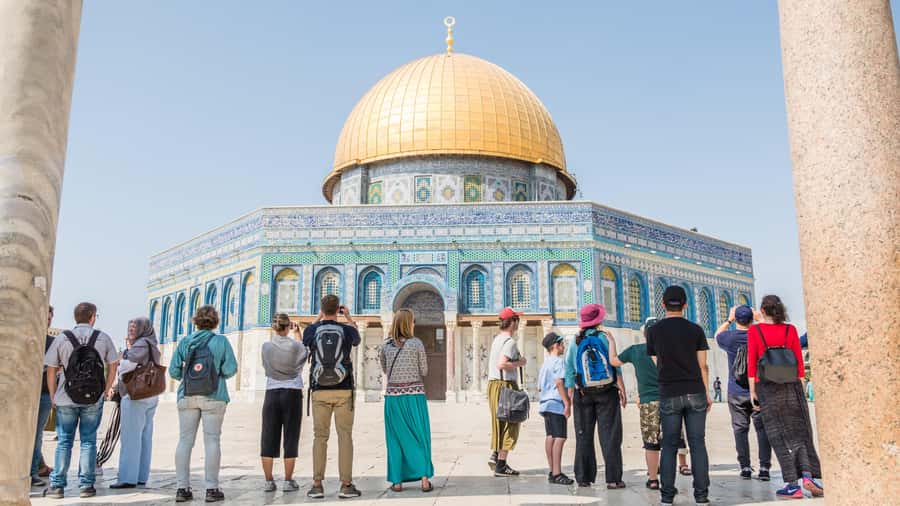
The Temple Mount is central to the tour’s attempt to explain Jerusalem through all three major monotheistic faiths. For Muslims, the area includes the Dome of the Rock, connected with the Prophet Mohammed’s ascent to heaven, and Al-Aqsa Mosque. For Jews, the same mount is tied to the ancient Temple. For Christians, it forms part of the setting for events that shaped the faith.
This is where timing matters most. The Temple Mount, including the Dome of the Rock and Al-Aqsa Mosque, is closed to visitors every Friday and Saturday, as well as during various Muslim and Jewish holidays. On those dates, the tour includes a viewpoint overlooking the mount instead.
Do not treat that viewpoint as a failed tour. It can give you a useful way to see the site as a whole and understand its place in the Old City. Still, if entering the compound is important to you, check the available date before booking and understand that access can change for religious or security reasons.
One particularly positive account describes a guide taking the group to the Dome of the Rock when access was possible. That is a special opportunity, but it should not be read as a promise that every departure enters every building. The tour description itself clearly warns that the site is sometimes closed.
The clothing rules also matter here and at other religious sites. Shorts and sleeveless shirts are not allowed. A scarf is recommended, and modest dress will make the day easier and more respectful. Bring your passport, or a copy, as requested in the practical instructions.
More Walking Tours in Jerusalem
- All Inclusive Walking Tour Old City Jerusalem
★ 5.0 · 83 reviews - Jerusalem Walking Tour: In the Footsteps of Jesus
★ 4.5 · 67 reviews - Boutique Walking Tour of Jerusalem
★ 5.0 · 64 reviews - Old City of Jerusalem Guided Walking Tour
★ 5.0 · 47 reviews
Via Dolorosa and the Christian Quarter
The Christian section of the walk follows the Via Dolorosa, the route associated with Jesus carrying the cross toward his crucifixion. Your guide puts the biblical account into place as you walk through the streets, rather than leaving the story as something you only hear inside a church.
The route is meaningful for Christian visitors, but it can also be useful for anyone interested in how religious memory shapes a city. The lanes are not a museum reconstruction. They are working streets, which makes the experience more immediate and sometimes more crowded or distracted than you might expect.
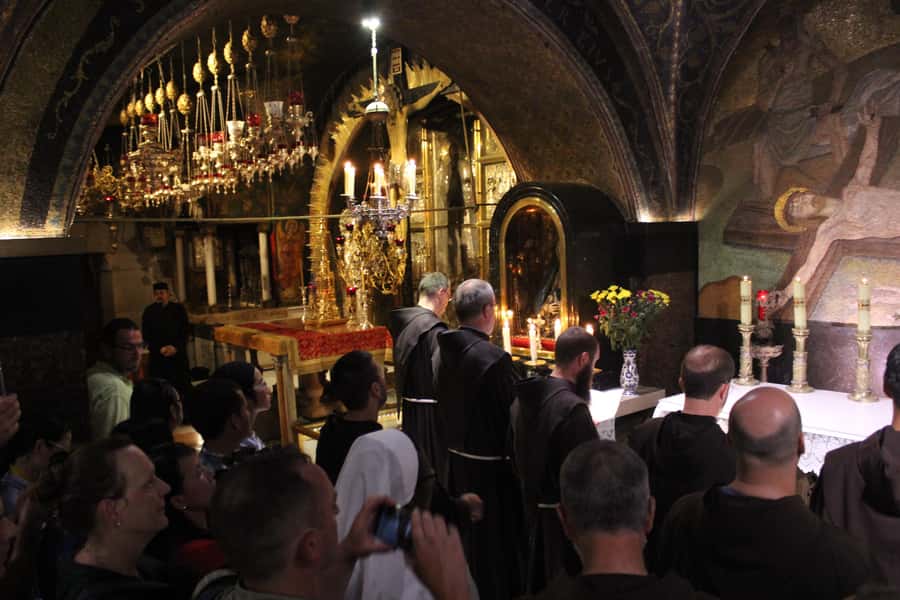
The Church of the Holy Sepulchre is the major Christian stop. You go inside and learn about the church’s connection with the crucifixion, burial, and resurrection of Jesus. The tour also refers to the discovery of the True Cross and includes the stone slab associated with the preparation of Jesus’ body after the crucifixion.
This church can be confusing without help. It contains several chapels and sacred points, and different Christian communities share responsibility for parts of the building. A guide helps you sort out what you are seeing and why the place matters.
Allow for a lively, sometimes crowded atmosphere. This is a functioning place of worship, not a quiet gallery. Services, queues, and other groups may affect how long you can stay in particular areas. The guide’s job is to explain the setting and keep the group moving, but you should not expect a private, unhurried church visit.
The Last Supper and stories placed on the ground
The walk also covers the room associated with the Last Supper. Along with the Via Dolorosa and Holy Sepulchre, this stop helps create a Christian-focused thread through the Old City.
The tour’s larger strength is the way it places stories where they are said to have happened. Instead of receiving a long lecture at one overlook, you hear about the Five Pillars of Islam near Islamic holy places, Jewish religious foundations near the Western Wall, and Christian traditions near the Via Dolorosa and Holy Sepulchre.
That method works well for first-time visitors. You may not remember every date or dynasty, but you are more likely to remember the connection between a story and a particular lane, wall, doorway, or courtyard.
The approach is not designed for specialists. If you already have a strong academic background in Jerusalem’s archaeology, theology, or political history, some explanations may feel introductory. For most people, that is a fair exchange for a clear route through a very complicated city.
Four hours on foot: pace, weather, and group comfort
The stated duration is four hours, and the strongest accounts praise the pace. People describe the walk as thorough without being rushed, with enough time to listen and ask questions. One account even appreciated that the tour ran longer than expected, though you should plan around the advertised four hours rather than count on extra time.
Summer heat can make the route harder. Bring water and a sun hat, and use the scarf for sun protection or modesty. A guide may seek shade when possible, but the Old City does not always offer a comfortable place for a whole group to stop.
Winter weather deserves equal attention. During one stormy departure, heavy rain and cold wind turned the streets into streams, yet the guide kept the group going. That kind of commitment is admirable, but it is also a warning: the tour is outdoors and can be unpleasant in bad weather. A waterproof layer and shoes with a firm grip would be sensible additions, even though only comfortable shoes are specifically required.
The walk suits people who want active sightseeing. Families can enjoy it, and one account notes that a guide used humor to keep children engaged. Still, young children, older adults, or anyone with knee, balance, or stamina concerns may find the stone streets tiring.
Is $57 a fair price for this Jerusalem tour?
At $57 per person, the tour offers good value if you want a guided introduction to the Old City’s main religious sites. You are paying for four hours with a live English-speaking guide, route planning, historical explanation, and help making sense of places that can otherwise feel overwhelming.
The price is especially reasonable for a first day in Jerusalem. A strong guide can show you where to return later, explain which sites deserve more time, and give you enough background to explore independently. Several people describe the tour as one of the best uses of their money in Jerusalem, and that assessment makes sense when you consider how much ground and subject matter it covers.
Food and drinks are not included. You should eat beforehand or carry water and a snack, while remembering that you will be walking through religious areas where eating may not always be convenient. Any falafel or shopping stop should be treated as incidental rather than part of the promised package.
The main limitation is depth. You see many important places, but the tour cannot give every site a long visit. If you want extended prayer time, detailed archaeology, or a specialist religious tour, you may prefer a private guide or separate visits after this introduction.
What the guide adds to a difficult city
The most praised part of this experience is the guide’s role. The names vary by departure, but the pattern is consistent: Tania, Shahar, Alex, Yoni, Nimrod, Tanya, Shimon, Orna, Hagar, and others are praised for explaining complex subjects in plain English and answering unexpected questions.
That matters in Jerusalem because the stories overlap. A single stone or hill can carry Jewish, Muslim, and Christian meaning, and a quick online explanation rarely tells you how those traditions relate to the physical place. The best guides keep the tone respectful and avoid making the tour a platform for political statements.
You should still ask questions. The tour appears to work best when the group engages with the guide. Ask for clarification when a biblical story, religious practice, or historical date becomes hard to follow. A patient guide can turn a good sightseeing walk into a much more useful lesson.
Group size is not specified, so do not assume a private or very small tour. One departure had seven people, but that does not establish the size for every date. Your experience may depend partly on how easily the group stays together in narrow streets.
Who should book this Old City walk?
I would choose this tour if you are visiting Jerusalem for the first time, want the key sacred places in one outing, and prefer a guide who can explain religious context without overwhelming you with academic detail.
It also suits English-speaking families, couples, and solo visitors who want a safe-feeling introduction to the Old City. The praise for calm guides, clear explanations, and good pacing is important for a place that can feel confusing at first.
I would hesitate if you have limited mobility, dislike four hours of walking, need guaranteed entry to the Dome of the Rock or Al-Aqsa Mosque, or want long periods of quiet reflection at each site. Check the date carefully if the Temple Mount is a priority, and dress modestly from the start.
The cancellation policy gives you some flexibility: you can cancel up to 24 hours before the tour for a full refund, and you can reserve now and pay later. That is useful when weather, schedules, or regional conditions may affect your plans.
Should you book it?
Yes, if you want a strong first look at Jerusalem’s Old City for $57. The route covers the Western Wall, Temple Mount area, Via Dolorosa, Church of the Holy Sepulchre, King David’s Tomb, and the four quarters while giving you a guide to connect the pieces.
Book it as an introduction, not the final word on Jerusalem. Wear proper shoes, bring water and a hat, carry your passport or a copy, and check whether your date falls during a Temple Mount closure. If you can accept the walking and the possibility of a viewpoint instead of entry to the mount, this is a practical and worthwhile way to begin your time in the city.
FAQ
How long is the Jerusalem Old City walking tour?
The tour lasts four hours. Starting times vary, so you need to check availability for your chosen date.
Where does the tour meet?
The meeting point is the stone bench just outside Jaffa Gate. Look for a guide wearing a green shirt with Guide written in yellow on the back.
What language is the tour conducted in?
The tour is conducted in English with a live English-speaking guide.
Does the tour visit the Western Wall?
Yes. The route includes the Western Wall and explains its religious and historical importance to Jewish people.
Does the tour enter the Church of the Holy Sepulchre?
Yes. The tour includes a visit inside the Church of the Holy Sepulchre, along with the Via Dolorosa and other Christian sites.
Can I enter the Dome of the Rock and Al-Aqsa Mosque?
Entry is not always possible. The Temple Mount, including the Dome of the Rock and Al-Aqsa Mosque, is closed to visitors every Friday, Saturday, and during various Muslim and Jewish holidays. On those days, the tour includes a viewpoint overlooking the Temple Mount.
What should I bring?
Bring comfortable shoes, water, a sun hat, a scarf, and your passport. A copy of your passport is accepted.
What clothing is not allowed?
Shorts and sleeveless shirts are not allowed. Modest clothing is necessary for the religious sites on the route.
Is the tour suitable for wheelchair users?
No. The tour is not suitable for wheelchair users or people with mobility impairments.
More Walking Tours
- Jerusalem: The Center of the Universe – Walk the “Holy City” with GaryTheGuide
★ 5.0 · 38 reviews - Magical Walking Tour in Old City of Jerusalem
★ 5.0 · 27 reviews - Jerusalem Jewish Orthodox Neighborhood Walking Tour
★ 4.0 · 21 reviews - Jerusalem Half Day Walking Tour (3 hours) from Jerusalem
★ 4.5 · 20 reviews
More Jerusalem Old City Tours
- Private Tour Jerusalem Old City
★ 5.0 · 118 reviews - Jerusalem Half Day Tour: Holy Sepulchre and Western Wall
★ 4.5 · 80 reviews - City of David and Underground Jerusalem Day Tour
★ 4.5 · 53 reviews - Full-Day Private and Guided Tour of the Jerusalem’s Old City
★ 5.0 · 43 reviews
Just added around Jerusalem
- jerusalem classic tour★ 5.0 · 3 reviews
- Jerusalem and the Dead Sea★ 5.0 · 3 reviews
- Private Walking Tour in Jerusalem’s Old City★ 5.0 · 3 reviews
- Jerusalem Running Tour-Experience the unique vibes of Jerusalem in your sneakers★ 5.0 · 3 reviews
- Jerusalem of 3 Religions in Russian★ 4.4 · 3 reviews
- Christian Jerusalem in Russian★ 5.0 · 3 reviews
- From Jerusalem: Masada Sunrise, Ein Gedi & Dead Sea★ 5.0 · 3 reviews
- Hebron & Ramallah Full-Day Guided Tour from Jerusalem★ 5.0 · 3 reviews
Jerusalem Old City Tours, compared.

Jerusalem Half Day Tour: Holy Sepulchre and Western Wall
Read our review →
Jerusalem Half-Day Tour from Tel Aviv: Holy Sepulchre and Western Wall
Read our review →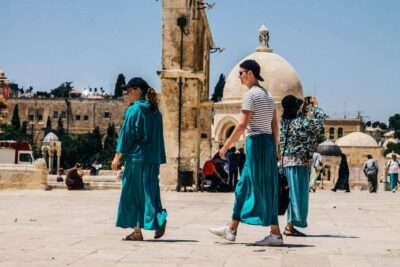
City of David and Underground Jerusalem Day Tour
Read our review →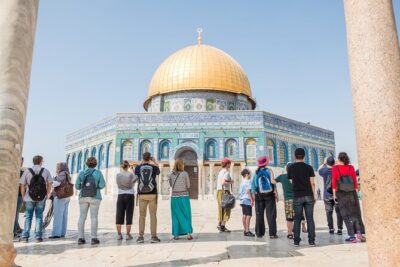
Browse the lists this tour appears in