

Review · WALKING TOURS
Jerusalem Jewish Orthodox Neighborhood Walking Tour
Jerusalem reveals its private side here. This walking tour takes you into Me’a She’arim, a Haredi neighborhood many visitors only see from the outside. I like the chance to hear about daily religious life from a local guide, and I especially like the stops at a bakery and community spaces. The modest dress code is essential, and the advertised timing and visits can vary.
I also appreciate the small group limit of 20 people, which should make questions easier and keep the walk manageable. The main drawback is that the experience description promises more than some participants actually received, including a home visit, synagogue entry, pastries, and a full four-hour program.
In This Review
- Key points at a glance
- Why Me’a She’arim is worth your afternoon
- Starting at Davidka Square at 4:30 pm
- Walking into Me’a She’arim
- The working synagogue and community spaces
- A bakery stop for rugelach and challah
- A Hasidic tomb and the neighborhood library
- The promised family visit and the biggest caveat
- What the $45 price really buys
- Clothing, conduct, and practical preparation
- Who should book this walk?
- Should you book the Jerusalem Haredi neighborhood tour?
- FAQ
- Where does the tour begin?
- What time does the tour start?
- Where does the tour end?
- How long is the tour?
- Is food included?
- What should I wear?
- What happens if the tour is canceled?
Key points at a glance

- A rare look at Me’a She’arim: Walk through one of Jerusalem’s Haredi neighborhoods with a guide from the local Ultra-Orthodox community.
- Local customs come first: Modest clothing is required for both men and women, and respectful behavior matters throughout the visit.
- Several community stops are planned: The experience includes a synagogue, community center, soup kitchen, bakery, library, and Hasidic tomb.
- Food adds a useful human touch: Rugelach and challah are part of the planned bakery experience, though food and drinks are not included in the price.
- Expect a timing mismatch: The details describe 2 hours 30 minutes, four hours, and about three hours in different places, so confirm the schedule before booking.
- Guides shape the experience: Motti earned especially strong praise for clear explanations, fair discussion, and patient answers.
Why Me’a She’arim is worth your afternoon
Jerusalem has plenty of famous sights, but this tour focuses on a living community rather than a monument. Me’a She’arim is home to Haredi Jewish families whose clothing, schedules, religious practice, education, and neighborhood rules differ sharply from the parts of Jerusalem most visitors know.
That difference is the point. You are not simply walking past old buildings while a guide recites dates. You are being introduced to customs and symbols that can be hard to understand from a distance. A local guide can explain why certain signs matter, how public space is used, and what daily life looks like inside the community.
I like this kind of tour because it asks you to pay attention to ordinary details. A bakery, a soup kitchen, a library, or a working synagogue can tell you more about a neighborhood than a grand viewpoint. At the same time, you should approach the walk with humility. This is a religious community, not a themed attraction, and the dress code and conduct rules are part of being a respectful visitor.
The guide is the key. Motti received particularly warm praise for explaining Haredi life clearly, answering questions, and presenting a fair view of this part of Israeli society. Another guide was praised for sharing information at a good pace and stopping often to explain important facts. The quality of the walk may depend heavily on who leads your group.
More Walking Tours in Jerusalem
- Jerusalem: Guided Walking Tour of the Old City
★ 4.7 · 386 reviews - All Inclusive Walking Tour Old City Jerusalem
★ 5.0 · 83 reviews - Jerusalem Walking Tour: In the Footsteps of Jesus
★ 4.5 · 67 reviews
Starting at Davidka Square at 4:30 pm
The meeting point is Abraham Jerusalem, at Ha-Nevi’im Street 67. The tour begins at 4:30 pm and returns to the same meeting point. Davidka Square is listed as the opening stop, with about 15 minutes there.
This is a practical place to begin. The square sits near the Mahane Yehuda Market, the Jaffa Road pedestrian area, and a Jerusalem light rail station. It also carries a wartime name, taken from the Davidka, a homemade mortar used by Jewish forces during the 1948 Arab-Israeli War.
You will probably spend this opening section getting oriented rather than sightseeing at length. The square works as a bridge between the more familiar city center and the Haredi neighborhood ahead. It is also useful for finding the meeting point by public transport.
Give yourself extra time to arrive. The information says the tour is near public transportation, but it does not provide a detailed route from your hotel or a precise meeting procedure beyond the address. A mobile ticket is accepted, so keep your booking available on your phone.
Walking into Me’a She’arim
The main neighborhood walk lasts about 1 hour 15 minutes in the listed itinerary. This is where the experience earns its price, provided the guide offers the promised context and access.
Your guide is described as a member of the local Ultra-Orthodox community. That gives the walk an important advantage. Haredi Jews are often called Ultra-Orthodox Jews or Haredim, a term connected with the idea of fearing God. The tour aims to explain the community from within, rather than treating it as an oddity to observe.
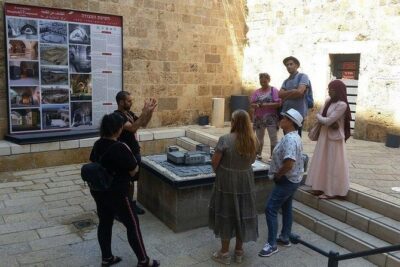
Expect the guide to point out religious symbols, customs, and important places along the streets. The supplied information does not name every site or give a precise route, so you should not expect a fixed sightseeing circuit with a detailed stop-by-stop map.
This part requires good manners. Wear conservative clothing before you arrive. Men and women both need to follow the modest dress requirement, and it is wise to avoid treating residents as photo subjects. The tour is about understanding how people live, not collecting snapshots of unusual clothing or private moments.
The neighborhood can be especially useful for visitors who have seen Haredi communities only from a taxi window. You may come away with a clearer sense of the community’s religious identity and its role in modern Jerusalem. The strongest feedback focused on the guide’s ability to explain this life in a balanced way, without turning the discussion into a political argument or a one-sided portrait.
The working synagogue and community spaces
The planned visits include a working synagogue, community center, and soup kitchen. These are valuable because they show how the neighborhood functions beyond its streets and storefronts.
A synagogue visit can help you understand the central role of prayer and communal religious life. Yet you should be realistic about access. One account says the synagogue was viewed through a window rather than entered, so the exact experience may depend on permission, timing, or the guide’s arrangements.
The community center and soup kitchen offer another useful angle. They point to the support systems that serve local families and residents. The supplied information does not promise a hands-on activity or a meal at the soup kitchen, so think of these as interpretive stops rather than services provided to the group.
I would ask the guide early in the walk which planned locations are open that day. Religious institutions often need to protect privacy and follow their own schedules. A good guide should explain changes plainly instead of allowing you to assume that every advertised interior visit will happen.
More walking tours:
- Boutique Walking Tour of Jerusalem
★ 5.0 · 64 reviews - Old City of Jerusalem Guided Walking Tour
★ 5.0 · 47 reviews - Jerusalem: The Center of the Universe – Walk the “Holy City” with GaryTheGuide
★ 5.0 · 38 reviews - Magical Walking Tour in Old City of Jerusalem
★ 5.0 · 27 reviews
A bakery stop for rugelach and challah
Food is one of the easiest ways to connect with a neighborhood. The tour description includes a bakery visit with samples of Jewish pastries and bread, including rugelach and challah.
Rugelach gives you a sweet pastry associated with Jewish baking, while challah is the braided bread traditionally linked with Jewish meals, especially the Sabbath. These foods make the cultural discussion more concrete. You can hear about tradition, then encounter it in a place where local people actually buy bread and pastries.
There is an important catch: food and drinks are not included. One account says food bought at a snack shop required an additional payment. I would bring some Israeli shekels or a payment method that works locally, and I would treat the tasting as an opportunity to buy something rather than assume the cost is covered.
The bakery stop may be short, but it can be one of the most memorable moments if the guide explains what you are eating. Ask what makes the pastries local to this community and whether the bread is connected to a particular religious custom. The information does not guarantee a set tasting menu, so keep your expectations flexible.
A Hasidic tomb and the neighborhood library
The walk also includes an important Hasidic tomb and a neighborhood library with ancient Jewish religious artifacts. These stops add historical and spiritual depth to what could otherwise be a street-level introduction to Haredi life.
A Hasidic tomb gives the guide a chance to explain the place of respected religious figures and the way memory is preserved within the community. The supplied details do not identify the person buried there, so I would not book this expecting a famous landmark with a long museum-style presentation.
The library sounds particularly distinctive. Rather than viewing artifacts in a major national museum, you may see ancient religious objects held within a local institution. That setting could make the material feel closely tied to the people who preserve and study it.
Still, access is worth confirming. Some participants said that several promised stops did not occur, while others found the guide and neighborhood explanation excellent. The guide may have to adjust the route or substitute a viewing point. That does not automatically ruin the walk, but it affects the value of a $45 ticket.
The promised family visit and the biggest caveat
The most personal feature is the planned welcome into a Haredi family home. In theory, this could be the strongest part of the experience. A home visit can show daily life in a way no public street or institution can.
In practice, this is the feature I would treat most cautiously. At least one account says the family visit did not happen. Since private invitations can change, you should ask at the start whether the home visit is confirmed and what the alternative will be if it is not.
The same caution applies to the full program. The experience is priced at $45 per person, while the supplied details give several different lengths: about 2 hours 30 minutes, four hours, and roughly three hours in one account. The listed stops add up to only about 1 hour 30 minutes, though time can also be spent walking between them and discussing the neighborhood.
That conflict matters. A two-and-a-half-hour walk at $45 can be fair if you receive a local guide, meaningful access, food sampling, and careful interpretation. A shorter walk with only an exterior tour is a weaker deal. I would confirm the expected end time and included stops before you commit.
What the $45 price really buys
The ticket includes the guided tour only. Food and drinks are extra, and no separate admission fees are listed for the stops. You are paying mainly for access, interpretation, and the guide’s local perspective.
That can be worthwhile for visitors who would not feel comfortable entering Me’a She’arim alone or who want more than a quick look at the neighborhood. A local guide can help you read the setting and avoid careless behavior. The small maximum group of 20 also gives the tour a more personal feel than a large coach outing.
The value drops if the tour becomes only a walk with general commentary. The strongest praise centered on explanations, answers, fairness, and insight into a little-understood way of life. The harshest criticism focused on missing promised elements and the shorter-than-expected duration.
I would compare this cost with your own interests. If you want a standard Jerusalem history walk, spend the money elsewhere. If you want a direct introduction to Haredi society and are prepared for some flexibility, the price is reasonable when the guide delivers the full program.
Clothing, conduct, and practical preparation
Plan your clothing before leaving your hotel. Modest dress is required for both men and women. The data does not specify exact sleeve, hemline, or head-covering rules, so ask the operator for current guidance if you are unsure.
The tour is near public transportation, allows service animals, and says most people can participate. It is a walking activity, so comfortable shoes are sensible, though the supplied information does not describe the route’s exact surfaces or number of stairs.
The experience requires good weather and a minimum number of participants. If poor weather or low enrollment cancels the tour, you are offered another date or a full refund. You can cancel for a full refund up to 24 hours before the start time, but changes or cancellations inside that window are not accepted.
Because the tour starts at 4:30 pm, the changing light may shape the mood of the walk. Do not assume the late start guarantees a particular sunset or evening program. The operator is Abraham Tlalim Tours LTD, and the mobile ticket should make check-in simple at the Abraham Jerusalem meeting point.
Who should book this walk?
I would recommend it to you if you are curious about Jewish religious life, modern Jerusalem, and communities that are easy to misunderstand from the outside. It suits adults and older children who can listen respectfully and follow modest dress rules.
It is also a good choice for anyone who values conversation more than a long list of monuments. The best guides appear to explain complex social questions in a fair, approachable way. Motti’s name is worth noting, though you should not assume he will lead every departure.
I would hesitate if you need a tightly controlled itinerary, guaranteed interior access, or a precise four-hour schedule. The family home, synagogue entry, pastry tasting, and artifact visit may not all happen as described. You should also budget separately for any food.
Should you book the Jerusalem Haredi neighborhood tour?
Book it if the chance to hear from a local Haredi guide matters more to you than ticking off guaranteed sights. The neighborhood walk, religious symbols, bakery, community spaces, and local explanations can give you a perspective that standard Jerusalem sightseeing rarely provides.
Before paying, confirm three things: the actual duration, the expected family and synagogue access, and whether the bakery food is a sample or a separate purchase. If the operator confirms a full program, $45 is a sensible price for this kind of introduction. If the schedule has been shortened, decide if the guide’s local perspective alone is enough to justify it.
FAQ
Where does the tour begin?
It begins at Abraham Jerusalem, Ha-Nevi’im Street 67, Jerusalem, postal code 9470211.
What time does the tour start?
The stated start time is 4:30 pm.
Where does the tour end?
The activity ends back at the meeting point.
How long is the tour?
The supplied details give different lengths: about 2 hours 30 minutes, four hours, and approximately three hours in one account. Confirm the expected duration before booking.
Is food included?
No. Food and drinks are not included. The program includes a bakery stop for items such as rugelach and challah, but purchases may cost extra.
What should I wear?
Modest dress is required for both men and women. The provided information does not give more precise clothing rules.
What happens if the tour is canceled?
If poor weather or an insufficient number of participants causes cancellation, you can choose another date or receive a full refund. You can also cancel for a full refund if you do so at least 24 hours before the start time.
Just added around Jerusalem
- jerusalem classic tour★ 5.0 · 3 reviews
- Jerusalem and the Dead Sea★ 5.0 · 3 reviews
- Private Walking Tour in Jerusalem’s Old City★ 5.0 · 3 reviews
- Jerusalem Running Tour-Experience the unique vibes of Jerusalem in your sneakers★ 5.0 · 3 reviews
- Jerusalem of 3 Religions in Russian★ 4.4 · 3 reviews
- Christian Jerusalem in Russian★ 5.0 · 3 reviews
- From Jerusalem: Masada Sunrise, Ein Gedi & Dead Sea★ 5.0 · 3 reviews
- Hebron & Ramallah Full-Day Guided Tour from Jerusalem★ 5.0 · 3 reviews
Walking Tours, compared.


Jerusalem Walking Tour: In the Footsteps of Jesus
Read our review →



Browse the lists this tour appears in