
Review · HALF-DAY
Holy Jerusalem Half-Day Tour From Jerusalem
Jerusalem comes into focus from above. I like the Mount Scopus panorama and the way this route links Jewish, Christian, and ancient city landmarks in one morning. I also like that a professional guide handles the complicated Old City route, from the Armenian Quarter to the Western Wall and Church of the Holy Sepulchre. The main concern is timing: one reported booking began much later than the stated pickup, leaving only about three hours of sightseeing.
This is a compact introduction to Jerusalem rather than a slow, detailed study of every quarter. You will walk on uneven stone streets, pass through crowded markets, and visit active places of worship, so comfortable shoes and modest clothing matter. Weather can also change the experience quickly. Heavy rain once made it hard for a participant to appreciate the sites.
In This Review
- Key points to know before booking
- Mount Scopus puts Jerusalem in one frame
- Down through the Kidron Valley
- Entering through Zion Gate and the Armenian Quarter
- The Jewish Quarter and the Western Wall
- Following the Via Dolorosa
- Inside the Church of the Holy Sepulchre
- Ending among the Old City markets
- Five hours, or less in practice?
- Is $385 per person good value?
- Who will get the most from this tour?
- Should you book the Holy Jerusalem Half-Day Tour?
- FAQ
- Where does the tour meet?
- How long does the tour last?
- What language is the tour conducted in?
- Which places are included?
- Is hotel drop-off included?
- What should you wear and bring?
- Are food and drinks included?
- Can you cancel for a refund?
- Does the price include insurance?
Key points to know before booking
- Mount Scopus gives you the big picture first: You look across the Jewish cemetery, Old City walls, and Dome of the Rock before entering the historic center.
- The route covers three major Old City quarters: You enter through Zion Gate, cross the Armenian Quarter, and continue through the Byzantine Cardo and Jewish Quarter.
- The Western Wall and Church of the Holy Sepulchre are the main stops: Both are active religious sites, not museum displays, so dress and behavior matter.
- The tour finishes inside the Old City: Hotel drop-off is not included, which is useful if you want to continue exploring on foot but less convenient if you need to return to your hotel.
- Guide quality matters here: The route is packed with religious and historical meaning, and the strongest praise centers on guides who explain the sites clearly.
- The listed price is substantial: At $385 per person, the value depends heavily on the actual start time, transport arrangement, and amount of guided time you receive.
Mount Scopus puts Jerusalem in one frame
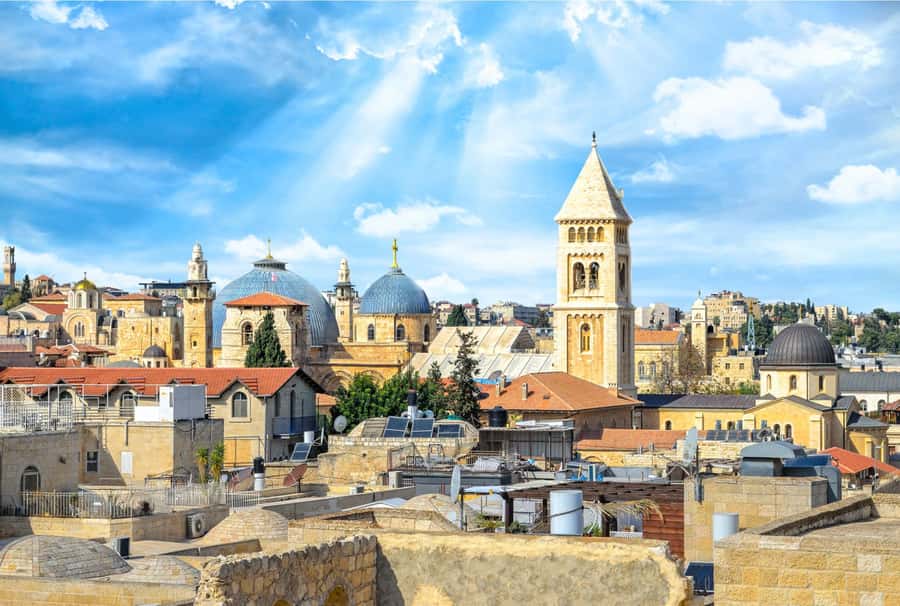
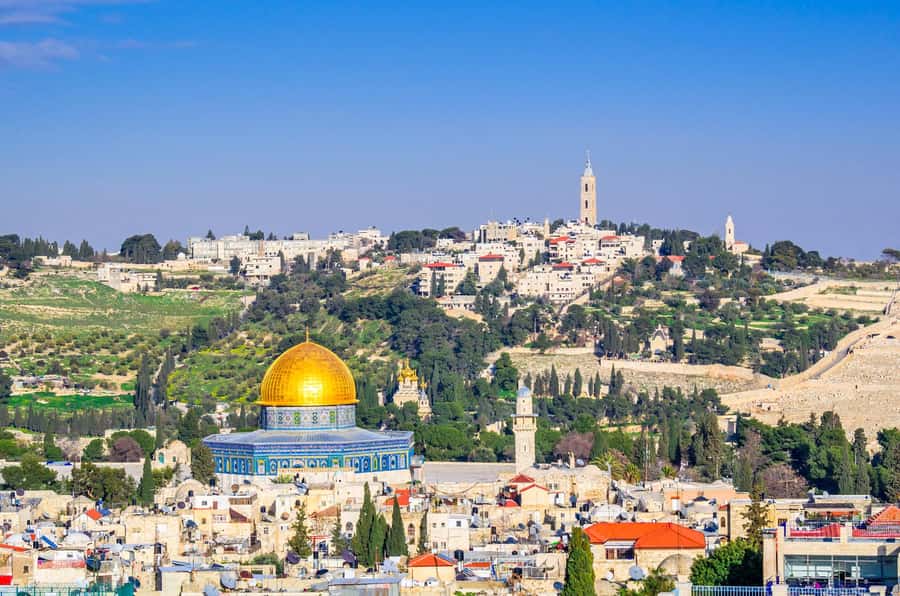
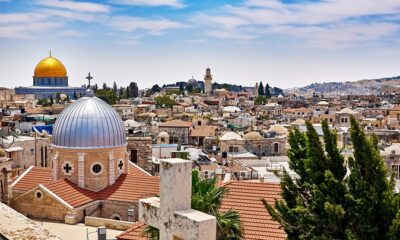
The tour begins at Mount Scopus, one of the best places to understand Jerusalem’s layout before the narrow lanes take over. From here, you look down toward the ancient Jewish cemetery, the Old City, and the Dome of the Rock on Temple Mount.
This first stop does useful work. Jerusalem can feel like a maze once you enter the Old City, with walls, gates, quarters, and holy buildings packed into a small area. The view from Mount Scopus lets you see how the pieces fit together.
Your guide can also point out the Temple Mount and explain the importance of the Second Temple, which was destroyed in AD 70. The view connects the modern city to the ancient city that once filled this ridge and valley.
Bring patience for this opening stop. The value comes from orientation and explanation rather than from a long list of attractions. If the sky is clear, you get a sweeping view. If rain or haze moves in, the panorama loses much of its force. One participant specifically found that heavy rain made the day harder to enjoy, so a weather check is worth doing before you leave.
A few more Jerusalem trips worth weighing up
- Travel to Bethlehem Half Day Guided Tour from Jerusalem & TelAviv
★ 5.0 · 239 reviews - Jerusalem Half-Day Sightseeing Tour
★ 3.9 · 177 reviews - From Jerusalem: Dead Sea Chill Out Half-Day Trip
★ 4.7 · 165 reviews
Down through the Kidron Valley
From Mount Scopus, the vehicle follows the winding road toward the Kidron Valley. The change in setting is quick. You move from a broad city view to a valley lined with ancient burial monuments and religious sites.
The Garden of Gethsemane is one of the key stops in this section. Nearby, you see the Church of All Nations, a Christian place of worship linked with the final hours of Jesus. The tour does not treat the site as an isolated church visit. It places the garden, valley, city walls, and Mount of Olives area into one connected view.
The Kidron Valley also contains ancient tombs associated with Absalom, Jehoshapat, Benei Hezir, and Zechariah. These monuments help explain why the valley feels so layered. Here, the past is not tucked behind glass. It appears in stone structures cut into the slopes and in religious traditions that remain important today.
This part of the route is mainly visual and interpretive. The supplied details do not promise long interior visits or extended time at each tomb. If your main goal is to see every church interior in detail, five hours will feel short. If you want a guided introduction to the setting around Jerusalem’s eastern edge, it makes a strong opening.
Entering through Zion Gate and the Armenian Quarter

The walking portion begins as you enter the Old City through Zion Gate. From here, the route moves into the Armenian Quarter before reaching the Byzantine Cardo.
Jerusalem’s Old City is divided into quarters, and the Armenian Quarter often feels quieter than the market streets farther ahead. The guide’s role is important because the boundaries are not always obvious when you are walking. A good explanation turns a simple gate and lane into part of the city’s long story.
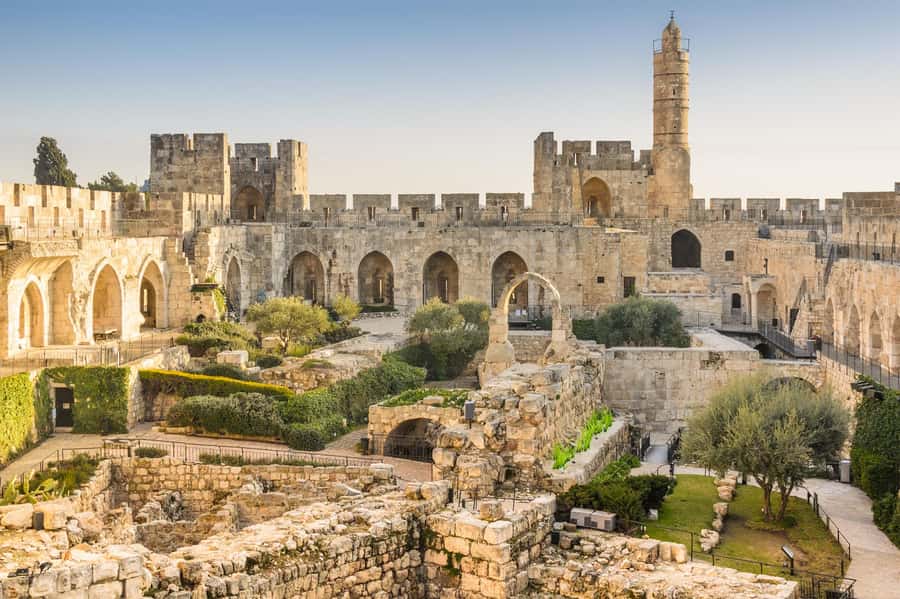
The Cardo is one of the most interesting stops for anyone who wants to see how archaeology fits into daily life. Excavations exposed the old street, and specialty shops now occupy spaces where Crusader-era stores once stood. You get both the remains of the earlier street and a living commercial area, rather than a bare archaeological site.
Keep your pace flexible here. The Old City is a working neighborhood as well as a historic center. Shops, worshippers, local residents, and tour groups all use the same narrow routes. That makes the walk feel real, but it can also slow the group.
The Jewish Quarter and the Western Wall

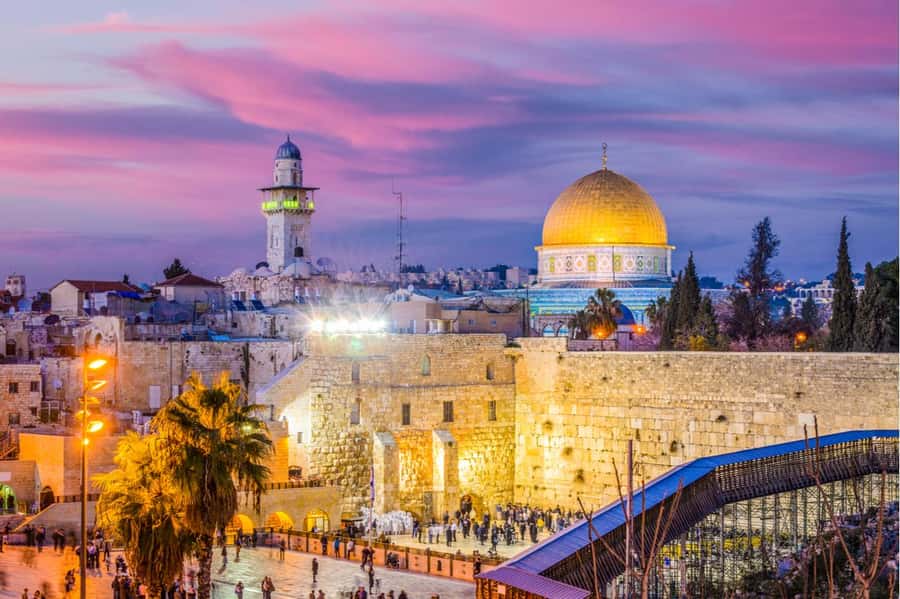
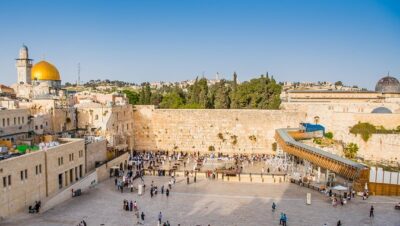
The tour continues through the Jewish Quarter to the Western Wall, the most important stop for Jewish religious life on this route. The wall is part of the outer supporting structure of the Second Temple complex, destroyed in AD 70.
You will see people from around the world praying at the wall and placing notes between its stones. That detail gives the visit a human scale. This is not simply an old structure to photograph. It remains a place of prayer, and you should approach it with quiet respect.
The guide can help you understand why the wall carries such weight even though it was not the temple itself. The setting also brings the Second Temple period into sharper focus after the earlier view from Mount Scopus.
Dress modestly for this stop and for the churches later in the route. The information says modest dress is required, so avoid treating this as an optional suggestion. Comfortable footwear is equally important. The tour combines vehicle transfers with a substantial Old City walk on stone streets, and the day is more enjoyable when your shoes are built for walking rather than photographs.
A completely different sort of day out of Jerusalem:
- From Jerusalem: Masada & Dead Sea Full Day Tour with Pick Up
★ 4.5 · 815 reviews - Masada and the Dead Sea Day Trip from Jerusalem
★ 4.5 · 757 reviews - From Jerusalem: Nazareth and Sea of Galilee Tour
★ 4.5 · 588 reviews - Nazareth and the Sea of Galilee Day Trip from Jerusalem
★ 4.5 · 446 reviews
Following the Via Dolorosa
After the Western Wall, you continue toward the Via Dolorosa, also called the Way of Sorrows. Along the route, the guide pauses at several Stations of the Cross.
For Christian visitors, this is the emotional center of the tour. The route follows the traditional path associated with Jesus’ final journey before crucifixion. Even if you are not visiting for religious reasons, the Via Dolorosa shows how faith has shaped the Old City’s streets, chapels, signs, and daily traffic.
The route can feel compressed because the Old City offers more detail than a five-hour tour can absorb. You may pass from a small station to a busy lane within moments. That is part of Jerusalem’s character, but it means you should listen closely when the guide stops to explain a location.
Do not expect a quiet pilgrimage walk from start to finish. The same streets serve shops and local businesses, and the markets grow busier as you move along. The mix of devotion and commerce can feel jarring, yet it is also an honest picture of the Old City.
Inside the Church of the Holy Sepulchre
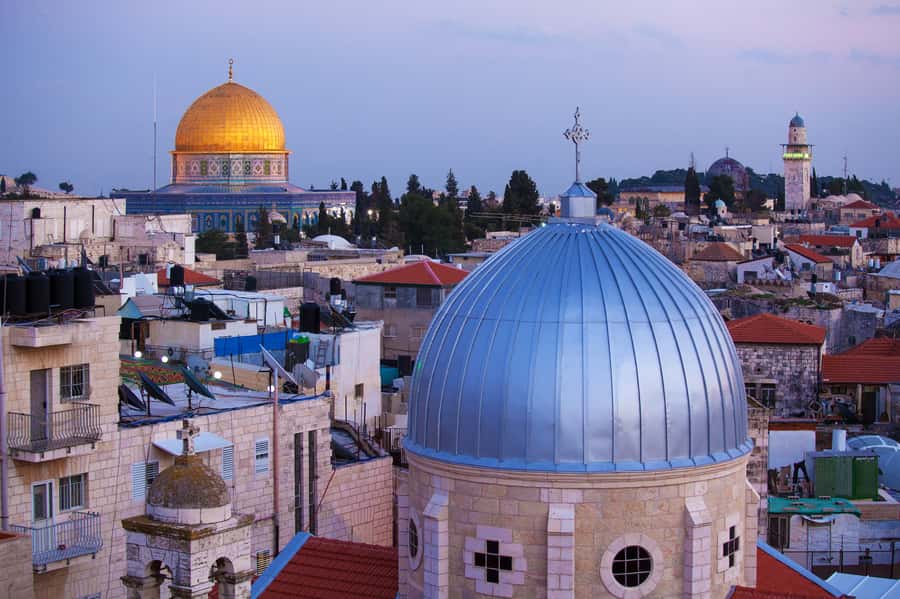
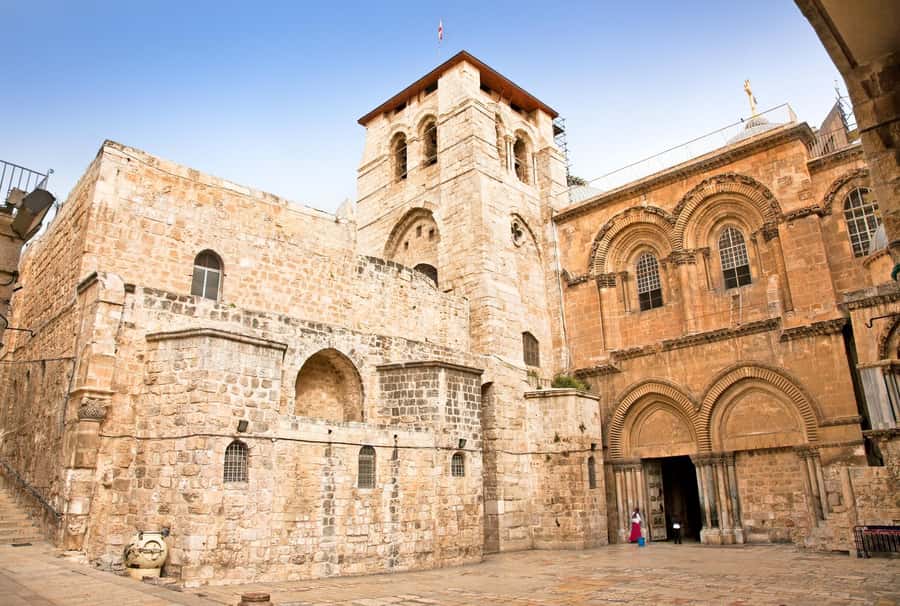
The final major religious stop is the Church of the Holy Sepulchre. The basilica occupies the site where Jesus is believed to have been crucified, and it contains his burial tomb according to Christian tradition.
This is a large, ornate place of worship that has been renovated, rebuilt, and expanded over many centuries. Its appearance reflects that long building history. Rather than one simple church interior, you encounter a complex basilica with several areas tied to different parts of the Christian story.
The church can be difficult to understand without guidance. The route, religious traditions, and layers of construction are not always clear at first glance. This is where the guide’s ability to explain matters most, and strong guide service is one of the best reasons to consider the tour.
Allow for a busy atmosphere. The supplied information does not guarantee a private visit or a set amount of time inside. Services, worshippers, and other groups may affect how long you can pause at a particular point. Go in ready to observe respectfully rather than expecting a museum-style visit with empty rooms.
Ending among the Old City markets
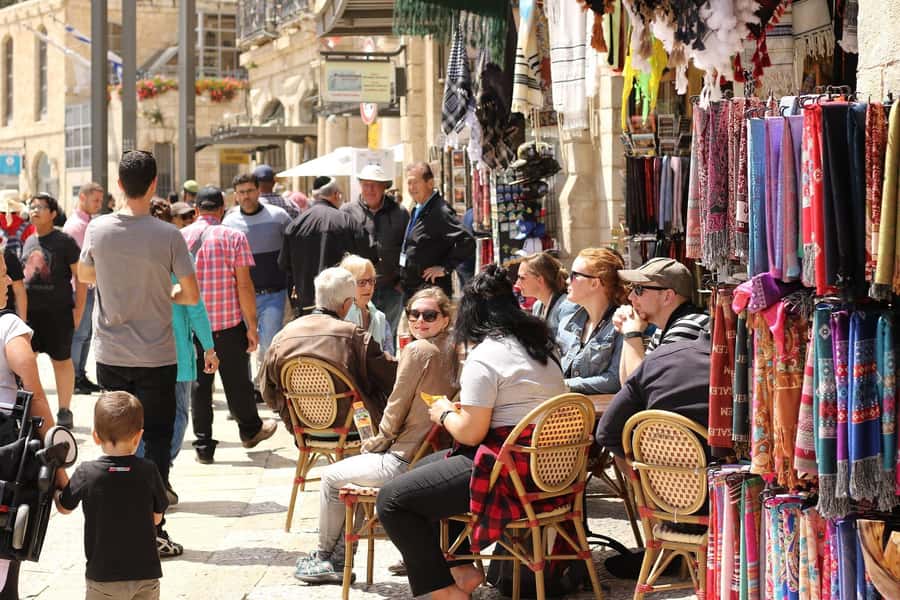
The tour ends with a walk through the Old City markets, at approximately 1:00 PM. These lanes are a natural place to finish because they connect the historic sights with the modern life of the city.
You can look for distinctive souvenirs and browse the shops as you make your way out. The phrase City of Gold is often associated with Jerusalem, and the market gives you a chance to take home something linked to the city rather than buying from a generic shop outside the old walls.
There is a practical advantage here: you finish in the Old City, where you can continue exploring on your own. You might want lunch, more time in the quarters, or a second look at a site that went by quickly.
The drawback is that hotel drop-off is not included. If you are staying elsewhere in Jerusalem, you need to arrange your own return. The tour includes hotel pickup, but the stated meeting point is the David Citadel Hotel at 7 King David Street, Jerusalem. Confirm exactly where and when you will be collected, especially because the timing has caused confusion for at least one booking.
Five hours, or less in practice?
The advertised duration is five hours, but the amount of active sightseeing depends on the pickup and departure schedule. One reported experience had a 7:50 AM summons followed by a 9:30 AM start, leaving little more than three hours for the actual route.
That is a serious point at this price. You are paying $385 per person, so you should know whether the clock includes waiting, vehicle collection, or transfers between hotels. Ask for the precise pickup time and expected Old City arrival before committing.
The tour is conducted in English with a live guide. An air-conditioned vehicle is included, which is useful for the drive between Mount Scopus, the Kidron Valley, and the Old City. The group size is not specified, so you should not assume a small private outing or a quick pace through the lanes.
The strongest guide feedback praises clear explanations and impressive command of the places. That matters more here than it would on a simple sightseeing loop. The meaning of the Western Wall, Via Dolorosa, and Holy Sepulchre is tied to details that are easy to miss without context.
Is $385 per person good value?
At $385 per person, this is not a budget half-day. The cost can make sense if you want hotel pickup, an air-conditioned vehicle, and a guide to connect the major sacred sites without arranging transport yourself.
The price is harder to justify if the actual guided portion is closer to three hours or if you already know Jerusalem well. The route covers a lot, but it does not promise food, drinks, hotel drop-off, or insurance. Those extras are your responsibility.
I would judge the value by three questions:
- Will the guide give you clear historical and religious context?
- Is the pickup schedule efficient, with little waiting?
- Do you want to finish in the Old City and continue independently?
If the answer to all three is yes, the tour can save you the work of planning a complicated morning. If not, the cost may feel high for a route that ends before lunch and leaves you to arrange your way back.
Food and drinks are not included, so plan to eat after the tour. Since the finish is in the Old City, that may be convenient, but the tour itself does not provide a meal stop.
Who will get the most from this tour?
I would recommend this experience to a first-time Jerusalem visitor with limited time. You see the city from Mount Scopus, visit the Kidron Valley, enter the Old City, and reach two of its most important religious sites in one tightly planned outing.
It also suits visitors who want a guide to handle the cultural details. The Old City brings together Jewish, Christian, and Armenian traditions in a small area. A good guide helps you understand what you are seeing instead of leaving you with a series of disconnected photographs.
This is less suitable for someone who wants a slow, contemplative visit. Five hours is not enough to linger at every station, explore the quarters fully, or study the Church of the Holy Sepulchre at length. It is also not ideal if you need a guaranteed return to your hotel.
Dress rules and walking demands make it a poor choice for anyone unwilling to wear modest clothing or comfortable shoes. Weather deserves attention too. Rain can make the stone streets and outdoor viewpoints less pleasant, and it may reduce the value of the Mount Scopus stop.
The cancellation terms are helpful if plans are uncertain: you can cancel up to 24 hours in advance for a full refund, and reserve now while paying later. Those terms do not fix a weak schedule, so timing remains the detail I would confirm first.
Should you book the Holy Jerusalem Half-Day Tour?
Book it if you want a guided first look at Jerusalem’s most important sacred places and value hotel pickup over independent planning. The route is well chosen: Mount Scopus gives you orientation, the Kidron Valley adds ancient context, and the Old City brings you to the Western Wall and Church of the Holy Sepulchre.
I would hesitate at $385 if the operator cannot give you a firm start time or explain how much of the five hours is spent sightseeing. The reported delay is the main warning sign, especially for a tour that already packs a great deal into one morning.
For a short visit, this can be a useful introduction. For a deeper understanding of Jerusalem, treat it as your first chapter, not the whole book. Confirm pickup, dress modestly, wear good shoes, and plan to continue exploring after the 1:00 PM finish.
FAQ
Where does the tour meet?
The listed meeting point is the David Citadel Hotel at 7 King David Street, Jerusalem 94101, Israel. Hotel pickup is included, so confirm the exact pickup arrangement when booking.
How long does the tour last?
The stated duration is five hours. The tour is expected to end in the Old City at approximately 1:00 PM.
What language is the tour conducted in?
The tour has a live English-speaking guide.
Which places are included?
The route includes Mount Scopus, the Garden of Gethsemane, the Church of All Nations, ancient tombs in the Kidron Valley, Zion Gate, the Armenian Quarter, the Byzantine Cardo, the Jewish Quarter, the Western Wall, the Via Dolorosa, the Stations of the Cross, the Church of the Holy Sepulchre, and the Old City markets.
Is hotel drop-off included?
No. Hotel pickup is included, but hotel drop-off is not. The tour ends in the Old City.
What should you wear and bring?
Modest dress is required, and comfortable shoes are recommended. You should also plan for changing weather, since much of the experience takes place outdoors or on Old City streets.
Are food and drinks included?
No. Food and drinks are not included in the tour price.
Can you cancel for a refund?
You can cancel up to 24 hours in advance for a full refund.
Does the price include insurance?
No. Insurance is not included.
Just added around Jerusalem
- jerusalem classic tour★ 5.0 · 3 reviews
- Jerusalem and the Dead Sea★ 5.0 · 3 reviews
- Private Walking Tour in Jerusalem’s Old City★ 5.0 · 3 reviews
- Jerusalem of 3 Religions in Russian★ 4.4 · 3 reviews
- Jerusalem Running Tour-Experience the unique vibes of Jerusalem in your sneakers★ 5.0 · 3 reviews
- From Jerusalem: Masada Sunrise, Ein Gedi & Dead Sea★ 5.0 · 3 reviews
- Christian Jerusalem in Russian★ 5.0 · 3 reviews
- Hebron & Ramallah Full-Day Guided Tour from Jerusalem★ 5.0 · 3 reviews
Half-Day, compared.
Travel to Bethlehem Half Day Guided Tour from Jerusalem & TelAviv
Read our review →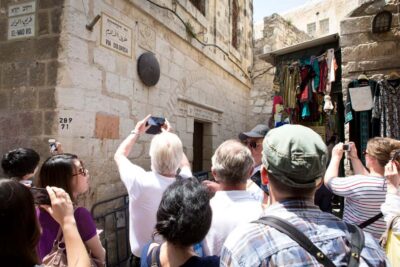
Jerusalem Half Day Tour: Holy Sepulchre and Western Wall
Read our review →
Jerusalem Half-Day Tour from Tel Aviv: Holy Sepulchre and Western Wall
Read our review →
Browse the lists this tour appears in