
Review · DEAD SEA TOURS
Jerusalem and the Dead Sea Tour
Jerusalem packs a lot into one day. This 10-hour tour combines major Holy Land sights with time at the Dead Sea, making it a practical choice if you want a broad first look without arranging several separate rides. I especially like the opening view from Mount Scopus, the walk through Jerusalem’s Old City, and the chance to float in the Dead Sea before returning to your hotel.
The strongest part is the guiding. Guides such as Itamar, Norbert, Abishai, Lorne, Zahi, and Amir have been praised for clear explanations, humor, and a personal touch. The main consideration is time: Jerusalem and the Dead Sea both deserve more than a few hours, and some departures have included crowded stops, organized shopping or lunch breaks, and confusing changes of bus or guide.
In This Review
- Key things to know before booking
- Why this tour works as a first look at Israel
- Mount Scopus and the first view of Jerusalem
- Walking the Old City for two hours
- The Jewish Quarter and Byzantine Cardo
- The Western Wall and a sacred pause
- Via Dolorosa and the Church of the Holy Sepulchre
- The Muslim Quarter and bazaar
- The ride to the Dead Sea
- Two hours at the Dead Sea
- Guides, group size, and the human factor
- What the $106 price really covers
- Who should book this day trip?
- Final verdict
- FAQ
- How long does the Jerusalem and Dead Sea tour last?
- Is hotel pickup and drop-off included?
- What places in Jerusalem does the tour visit?
- How much time is spent at the Dead Sea?
- Are food and drinks included?
- What should I bring to the Dead Sea?
- Is the tour suitable for young children?
Key things to know before booking
- Two major sights in one long day: You see Jerusalem’s Old City in the morning and visit the Dead Sea later, with transport between them.
- A powerful first view: Mount Scopus offers a wide look across Jerusalem toward the Dome of the Rock and Temple Mount.
- Holy sites require respectful clothing: Cover your shoulders and knees, and skip shorts if you want to avoid being refused entry.
- The Old City involves steady walking: Bring comfortable shoes for stone streets, steps, narrow lanes, and a busy schedule.
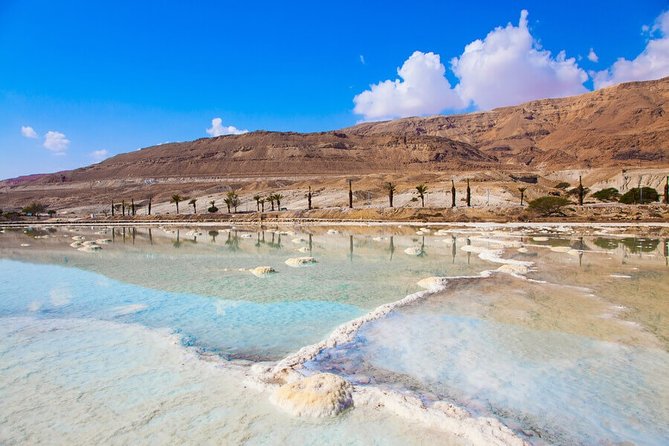
- The Dead Sea stop is hands-on: You can use mineral-rich black mud, rinse off, and float in the salt-heavy water.
- The $106 price buys convenience: Hotel pickup, transport, a guide, and entrance fees are included, but food, drinks, towels, and personal purchases are not.
Why this tour works as a first look at Israel
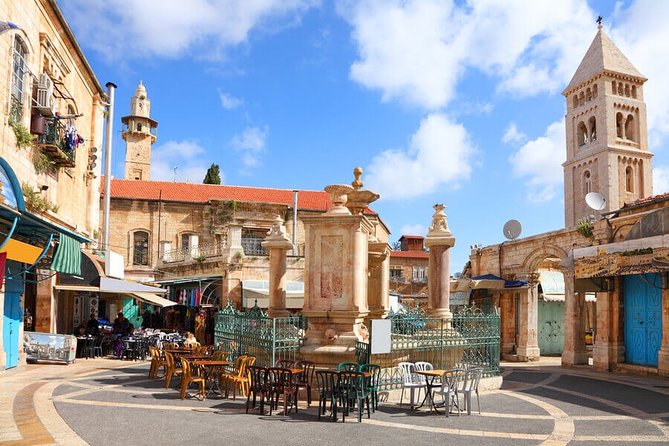
Jerusalem and the Dead Sea offer very different experiences. Jerusalem is layered, crowded, and full of sacred places shared by several faiths. The Dead Sea is open, quiet, and physical. You do not simply look at it. You step into water so salty that floating takes almost no effort.
This tour links those two settings in one day. That saves planning time and removes the need to work out intercity transport, local meeting points, and return travel. Hotel pickup and drop-off are included, and the vehicle is air-conditioned, a useful comfort during a long day.
The tradeoff is pace. A 10-hour outing sounds generous, but Jerusalem alone can fill a day. You will see many important places, yet most stops are short. If your main goal is prayer, museum visits, long time inside churches, or relaxed shopping in the Old City, a Jerusalem-only tour would suit you better.
The group can reach up to 40 people. That keeps the price moderate, but it can also make head counts and meeting points important. Keep close to your guide, note the meeting time, and make sure you know the exact place to regroup.
More ways to get down to the Dead Sea:
- From Jerusalem: Masada & Dead Sea Full Day Tour with Pick Up
★ 4.5 · 815 reviews - Masada and the Dead Sea Day Trip from Jerusalem
★ 4.5 · 757 reviews - From Jerusalem: Masada&Dead Sea Tour INCLUDING ENTRANCE FEES
★ 4.3 · 392 reviews
Mount Scopus and the first view of Jerusalem
The day begins around 8:30 am with pickup from a Jerusalem hotel. Pickup arrangements have not always felt simple, and one account described a taxi transfer to a bus meeting point rather than direct hotel pickup. Confirm the pickup details before the morning of the tour and allow extra time.
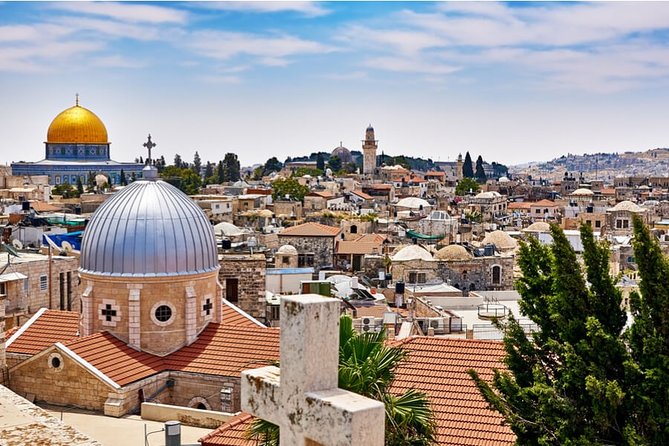
The opening viewpoint is listed at Mount Scopus, with roughly 30 minutes for photos and orientation. From here, you can look over Jerusalem and see the Dome of the Rock on the Temple Mount. Its gold dome is one of the city’s most recognizable sights, but the view also helps you understand the shape of Jerusalem: the Old City walls, the ridges around it, and the Kidron Valley below.
The tour also passes the Mount of Olives area, the Garden of Gethsemane, the Church of All Nations, and the Kidron Valley. These places connect directly to the final events in the life of Jesus. The Garden of Gethsemane is traditionally associated with Jesus praying there before his crucifixion.
Do not expect a long, quiet visit at every stop. One account said the Mount of Olives was seen mainly from the coach with only a brief photo stop, and another noted that the Garden of Gethsemane was missed. The advertised route includes these sights, but the actual amount of time can depend on traffic, group movement, and the day’s schedule.
Walking the Old City for two hours
The Old City is the heart of the Jerusalem portion. The tour allows about two hours for its streets, with further timed stops in several quarters. You will walk on uneven stone, pass through narrow lanes, and move between religious sites where lines and crowd control can change the pace.
The city is divided into quarters, each with its own character and traditions. The route includes the Armenian Quarter, Jewish Quarter, Christian Quarter, and Muslim Quarter. That broad route gives you a useful introduction, though it is more a rapid survey than an in-depth exploration.
A good guide makes a major difference here. The lanes are easy to confuse, especially when several groups are moving at once. Zahi was praised for taking people through side lanes and over rooftops to reveal views that are easy to miss. Norbert was praised for explaining the past clearly and answering questions. Those comments point to the best version of this tour: a guide who helps you see meaning in places that could otherwise blur together.
The Jewish Quarter and Byzantine Cardo
The Jewish Quarter receives about 40 minutes. One key stop is the Byzantine Cardo, an old north-south street whose remains give you a sense of how Jerusalem functioned in an earlier era.
This part of the walk often receives more attention than the other quarters. That is useful if you want context for Jewish Jerusalem, the Temple Mount, and the Western Wall. It can feel less balanced if your main interest is Christian or Muslim history.
The schedule does not allow you to wander freely for long. You might want to browse shops or stop for a snack, but the group must keep moving. Make note of where your guide asks you to meet. One person was briefly separated from the group after arriving five minutes late at a meeting point, a reminder that the Old City is not the place to guess your way back to the bus.
A few more Jerusalem trips worth weighing up
- From Jerusalem: Nazareth and Sea of Galilee Tour
★ 4.5 · 588 reviews - Nazareth and the Sea of Galilee Day Trip from Jerusalem
★ 4.5 · 446 reviews - Jerusalem: Guided Walking Tour of the Old City
★ 4.7 · 386 reviews - Full Day City Tour of Jerusalem
★ 4.1 · 367 reviews
The Western Wall and a sacred pause
The Western Wall stop lasts about 20 minutes. It is the most important Jewish prayer site in the tour and a place where the significance is easy to feel, even during a short visit.
Dress carefully. Shoulders and knees should be covered for both men and women, and shorts can cause problems at religious sites. You should also carry a light layer or scarf if needed, since respectful clothing matters throughout the morning.
Twenty minutes may be enough to see the wall and absorb the setting, but it is not a long private visit. If you want extended prayer time, take photographs, or spend time observing the area, you may feel hurried. The guide’s explanation is valuable here, yet the schedule favors coverage over solitude.
Via Dolorosa and the Church of the Holy Sepulchre
The Christian Quarter and Via Dolorosa follow. The route includes about 30 minutes in the Christian Quarter and 40 minutes along the Way of the Cross. The Via Dolorosa is traditionally linked with Jesus carrying the cross toward his crucifixion.
The route is marked by 14 stations of the cross, though you should not assume you will stop for a full explanation at all 14. The schedule is tight, and some departures have covered only a few stations before moving on. A guide may give a short explanation outside a church, then set a time to regroup rather than walking every step with the whole group.
The Church of the Holy Sepulchre is the emotional center of this section. It is associated with the crucifixion and burial of Jesus, and its interior contains several deeply important Christian shrines. The scheduled visit is about 30 minutes, but queues can be long. You may see the main areas without having enough time to enter every chapel or wait for access to the Sepulchre itself.
This is one reason I would not choose this excursion as your only serious visit to Jerusalem. It introduces the church and places it in context, but a separate visit gives you more control over timing.
The Muslim Quarter and bazaar
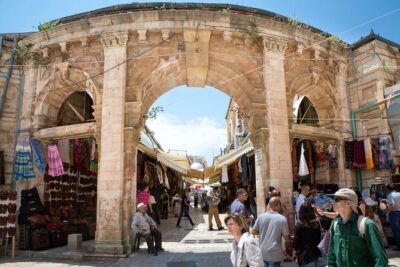
The route continues through the Muslim Quarter, with about 20 minutes to walk through the bazaar. This is a short but useful shift in mood. The lanes are lined with shops and daily activity, and the quarter connects the religious sites with the living city around them.
The tour may include a designated souvenir shop or an arranged lunch stop. Some people find these breaks convenient, especially when they need food, a restroom, or a chance to sit. Others dislike being directed to one shop or restaurant when they would rather choose for themselves.
Lunch and drinks are not included in the price. Bring water and take the chance to buy food before leaving Jerusalem for the Dead Sea. One useful suggestion from the experience is to ask your guide directly when and where you can purchase food, rather than waiting until the final transfer.
The ride to the Dead Sea
After Jerusalem, the coach heads toward the Dead Sea. The drive is part of the day’s logistics rather than a guided sightseeing session. One account praised the Jerusalem guide but found the transfer less informative, with the driver offering little explanation of the scenery.
Traffic can affect this section. The schedule may change, and some departures have involved regrouping with another bus or a new guide after lunch. That does not happen on every outing, but it is worth knowing that the afternoon may feel less polished than the morning.
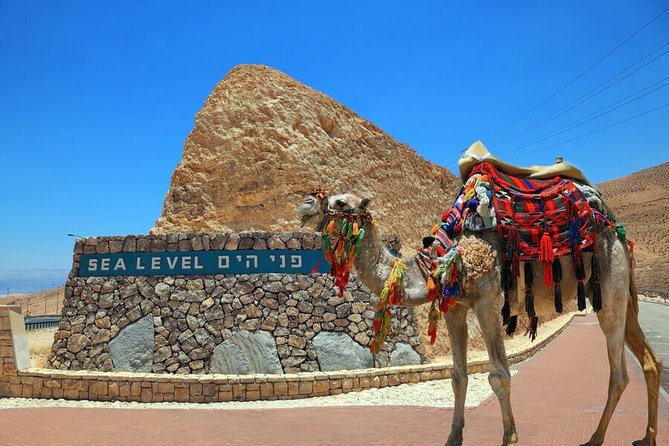
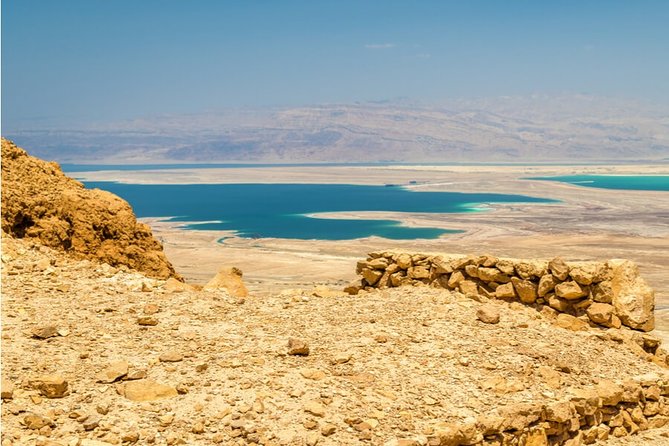
The Dead Sea is about 400 meters below sea level, making it the lowest place on Earth. The setting is striking, and the change from crowded stone streets to open salt water gives the day a strong finish.
Two hours at the Dead Sea
The advertised stop allows about two hours, with admission included. You change into a swimsuit, apply the mineral-rich black mud, rinse it away, and enter the water to float or swim.
The salt level is so high that the main experience is floating, not ordinary swimming. Avoid shaving immediately before the visit, keep water away from your eyes, and do not splash. The supplied information does not state these as formal tour rules, so treat them as sensible personal precautions rather than promised instructions.
Bring a swimsuit, towel, hat, sun protection, and flip-flops. Towels are not included. A pair of water shoes or sandals is useful because the shore can be uncomfortable underfoot, though the exact beach conditions can vary.
The two-hour allowance sounds generous, but changing-room lines can reduce your actual water time. One account described a crowded facility and only about 20 minutes in the water after changing and waiting. If the bus gives you a firm return time, follow it closely. The Dead Sea is the one part of the day where you will want every spare minute.
The mud is presented as having therapeutic qualities, and the experience is often sold as a way to feel years younger. Enjoy it as a fun mineral mud treatment, but do not book the tour expecting medical treatment or a guaranteed health result.
Guides, group size, and the human factor
The most praised part of the experience is the guiding. Itamar received strong praise for his information and professional manner. Abishai was appreciated for explaining Jerusalem, the City of David, and the Dead Sea with energy. Amit, Lorne, Amir, Norbert, and Zahi were also singled out for clear explanations, humor, or personal attention.
That praise matters because the Old City can otherwise become a sequence of names and stones. A good guide gives the places a timeline and explains why each faith regards them as sacred.
Still, the guiding may not be consistent for the full day. Some departures change groups or guides after lunch, and language balance can be an issue. One Spanish-language booking was described as mostly English, with only brief Spanish explanations. If you need a Spanish tour, confirm the language arrangement before booking rather than relying only on the general tour description.
What the $106 price really covers
At $106 per person, the value comes from combining transport, hotel pickup and drop-off, a professional guide, and entrance fees in one day. You also avoid having to arrange the Dead Sea transfer separately, which is a major convenience.
Food and drinks are extra. So are towels and anything bought at a shop. Possible organized lunch and souvenir stops may also affect how much free time you have and where you spend money.
I consider the price fair for a first visit if your priority is seeing major sights efficiently. It is less attractive if you want long, unhurried time at the Wall, Holy Sepulchre, or Dead Sea. In that case, two separate day trips may cost more but give you a better experience.
Free cancellation is available up to 24 hours before the start time. Changes or cancellations inside that window are not accepted for a refund.
Who should book this day trip?
You should consider it if you have one free day, want hotel pickup, prefer a guide in the Old City, and like the idea of pairing sacred history with a memorable swim. It also suits first-time visitors who would rather follow a planned route than navigate the Old City and Dead Sea on their own.
Families can enjoy the Dead Sea, and most people can participate, but children under four are not accepted. The walking makes comfortable shoes essential, and the religious sites require modest clothing.
I would choose another format if Jerusalem is your main reason for visiting Israel. A dedicated Old City tour gives you more time inside the Church of the Holy Sepulchre, more freedom at the Western Wall, and less pressure at the Via Dolorosa. I would also avoid this combined trip if you dislike group meals, souvenir stops, changing vehicles, or a tightly managed schedule.
Final verdict
Book this tour for range and convenience, not depth. The view from Mount Scopus, the Western Wall, the Holy Sepulchre, and the Dead Sea make a powerful one-day mix, and a strong guide can turn a rushed route into a memorable introduction.
Before you commit, confirm pickup instructions, tour language, the expected lunch arrangement, and the Dead Sea facility. Stay with the group, carry water, dress modestly, and bring your own towel and sun protection. If you can accept the pace, $106 is a sensible way to cover two of Israel’s major experiences in one day.
FAQ
How long does the Jerusalem and Dead Sea tour last?
The tour lasts approximately 10 hours, beginning around 8:30 am and ending with return transportation to Jerusalem hotels.
Is hotel pickup and drop-off included?
Yes. Hotel pickup and drop-off are included, though pickup arrangements can vary, so you should confirm the exact meeting instructions before the tour.
What places in Jerusalem does the tour visit?
The route includes a Mount Scopus viewpoint, views of the Dome of the Rock and Temple Mount, the Garden of Gethsemane area, the Old City, Jewish Quarter, Byzantine Cardo, Western Wall, Christian Quarter, Via Dolorosa, Church of the Holy Sepulchre, and Muslim Quarter bazaar.
How much time is spent at the Dead Sea?
The planned Dead Sea stop is approximately two hours, including time to change, use the mineral-rich mud, and float or swim.
Are food and drinks included?
No. Food and drinks are not included. You should plan to pay separately for lunch, snacks, and water.
What should I bring to the Dead Sea?
Bring a bathing suit, towel, hat, sun protection, and comfortable footwear such as flip-flops. Towels are not included.
Is the tour suitable for young children?
The tour is not suitable for children under four. Most other participants can take part, but the day includes a reasonable amount of walking and a long schedule.
Just added around Jerusalem
- jerusalem classic tour★ 5.0 · 3 reviews
- Jerusalem and the Dead Sea★ 5.0 · 3 reviews
- Private Walking Tour in Jerusalem’s Old City★ 5.0 · 3 reviews
- Jerusalem of 3 Religions in Russian★ 4.4 · 3 reviews
- Jerusalem Running Tour-Experience the unique vibes of Jerusalem in your sneakers★ 5.0 · 3 reviews
- Christian Jerusalem in Russian★ 5.0 · 3 reviews
- From Jerusalem: Masada Sunrise, Ein Gedi & Dead Sea★ 5.0 · 3 reviews
- Hebron & Ramallah Full-Day Guided Tour from Jerusalem★ 5.0 · 3 reviews
Dead Sea Tours, compared.
Masada & Dead Sea Full Day Tour with Pick Up
Read our review →
Masada and the Dead Sea Day Trip from Tel Aviv
Read our review →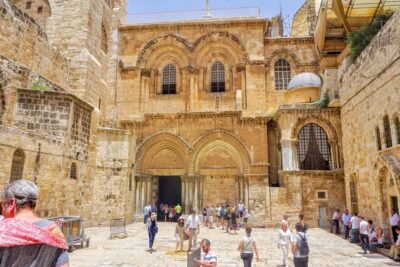
Masada and the Dead Sea Day Trip from Jerusalem
Read our review →
Browse the lists this tour appears in