
Review · JERUSALEM TOURS
Jerusalem: Dual Narrative Tour
Jerusalem rewards patience, and this tour asks for it. The Dual Narrative Tour pairs one Jewish guide with one Palestinian guide for a four-and-a-half-hour walk through the Old City, linking sacred places with the political disputes around them. I like the format because you hear two lived perspectives in the same place, and I like the route because it covers the Western Wall, Church of the Holy Sepulchre, and Al Aqsa Mosque rather than staying with only one tradition. The main caution is pace: four and a half hours on crowded stone lanes, under the sun, with no planned meal break, can feel long.
This is not a tour for quick snapshots and a neat, simple story. It is built for you if you want context about how Jewish, Christian, and Muslim claims overlap, and how different ruling powers have marked the city. Some people find the discussion intense and engrossing. Others may find the information comes too quickly, or that noise makes it hard to hear.
- Two guides, two viewpoints: A Jewish Israeli guide and a Palestinian guide share the route and respond to the same places from different backgrounds.
- Nine major stops: The walk connects Jaffa Gate, the Armenian and Jewish quarters, the Church of the Holy Sepulchre, the Western Wall, and Al Aqsa Mosque.
- History beneath the pavement: At the Roman Cardo, you consider which archaeological layers were exposed and which were removed.
- Sacred sites with modern stakes: The tour explains why the Temple Mount and Noble Sanctuary remain a flash point.
- A compact but demanding half-day: The tour lasts about four hours and 30 minutes, with no food or drinks included.
- Small-group setting: The maximum group size is 20 people, with two professional guides and a tour host.
In This Review
- Why Two Guides Change the Walk
- Jaffa Gate: Reading Power at the Entrance
- The Armenian Quarter and Jerusalem’s Fourth Community
- The Jewish Quarter and the Roman Cardo
- A Rooftop View Above East Jerusalem
- Church of the Holy Sepulchre: One Site, Several Stories
- The Muslim Quarter and the Via Dolorosa
- The Western Wall and Al Buraq Square
- Al Aqsa and the Noble Sanctuary
- What Four and a Half Hours Feel Like
- Clothing, Phones, and Other Practical Details
- Who Should Choose This Tour?
- Should You Book the Jerusalem Dual Narrative Tour?
- FAQ
- How long does the Jerusalem Dual Narrative Tour last?
- Where does the tour begin?
- Where does the tour end?
- What sites does the tour visit?
- Are food and drinks included?
- What should I wear?
- How far in advance is the tour usually booked?
Why Two Guides Change the Walk
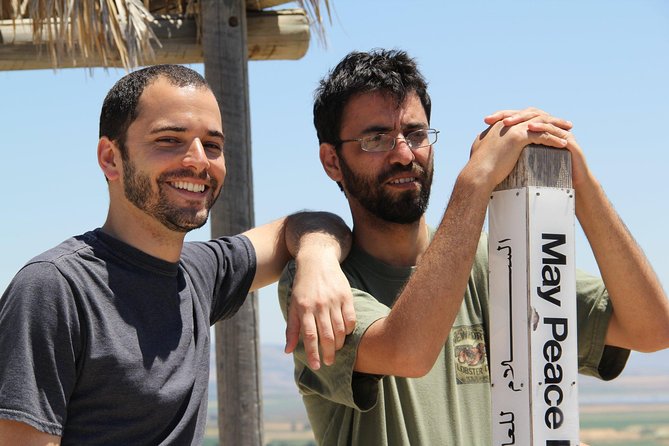
Most Old City tours give you a single line through a complicated story. This one makes the difference between narratives part of the experience. A Jewish guide may explain the importance of Jerusalem in Jewish memory, pilgrimage, and modern Israeli identity. A Palestinian guide may describe the city through Palestinian history, community life, displacement, access, and political control.
That does not make every point perfectly balanced or free of disagreement. It does give you a chance to hear how the same street or shrine can carry different meanings. The strongest part of the format is not simply that each guide speaks. It is that the guides model a respectful exchange while discussing subjects that are often painful and fiercely contested.
Names vary by departure. People have praised guides including Betty, Ameer, Morgi, Amir, Nour, Alex, Beni, Yousef, Shay, and Nol. The consistent point is that the best guides are candid without turning the walk into a shouting match. They welcome questions, explain their own viewpoints, and keep the tone civil.
You should arrive ready to listen rather than to win an argument. The tour is about understanding why the dispute is so hard to resolve, not about handing you a final political answer.
Jaffa Gate: Reading Power at the Entrance
Meet at 9:30 a.m. in the plaza just outside Jaffa Gate. Look for a representative holding a sign for the Jerusalem Dual Narrative Tour. The opening 20 minutes use the gate and the surrounding view to explain Jerusalem’s geography, along with the relationship between Israel and Palestine.
The guide’s first question is a useful one: what does a sign at the entrance to the Old City tell you about the ruling power that placed it there? In Jerusalem, signs, borders, names, flags, and public markers are never just decoration. They help define who claims a place and how that claim is presented.
This opening should help you get your bearings before the lanes close in. Pay attention here, since the basic map of west and east Jerusalem will return later from a rooftop view. It is also a good time to ask practical questions about the route and hearing both guides.
A few more Jerusalem trips worth weighing up
- From Jerusalem: Masada & Dead Sea Full Day Tour with Pick Up
★ 4.5 · 815 reviews - Masada and the Dead Sea Day Trip from Jerusalem
★ 4.5 · 757 reviews - From Jerusalem: Nazareth and Sea of Galilee Tour
★ 4.5 · 588 reviews
The Armenian Quarter and Jerusalem’s Fourth Community
The 10-minute stop in the Armenian Quarter is brief, but it adds a community that can disappear from a three-faith overview. You examine signage commemorating the Armenian genocide and discuss Armenian history and identity in Jerusalem.
That short pause matters because the Old City is not only a contest among Jewish, Christian, and Muslim traditions. Armenian life has its own long place within the city, and the community must also find room within a tense religious and political setting.
Do not expect a long visit here. The value is in the guide’s explanation of how a distinct community fits into the Old City’s crowded system of identities. If Armenian history interests you, treat this as an introduction rather than a full lesson.
The Jewish Quarter and the Roman Cardo
The 20-minute Jewish Quarter stop focuses on the Roman Cardo, the ancient commercial street whose excavated remains help build a modern Israeli connection to earlier Jewish life in Jerusalem.
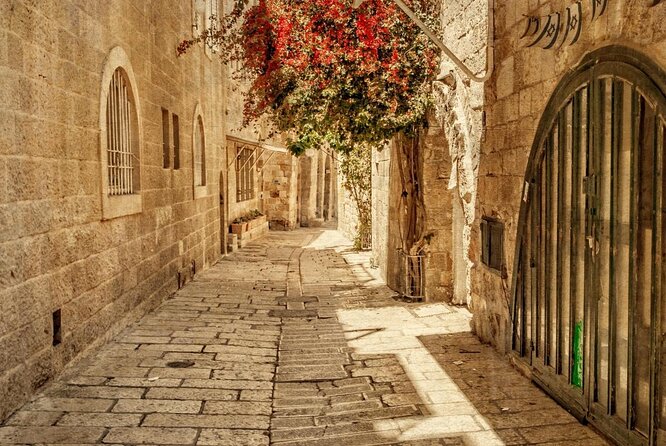
The important question is not only what you see. It is what lies below it, and what was taken away to expose the current archaeological arrangement. Excavation can make the past visible, but it can also remove later layers and shape the story that visitors receive. The guides use the Cardo to explain how modern Jewish identity links itself to earlier periods of Jerusalem’s past.
This is one of the tour’s best places to see history as a selection process. You are not simply looking at old stones. You are considering who chose to uncover them, which period receives attention, and how archaeology can support a present-day claim.
The quarter’s lanes can be crowded, so stay close enough to hear. The group limit of 20 is modest, but a group of that size still needs to gather carefully around narrow streets.
A Rooftop View Above East Jerusalem
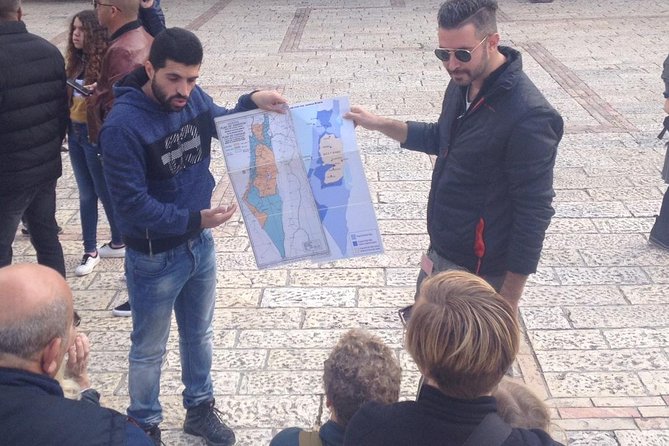
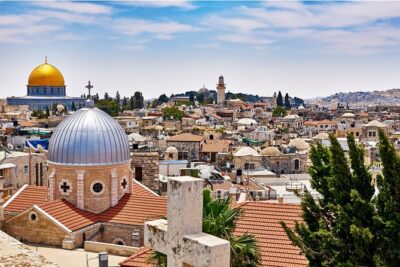
At St. Mark’s Syriac Church, the group stops above the church at a rooftop looking toward East Jerusalem. The stop lasts about 10 minutes and returns to the geography introduced at Jaffa Gate.
From a higher point, the guides review Jerusalem’s borders and major landmarks. This view is useful because political boundaries are difficult to understand when you are moving through walls and alleys. From above, the city’s divisions become easier to discuss, even if they remain disputed.
The stop is short, and the tour does not present it as a long rooftop visit. Think of it as a visual pause between quarters, giving the political discussion a physical map.
A completely different sort of day out of Jerusalem:
- Nazareth and the Sea of Galilee Day Trip from Jerusalem
★ 4.5 · 446 reviews - From Jerusalem: Masada&Dead Sea Tour INCLUDING ENTRANCE FEES
★ 4.3 · 392 reviews - Jerusalem: Guided Walking Tour of the Old City
★ 4.7 · 386 reviews - Full Day City Tour of Jerusalem
★ 4.1 · 367 reviews
Church of the Holy Sepulchre: One Site, Several Stories
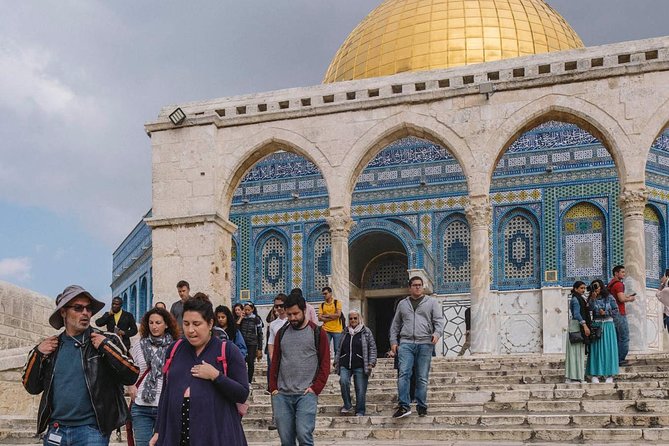
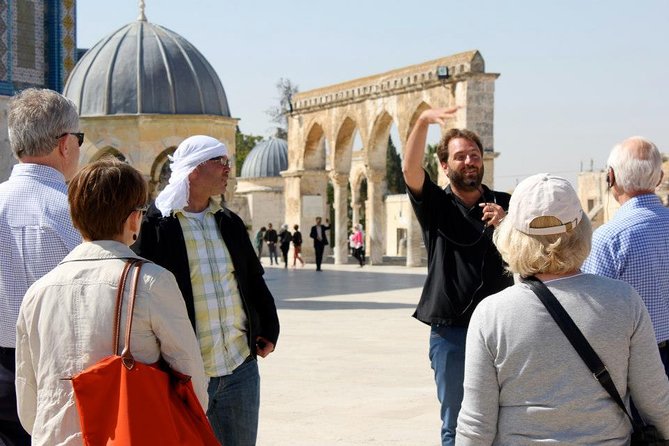
The 30-minute visit to the Church of the Holy Sepulchre is a major part of the Christian focus. The guides explain the church’s importance in Christian tradition and place it within Israeli and Palestinian narratives. You also visit major sites inside the church.
This is a place where religious meaning, historical memory, and modern control meet in a tight space. The two-guide approach is especially useful here because the church is not treated as an isolated Christian monument. Its setting in the Old City also connects it to the wider Israeli-Palestinian argument over authority, access, and belonging.
Keep your expectations realistic. Thirty minutes is enough for an introduction and a look at key parts of the church, but not necessarily for a slow personal visit to every chapel or devotional site. If you want to wait in a queue for the tomb of Jesus, pray at length, or study the church in detail, plan separate time.
The route also includes the Via Dolorosa, but the final timing can be tight. The walk may bring you near part of the Way of the Cross without giving you time to follow every station at a leisurely pace.
The Muslim Quarter and the Via Dolorosa
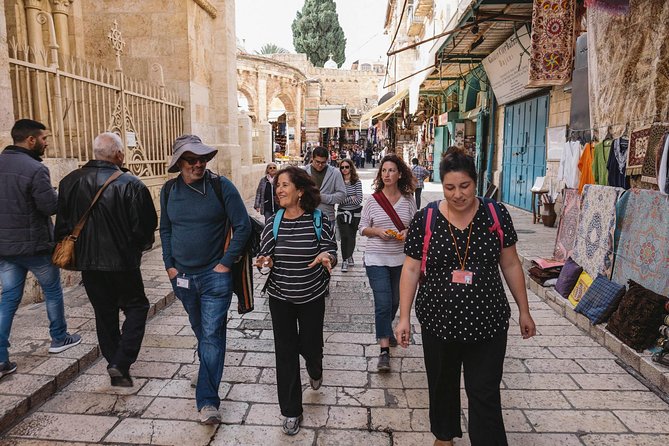
The 15-minute walk through the Muslim Quarter shifts the focus to communities connected with the wider Muslim world and to present tensions in the Old City. Here, you see how ordinary streets sit alongside places that carry enormous religious and political weight.
The short timing means the value comes from interpretation as you walk, not from extended stops. Listen for how the guides explain community links, local identity, and current pressure without treating the quarter as a backdrop for someone else’s story.
The tour concludes its main walking portion near the fifth Station of the Cross and the Austrian Hospice, on Via Dolorosa Street. The final 20 minutes are set aside for guide reflections and questions.
There is a practical wrinkle: the published route also includes the Western Wall and Al Aqsa Mosque, so the order may not feel like a simple straight line. Old City access, crowds, and religious-site schedules can affect movement. Keep your group in sight and do not assume you will have spare time to stop for lunch.
The Western Wall and Al Buraq Square
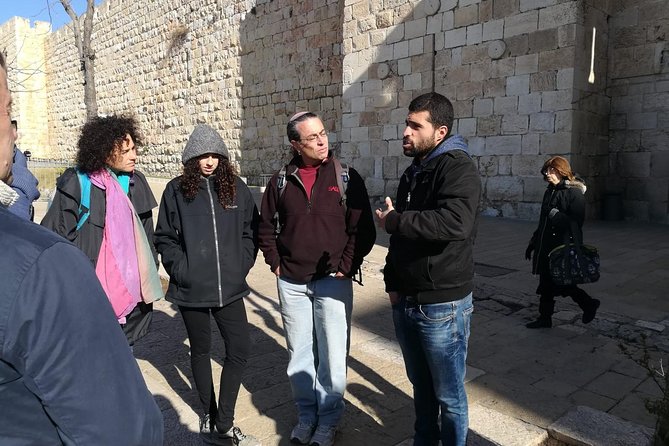
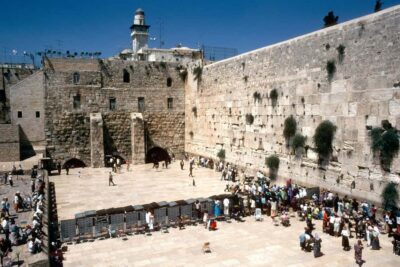
The Western Wall stop lasts about 25 minutes. The guides explain the Second Temple in Jerusalem and the long Jewish tradition of pilgrimage to stand beside its remains. They also introduce Al Buraq, the Islamic account connected with Muhammad’s flight to Jerusalem.
This is a valuable example of how two names can describe more than vocabulary. The wall is central to Jewish prayer and memory. The adjacent area is also tied to Muslim tradition and Palestinian history. The guides discuss what the open complex looked like before and after Israel captured the area more than 50 years ago.
Expect security and a public religious setting, though the supplied details do not specify current procedures or waiting times. Dress modestly and follow instructions at the site. Give yourself room to absorb the place without treating it only as a photo stop.
Al Aqsa and the Noble Sanctuary
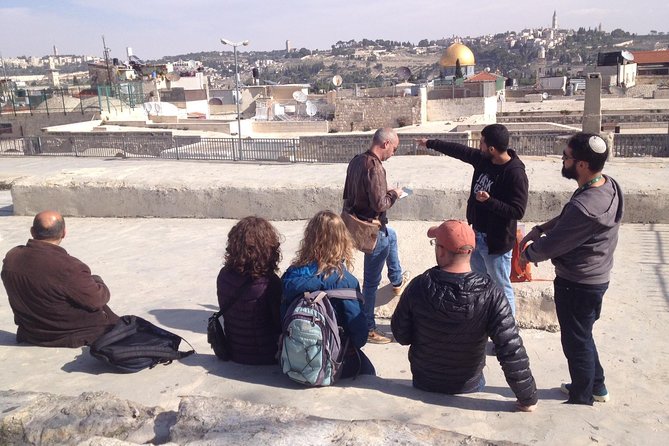
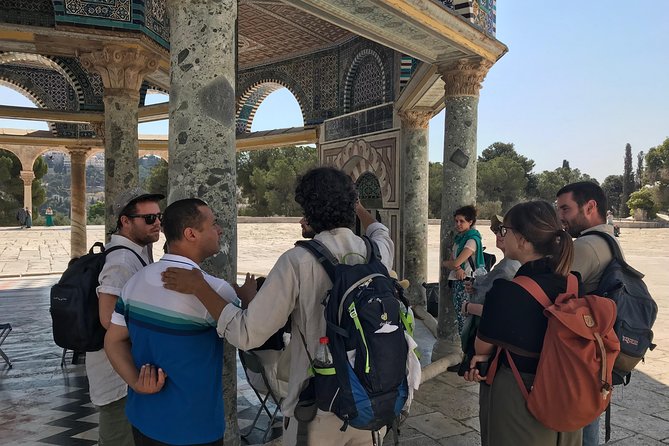
The final major site is the Temple Mount, also called the Noble Sanctuary. The visit is listed at about one hour, making it the longest stop on the route. You view the tiled Dome of the Rock shrine and Al Aqsa Mosque while learning why the platform matters to all three major monotheistic traditions.
This is also where the tour’s political purpose is clearest. The compound is a flash point in the Israeli-Palestinian conflict because religious devotion, national claims, control, and access all meet on the same elevated platform. A guide can explain the basic facts, but the two perspectives help you understand why the facts are interpreted so differently.
Access rules can change, and the information provided does not promise entry into every structure. Do not treat the one-hour allocation as a guarantee of interior access to both the Dome of the Rock and Al Aqsa Mosque. The important promise is the guided explanation of the complex and its major landmarks.
The listed endpoint is the Austrian Hospice at Via Dolorosa Street 37, though the route details place several sites in an order that may shift. Confirm the day’s sequence with the host when you arrive.
What Four and a Half Hours Feel Like
The tour costs $65 per person. That is a fair price if you want two professional guides, a structured route, and serious explanation at the city’s most contested sites. You are paying less for admission, since the listed stops are free, and more for the time and skill needed to connect archaeology, religion, geography, and current politics.
The format also gives you something hard to arrange alone: a Jewish and Palestinian guide speaking together. A standard sightseeing walk may show you the Western Wall, Church of the Holy Sepulchre, and Al Aqsa Mosque, but it may not explain how competing claims shape the meaning of each place.
The tradeoff is stamina. The route lasts about four hours and 30 minutes, and one person found it too long, hot, fast, and tiring, especially without a food break. Bring plenty of water and a hat. Wear shoes suited to uneven stone streets, though the provided information only formally requires a moderate level of physical fitness.
The group maximum is 20. That is small enough to support questions, but the narrow streets and crowds can still make hearing difficult. Stand near the guides, move in promptly when the group stops, and ask for repetition if you miss a point.
Clothing, Phones, and Other Practical Details
Dress code is important. Knees and shoulders must be covered for both men and women, with no shorts or sleeveless tops allowed at places of worship and selected museums. Choose light, modest clothing before leaving your hotel rather than hoping to buy a cover-up on the way.
Bring water and a hat to block the sun. Food and drinks are not included, and no transportation to or from the attractions is included, so plan around the 9:30 a.m. start and the walk through the Old City.
The tour uses a mobile ticket, and confirmation arrives when you book. Large electronics should not be brought. Service animals are allowed, and the meeting point is near public transportation.
Free cancellation is available if you cancel at least 24 hours before the start time. Cancellations or changes inside that window are not accepted for a refund. The tour also requires a minimum number of people, so a cancellation by the operator for that reason brings a choice of another date or experience, or a full refund.
Who Should Choose This Tour?
I would choose this tour early in a Jerusalem visit if I wanted a framework for the city. It can help you understand later visits to the Western Wall, Church of the Holy Sepulchre, or Al Aqsa because you will have already heard how each tradition describes the place.
It suits people who enjoy history, religion, politics, and open discussion. It is also a good match for anyone who feels that a single guide cannot explain Jerusalem’s competing memories on their own.
I would not choose it if you want a relaxed photo walk, a slow devotional visit, or detailed time inside every shrine. The tour gives broad coverage and sharp discussion, not long quiet stays. Families and older people should consider the heat, pace, stone streets, and lack of a scheduled meal stop.
The strongest feature is the guides’ respectful exchange. The most useful outcome is not a tidy answer. It is a clearer sense of why Jerusalem’s arguments remain so powerful.
Should You Book the Jerusalem Dual Narrative Tour?
Book it if you want the Old City explained through both Jewish Israeli and Palestinian perspectives, and if you are willing to spend half a day thinking as well as walking. At $65, the paired-guide format offers good value, especially for a first visit.
Skip it if your priority is independent worship, extensive interior sightseeing, or an easygoing route with regular breaks. For most curious visitors, though, this is one of the more useful ways to meet Jerusalem: with sacred sites in view, difficult questions on the table, and two guides willing to speak honestly and respectfully.
FAQ
How long does the Jerusalem Dual Narrative Tour last?
The tour lasts approximately four hours and 30 minutes.
Where does the tour begin?
It begins at 9:30 a.m. in the plaza just outside Jaffa Gate in Jerusalem’s Old City. Look for a representative holding a Jerusalem Dual Narrative Tour sign.
Where does the tour end?
The stated endpoint is the Austrian Hospice at Via Dolorosa Street 37, Jerusalem.
What sites does the tour visit?
The route includes Jaffa Gate, the Armenian Quarter, the Jewish Quarter and Roman Cardo, St. Mark’s Syriac Church, the Church of the Holy Sepulchre, the Muslim Quarter, the Via Dolorosa, the Western Wall, and Al Masjid Al Aqsa.
Are food and drinks included?
No. Food and drinks are not included unless specifically stated. Bring plenty of water, and plan for the fact that the tour does not include a scheduled food stop.
What should I wear?
Knees and shoulders must be covered for men and women. Shorts and sleeveless tops are not allowed at places of worship and selected museums.
How far in advance is the tour usually booked?
It is booked an average of 25 days in advance. The maximum group size is 20 people.
Just added around Jerusalem
- jerusalem classic tour★ 5.0 · 3 reviews
- Jerusalem and the Dead Sea★ 5.0 · 3 reviews
- Private Walking Tour in Jerusalem’s Old City★ 5.0 · 3 reviews
- Jerusalem of 3 Religions in Russian★ 4.4 · 3 reviews
- Jerusalem Running Tour-Experience the unique vibes of Jerusalem in your sneakers★ 5.0 · 3 reviews
- From Jerusalem: Masada Sunrise, Ein Gedi & Dead Sea★ 5.0 · 3 reviews
- Christian Jerusalem in Russian★ 5.0 · 3 reviews
- Hebron & Ramallah Full-Day Guided Tour from Jerusalem★ 5.0 · 3 reviews
Jerusalem Tours, compared.
Masada and the Dead Sea Day Trip from Jerusalem
Read our review →
Nazareth and the Sea of Galilee Day Trip from Jerusalem
Read our review →

Browse the lists this tour appears in