
Review · JERUSALEM TOURS
ScaVentures! Have fun, explore and discover!
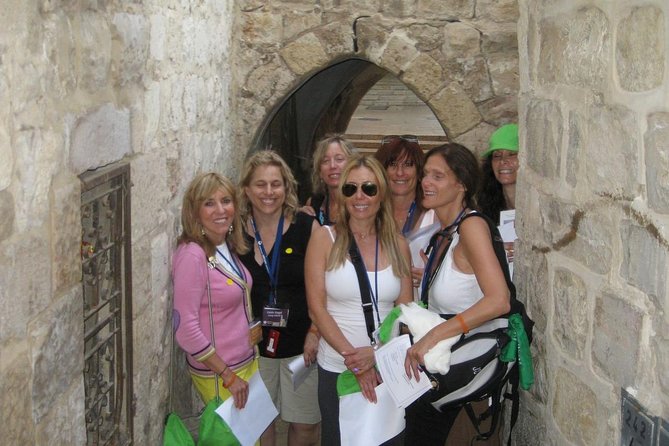
Turn Jerusalem into your game board. ScaVentures mixes navigation, local stories, picture clues, and team missions into a private two-hour outing. I like the hands-on format, and I like that children and adults receive real jobs instead of simply following a guide. The main consideration is that you need moderate fitness, and the activity runs in all weather.
For groups of nine or more, you split into teams of about five to eight people. Each team gets maps, notebooks, pencils, stickers, information sheets, and a picture pack. The group challenge works especially well for families, bar and bat mitzvah celebrations, and friends who enjoy a little friendly competition.
The price is $358.98 per group of up to 15, which can be good value when the group is full. It is less attractive for a very small party, since you pay a group price rather than a simple per-person fee.
In This Review
- Key points to know before you book
- How the Jerusalem ScaVenture works
- Why the team roles make a difference
- The Old City route and its hands-on history
- Nachlaot, Mahane Yehuda, and other Jerusalem settings
- What the two hours feel like
- The strongest family and celebration activity
- Weather, walking, and practical comfort
- Is $358.98 good value for your group?
- What the ratings suggest about the experience
- Who should book ScaVentures?
- FAQ
- How long does the ScaVenture last?
- How many people can join?
- What materials are provided?
- Do I need prior knowledge of Jerusalem?
- Is transportation included?
- What happens if it rains?
- Should you book this Jerusalem scavenger hunt?
Key points to know before you book
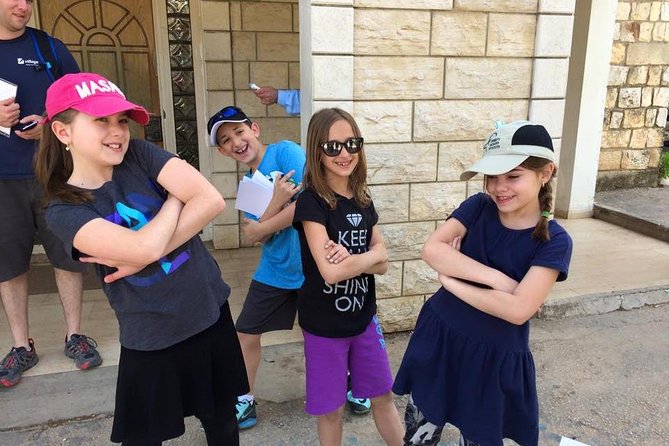
- You play assigned roles: Leader, detective, navigator, historian, note keeper, photographer, and other jobs keep everyone involved.
- The route is built around discovery: You move from station to station, read short stories, complete missions, and solve a picture mystery.
- The Old City is a popular setting: Routes can reveal corners and details you might pass on a standard walking tour.
- Large groups become a competition: Teams race to the final station with the best time and correct answers.
- It suits mixed ages: Families ranging from young children to older adults have used the format for outings and celebrations.
- Weather matters: The game continues in rain and other conditions, so sensible shoes and weather protection are important.
How the Jerusalem ScaVenture works
This is not a guide-led walk where you gather around one person and listen for two hours. The Game Leader, also called the Game Master, starts the activity, explains the rules, checks progress at selected stations, adds information when useful, and keeps the game moving.
Your team receives a prepared pack. The exact contents can include maps, stickers, information sheets, notepads, pencils, picture packs, and other game materials. You then use those tools to navigate between the opening station and the final station.
The picture pack is the central mystery. You look for images, match clues, answer questions, and complete tasks before moving on. The format gives you a reason to stop and inspect your surroundings rather than rushing past them on the way to a famous landmark.
If your group has fewer than nine people, you remain one team. That makes the activity more cooperative and less competitive. With nine or more, the group divides into teams, ideally with five to eight people per team. At the finish, the Game Leader checks the answers, compares times, and awards prizes to the winning teams.
The setup is simple, but it has a useful effect: everyone has something to do. One person navigates, another records answers, another studies the clues, and someone else helps lead the group. You do not need prior knowledge of Jerusalem or the region. The information sheets and station stories provide the background you need as you go.
A few more Jerusalem trips worth weighing up
- From Jerusalem: Masada & Dead Sea Full Day Tour with Pick Up
★ 4.5 · 815 reviews - Masada and the Dead Sea Day Trip from Jerusalem
★ 4.5 · 757 reviews - From Jerusalem: Nazareth and Sea of Galilee Tour
★ 4.5 · 588 reviews
Why the team roles make a difference
Many family tours quietly become adult tours with children in tow. The adults listen, the children drift away, and everyone reaches the end having had different experiences. ScaVentures addresses that problem by giving each person a part in the game.
The leader keeps the group focused. The navigator works with the map. The historian shares the story at each station. The detective studies the picture pack. A note keeper records answers, while a photographer and other assigned roles help complete the missions.
Younger participants may not understand every historical detail, but they can still contribute by spotting a picture or guiding the team. Older children can take on more responsibility. Adults still have useful jobs, especially when the route requires careful reading, quick decisions, or map work.
This design also works well for celebrations. Families have used the activity after bar and bat mitzvah events, with ages ranging from toddlers to grandparents. It gives a large family something to do together without requiring everyone to enjoy the same style of sightseeing.
The system is not perfect for every group. If your party dislikes rules, time limits, or competition, the structure may feel like extra work. A smaller team also has fewer people to share the jobs, so two participants may need to handle several roles at once.
The Old City route and its hands-on history
The Old City is one of the strongest settings connected with this activity. A standard tour can lead you through major sights while explaining dates, faiths, and buildings. A ScaVenture asks you to observe details, follow instructions, and make decisions as a group.
The Jewish Quarter has been used for routes that combine stories with missions. You may be asked to study a picture, identify a place, answer a question, or complete an activity before continuing. The supplied material helps you notice features that might otherwise disappear into the busy stream of Old City sightseeing.
I especially like this format for families visiting Jerusalem for the first time. You are not expected to arrive with a working map of the Old City or a long list of facts. The route gives you a task at each point, which helps you get your bearings without turning the outing into a geography lesson.
The main drawback is pace. A competitive team may hurry from station to station and miss some of the information. In practice, your group will get more from the experience if you treat the clock as a light challenge rather than the whole point of the morning.
The route is also a walking activity, not a seated attraction. You should expect to move through city streets and handle the materials while walking. A moderate level of physical fitness is required, and children must remain with an accompanying adult.
Nachlaot, Mahane Yehuda, and other Jerusalem settings
ScaVentures also operates in other Jerusalem areas, including Nachlaot and the Mahane Yehuda Market. These settings change the feel of the game.
Nachlaot offers a neighborhood-based route with local stories and small discoveries. The format encourages you to pay attention to the streets and buildings around you instead of focusing only on major monuments. One family found the written instructions especially clear during a Nachlaot game, though darkness and drizzle made the challenge harder for a two-person team.
That detail is worth noting. A small group may have less help with navigation, note taking, and clue solving. A larger team can spread the work, but a pair may need to pause often and read the instructions carefully.
The Mahane Yehuda route, known as the Shuk Dash, adds market interaction to the game. You may search for specific items, observe details, and complete tasks connected with vendors and the market setting. This is a more social version of the experience, with plenty of movement and distractions.
A group of 15 divided into three teams for one Shuk Dash, with the Game Leader tracking answers through iPads. That kind of setup shows why the market route can suit a lively group, but it also means you should stay organized. Markets are not quiet classrooms, and your team must balance the game with ordinary pedestrian traffic and market activity.
Other routes connected with the company include Jaffa and Tzfat, but the experience described here is based in Jerusalem. When booking, confirm the exact neighborhood and starting point. The supplied meeting information gives Jerusalem as the start location but does not provide a detailed street address.
A completely different sort of day out of Jerusalem:
- Nazareth and the Sea of Galilee Day Trip from Jerusalem
★ 4.5 · 446 reviews - From Jerusalem: Masada&Dead Sea Tour INCLUDING ENTRANCE FEES
★ 4.3 · 392 reviews - Jerusalem: Guided Walking Tour of the Old City
★ 4.7 · 386 reviews - Full Day City Tour of Jerusalem
★ 4.1 · 367 reviews
What the two hours feel like
The activity begins with instructions, materials, and team assignments. This opening is important because the game depends on every participant understanding the basic system. If you are in a large party, this is when you divide into teams and decide who will handle each role.
You then navigate to the first station. At each station, the historian shares the story, the team leader presents the mission, and the detective studies the picture clues. The team works through the task, records its answer, and moves to the next point.
The Game Leader does not need to walk beside you every minute. Instead, the leader visits teams at certain stations, checks progress, adds information, and makes sure the route is functioning properly. That gives you some independence while still providing support.
At the final station, all teams gather. The Game Leader reviews the answers, compares completion times, and awards prizes. If you are a small group, the ending is less about beating another team and more about completing the challenge correctly within the time allowed.
Two hours is a sensible length for this kind of outing. It is long enough to create a proper game but short enough to fit around meals, religious visits, museum time, or a larger Jerusalem sightseeing plan. You should not expect a full historical tour of the city in that period. The value comes from the way the game makes you interact with a particular route.
The strongest family and celebration activity
The best match is a mixed-age family that wants to explore together but knows a normal walking tour may lose the children. The game gives young participants control over small parts of the outing, while adults can help with reading, navigation, and historical context.
It also suits teenage groups. A team of teenagers can compete, solve picture clues, and take responsibility for the route. One large family group divided children and adults into separate teams, and the children won. That is exactly the kind of result that makes the activity memorable, especially for children who are used to adults leading every sightseeing decision.
The experience has also been used for bar and bat mitzvah events. Families have arranged Old City and Nachlaot games as part of a celebration, and the company has offered special programs that prepare a child to guide friends through a route. If you are planning a similar event, the private format gives you more control than a public group tour.
The age range can be broad. Groups have included children as young as three and adults in their seventies. Still, very young children will not manage the written work independently. They will need an adult or older child to involve them in spotting, walking, and simple missions.
Weather, walking, and practical comfort
The activity operates in all weather conditions. That is useful when your itinerary is tight, but it also means you should not assume the Game Leader will cancel because of rain. Wear shoes suitable for walking on city streets and bring clothing for the forecast.
A rainy outing can remain enjoyable, but it changes the experience. Wet paper, reduced visibility, and slippery surfaces make map reading and picture hunts harder. One family continued through rain and hail and still enjoyed the morning, while another found a dark, drizzly route more difficult with only two people.
Bring only what you need. You will already be carrying game materials, and the route requires attention to maps and clues. Keep phones available if the Game Leader has arranged digital answer tracking, as happened during one Shuk Dash, but do not assume that every Jerusalem route uses the same system.
Transportation is not included. You must make your own way to the Jerusalem starting point and arrange your own transport afterward. Hotel pickup and drop-off are also not included. The confirmation arrives at booking, so check the meeting instructions carefully before the day of the game.
Is $358.98 good value for your group?
The listed price is $358.98 per private group of up to 15 people. At the full size, that works out to about $24 per person before you even consider the private Game Leader, printed materials, and organized route.
That is a reasonable price for a family celebration or group outing. You are paying for a prepared activity, not only a walk through Jerusalem. The materials, team structure, station stories, missions, and final scoring all require planning.
The value drops when only two or three people participate. The price does not shrink with the group, and a small team cannot distribute the roles as easily. Still, a small group may prefer the cooperative version and avoid the noise of a larger competition.
Taxes, fees, handling charges, and gratuities are included. Transportation, hotel pickup, and drop-off are not. The booking is non-refundable and cannot be changed for any reason, so choose your date carefully before paying.
What the ratings suggest about the experience
The experience carries a five out of five rating from 87 reviews, with 100 percent recommending it. The strongest praise centers on three things: family enjoyment, clear organization, and learning through action.
Guide support is another recurring strength. Tali has been praised for being flexible and easy to work with when arranging family events. Yomtov helped a two-person group through a rainy Nachlaot game and also led a Mall Dash. Daniel managed a large Shuk Dash, while Joel received praise for leading an Old City outing.
The comments also show that the quality depends partly on how your group approaches the game. Families who let children take real roles get more from it. Groups that focus only on speed may complete the route but miss the stories and small observations that give the activity its purpose.
The perfect rating should not make you expect a polished museum visit. This is an active group game. You will read, walk, debate answers, manage materials, and sometimes get temporarily turned around. That is part of the fun, but it may not suit someone seeking a quiet, expert-led explanation of Jerusalem.
Who should book ScaVentures?
Book it if you want a private, family-friendly way to explore Jerusalem and your group enjoys solving problems together. It is particularly useful for first-time visitors who want structure without a standard lecture, and for families marking a bar or bat mitzvah.
It is also a good pick for a group of nine to 15 people. Dividing into teams gives the outing energy and makes the price more reasonable per person. A smaller group can still enjoy it, but you should expect a more concentrated workload.
Skip it if your priority is a traditional sightseeing tour with long explanations at major monuments. You should also think twice if your group has limited mobility, dislikes walking, or is likely to cancel at short notice because the booking cannot be refunded or changed.
For most families, the strongest reason to book is simple: the children are not just being taken through Jerusalem. They are helping lead the way.
FAQ
How long does the ScaVenture last?
The activity lasts approximately two hours, from the opening instructions through the final station and prize presentation.
How many people can join?
The private activity is priced for a group of up to 15 people. Groups of nine or more divide into teams, ideally with five to eight participants on each team.
What materials are provided?
Each team receives materials that can include maps, stickers, information sheets, notepads, pencils, picture packs, and other supplies needed for the missions.
Do I need prior knowledge of Jerusalem?
No. First-time visitors are welcome, and the game provides the stories and information needed to complete the route and challenges.
Is transportation included?
No. Transportation to and from the attractions is not included, and hotel pickup and drop-off are not provided.
What happens if it rains?
The activity operates in all weather conditions. Dress appropriately and wear suitable walking shoes. Children must be accompanied by an adult, and participants should have a moderate level of physical fitness.
Should you book this Jerusalem scavenger hunt?
I would book ScaVentures for a family group, celebration, or reunion that wants Jerusalem to feel active and shared. The materials are well suited to mixed ages, the private format keeps the outing focused on your group, and the team roles give children a reason to pay attention.
The best value comes with a full group of up to 15, especially if you enjoy friendly competition. Confirm the exact route and meeting point, prepare for weather, and accept that the experience is a game first and a conventional tour second. If that sounds right for your group, it offers an enjoyable way to notice more of Jerusalem while learning as you go.
Just added around Jerusalem
- Jerusalem and the Dead Sea★ 5.0 · 3 reviews
- Private Walking Tour in Jerusalem’s Old City★ 5.0 · 3 reviews
- jerusalem classic tour★ 5.0 · 3 reviews
- Jerusalem Running Tour-Experience the unique vibes of Jerusalem in your sneakers★ 5.0 · 3 reviews
- Jerusalem of 3 Religions in Russian★ 4.4 · 3 reviews
- Christian Jerusalem in Russian★ 5.0 · 3 reviews
- From Jerusalem: Masada Sunrise, Ein Gedi & Dead Sea★ 5.0 · 3 reviews
- Hebron & Ramallah Full-Day Guided Tour from Jerusalem★ 5.0 · 3 reviews
Jerusalem Tours, compared.
Masada and the Dead Sea Day Trip from Jerusalem
Read our review →
Nazareth and the Sea of Galilee Day Trip from Jerusalem
Read our review →


Browse the lists this tour appears in