
Review · CAESAREA, HAIFA & ACRE DAY TRIPS
Highlights of Caesarea, Haifa, Acre and Rosh Hanikra Tour from Tel Aviv
Northern Israel packs a lot into one coastline. This full-day trip links Caesarea’s Roman ruins with Haifa, Acre, and the sea caves of Rosh Hanikra, giving you a brisk look at several very different places. I like the front-door hotel pickup and the chance to reach far northern Israel without arranging several separate journeys. The main drawback is the pace: ten hours is a long day, yet each stop is short.
I also like the range of history, from Herod and Rome to the Crusaders, Ottoman rule, and the British Mandate. Guide Michael A. received especially warm praise for being attentive, polite, and well informed. Still, the stated price of $931 makes this a costly outing, so you will want to be certain that convenience and coverage matter more to you than spending longer at each site.
In This Review
- Key points to know before booking
- Why this coastal route is worth considering
- Caesarea: Herod’s Roman seaport in one hour
- Haifa’s Baha’i terraces in a brief stop
- Rosh Hanikra and the cable car to the grottoes
- The Lebanese border adds a serious edge
- Acre: Crusader remains beneath an old port city
- How the guide and group size affect the day
- Is $931 fair for a ten-hour day?
- Who will enjoy this route most?
- Final decision: book it for coverage, not free time
- FAQ
- Where does the tour begin?
- How long does the tour last?
- Which places does the tour visit?
- Is hotel pickup included?
- Is transportation provided between the stops?
- Are entrance fees included?
- Can children join the tour?
- How large is the tour group?
- Will I enter the Baha’i Gardens?
- Can I cancel for a full refund?
Key points to know before booking
- Caesarea begins the history lesson: You see Herodian ruins, Roman walls, gateways, a moat, amphitheater, and part of a hippodrome.
- Haifa is a quick viewpoint stop: The Baha’i Shrine and its 19 terraces are beautiful, but the visit lasts only about 20 minutes and may not include entry into the gardens.
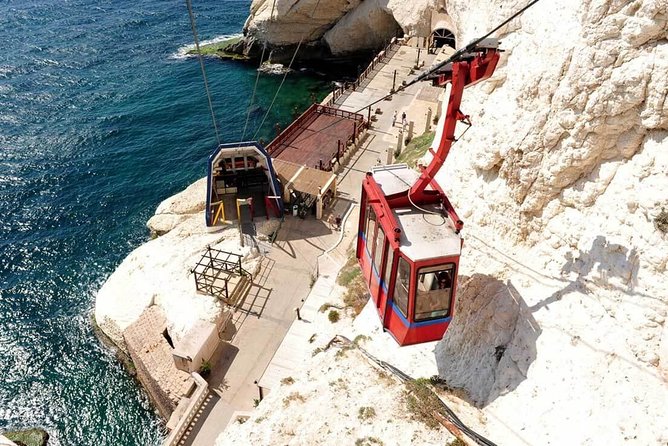
- Rosh Hanikra provides the strongest natural spectacle: A cable car takes you down to limestone grottoes carved by waves near the Lebanese border.
- Acre adds the best medieval atmosphere: The Old City and Crusader remains provide a very different setting from Caesarea.
- The day starts early and moves fast: Pickup begins at about 6:40 a.m., with roughly ten hours on the road and at the sites.
- The group may be fairly large: The stated maximum is 35 people, although one account described a group of about 40.
Why this coastal route is worth considering
Israel’s northern coast rewards a wide-angle approach. Caesarea is Roman and royal. Haifa is modern, steep, and shaped by the Baha’i faith. Acre is a lived-in old port with Crusader and Ottoman remains. Rosh Hanikra is all white rock, sea, and border-country drama.
You can visit these places independently, but connecting them in one day is not simple. They are spread along the coast, and the trip requires a substantial amount of driving. The air-conditioned vehicle and hotel pickup remove much of that work. You can sit back, watch the coast pass, and let the guide handle the route.
The tradeoff is clear. You are buying reach, not leisure. A ten-hour tour can show you four major places, but it cannot give you an unhurried visit to each one. I would view this as a sampler for a first visit, especially if your time in Israel is short.
The tour begins early, at around 6:40 a.m. Pickup and drop-off at your Tel Aviv hotel are included. Food, drinks, and insurance are not included, so plan for those costs yourself. Since the day is long, you should think ahead about breakfast and water, even though the exact meal arrangements are not specified.
More Rosh Hanikra trips:
- Caesarea, Rosh Hanikra and Acre Day Trip from Tel Aviv
★ 4.5 · 406 reviews - Unforgettable Tour to Caesarea, Haifa, Acre and Rosh HaNikra from Tel Aviv
★ 4.0 · 56 reviews - Caesarea, Acre & Rosh Hanikra Day Trip from Jerusalem
★ 4.0 · 78 reviews
Caesarea: Herod’s Roman seaport in one hour
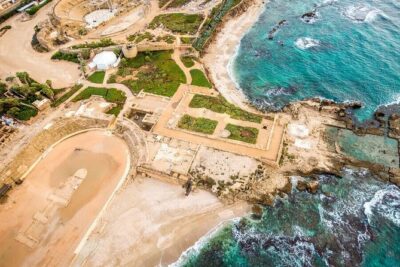
Caesarea National Park gives the tour its strongest ancient setting. Herod built the city and named it for Caesar, creating a wealthy seafront center with Roman ambition on a grand scale.
In the one-hour visit, you can see excavated gateways, a moat, walls, and rooms. The remains help you picture a planned city rather than a scattered pile of stones. The site’s position beside the Mediterranean also makes it easier to understand why this was an important port and display piece.
The Roman amphitheater is a major highlight. It is described as remarkably well preserved and is still used for performances by Israeli and international artists. That continued use gives the structure a practical connection to modern life. It is not simply an archaeological shell. Nearby, you can see part of the old hippodrome, where public spectacles once took place.
I would pay close attention to the guide here. The ruins are rewarding, but the meaning of a moat, gateway, amphitheater, or hippodrome is much clearer with context. One hour is enough for an introduction and a walk through the principal remains. It is not enough for a slow archaeological visit, extensive reading, or a relaxed exploration of every corner.
The entrance fee is included, which makes this stop easier to manage. Wear shoes suitable for walking over historic surfaces, though no specific footwear rule is given. The main practical point is to keep your expectations in check: Caesarea is a focused introduction, not a half-day study of the entire park.
Haifa’s Baha’i terraces in a brief stop
The route continues through Haifa, where the tour pauses at the Baha’i Shrine and gardens. The gardens descend in 19 terraces down the mountain toward the city, with flowers and carefully arranged plantings across the slopes.
This is a visual stop rather than a long visit. The scheduled time is about 20 minutes, and entry is free. You should expect a chance to see the shrine and the dramatic arrangement of the terraces, then return to the vehicle.
That short timing matters. One account specifically noted that the group could not go into the Baha’i gardens. The supplied details describe stopping to see the shrine and gardens, but they do not promise a full garden visit. If walking through the terraces is important to you, ask the operator before booking what access is planned on your date.
Even from a viewing point, Haifa gives the day a useful change of mood. Caesarea presents ancient stone and Roman power. Haifa offers a formal religious site shaped around symmetry, flowers, and the steep mountain above the city. You get the picture quickly, but you do not get much time to linger.
Rosh Hanikra and the cable car to the grottoes
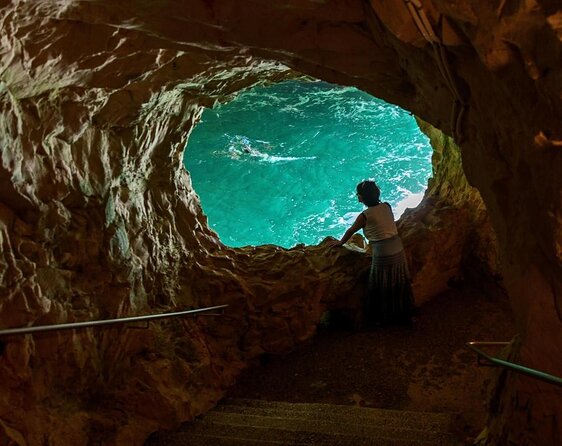
Rosh Hanikra is likely to be the most memorable stop for anyone drawn to natural scenery. It is the northernmost point on Israel’s Mediterranean coast, near the Lebanese border.
The tour takes you down by cable car into limestone grottoes formed by waves striking the rock over time. Inside, the setting changes from open coastline to narrow, echoing passages cut into the cliffs. The sea is the main sculptor here, and the result feels very different from the built remains at Caesarea and Acre.
The visit is divided into about one hour at Rosh Hanikra and another 40-minute stop connected with the Lebanese border and grottoes. The information provided includes the grotto entrance and cable car arrangements, with admission fees included overall. The exact division of guide time between the cable car, caves, and border viewpoint may vary.
A useful caution: the cable car and grotto visit depend on conditions and operation, but no specific disruption policy is provided. You should also remember that this is a coastal rock site. The tour does not promise a long walk or a private visit. You will be seeing a famous natural attraction as part of a group schedule.
Still, this is the place where the tour’s variety pays off. After ancient ruins, formal gardens, and city streets, you get waves, cliffs, and caves. One particularly enthusiastic assessment called the grottoes the best part of the day. I can understand why. The experience is simple, physical, and easy to appreciate even if you are not deeply interested in archaeology.
More days up the coast to Caesarea and Acre:
- From Tel Aviv: Caesarea, Haifa and Akko Day Trip
★ 4.4 · 744 reviews - Walking Tour of Akko (Half-day)
★ 5.0 · 84 reviews - Tel Aviv/Jerusalem: Caesarea, Haifa & Akko Day Tour
★ 4.5 · 53 reviews - Caesarea, Haifa And Akko Tour
★ 4.0 · 36 reviews
The Lebanese border adds a serious edge
The border stop gives Rosh Hanikra more weight than a standard seaside viewpoint. You are visiting the far north of Israel, at a location connected directly with Lebanon. The supplied schedule allows about 40 minutes for this portion and the grotto area.
Do not expect a long border-history presentation unless your guide provides one on the day. The confirmed details focus on exploring the grottoes and visiting the border area. Its value is partly geographical: you are seeing a distant edge of the country rather than only another pretty coastal lookout.
This stop may appeal most if you enjoy places with a strong sense of location. It is less suitable if you need a slow, detailed visit at every stop. The tour must keep moving to reach Acre and complete the return to Tel Aviv.
Acre: Crusader remains beneath an old port city
Acre, also called Akko, brings you into an older urban setting. The tour includes the Old City and the Citadel of Acre, with about an hour assigned to each part.
The Old City provides a change from open archaeological parks. Here, the historic center is part of a real city, with streets and buildings rather than only excavated foundations. You can get a feel for Acre as a port settlement while moving through its older quarters.
The citadel supplies the major historical focus. You can see Crusader remains, a prison used during Turkish rule, and gallows connected with the British Mandate. The gallows are tied to the British restrictions on Jewish immigration to Palestine after World War II, when Jews who broke those laws were executed.
That subject gives the site a modern political and human dimension. It also means the citadel is not just an attractive medieval ruin. The building’s later use carries difficult memories, and a good guide can help connect the Crusader period, Ottoman rule, and the British Mandate without flattening them into one story.
The schedule gives Acre more time than Haifa, but the total visit is still tightly managed. You may have enough time to see the main remains and walk through part of the Old City. You may not have time for a relaxed meal, extensive shopping, or a detailed visit to every room.
One positive account praised Acre both as a city and for its intact Hospitaller fort. That is a useful clue for planning your attention. If medieval military architecture interests you, stay close to the guide at the citadel and use your free moments for the Old City itself.
How the guide and group size affect the day
A guide can make or break a route like this. You are moving through four major areas with very different stories, and the sites are too compressed for you to depend only on signs. Several comments praised the tour’s organization and the guide’s explanations.
Michael A. received particular praise for being attentive, polite, and well informed. Another positive assessment described the guide as personable and able to provide the right amount of explanation. Those are important qualities on a long day. Clear instructions help you return to the vehicle on time, while good commentary gives the ruins and buildings meaning.
There are also reasons to be cautious. One account described a group of about 40 and said the guide spent too much time keeping people together. The stated maximum is 35, so the exact group size may matter greatly to your experience. A smaller group generally makes it easier to hear, ask questions, and stay near the guide.
Another account said the guide had to speak in both English and French. That made the commentary confusing at times. If you need one language for the whole tour, ask about the language arrangement before you reserve.
Most importantly, confirm the route shortly before departure. One serious complaint described an itinerary change announced after the bus had left, with a requested refund for an omitted destination. That is one account, not proof that the same thing will happen to you, but it is a sensible reason to verify the stops and included entry fees in advance.
Is $931 fair for a ten-hour day?
At $931, this is an expensive excursion. The price includes hotel pickup and return, an air-conditioned vehicle, a professional guide, and entrance fees. It also covers a route that would take careful planning and several long transfers if you arranged it independently.
That convenience has real value. You do not need to work out how to connect Tel Aviv with Caesarea, Haifa, Rosh Hanikra, and Acre in one day. You also avoid the stress of driving between places you may not know well.
Still, the price needs close attention. If $931 is the total for your booking, you should compare it with a private tour or with the cost of arranging only the sites that matter most to you. If the amount is based on a particular group or booking configuration, confirm exactly what it covers before paying.
The tour is better value for someone with limited time who wants breadth. It is weaker value for someone who prefers long museum visits, independent wandering, or a slower lunch in Acre. Food and drinks are extra, and insurance is not included, so your real spending will be higher than the advertised tour price.
Who will enjoy this route most?
I would recommend this tour to a first-time visitor with only a short stay in Israel. You can sample Roman ruins, a major religious site, a border-region natural attraction, and a Crusader-era city without changing hotels or planning several day trips.
It also suits people who enjoy guided context. The schedule moves quickly, and the historical layers are easier to follow when someone explains them as you go.
Families can participate from age four, and the information says most people can take part. The day is long, though, so young children may find the early start and repeated stops tiring. The tour has a maximum stated size of 35 people, but you should confirm the expected group before booking if space and quiet matter to you.
You may want a different plan if Haifa’s gardens are your main goal, since the stop is brief and full garden access is not promised. The same applies if you want a full day at Acre or Caesarea. This route gives you an overview, not an intensive visit.
Final decision: book it for coverage, not free time
I would book this tour if I had one day for northern Israel and wanted the simplest way to reach all four headline stops. Caesarea, Rosh Hanikra, and Acre each offer something distinct, while Haifa adds a fast but attractive pause.
I would not book it blindly at $931. Confirm the final route, group size, language arrangements, and exactly what access is planned at the Baha’i site. Also ask how the price is calculated and remember that meals, drinks, and insurance are extra.
The strongest reason to choose it is efficiency. The strongest reason to skip it is pace. If you accept a long day with limited time at each stop, this can be an effective northern-coast sampler. If you want depth, choose fewer places and stay longer.
FAQ
Where does the tour begin?
The tour departs from Tel Aviv, with hotel pickup offered. The stated start time is about 6:40 a.m.
How long does the tour last?
The tour lasts approximately ten hours, including travel between the sites and the return to your Tel Aviv hotel.
Which places does the tour visit?
The route includes Caesarea National Park, Haifa’s Baha’i Shrine and gardens, Rosh Hanikra, the Lebanese border area, and Acre’s Old City and citadel.
Is hotel pickup included?
Yes. Hotel pickup and drop-off in Tel Aviv are included.
Is transportation provided between the stops?
Yes. The tour uses an air-conditioned vehicle for transportation between locations.
Are entrance fees included?
Yes. The tour information says entrance fees are included. Food, drinks, and insurance are not included.
Can children join the tour?
Yes. The minimum starting age is four years old, and most people can participate.
How large is the tour group?
The stated maximum is 35 people. One account described a group of about 40, so you may wish to confirm the expected group size before booking.
Will I enter the Baha’i Gardens?
The tour includes a stop to see the Baha’i Shrine and gardens, but the visit lasts about 20 minutes. Full entry into the gardens is not guaranteed in the supplied details.
Can I cancel for a full refund?
Yes, if you cancel at least 24 hours before the experience start time. Cancellations or changes made within 24 hours are not refunded or accepted.
Just added around Tel Aviv
- 4-Day Christian Israel Tour from Tel Aviv★ 5.0 · 3 reviews
- Palm Sunday in Jerusalem: Mass at Bethpage and Via Dolorosa Procession with Transport from Tel Aviv★ 5.0 · 3 reviews
- Tel Aviv to Tel Aviv Airport (TLV) – Departure Private Transfer★ 5.0 · 3 reviews
- Masada and Dead Sea from Tel Aviv★ 4.5 · 3 reviews
- Jerusalem and Dead Sea Tour from Tel Aviv★ 4.5 · 3 reviews
- Private Transportation From / To Ben Gurion Airport to Tel Aviv Hotels★ 5.0 · 3 reviews
- Tel Aviv: Carmel Market & Neighborhood Guided Walking Tour★ 4.7 · 3 reviews
- Holyland Tour :Jerusalem & Bethlehem from Jerusalem or Tel Aviv★ 5.0 · 3 reviews
Caesarea, Haifa & Acre Day Trips, compared.
Caesarea, Rosh Hanikra and Acre Day Trip from Tel Aviv
Read our review →
Haifa Shore Excursion: Nazareth and the Galilee – for cruise ship guests only
Read our review →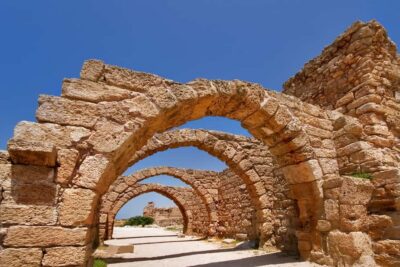
Caesarea, Acre & Rosh Hanikra Day Trip from Jerusalem
Read our review →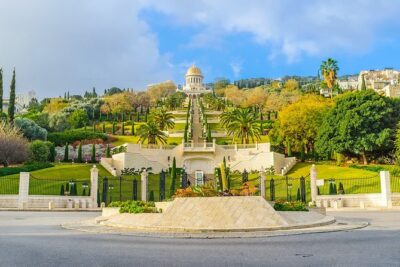
Unforgettable Tour to Caesarea, Haifa, Acre and Rosh HaNikra from Tel Aviv
Read our review →
Tel Aviv/Jerusalem: Caesarea, Haifa & Akko Day Tour
Read our review →Browse the lists this tour appears in