
Review · JERUSALEM TOURS
Israel Museum Must See High-Lights
Jerusalem’s past comes alive here. This private Israel Museum tour gives you a clear route through a very large collection, with the original Dead Sea Scrolls, the Second Temple Jerusalem Model, biblical-era archaeology, and Jewish life-cycle traditions all in one visit. I especially like the way the stops connect scripture, archaeology, and daily life rather than treating each display as an isolated object. I also like the private format, which lets your guide adjust the pace and explain difficult subjects in plain language.
The main consideration is price: $512.83 per group of up to six is a serious outlay for a two-to-four-hour experience. It can make sense for a family or small group, but less so for one or two people unless personal guiding and hotel pickup are top priorities. You should also confirm the exact admission arrangement, since the archaeological wing is marked as not included while other stops include admission.
In This Review
- Key points before you book
- Why this museum needs a plan
- Starting with Jerusalem in the Second Temple period
- Inside the Shrine of the Book
- Reading the archaeological wing through the Bible
- Jewish life beyond ancient ruins
- What the private guide adds
- Price, transport, and timing
- Who will get the most from this visit
- Is the Israel Museum highlights tour worth booking?
- FAQ
- Where does the tour begin?
- Does the tour offer hotel pickup?
- How long does the experience last?
- How many people can join the private tour?
- What is included in the price?
- What will I see at the Shrine of the Book?
- Is the tour suitable for people using public transportation?
- What is the cancellation policy?
Key points before you book
- The Dead Sea Scrolls are the centerpiece: See ancient biblical texts, including a full Isaiah facsimile, inside the Shrine of the Book.
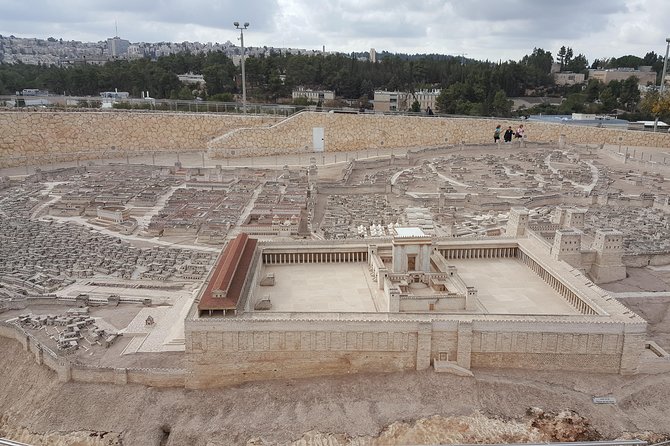
- The 1:50 Jerusalem model sets the scene: It helps you understand the city’s geography during the Second Temple period and the time of Jesus.
- The route links faith and archaeology: The guide uses objects from the archaeological wing to place biblical events in historical context.
- Jewish traditions receive their own stop: The Jewish Culture and Life-Cycle wing covers weekly, seasonal, and annual customs across Jewish communities.
- Private guiding changes the pace: Only your group takes part, with space for questions and family-friendly adjustments.
- Uri Goldflam is the named guide: Past guests praise his command of Israeli history, geography, religion, public policy, and biblical connections.
Why this museum needs a plan
The Israel Museum is not a quick room with a few famous objects. It is a large institution with archaeology, Jewish life and culture, art, temporary displays, and outdoor features. If you walk in without a plan, you can spend a lot of time finding your way and still miss the pieces that matter most to you.
This experience solves that problem with a focused route. You are not promised every gallery, and that is a strength. In roughly four hours, the visit concentrates on four connected subjects: Jerusalem at the time of the Second Temple, the Dead Sea Scrolls, archaeology connected to the biblical world, and Jewish traditions.
The order also makes sense. You first see a model of the ancient city, then the scrolls, then archaeological evidence, and finally the customs that shaped Jewish life across different places and periods. I like this progression because it moves from geography to text, from text to physical evidence, and from ancient events to living tradition.
The tour is private, so your group can ask questions without holding up a larger party. That matters in a museum where one person may want a brisk historical overview while another wants to spend time on inscriptions, ritual objects, or biblical references.
More museums:
- Jerusalem Yad Vashem Holocaust History Museum Tour
★ 5.0 · 98 reviews
Starting with Jerusalem in the Second Temple period
The first stop is the Second Temple Jerusalem Model, also called the Holy-land Model. Built at a scale of 1:50, it gives you a broad view of Jerusalem as it looked around the time of Jesus.
This is more useful than it may sound. Ancient Jerusalem can be hard to picture from written descriptions alone. The model lets you see the city’s shape, major structures, and relationship to the surrounding terrain in one glance. A short walk around it can make later references to Jerusalem’s geography easier to follow.
I would pay close attention here, even if you are eager to reach the scrolls. The model gives the rest of the tour a frame. When the guide discusses the Second Temple, biblical events, or the city’s later development, you have a physical picture in mind rather than a list of names.
The planned time is about 45 minutes, which should allow for an explanation of the model and questions. It is also a good point to tell the guide what interests your group most. If you are traveling with children or teenagers, the model may be the easiest place to begin because it turns a complicated city into something you can understand at a glance.
Inside the Shrine of the Book
The Shrine of the Book holds the Dead Sea Scrolls, the most famous archaeological material on this route. The building itself has a distinctive design, created to house and present these fragile ancient texts.
The display covers more than the scrolls alone. You learn about their discovery, the objects found during excavations, and the age of the manuscripts. Some texts are roughly 2,000 years old, while others reach back about 2,200 years. The collection includes biblical passages and a facsimile of the complete Book of Isaiah.
That combination is important. Seeing an old manuscript without knowing how it was found or preserved can feel abstract. Here, the story of discovery and the physical evidence around it help explain why the scrolls changed the study of ancient Judaism and biblical texts.
The visit is scheduled for about 45 minutes. That is enough for a strong introduction, but it is not a long research session. If you have a special interest in manuscript studies, you may want to ask the guide in advance how much time can be given to the scrolls compared with the other sections.
The Shrine of the Book can also be a meaningful stop for people with different religious backgrounds. The tour description presents the texts within Jewish and biblical history, while the guide’s past work has included respectful discussion of Christianity and the region’s three major religions. That broad approach may suit a mixed group better than a tour built around only one faith tradition.
Reading the archaeological wing through the Bible
The largest part of the route is the archaeological wing, with about 90 minutes planned. This is where the guide connects artifacts to the biblical narrative and to the wider history of the land.
The value here comes from interpretation. Museum labels can tell you an object’s date and material, but they may not show how it fits into a sequence of events, kingdoms, settlements, religious practice, and political change. A guide can point out those relationships and help you understand what archaeology can support, what it can suggest, and where questions remain.
The route is intended to bring biblical-era history into context through ancient findings. If you know the Bible well, you may appreciate seeing familiar places and periods linked to actual objects. If you know little about the Bible, the guide can provide a basic path through the material without expecting you to arrive with a long list of background knowledge.
I would treat this section as the intellectual core of the experience. The Jerusalem model shows the city, and the Shrine of the Book presents ancient scripture. The archaeological wing asks you to consider how material evidence helps us understand the people and societies behind those texts.
There is one practical issue to settle before booking. This stop is marked as admission not included, while the other listed stops show admission included. That may reflect a ticketing distinction or a data error, so ask the provider exactly what your $512.83 covers. You do not want a surprise at the museum entrance.
A few more Jerusalem trips worth weighing up
- From Jerusalem: Masada & Dead Sea Full Day Tour with Pick Up
★ 4.5 · 815 reviews - Masada and the Dead Sea Day Trip from Jerusalem
★ 4.5 · 757 reviews - From Jerusalem: Nazareth and Sea of Galilee Tour
★ 4.5 · 588 reviews - Nazareth and the Sea of Galilee Day Trip from Jerusalem
★ 4.5 · 446 reviews
Jewish life beyond ancient ruins
The final stop takes you to the Jewish Culture and Life-Cycle wing, with about 45 minutes planned. This section shifts the focus from ancient cities and manuscripts to customs shared by Jewish communities across different continents.
The subject is broad, but the route is organized around weekly, seasonal, and annual events. You can expect the discussion to address the ways Jewish life is marked through time, family milestones, holidays, and repeated community practices.
I like this inclusion because it prevents the museum visit from becoming only a lesson in ancient history. Jewish culture did not stop with the biblical period or the destruction of the Second Temple. Traditions changed across regions and centuries, yet certain practices continued to connect communities.
For a group that includes people of different ages, this may be one of the most relatable stops. Objects tied to family and ritual can make history feel closer than a stone fragment or ancient inscription. At the same time, 45 minutes is limited, so the guide will need to choose examples rather than cover every tradition in detail.
If this subject matters most to you, tell Uri Goldflam or your assigned guide early in the visit. A private tour gives you a better chance to steer the conversation toward the objects and customs your group wants to understand.
What the private guide adds
The strongest part of this experience is the guide’s role in connecting the displays. Uri Goldflam is associated with the tour, and the supplied feedback repeatedly praises his command of Israeli history, geography, religion, biblical relationships, current affairs, and public policy.
Several people describe him as warm, engaging, and easy to listen to. One person compared his recall to a walking Google, while another praised the way he made information fun for a group. Those comments suggest a guide who can handle both serious historical discussion and a relaxed family pace.
His background also seems useful for visitors who want more than a narrow museum lecture. He is described as proud of Israel and his Jewish heritage while remaining respectful toward Christianity. That balance can matter in Jerusalem, where religious interpretation is often personal and political questions are never far away.
You should still communicate your interests before the tour begins. Ask for more archaeology if that is your priority. Request extra attention to Jewish customs if your group is preparing for a bar or bat mitzvah. If you are visiting from a Christian background, explain which biblical periods or places you want placed in context.
The private setup means only your group participates. That is especially useful when six people have different levels of background. You can stop for clarification, move on when attention fades, or spend longer at one object without waiting for strangers.
Price, transport, and timing
The listed cost is $512.83 for the group, up to six people. At the full group limit, that works out to about $85.47 per person. For six people who want a private guide, that is easier to justify than the same total for a couple.
The price buys more than entry to a museum. You are paying for a private guide, a planned route through a large institution, an air-conditioned vehicle, and pickup and drop-off options from locations in Jerusalem. Those extras have real value if your group would otherwise need to arrange transport and pay for separate guiding.
The experience lasts approximately two to four hours, while the listed stops add up to about three hours and 45 minutes. Allow for that longer end if you want the full route and time for questions. The meeting point is listed at the museum shops in Jerusalem, and the ticket redemption point is Israel Museum/Ruppin. Pickup is offered on request, with front-door pickup and return available from locations in Jerusalem.
The supplied opening information lists Tuesday hours from 4:00 PM to 9:00 PM for the stated date range. Museum schedules can change, so confirm the start time and operating hours before you commit to other Jerusalem plans. A late afternoon start may work well if you want to avoid using your entire day, but it leaves less flexibility if the tour runs toward four hours.
Free cancellation is available when you cancel at least 24 hours before the local start time. Changes or cancellations made later are not accepted for a refund.
Who will get the most from this visit
I would recommend this tour to first-time visitors who want a guided introduction rather than an unstructured museum day. It also fits families, religious study groups, small friend groups, and anyone who wants biblical history explained alongside physical evidence.
It is particularly useful if you have only one museum visit available in Jerusalem. The route covers several major areas without asking you to master the building on your own.
The experience may be less suitable if you prefer to browse slowly, sketch, read every label, or spend most of your time in art galleries. This is a highlights visit, not a complete survey of the museum. You should also think carefully about the cost if your group is small.
Most people can participate, service animals are allowed, and the museum is near public transportation. Still, the provided details do not describe the exact walking distance, seating, or mobility arrangements inside each display area, so ask the provider if your group has specific access needs.
Is the Israel Museum highlights tour worth booking?
Book it if you want a private, guide-led route through Jerusalem’s archaeology, the Dead Sea Scrolls, and Jewish culture, especially if you can fill most or all of the six places. Uri Goldflam’s praise for clear explanations, broad subject knowledge, warmth, and respect across religious traditions adds real appeal.
Think twice if you are traveling alone or as a couple and mainly want museum admission. In that case, the group price may be hard to defend. Before payment, confirm the exact start time, pickup plan, and whether archaeological-wing admission is included.
For the right group, this is a smart way to turn a huge museum into a readable story: city, scripture, archaeology, and tradition, in that order.
FAQ
Where does the tour begin?
The listed start point is at the museum shops in Jerusalem, with the ticket redemption point at Israel Museum/Ruppin.
Does the tour offer hotel pickup?
Yes. Pickup and drop-off can be requested from locations in Jerusalem.
How long does the experience last?
The overall duration is approximately two to four hours. The four listed stops total about three hours and 45 minutes.
How many people can join the private tour?
The price covers one private group of up to six people.
What is included in the price?
An air-conditioned vehicle is included. Admission is listed as included for the Second Temple Jerusalem Model, the Shrine of the Book, and the Jewish Culture and Life-Cycle wing. The archaeological wing is marked as admission not included, so confirm this detail with the provider.
What will I see at the Shrine of the Book?
You will see the Dead Sea Scrolls, material found during excavations, information about their discovery, and a facsimile of the complete Book of Isaiah.
Is the tour suitable for people using public transportation?
The museum is near public transportation, and most people can participate. The stated meeting point is at the museum, while pickup can be arranged on request.
What is the cancellation policy?
You can receive a full refund if you cancel at least 24 hours before the experience start time. Cancellations or changes made less than 24 hours before the local start time are not accepted.
Just added around Jerusalem
- Private Walking Tour in Jerusalem’s Old City★ 5.0 · 3 reviews
- jerusalem classic tour★ 5.0 · 3 reviews
- Jerusalem and the Dead Sea★ 5.0 · 3 reviews
- Jerusalem Running Tour-Experience the unique vibes of Jerusalem in your sneakers★ 5.0 · 3 reviews
- Jerusalem of 3 Religions in Russian★ 4.4 · 3 reviews
- From Jerusalem: Masada Sunrise, Ein Gedi & Dead Sea★ 5.0 · 3 reviews
- Christian Jerusalem in Russian★ 5.0 · 3 reviews
- Holy Jerusalem Full Day Tour from Jerusalem★ 5.0 · 3 reviews
Jerusalem Tours, compared.

Masada and the Dead Sea Day Trip from Jerusalem
Read our review →
Nazareth and the Sea of Galilee Day Trip from Jerusalem
Read our review →

Browse the lists this tour appears in