
Review · HISTORICAL TOURS
Jerusalem Yad Vashem Holocaust History Museum Tour
History here is impossible to keep at a distance. Yad Vashem brings the Holocaust into clear human focus, from Nazi propaganda and antisemitic games to personal photographs, survivor testimony, and the names of those murdered. I especially like the official Yad Vashem guide and the supplied headset, which help you follow the story in a busy museum. I also value the chance to continue exploring after the two-hour tour ends. The main drawback is emotional and practical: the material is graphic, painful, and far too extensive for a short visit.
At $12 per person, this shared tour offers strong value if you want an organized introduction rather than trying to find your own path through the museum. Still, you should not treat the advertised two hours as enough for the whole center. Several people have spent three or four hours inside and still felt they had more to see.
In This Review
- Key points to know before you go
- Why the $12 guided visit makes sense
- The building tells part of the story
- Gallery one: how propaganda prepared the ground
- Following the story through nine galleries
- Leszno Street and the Warsaw Ghetto
- The Auschwitz Album and Schindler’s List
- Survivor testimony gives the history a voice
- The Hall of Names and the work of memory
- How much time should you allow?
- Who should take this tour?
- Practical details for the 10:30 start
- Should you book the Yad Vashem tour?
- FAQ
- Where does the tour take place?
- How long does the tour last?
- What time does the tour start?
- What is included in the price?
- Is parking included?
- Are food and drinks included?
- Can I continue exploring after the guided tour?
- Can I cancel for a full refund?
Key points to know before you go
- Nine chronological galleries trace the Holocaust from antisemitic propaganda in 1930s Germany through the destruction of European Jewish communities.
- The prism-shaped building by Moshe Safdie turns the museum itself into part of the experience, cutting dramatically through the mountain.
- Auschwitz Album images and a copy of Schindler’s List connect large events with specific people, places, and evidence.
- A reconstructed Warsaw Ghetto street gives the historical story a physical setting, with cobblestones underfoot.
- Headsets make the shared tour easier to follow, especially when the guide is speaking to a group.
- The Hall of Names and survivor testimonies shift attention from statistics to individual lives and memory.
Why the $12 guided visit makes sense
The price is modest for a two-hour visit led by an official Yad Vashem guide. Admission to the museum is included, as are the guide, headset, taxes, fees, handling charges, and gratuities. You do not have to calculate a tip at the end or pay an extra museum entry charge.
The real value is structure. Yad Vashem contains a great deal of material, and the nine galleries can feel overwhelming if you walk in without a plan. A guide helps you understand how one stage led to the next, from propaganda and discrimination to deportation, mass murder, and the aftermath.
This is a shared tour, so you will not get the same amount of personal attention as you would on a private visit. The headset helps solve part of that problem. You can hear the guide clearly while standing with the group, then return to selected displays after the formal tour.
For most people, the tour works best as an introduction. Think of the two hours as a guided framework, not a complete museum visit. If you have a family connection, academic interest, or simply want to read every document, plan extra time after the guide leaves.
More museums:
- Israel Museum Must See High-Lights
★ 5.0 · 17 reviews
The building tells part of the story
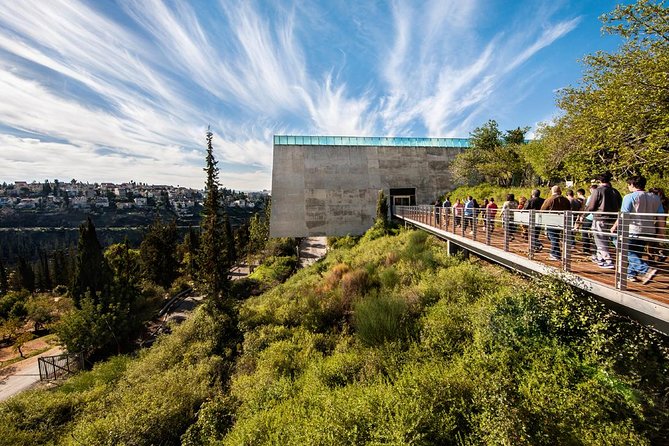
Yad Vashem’s Holocaust History Museum was designed by Moshe Safdie. The building has a long, triangular, prism-like form that cuts through the mountain, with both ends extending dramatically into open air.
That design matters because the museum does not feel like a neutral collection of rooms. The architecture creates a strong sense of movement through a confined historical period. The structure is spare and angular, while the approach passes through a peaceful setting lined with cypress and olive trees.
The contrast can be unsettling. You begin in a quiet, green setting, then enter a building devoted to persecution, murder, and loss. There is no easy emotional preparation for what follows, but the change in mood makes the entrance memorable.
The building is easy to navigate, according to the practical experience shared about the museum, but the content itself demands concentration. You may need to pause often. This is not a place to rush through with a camera in hand.
Gallery one: how propaganda prepared the ground
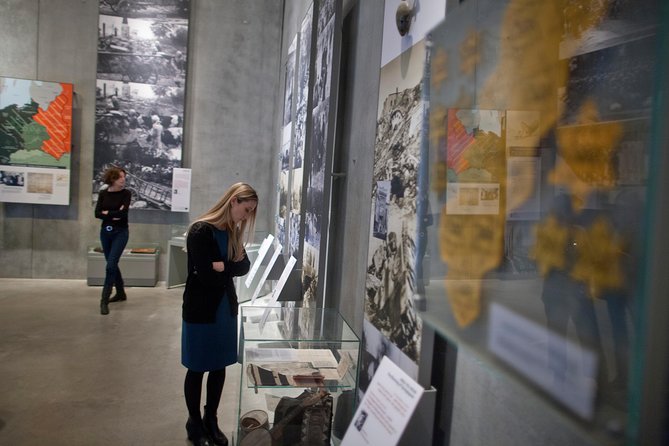
The tour begins with the rise of antisemitism and the political climate of Nazi Germany during the 1930s. Authentic posters, propaganda, and antisemitic board games show how hatred was presented as ordinary entertainment and public policy.
This section is important because it explains that the Holocaust did not appear without warning. The displays show how prejudice can be taught, repeated, and made to look respectable. You are not simply shown the final crimes. You are shown some of the methods used to prepare society for them.
The antisemitic games are particularly disturbing because of their familiar format. Games are usually associated with family life and children. Here, that format was used to spread racist ideas. It is a small detail with a large lesson: propaganda can enter everyday life in forms that seem harmless.
Your guide can help connect these objects to the wider chronology. Without that context, a poster or game might seem like an isolated artifact. Within the gallery sequence, it becomes evidence of a broader campaign.
Following the story through nine galleries
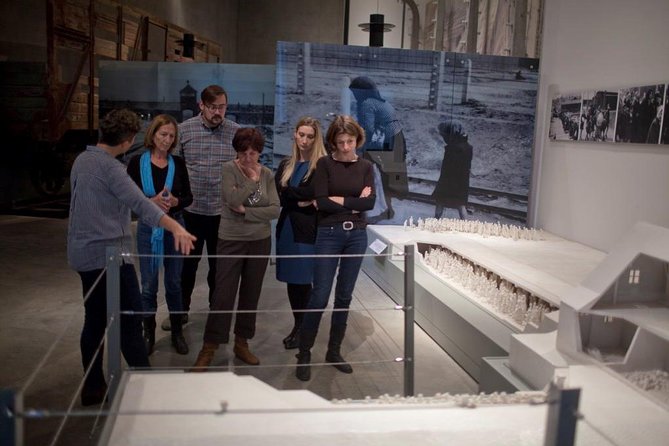
The museum takes you through nine galleries, each devoted to a different chapter of the Holocaust. The chronology is one of the tour’s strongest features because it keeps the events connected rather than presenting a collection of unrelated horrors.
You move from the growth of Nazi power and anti-Jewish measures toward the destruction of Jewish communities across Europe. Along the way, authentic objects, photographs, documents, film, and survivor accounts give the story human scale.
The amount of information can be difficult to absorb. You might feel that one gallery alone deserves an hour. That is why the guide’s selection matters. In two hours, you will receive key explanations and see major displays, but you will not read everything.
I recommend choosing your priorities before the tour begins. Listen closely to the guide’s main points, then mark displays you want to revisit. Trying to read every panel while keeping up with a group can make the experience tiring and fragmented.
More historic sites:
- Jerusalem Heritage Private Tour
★ 5.0 · 3 reviews - Kabbalah Heritage Walk
★ 5.0 · 23 reviews - Jerusalem Christian Heritage Private Tour
★ 5.0 · 9 reviews - Full-Day Private Luxury and Cultural Tour in Tel Aviv
★ 5.0 · 5 reviews
Leszno Street and the Warsaw Ghetto
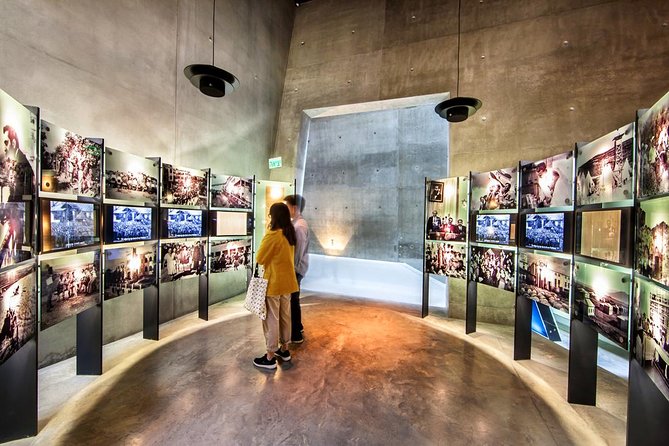
One of the most memorable sections is Leszno Street, a reconstructed cobblestoned street from the Warsaw Ghetto. This is a physical reminder that ghettos were not abstract zones on a map. They were real neighborhoods where people lived under confinement, hunger, fear, and forced separation.
Walking on cobblestones changes your pace. The setting gives the history a sense of place, even though it is reconstructed. You can better imagine the streets as lived spaces rather than seeing only photographs and text.
The section also helps explain the destruction of Jewish communities in the context of daily life. Families, shops, schools, and religious communities existed before the Nazis dismantled them. The museum’s strength lies in showing both the lives that were targeted and the system that targeted them.
This part may be especially hard for anyone with family ties to Poland or Eastern Europe. Give yourself time to stop and think. The group schedule may not allow long pauses, but you can return later if the tour leaves you wanting more.
The Auschwitz Album and Schindler’s List
Yad Vashem includes the Auschwitz Album and a copy of Schindler’s List. These are powerful because they connect the wider story to concrete evidence.
The Auschwitz Album records the arrival and processing of Jewish deportees at Auschwitz. Its photographs help you confront the organized nature of the camp system and the way people were stripped of control over their own fate.
A copy of Schindler’s List offers a different kind of historical document. It is linked to the names of people Oskar Schindler sought to protect. Seen alongside the rest of the museum, it does not turn the story into a simple tale of one hero. Instead, it adds a complicated example of individual action within a vast system of murder.
These displays are not quick photo stops. The value comes from understanding what the documents represent. A guide’s explanation can help you read them as historical evidence, not just famous objects.
Survivor testimony gives the history a voice
Recorded survivor testimonies are among the museum’s most affecting features. Objects can establish facts, but a survivor’s voice conveys fear, confusion, separation, and survival in a direct way.
You will see large video presentations and other recorded material throughout the museum. Some sections are graphic and emotionally intense. If you know that film footage affects you strongly, pace yourself and step aside when you need a break.
The testimony also prevents the museum from becoming only a story about Nazi policy. It brings attention back to the people who endured persecution. Names, faces, and memories resist the flattening effect of large numbers.
Several accounts of the museum describe spending much longer than planned because the displays kept drawing them onward. That is easy to understand. The material is arranged so that each section adds another layer, and the urge to keep reading can override your watch.
The Hall of Names and the work of memory
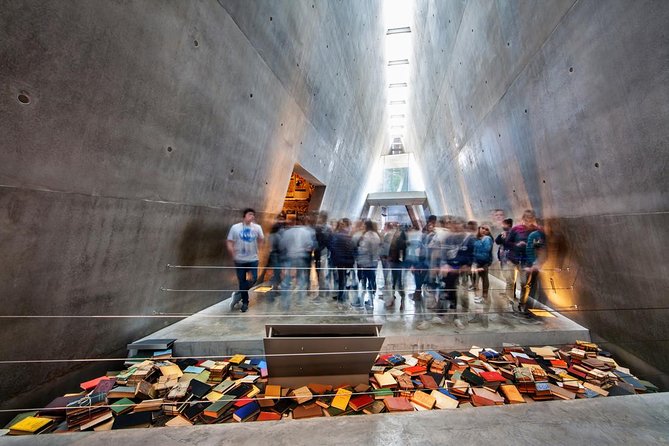
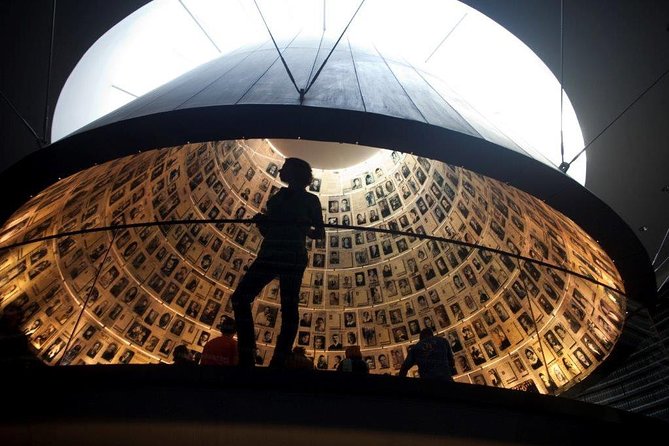
The Hall of Names is a major memorial space dedicated to the victims. It shifts the focus from the machinery of the Holocaust to individual identity.
The name of each person matters. The memorial pushes back against the way mass murder can reduce human beings to statistics. Even if you have visited other Holocaust museums or concentration camps, this space can still affect you differently because it centers remembrance and personal record.
Yad Vashem also includes research facilities where people can investigate family histories. If you are trying to learn about relatives affected by the Holocaust, the research center may be worth additional time. Assistance is available there, and the setting can turn a general museum visit into a personal search.
Do not assume you will complete this work during the guided tour. The two-hour schedule is focused on the main museum route. Treat family research as a separate part of your visit.
How much time should you allow?
The scheduled experience lasts about two hours. That is enough for a guided introduction, but not enough to see the museum at a slow pace.
You may finish the formal tour wanting at least another hour. Some people have spent three hours or more and still covered only part of the material. If you read documents carefully, watch full testimonies, or stop often, you could need much longer.
The best plan is to keep your schedule flexible. Do not book a major activity immediately afterward if you expect to continue exploring. The museum provides an opportunity to remain after the tour, so use it.
Emotionally, extra time also helps. A short, rushed visit can leave you feeling numb. A slower pace allows you to process what you have seen, though it may also make the visit more difficult.
Who should take this tour?
This experience suits adults and older children who can handle graphic material and sustained historical discussion. It is a strong choice if you are visiting Jerusalem for a limited time and want a guide to organize the museum’s main story.
It is also useful if you have visited Holocaust museums in the United States or former concentration camps in Europe. Yad Vashem will not simply repeat the same displays. Its scale, documentation, architecture, memorial spaces, and connection to Jewish memory give the visit its own character.
I would not choose it as a casual family outing. The content includes disturbing images, film, and descriptions of mass murder. Very young children may not be ready for the experience, and the museum’s emotional weight can be hard for anyone who expects a light sightseeing stop.
Afterward, plan something quieter or more uplifting. One sensible approach is to visit the Israel Museum or Jerusalem’s Old City later, giving yourself a change of mood and subject. Ending your day here may be right for some people, but it can leave you carrying the museum’s sadness into the evening.
Practical details for the 10:30 start
The listed start time is 10:30 a.m. Build in enough time to reach the meeting point without hurrying. The tour is near public transportation, and most people can participate. Service animals are allowed.
Parking is not included and is payable on site. Food and drinks are also not included, so plan those separately rather than expecting refreshments during the museum visit.
Your mobile ticket makes entry information easy to keep with you. The headset is included and is especially helpful on a shared tour. Gratuities and taxes are already covered, which keeps the $12 price straightforward.
Free cancellation is available if you cancel at least 24 hours before the local start time. Cancellations or changes made later do not qualify for a refund.
Should you book the Yad Vashem tour?
Book it if you want a low-cost, guided introduction to one of Jerusalem’s most important museums. The official guide, headset, included admission, and clear chronology make the experience easier to follow than a self-guided first visit.
Skip the tour only if you already know you need a full day for independent study and prefer to set your own pace from the start. Even then, the museum itself deserves time.
My advice is simple: reserve the guided visit, then protect extra hours afterward. Listen for the historical structure, return to the displays that stop you, and leave room for the Hall of Names and survivor testimony. This is not a box to tick between sightseeing stops. It is a serious act of remembrance, and Yad Vashem gives you the tools to approach it with care.
FAQ
Where does the tour take place?
The tour takes place at Yad Vashem, the World Holocaust Remembrance Center in Jerusalem.
How long does the tour last?
The guided experience lasts approximately two hours.
What time does the tour start?
The listed start time is 10:30 a.m.
What is included in the price?
The price includes an official Yad Vashem guide, museum admission, headsets, gratuities, taxes, fees, and handling charges.
Is parking included?
No. Parking is not included and is payable on site.
Are food and drinks included?
No. Food and drinks are not included.
Can I continue exploring after the guided tour?
Yes. You have an opportunity to continue exploring the museum after the formal tour ends.
Can I cancel for a full refund?
Yes, if you cancel at least 24 hours before the experience start time. Cancellations or changes made less than 24 hours before the start time are not refunded.
Just added around Jerusalem
- jerusalem classic tour★ 5.0 · 3 reviews
- Jerusalem and the Dead Sea★ 5.0 · 3 reviews
- Private Walking Tour in Jerusalem’s Old City★ 5.0 · 3 reviews
- Jerusalem of 3 Religions in Russian★ 4.4 · 3 reviews
- Jerusalem Running Tour-Experience the unique vibes of Jerusalem in your sneakers★ 5.0 · 3 reviews
- From Jerusalem: Masada Sunrise, Ein Gedi & Dead Sea★ 5.0 · 3 reviews
- Christian Jerusalem in Russian★ 5.0 · 3 reviews
- Hebron & Ramallah Full-Day Guided Tour from Jerusalem★ 5.0 · 3 reviews
Historical Tours, compared.

Browse the lists this tour appears in