
Review · JERUSALEM OLD CITY TOURS
Jerusalem: 3–Hour Old City Tour in French
Jerusalem rewards a good guide. This private three-hour walk links the Old City’s four quarters with the Jewish, Christian, and Islamic traditions that shaped it. I like the clear time journey, from Suleiman the Magnificent’s walls and the Armenian Quarter to the Roman Cardo, Hezekiah’s waterworks, the Western Wall, and the Church of the Holy Sepulchre.
I also like that the tour is offered in French, English, or Italian, with a private group rather than a large crowd. The guide Florent receives especially warm praise for being attentive, cultured, and easy to understand. The main consideration is pace: three hours is enough for an excellent introduction, but not enough to explore every site in the Old City.
In This Review
- Key points to know before booking
- Meeting the guide near Mamilla and Jaffa Gate
- The Armenian Quarter and a quieter side of the Old City
- Walking the Roman Cardo beneath modern Jerusalem
- Hezekiah, Isaiah, and Jerusalem’s ancient water story
- The Temple area and the Western Wall
- The Christian Quarter and the Church of the Holy Sepulchre
- What the private format adds
- Is $82 per person good value?
- Who should book this Jerusalem walk?
- My booking advice
- FAQ
- How long is the Jerusalem Old City tour?
- Where does the tour meet?
- Which languages are available?
- Is this a private tour?
- What places are covered?
- Are museum and park entrance fees included?
- What should I bring?
Key points to know before booking
- A private three-hour walk: You get a focused introduction to Jerusalem without spending half the day on a large group tour.
- A true time-travel route: The walk moves from Ottoman walls to Armenian Jerusalem, the Roman Cardo, biblical stories, Jewish sacred places, and Christian sites.
- Florent is a major strength: His French-speaking guiding is praised for clear explanations, care, and strong knowledge of the subject.
- The Church of the Holy Sepulchre is the finale: You follow the path associated with Jesus and finish at one of Christianity’s most important churches.
- The price is $82 per person: That is easier to justify for a private group, especially if you value personal questions and a French-speaking guide.
- Bring practical walking gear: Hats, water, and good walking shoes are strongly recommended.
Meeting the guide near Mamilla and Jaffa Gate
The meeting point is at the entrance to the Mamilla Shopping area, while the walking tour begins at Jaffa Gate. Your exact meeting instructions should be clear when you book, since these are nearby but separate points.
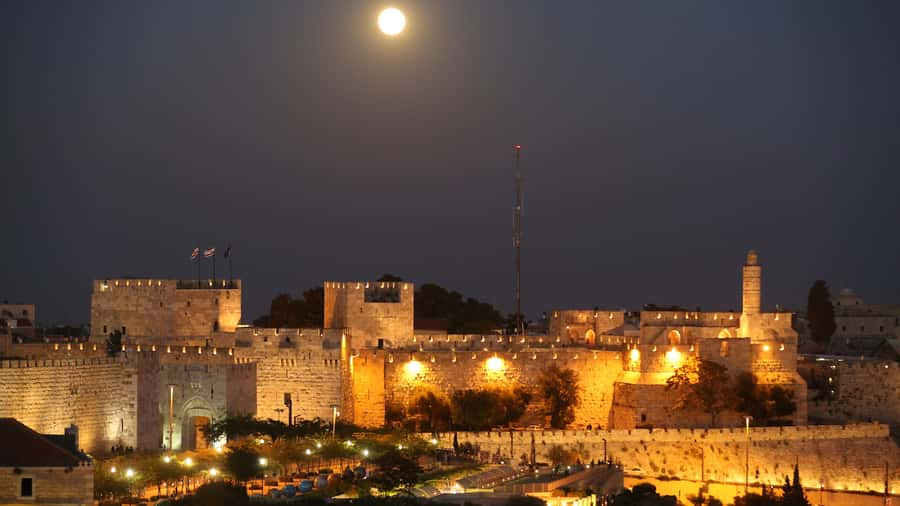
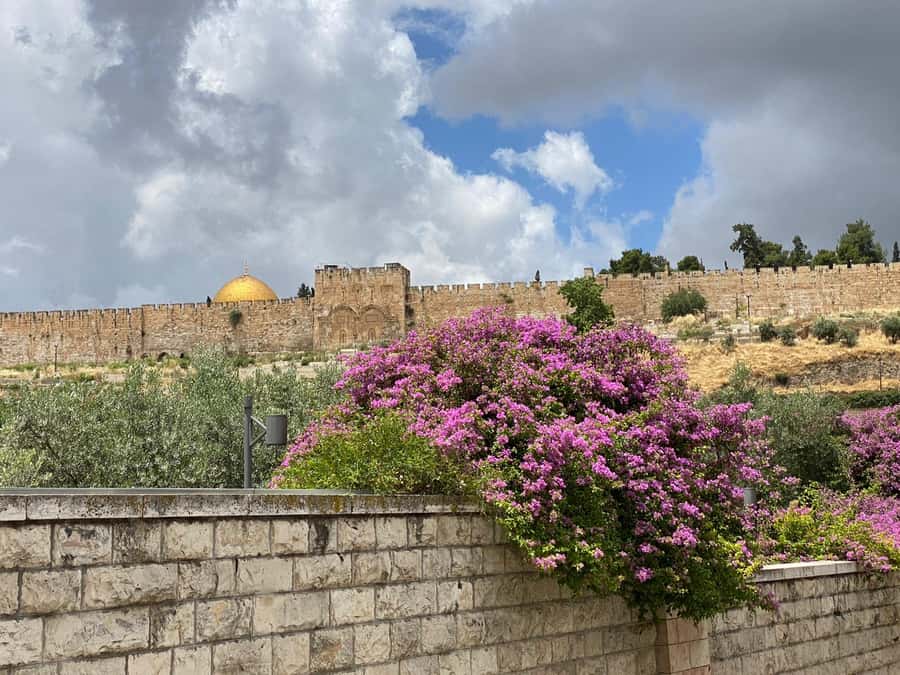
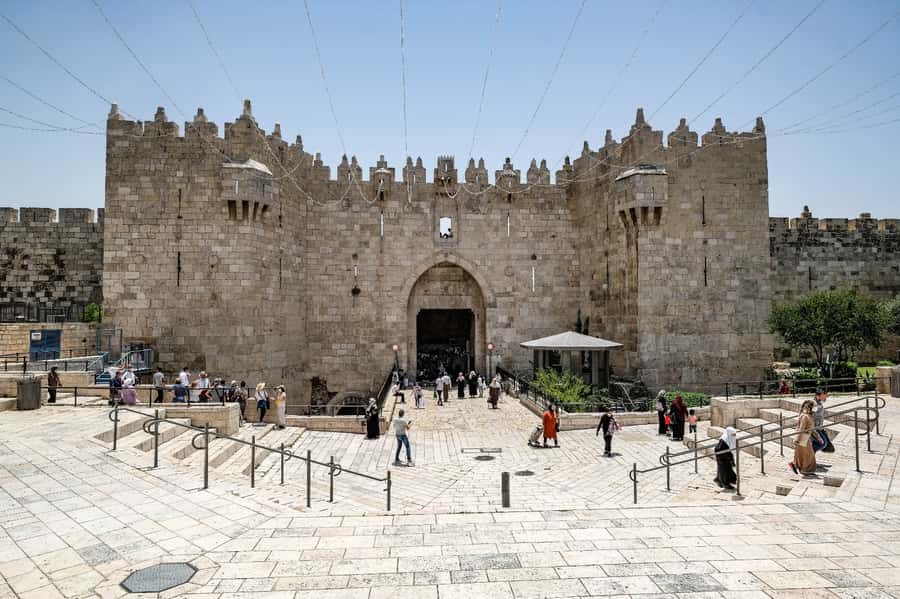
Jaffa Gate is a sensible starting place. It gives you an immediate view of Jerusalem’s fortified Old City and places you at one of the best-known entrances through Suleiman the Magnificent’s walls. The Ottoman sultan rebuilt much of the city’s defensive wall in the sixteenth century, and those walls still frame the first part of your walk.
I like beginning here because the tour does not treat Jerusalem as a collection of disconnected monuments. You start with the city itself, then move inward through its neighborhoods and past. The guide also sets the scene around the creation of the State of Israel and the different neighborhoods of Jerusalem.
That opening matters. Jerusalem can feel confusing at first. Streets twist, religious sites overlap, and the same stone may carry significance for several traditions. A short explanation at the start helps you understand where you are before the tour becomes more detailed.
More City Tours in Jerusalem
- Jerusalem: Guided Walking Tour of the Old City
★ 4.7 · 386 reviews - Full Day City Tour of Jerusalem
★ 4.1 · 367 reviews - From Jerusalem Small group tour Old&New City ENTRY FEES INCL
★ 4.0 · 135 reviews
The Armenian Quarter and a quieter side of the Old City
The first historic neighborhood is the Armenian Quarter. It is often less immediately familiar to first-time visitors than the Jewish, Muslim, or Christian areas, so including it gives the route more balance.
You can expect the guide to explain the Armenian presence in Jerusalem as part of the Old City’s wider religious and cultural picture. This is not simply a march toward the famous sights. The quarter helps show that Jerusalem has long been home to distinct communities, each with its own traditions and relationship to the city.
For me, this is one of the strongest choices in the itinerary. A tour that rushes directly from Jaffa Gate to the Western Wall misses the human shape of the Old City. The Armenian Quarter slows the story down and gives you a better sense of Jerusalem as a place of neighborhoods, not just sacred monuments.
The streets can be uneven, and you should expect a great deal of walking. Good shoes are not a polite suggestion here. Water and a hat will also help, particularly when the weather is hot.
Walking the Roman Cardo beneath modern Jerusalem
The route then turns to the Roman period and the Cardo, the ancient north-south street associated with Publius Aelius Hadrianus, better known as the emperor Hadrian.
This part of the tour shows how Jerusalem changed under Roman rule. The Cardo is valuable because it lets you picture the city as an organized Roman settlement, with a central street running through it. The contrast is striking: Roman planning sits under and beside later Jewish, Christian, Muslim, and Ottoman layers.
I enjoy this type of stop because it gives you a physical way to understand history. A date or ruler can disappear quickly from memory. A street plan, old columns, or the line of an ancient thoroughfare is easier to hold onto.
The Cardo also reminds you that Jerusalem’s past is not neatly divided into separate chapters. Roman remains exist within a city that continued to develop for centuries. Your guide’s job is important here, since the stones alone do not explain why the site matters or how it relates to the rest of the Old City.
You should keep your expectations sensible. This is a guided introduction, not a long archaeological visit with time for every museum or excavation. Entrance fees for parks and museums are not included, so the experience works best if you want an outdoor walking tour rather than a series of extended indoor visits.
Hezekiah, Isaiah, and Jerusalem’s ancient water story
One of the more unusual parts of the route is the story of King Hezekiah and the prophet Isaiah. The tour uses this biblical episode to explain Jerusalem’s ancient water system and the technical ability behind it.
Hezekiah is remembered as a pious king, but the practical side of his rule is just as interesting. Water was essential to Jerusalem’s survival, especially during times of threat. The story connects religious belief with engineering, defense, and the daily needs of an ancient city.
This is the sort of detail that can make a short city tour worthwhile. You are not only hearing who ruled Jerusalem. You are learning how people tried to protect and sustain it.
The information provided for this tour does not say that you enter Hezekiah’s Tunnel, so do not book expecting a tunnel walk. Instead, you should see this portion as a narrated stop in the larger story of biblical Jerusalem.
For visitors who enjoy the Bible as history, literature, or religious tradition, this section adds welcome depth. It also helps connect the Old City to a much older past than the Roman and Ottoman remains you see above ground.
More walks through the Old City:
- Best seller! Jerusalem old city four quarters tour
★ 5.0 · 123 reviews - Private Tour Jerusalem Old City
★ 5.0 · 118 reviews - All Inclusive Walking Tour Old City Jerusalem
★ 5.0 · 83 reviews - Jerusalem Half Day Tour: Holy Sepulchre and Western Wall
★ 4.5 · 80 reviews
The Temple area and the Western Wall
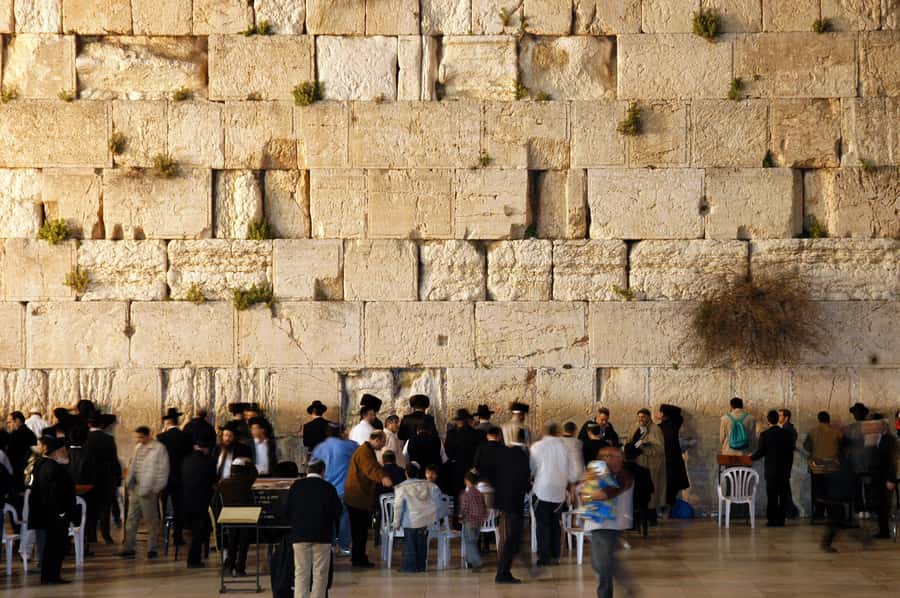
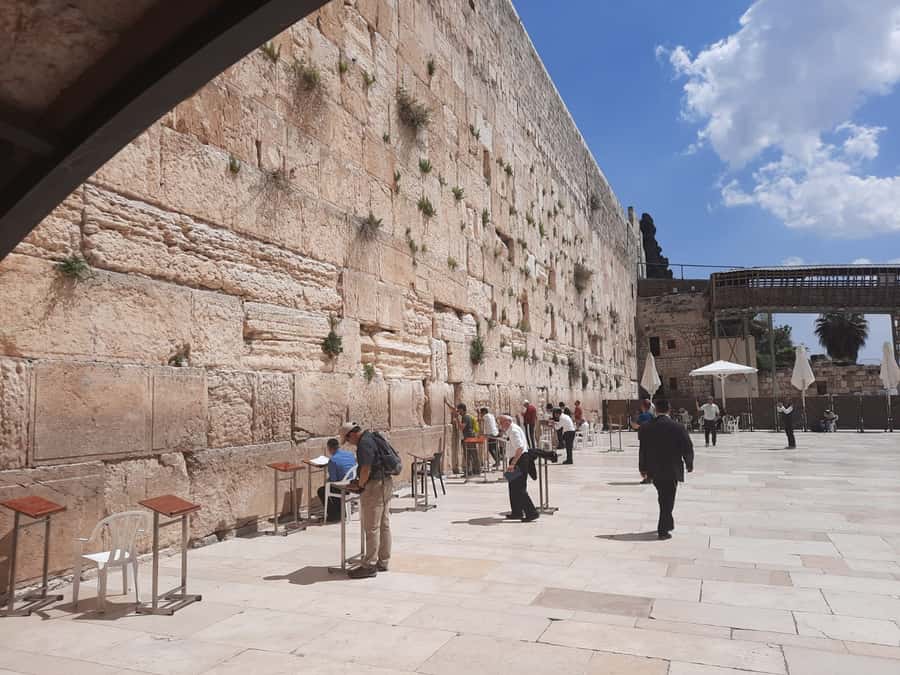
The route continues to the area associated with the Temple of Jerusalem and the Western Wall. This is one of the most important moments of the walk, and the guide’s explanation matters more here than a quick photograph.
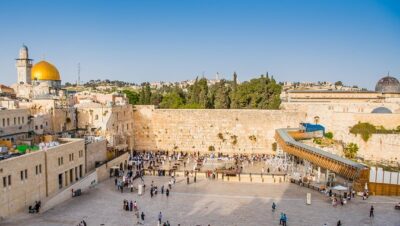
The Western Wall is a surviving section connected with the retaining walls of the ancient Temple complex. It is a major Jewish place of prayer and one of Jerusalem’s most recognizable sacred sites. Your guide can help place it within the wider story of the Temple, the city, and the Islamic era that followed.
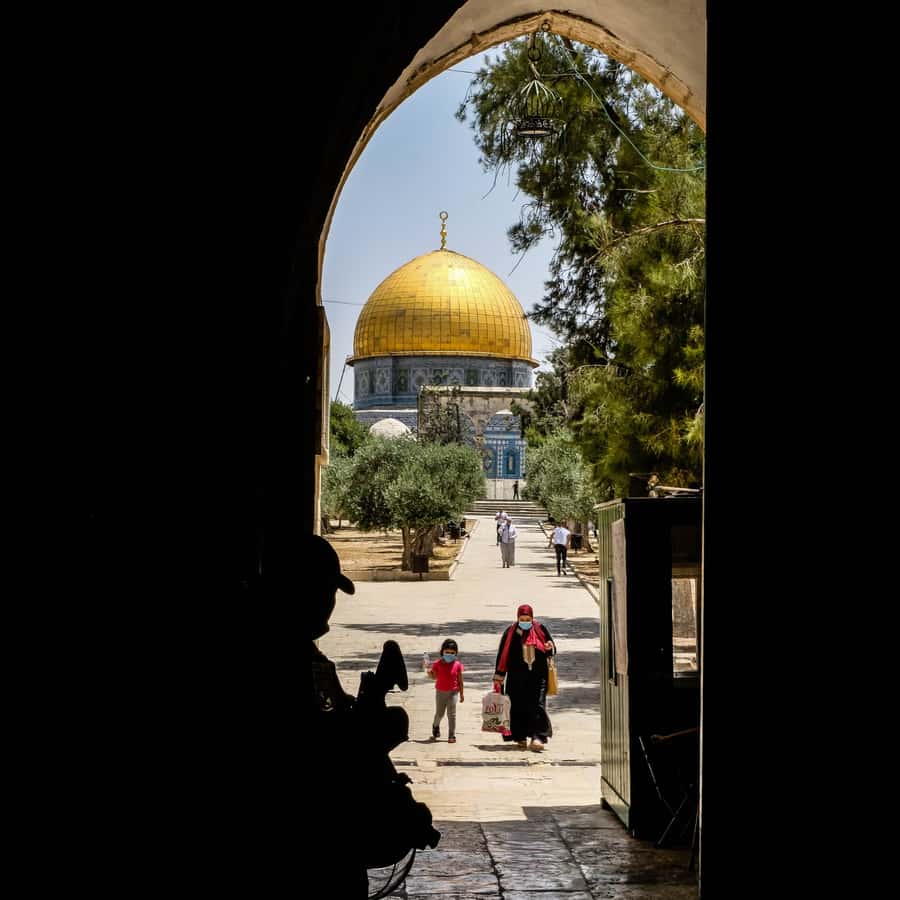
The itinerary describes a return to the temple story and then a move through Islamic Jerusalem. That sequence is useful because it avoids presenting the Old City as belonging to only one tradition. Jewish, Christian, and Muslim history is layered in the same compact area, and a responsible guide must explain those connections with care.
The tour does not list entrance to the Temple Mount or any other religious compound. Access rules and opening arrangements can vary, so I would treat this as a guided exterior and surrounding-area experience unless your guide confirms otherwise.
Dress and behavior should be respectful around religious sites. The supplied information specifically recommends a hat, water, and good walking shoes, but modest clothing and patience are also wise when visiting places of active worship.
The Christian Quarter and the Church of the Holy Sepulchre
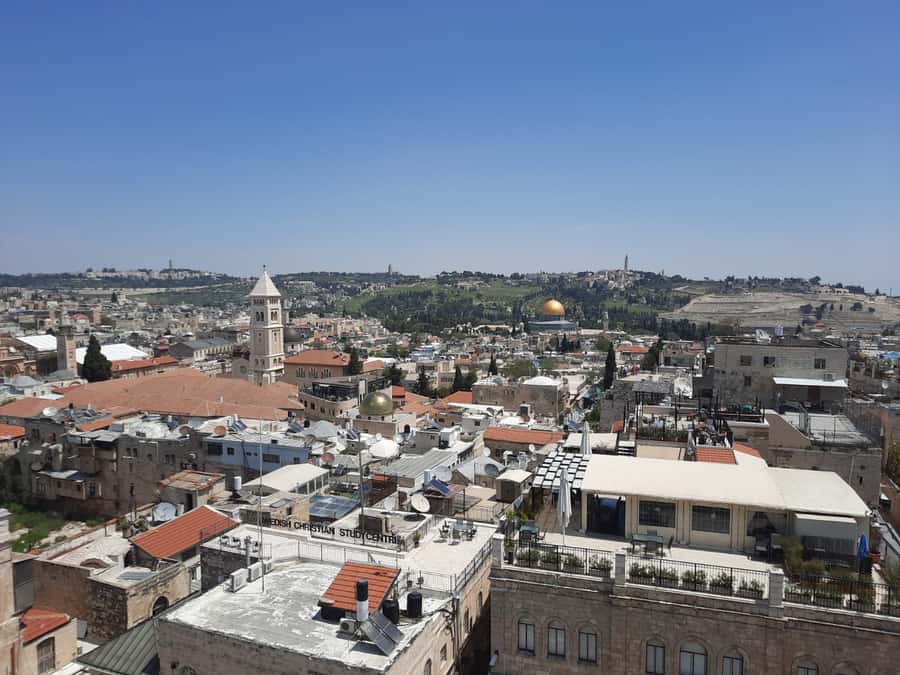
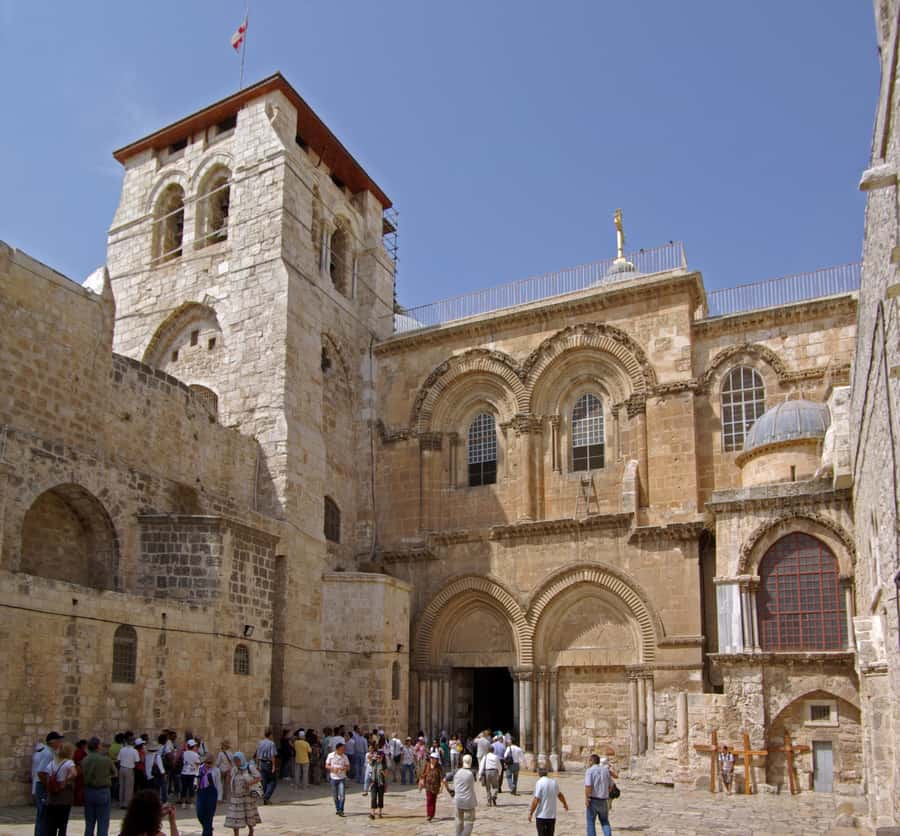
The final major stop is the Church of the Holy Sepulchre, reached by following the path associated with Jesus and the story of the Passion.
For Christian visitors, this is likely to be the emotional center of the tour. The church is tied to the crucifixion and burial traditions of Jesus, and several Christian communities share responsibility for the building. Even if you are approaching the site as a historical or cultural visitor, the importance of the place is hard to miss.
A guide can be especially helpful here because the church is not always easy to read at first glance. Chapels, stairways, shrines, and worshippers occupy a complex building with many layers of meaning. The tour’s final position at the church gives the whole walk a clear destination instead of ending at a random street corner.
The itinerary describes this as the story of the Passion, so you should expect an explanation of the Christian traditions connected with the site. You should not assume the tour includes every chapel, an extended religious service, or guaranteed time inside each section.
Ending here also creates a strong contrast with the beginning at Jaffa Gate. In three hours, you move from Ottoman Jerusalem through Armenian and Roman remains, biblical kings, Jewish sacred places, Islamic-era Jerusalem, and Christian tradition. That is a lot of ground, but the route has a clear logic.
What the private format adds
The tour is designed for a private group, and that changes the experience more than the word private might suggest. In the Old City, narrow streets and crowded sacred areas can make a large group awkward. A smaller party can stay closer to the guide and ask questions without holding up dozens of people.
Private guiding is also useful for a multilingual tour. The guide may speak French, English, or Italian, but you should select your preferred language when arranging the experience. French appears to be a particularly strong fit here, based on the praise for Florent’s explanations.
The comments about Florent are specific and consistent. He is described as attentive, cultivated, pleasant, and very clear. One French-speaking couple also praised his care and said they were delighted with the tour. That tells me the value is not just in the route. It is in how well the guide turns a complicated city into a story you can follow.
Still, a private group does not remove the physical demands. This remains a three-hour walking tour through an old city with uneven surfaces and religious sites that may require patience. If you need frequent breaks, ask about the pace before setting out.
Is $82 per person good value?
At $82 per person, this is not the cheapest way to see Jerusalem’s Old City. The price makes more sense if you are booking a private group, want a French-speaking guide, and prefer a carefully connected story instead of isolated stops.
You are paying for three hours of guiding across several major periods and traditions. The route includes the walls, Armenian Quarter, Cardo, biblical Jerusalem, the Temple area, Western Wall, Islamic-era context, and Church of the Holy Sepulchre. That is strong coverage for a first visit.
The value is weaker if you want long visits inside museums or paid attractions. Park and museum entrance fees are not included, and no entry tickets are listed as part of the tour. You may need a separate visit later if one particular site deserves more time.
I would also compare the price against your group size. For one person, $82 is a serious expense. For a private party sharing the guide, the personal attention may make it more reasonable. The flexible booking terms help too: you can reserve now and pay later, and cancellation is allowed up to 24 hours before the tour for a full refund.
Who should book this Jerusalem walk?
I would recommend this experience to you if you:
- Want a first introduction to the Old City in three hours
- Prefer French, English, or Italian guiding
- Like religious history presented alongside Roman and Ottoman history
- Want a private group rather than a large public tour
- Appreciate a guide who explains clearly and answers questions
- Plan to continue exploring Jerusalem on your own afterward
It is especially suitable for French-speaking visitors who want more than a basic monument checklist. Florent’s strong feedback makes the guide a central reason to consider this option.
I would hesitate if you want a slow archaeological tour, extensive museum time, or a long visit inside every major religious building. Three hours gives you the framework. You will still need extra time to study individual sites at your own pace.
My booking advice
Book this tour if you want the big picture of Jerusalem’s Old City and value a personal guide who can connect the city’s faiths and time periods. The Armenian Quarter, Cardo, Hezekiah story, Western Wall, and Holy Sepulchre create a thoughtful route rather than a simple list of famous corners.
Before booking, confirm the meeting details near Mamilla and Jaffa Gate, choose your language, and plan for serious walking. Bring water, a hat, and sturdy shoes. If you accept that this is an introduction rather than a full archaeological exploration, $82 per person can be fair value for a private, well-explained morning or afternoon in Jerusalem.
FAQ
How long is the Jerusalem Old City tour?
The walking tour lasts three hours.
Where does the tour meet?
The meeting point is at the entrance to the Mamilla Shopping area. The walking portion begins at Jaffa Gate.
Which languages are available?
The live guide is available in French, English, and Italian.
Is this a private tour?
Yes. The experience is arranged for a private group.
What places are covered?
The route includes Jaffa Gate and Suleiman the Magnificent’s walls, the Armenian Quarter, the Jewish Quarter, the Roman Cardo, the story of Hezekiah and Isaiah, the Temple area, the Western Wall, Islamic-era Jerusalem, and the Church of the Holy Sepulchre.
Are museum and park entrance fees included?
No. Park and museum entrance fees are not included in the price.
What should I bring?
Bring a hat, water, and good walking shoes. These are strongly recommended for the three-hour Old City walk.
Just added around Jerusalem
- Private Walking Tour in Jerusalem’s Old City★ 5.0 · 3 reviews
- jerusalem classic tour★ 5.0 · 3 reviews
- Jerusalem and the Dead Sea★ 5.0 · 3 reviews
- Jerusalem Running Tour-Experience the unique vibes of Jerusalem in your sneakers★ 5.0 · 3 reviews
- Jerusalem of 3 Religions in Russian★ 4.4 · 3 reviews
- From Jerusalem: Masada Sunrise, Ein Gedi & Dead Sea★ 5.0 · 3 reviews
- Christian Jerusalem in Russian★ 5.0 · 3 reviews
- Holy Jerusalem Full Day Tour from Jerusalem★ 5.0 · 3 reviews
Jerusalem Old City Tours, compared.


Jerusalem Half Day Tour: Holy Sepulchre and Western Wall
Read our review →
Jerusalem Half-Day Tour from Tel Aviv: Holy Sepulchre and Western Wall
Read our review →
City of David and Underground Jerusalem Day Tour
Read our review →Browse the lists this tour appears in