
Review · GUIDED
Jerusalem: Tour with Private Guide
Jerusalem rewards patient walkers. This private Old City tour pairs a local guide with a route through four historic quarters, the Western Wall, Via Dolorosa, and the Church of the Holy Sepulcher. I like the personal pace and the chance to ask questions that rarely fit into a large group outing. I also like that guides such as Moshe, Izzat, Alena, Hanna, and Izak have adapted routes to match individual interests. The main drawback is price: at $199 per person, it can feel costly for a small group, especially since the rate does not drop as more people join.
You meet your guide on foot at a centrally located hotel or another central point in Jerusalem. That keeps the start simple, but there is no drop-off service, food, drinks, or entrance fee included. Plan for serious walking, dress carefully for holy places, and leave room in your schedule for the Old City to take over your day.
In This Review
- Key points to know before you book
- Starting at Zion Gate and entering the Old City
- The Byzantine Cardo and the layers beneath the streets
- The Western Wall and the Temple Mount story
- Walking the Via Dolorosa
- Inside the Church of the Holy Sepulcher
- Finishing near Jaffa Gate
- What private guiding adds to the day
- Price, group size, and overall value
- Clothing, water, and walking advice
- Who should book this Jerusalem walk?
- Should you book it?
- FAQ
- Where does the tour begin?
- Where does the tour end?
- Is this a private tour?
- What sites are included?
- Is the Church of the Holy Sepulcher included?
- Are entrance fees included?
- Is food included?
- What should I bring?
- What should women wear at holy sites?
- What languages are available?
Key points to know before you book
- Zion Gate opens the story: The tour enters through Jerusalem’s historic southern side and continues through the Armenian and Jewish Quarters.
- The Western Wall is a hands-on stop: You can approach the wall, pray, and place a written note between its stones.
- The route follows the Via Dolorosa: Your guide explains the stations connected with Jesus’s condemnation and crucifixion.
- The Church of the Holy Sepulcher anchors the Christian portion: A private visit is included, though any separate entrance charges are not.
- Private guiding brings real flexibility: Guides have adjusted plans for road closures, holidays, markets, and personal interests.
- Dress and footwear matter: Long pants, covered shoulders, water, and comfortable walking shoes will make the day easier.
Starting at Zion Gate and entering the Old City
The tour begins in the lobby of a centrally located hotel, or at another central meeting point. Pickup is on foot, so you will want to be ready for a walking day from the first minute rather than expecting a vehicle transfer.
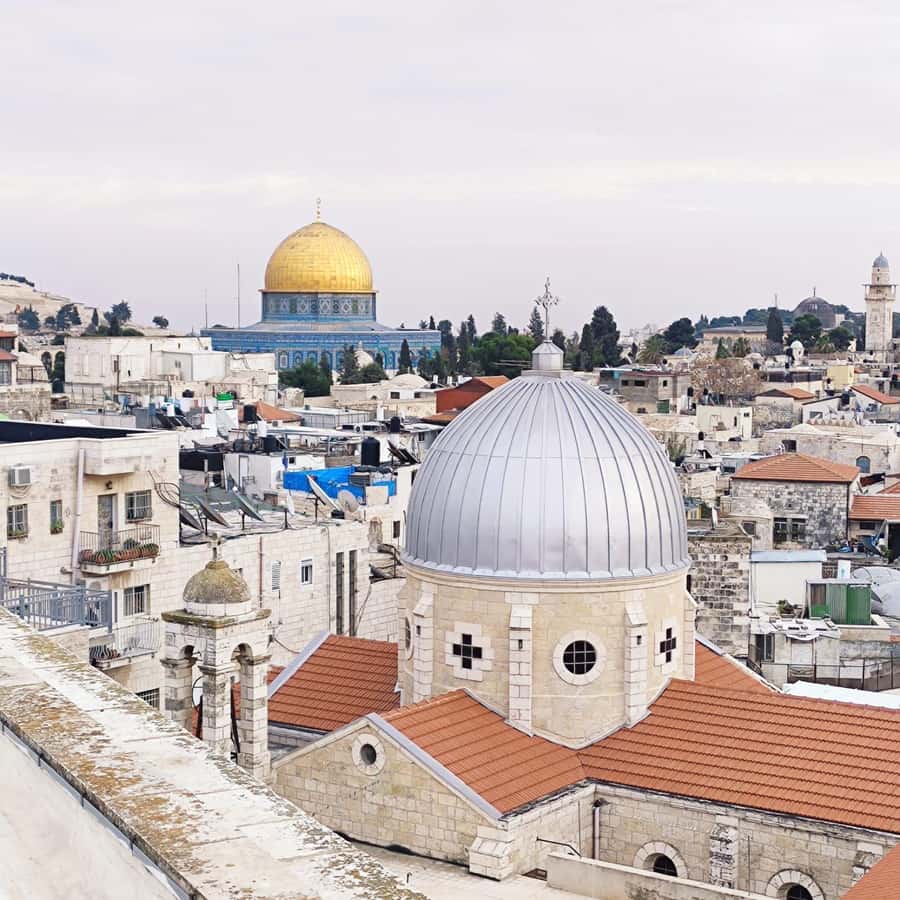
Entering through Zion Gate gives the route a useful sense of direction. Instead of being dropped into the middle of the Old City with no context, you begin near the southern edge and move through several distinct quarters. Your guide can explain how the streets, walls, gates, and religious sites fit together as you walk.
The Armenian Quarter comes first. It has a quieter feel than some of the market streets, and it helps show that Jerusalem is not one single religious or cultural district. The route then continues into the Jewish Quarter, where the focus shifts toward Jewish worship, ancient remains, and the long story of Jerusalem as a place of prayer and burial.
I appreciate this gradual opening. The Old City can feel confusing on a first visit, with narrow lanes turning sharply and religious sites appearing with little warning. A private guide gives you a running explanation instead of leaving you to read a sign and guess what matters.
A few more Jerusalem trips worth weighing up
- From Jerusalem: Masada & Dead Sea Full Day Tour with Pick Up
★ 4.5 · 815 reviews - Masada and the Dead Sea Day Trip from Jerusalem
★ 4.5 · 757 reviews - From Jerusalem: Nazareth and Sea of Galilee Tour
★ 4.5 · 588 reviews
The Byzantine Cardo and the layers beneath the streets
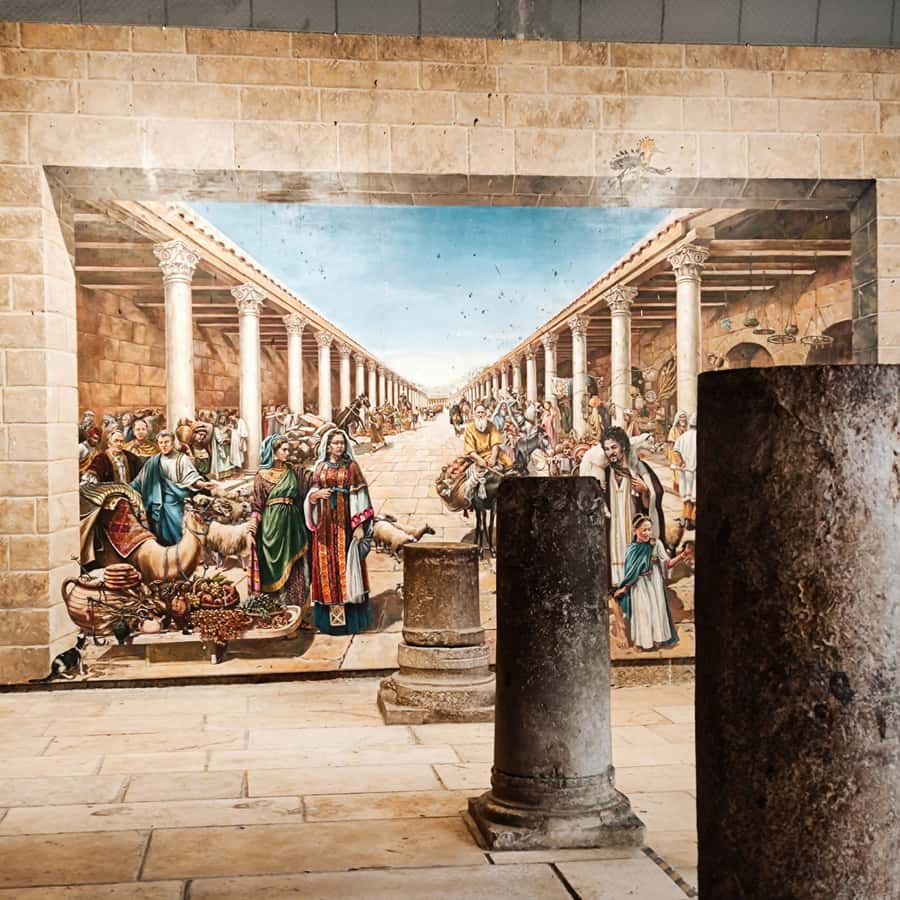
The ancient Byzantine Cardo is one of the route’s most useful stops for understanding Jerusalem’s layered past. This former main street helps you picture the city as a place rebuilt and reshaped across many centuries, not a frozen biblical set.
Your guide’s value here depends heavily on storytelling. A row of stones alone does not tell you how the street functioned or why its remains matter. The guides praised most highly, including Moshe and Alena, are especially good at connecting geography with history and answering questions beyond the standard script.
The private format works well at the Cardo because you can pause when a detail catches your interest. If you care more about ancient streets than shopping, you can give that subject extra time. If your group is ready to move on, you can keep the pace brisk.
That flexibility is not just a sales point. Jerusalem contains more material than any short walk can cover. One guide, Moshe, showed a visitor places outside the usual route, including the Church of St. Peter in Gallicantu, a model of Jerusalem, the Cistern of St. Helena, and an underground street level at the Convent of the Sisters of Zion. Those additions were not guaranteed, but they show what can happen when you tell your guide what you have already seen.
The Western Wall and the Temple Mount story
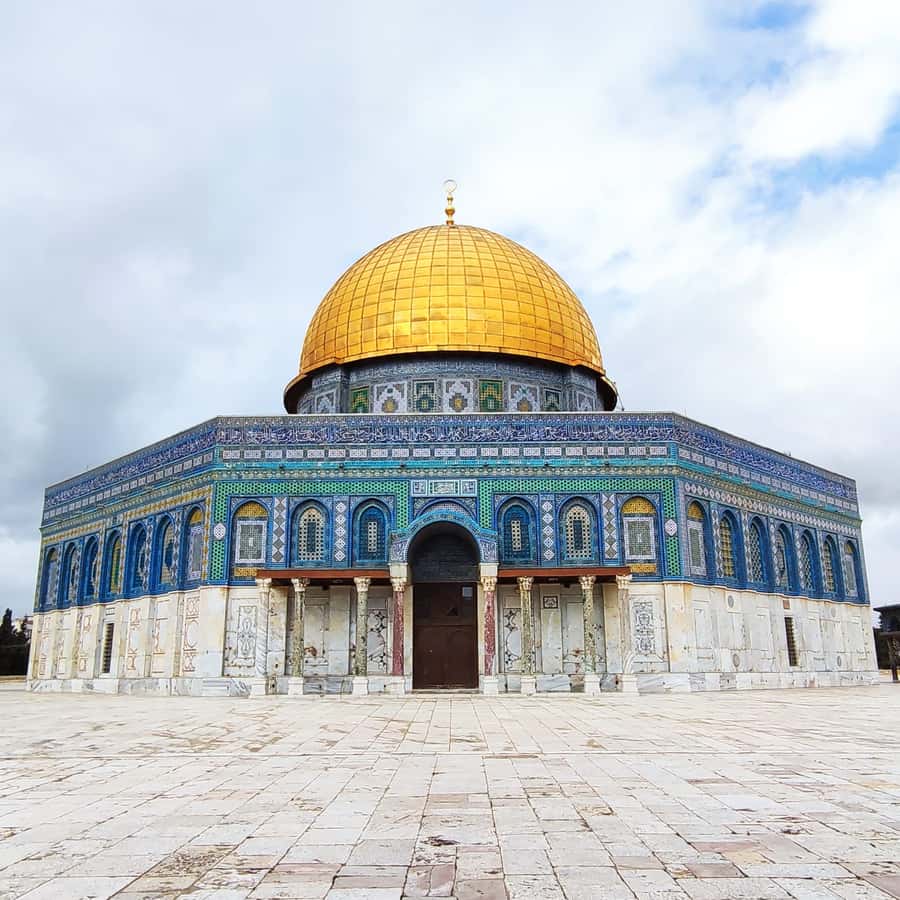
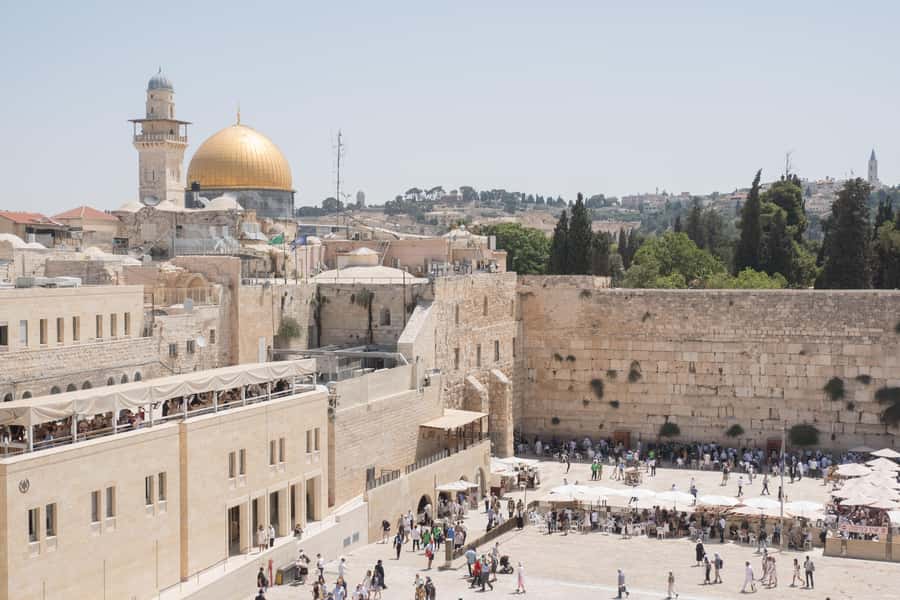
The Western Wall is the emotional center of the Jewish Quarter portion. It is part of the western retaining wall of the Temple Mount, expanded under Herod the Great around 20 BCE. For Jewish worshippers, it remains a place of prayer, and the custom of placing written notes into the spaces between the stones gives the visit a personal touch.
You can prepare a prayer before arriving, or write one during the tour if you have paper available. The experience is simple, but it can feel powerful because the wall connects private hopes with a site used for prayer across generations.
Your guide should also explain what the wall is, and what it is not. It is not the surviving wall of the First Temple itself. It is part of the later retaining structure associated with Herod’s expansion of the Temple platform. That distinction helps prevent the common mistake of treating every ancient stone in Jerusalem as belonging to the same period.
The prayer area requires respectful behavior. You may find separate areas for men and women, and the atmosphere can shift quickly from quiet reflection to a more crowded ceremonial setting. Your guide can help you understand what is happening without turning the moment into a lecture.
Walking the Via Dolorosa
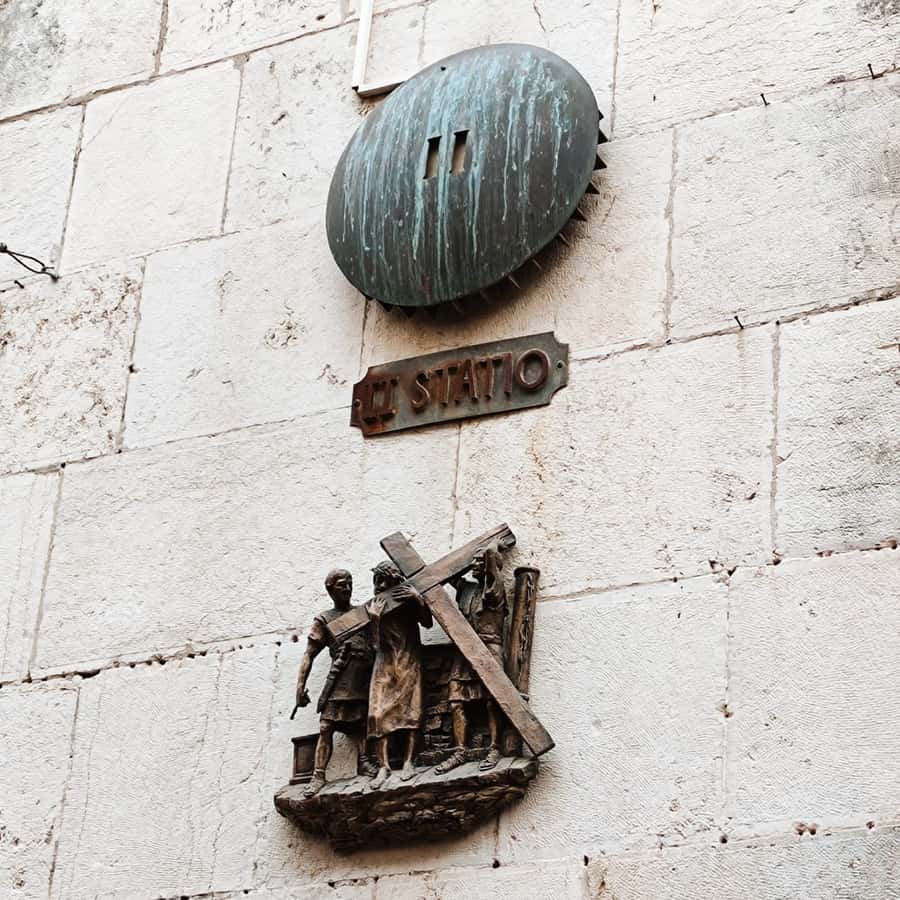
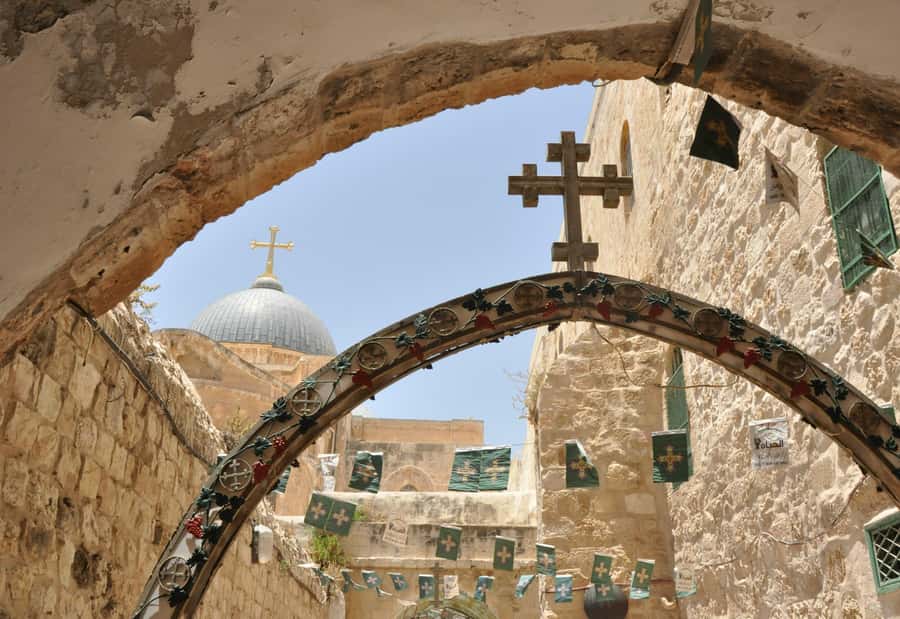
From the Western Wall area, the route moves into the Christian story of Jerusalem through the Via Dolorosa, or Way of the Cross. This path follows the traditional route associated with Jesus’s condemnation, carrying of the cross, and crucifixion.
The value here is partly religious and partly human. You are walking through ordinary city streets, but those streets carry enormous meaning for Christian pilgrims. Shops, stone walls, doorways, and passing residents share space with stations of prayer and processions.
I would not expect the Via Dolorosa to look like a quiet ceremonial trail. It is part of the living Old City, and the setting can be busy or distracting. That contrast is one reason a guide helps. Someone like Alena, praised for being flexible and clear, can explain the religious meaning while keeping you oriented in the street-level reality around you.
The route also brings up an important practical point: Jerusalem’s holy places are active religious sites, not museum displays. Dress modestly, lower your voice when appropriate, and follow your guide’s instructions. You will get more from the visit if you treat the setting with care.
A completely different sort of day out of Jerusalem:
- Nazareth and the Sea of Galilee Day Trip from Jerusalem
★ 4.5 · 446 reviews - From Jerusalem: Masada&Dead Sea Tour INCLUDING ENTRANCE FEES
★ 4.3 · 392 reviews - Jerusalem: Guided Walking Tour of the Old City
★ 4.7 · 386 reviews - Full Day City Tour of Jerusalem
★ 4.1 · 367 reviews
Inside the Church of the Holy Sepulcher
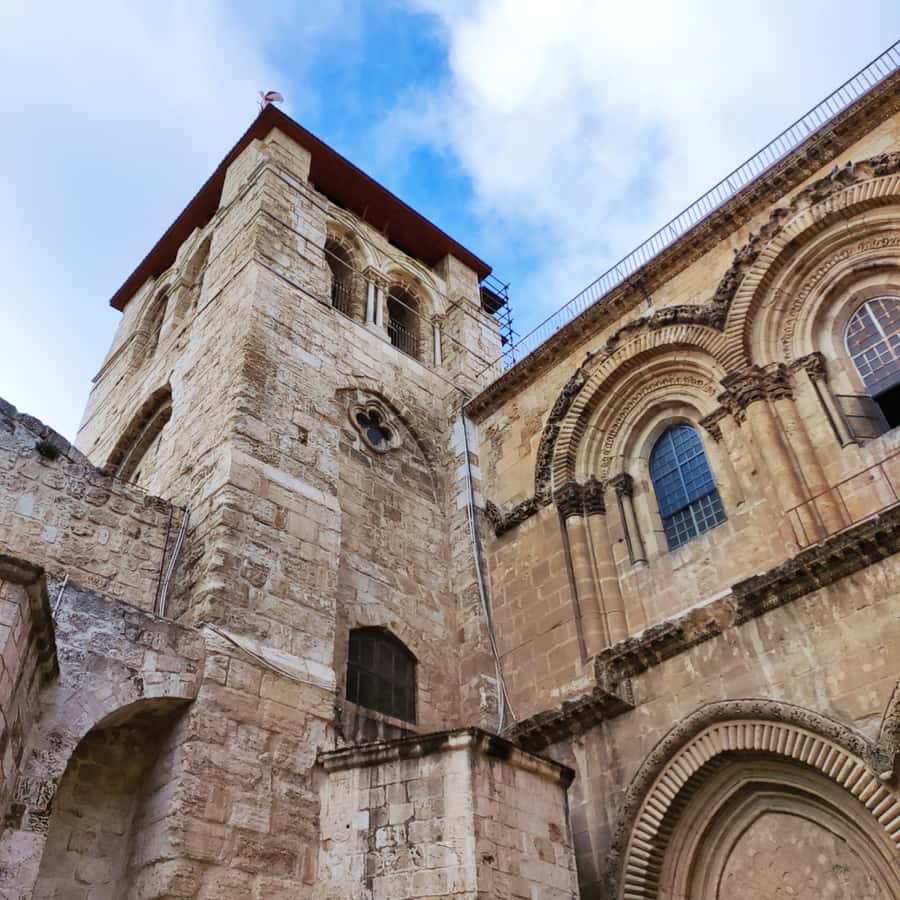
The Church of the Holy Sepulcher is the tour’s major Christian landmark. It is associated with the place of Jesus’s crucifixion, burial, and resurrection, making it one of the most important Christian sites in the world.
A private tour of the church is included, which is a meaningful benefit. The building can be difficult to understand without help because several Christian communities share responsibility for different sections. Your guide can provide the framework needed to make sense of the chapels, shrines, and traditions connected with the site.
Expect a serious religious atmosphere rather than a quick photo stop. People may be praying, lighting candles, or waiting to approach a sacred area. The visit can also feel crowded, and the interior may not unfold in a neat chronological order. Patience matters.
The experience is strongest when you allow time for both explanation and silence. I prefer a guide who gives the background, points out the main features, then lets me look without filling every moment with words. The private format gives you a better chance of asking about details that matter to you.
The supplied information says entrance fees are not included. Since the church visit itself is part of the private tour, confirm at booking what any separate charge covers and whether the guide will handle the practical details on the day.
Finishing near Jaffa Gate
The walk ends near Jaffa Gate, one of Jerusalem’s best points for continuing on your own. This is not a hotel return, so you should think of the finish as a useful handoff to the rest of your day.
You can keep walking through the Old City, return toward central Jerusalem, or arrange your next stop from the gate area. Since no drop-off service is included, ask your guide to point you in the right direction before saying goodbye.
This ending suits independent visitors. Rather than being placed back at your hotel on a fixed schedule, you finish in a part of the city where you can continue exploring. It is less convenient if you are tired and want transport straight back.
What private guiding adds to the day
The strongest part of this experience is the guide, not simply the list of monuments. Moshe has been praised for answering detailed questions about history and geography, waiting patiently when a group stopped to explore, and even staying beyond the planned end to finish the route. He also shared bread with zaatar, a local specialty, at his own expense.
I would not treat an individual guide’s extra time or food as a promised inclusion. Still, it shows the sort of personal attention this format can produce. Moshe also took visitors to less familiar sites, including places outside the usual Old City highlights.
Izzat has received similar praise for going beyond the stated plan. He brought his own car for convenience, without asking for an extra charge, and offered practical advice to someone planning to move to Israel. Again, that is a personal choice by a guide, not part of the advertised package, but it points to a helpful local perspective.
Alena has been praised for building a route around the group’s interests and making visitors feel safe and well looked after. Alena and Izak were also noted for taking people slightly off the usual path while remaining friendly and easy to be around. Hanna has been especially well regarded for her clear teaching and pleasant manner.
The service can also respond to disruption. One guide changed plans during the Jerusalem Marathon because roads were closed, and another adjusted the route during local holiday events. That is where a private tour earns its keep. A fixed group itinerary may simply lose a stop, while a private guide can look for another useful option.
There is one fair criticism to keep in mind. Near the end of a long walk, one participant felt the guide did not notice that the group was losing energy. If you need regular breaks, say so plainly. A good private guide can adjust, but your guide cannot read every group perfectly.
Price, group size, and overall value
The listed price is $199 per person. That is a serious amount for a walking tour, particularly because the cost is charged per person rather than divided among the group.
The value improves if you care about personal attention, have limited time, or want to shape the route around your interests. You are paying for a private professional guide, hotel pickup on foot from a central location, a private Old City walk, and a private visit to the Church of the Holy Sepulcher. Taxes, fees, and handling charges are included.
The price feels less attractive if you only want a quick introduction to the Western Wall and the church. It also makes less sense if your group is large and expects a lower per-person rate. One participant specifically felt the pricing model should become cheaper as more people joined.
I would compare this tour with the cost of a standard group walk, but I would not compare them as identical products. A group tour may cost less, yet it normally gives you less control over stops and questions. Here, the best value comes from asking for what you want, including sites you have missed on earlier Jerusalem visits.
Clothing, water, and walking advice
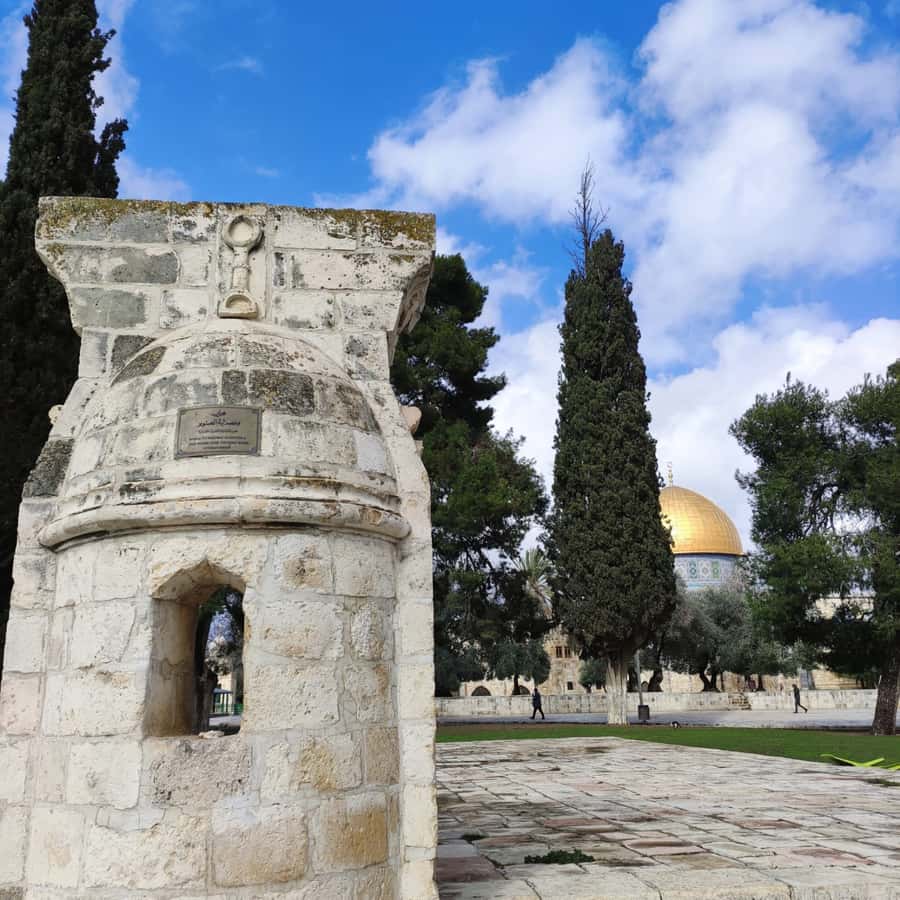
Bring comfortable shoes and water. The Old City route includes extended walking over old streets, and comfort will affect how much attention you can give to your guide.
Wear comfortable clothes, but plan for stricter requirements at holy sites. Women must cover their legs to the ankles, arms past the elbows, and the front of the body up to the neckline. Men must cover their knees and wear a shirt with sleeves.
A practical approach is to wear long pants or a long skirt, a shirt with sleeves, and an extra layer that provides more coverage. You can dress casually while walking through streets and markets, then make sure your clothing meets the religious sites’ rules.
The tour is offered in Arabic, English, French, German, Hebrew, Italian, Russian, Spanish, Chinese, Dutch, Greek, Indonesian, Portuguese, Romanian, and Swedish. Select the language that lets you ask detailed questions, especially if history, religious practice, or local geography matters to you.
You can reserve now and pay later, which helps if your Jerusalem plans are still shifting. Cancellation is available up to 24 hours before the tour for a full refund.
Who should book this Jerusalem walk?
I would choose this tour if you want a guide who can explain three major faith traditions without rushing you through the Old City. It suits first-time visitors who want structure, repeat visitors who have seen the main sights but want less familiar places, and anyone who prefers a private conversation to a large group.
It also fits people who care about personal stories and practical local advice. The strongest guide experiences here include help with market food, advice about settling in Israel, route changes during public events, and time spent on places outside the normal plan.
I would hesitate if you dislike walking, need a guaranteed vehicle return, or want a low-cost overview. The $199 per-person price is hard to justify for a very large group, and food, drinks, and entrance charges are extra.
Should you book it?
Book this private Jerusalem tour if flexibility and strong guiding matter more to you than getting the cheapest possible introduction. The route covers the Armenian and Jewish Quarters, the Byzantine Cardo, Western Wall, Via Dolorosa, Church of the Holy Sepulcher, and Jaffa Gate, while the private format leaves room for questions and side trips.
Before paying, confirm the expected duration, any entrance charges, and the meeting point. Then tell your guide what you have already seen and what you most want to understand. That is the best way to turn a standard Old City route into a more personal day.
FAQ
Where does the tour begin?
Your guide meets you in the lobby of a centrally located hotel or at another central point in Jerusalem. Pickup is on foot.
Where does the tour end?
The tour ends near Jaffa Gate. Drop-off service is not included.
Is this a private tour?
Yes. The experience includes a private professional guide and a private tour around Jerusalem’s Old City.
What sites are included?
The route includes Zion Gate, the Armenian Quarter, the Jewish Quarter, the Byzantine Cardo, the Western Wall, the Via Dolorosa, the Church of the Holy Sepulcher, and Jaffa Gate.
Is the Church of the Holy Sepulcher included?
Yes. A private tour of the Church of the Holy Sepulcher is included.
Are entrance fees included?
No. Entrance fees are not included in the price.
Is food included?
No. Food and beverages are not included.
What should I bring?
Bring comfortable shoes, water, comfortable clothing, a long-sleeved shirt, and long pants.
What should women wear at holy sites?
Women must cover their legs to the ankles, arms past the elbows, and the front of the body up to the neckline when entering holy sites.
What languages are available?
Guiding is available in Arabic, English, French, German, Hebrew, Italian, Russian, Spanish, Chinese, Dutch, Greek, Indonesian, Portuguese, Romanian, and Swedish.
Just added around Jerusalem
- Private Walking Tour in Jerusalem’s Old City★ 5.0 · 3 reviews
- jerusalem classic tour★ 5.0 · 3 reviews
- Jerusalem and the Dead Sea★ 5.0 · 3 reviews
- Jerusalem Running Tour-Experience the unique vibes of Jerusalem in your sneakers★ 5.0 · 3 reviews
- Jerusalem of 3 Religions in Russian★ 4.4 · 3 reviews
- From Jerusalem: Masada Sunrise, Ein Gedi & Dead Sea★ 5.0 · 3 reviews
- Christian Jerusalem in Russian★ 5.0 · 3 reviews
- Hebron & Ramallah Full-Day Guided Tour from Jerusalem★ 5.0 · 3 reviews
Guided, compared.


Travel to Bethlehem Half Day Guided Tour from Jerusalem & TelAviv
Read our review →
Travel To Bethlehem, Jericho & Jordan River – Group Guided Tour from Jerusalem
Read our review →
Browse the lists this tour appears in