
Review · CAESAREA, HAIFA & ACRE DAY TRIPS
Private tour: Caesarea, Haifa, and Mt. Carmel
History meets sea views here. This private day trip links Caesarea’s Roman ruins with Haifa’s Bahai Gardens and the mountaintop views of Carmel. I like the flexible route and the chance to travel with your own group, while the main drawback is that transportation, entrance fees, and lunch are extra.
I also like the depth offered by Dr. David Gurevich, a licensed guide with a PhD in archaeology. His background suits Caesarea especially well, and families of different ages have found his explanations engaging. Just allow a full day, since the schedule runs about eight to nine hours and begins at 8:00 am.
- Caesarea combines Roman ruins, a palace, a theater, a hippodrome, and an ancient harbor in one seaside stop.
- Dr. David Gurevich brings academic training in archaeology to a route that works for both families and serious history fans.
- The private format lets you shape the day around your group’s interests, with Megiddo and Akko available as possible additions.
- Haifa’s Bahai Gardens and Mount Carmel provide major scenic breaks after the stone ruins of Caesarea.
- Daliat El Carmel adds Druze food and local character rather than another standard sightseeing stop.
- The $475 group price can work well for a larger party, but private transportation and admission costs are not included.
In This Review
- A private route along Israel’s Mediterranean coast
- Caesarea’s Roman theater and harbor
- The ancient harbor and newly opened museum
- Haifa’s Bahai Gardens and the city view
- Druze food in Daliat El Carmel
- Mount Carmel and Muhraqa Monastery
- Optional Megiddo and Akko additions
- What the $475 price really buys
- Who will get the most from this day
- Practical tips before you go
- Should you book this Caesarea and Carmel tour?
- FAQ
- Where does the tour begin?
- What time does the tour start?
- Where does the tour end?
- How long does the tour last?
- Is this a private tour?
- Is pickup available?
- Are entrance fees included?
- Is lunch included?
- Is admission to the Bahai Gardens charged?
- Can the itinerary include Megiddo or Akko?
A private route along Israel’s Mediterranean coast
This tour begins at Tel Aviv Savidor Train Station at 8:00 am and returns you to the same meeting point. The drive north to Caesarea takes about 40 minutes, so you reach the first major stop without spending half the morning on the road.
The appeal is simple: you see several very different sides of northern Israel in one day. Caesarea gives you archaeology and Roman power. Haifa brings a formal religious garden and broad city views. Mount Carmel adds open views across the Jezreel Valley, while Daliat El Carmel gives you a chance to eat Druze food in a village setting.
Because this is a private tour, only your group takes part. That matters if you are traveling with children, older relatives, or a group with mixed interests. You can ask for more time at the ruins, keep the garden visit brief, or discuss adding Megiddo or Akko if the timing and route allow.
The tradeoff is cost. The advertised price is $475 per group of up to 15 people, not per person. For ten or fifteen people, that can be a sound deal. For one or two people, it is a much larger expense than a shared excursion. You also need to budget separately for admission fees, lunch, and private transportation.
Caesarea’s Roman theater and harbor
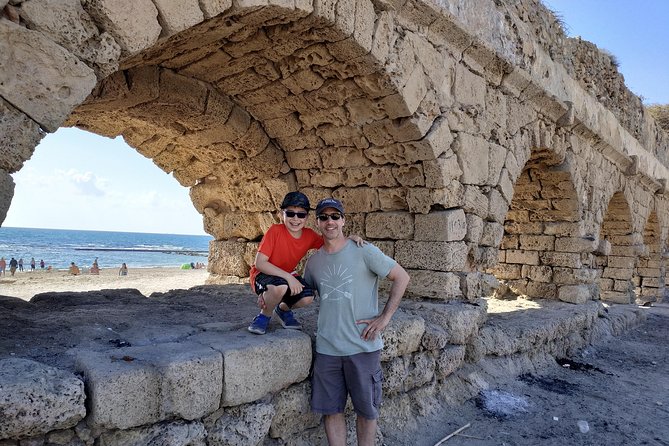
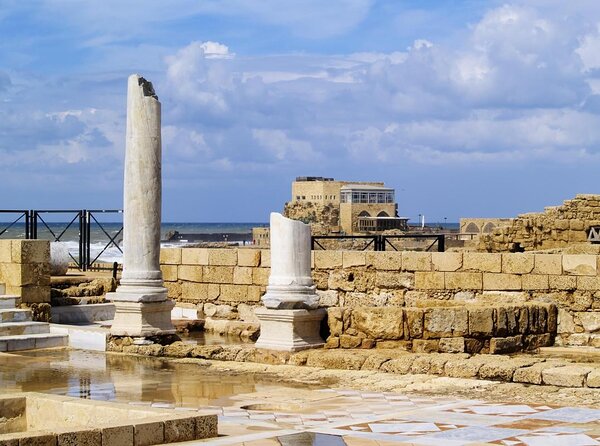
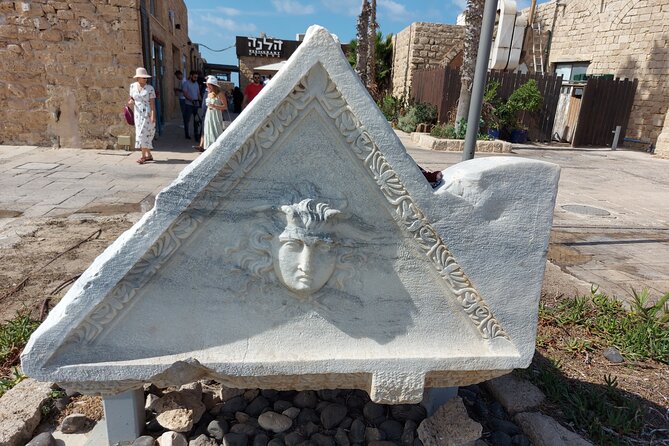
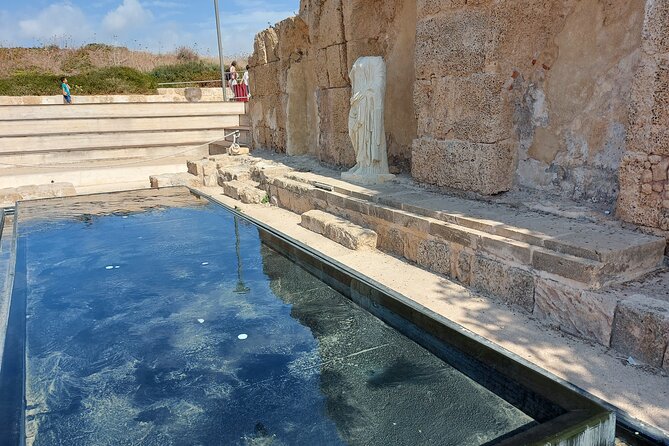
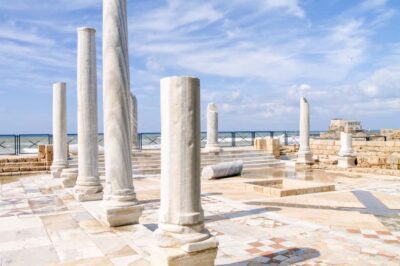
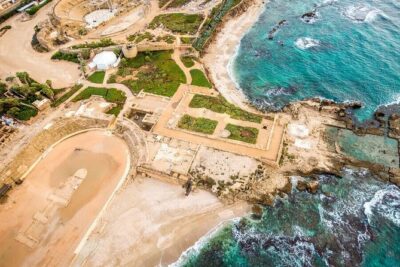
Caesarea is the anchor of the day. Herod the Great established the port city, which later became the capital of the Roman province. You begin with roughly two hours to explore the national park, including the Roman theater, the remains of Herod’s coastal palace, and the hippodrome where horse races once took place.
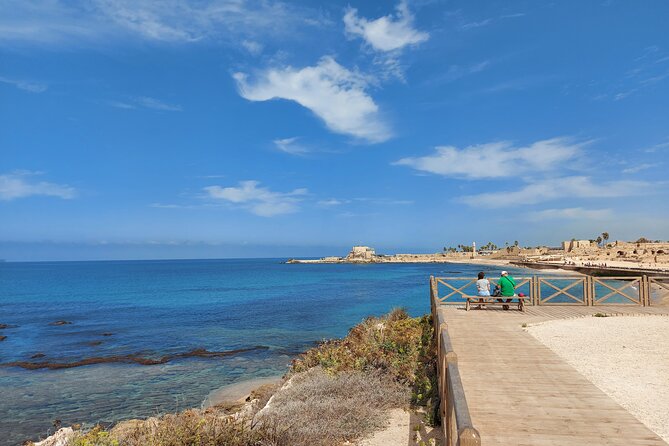
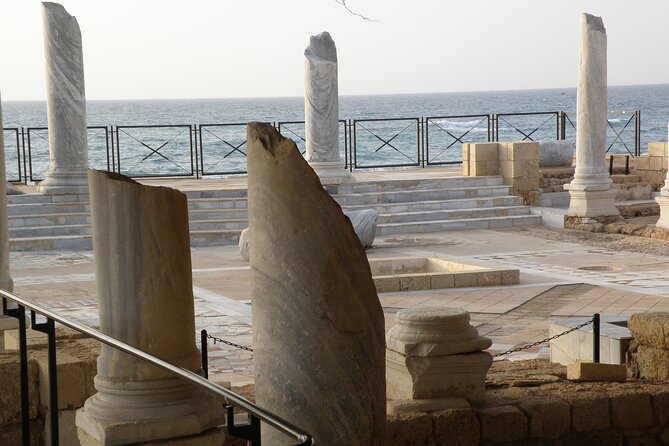
I like this opening because the setting does real work. The ruins are not isolated inland stones. They sit beside the Mediterranean, so you get ancient architecture with sea views at nearly every turn. The coastal palace is especially useful for understanding how power and display shaped the city.
The Roman theater gives the site a strong sense of scale. A guide can help you picture how public entertainment, politics, and status fit together in a major port city. The hippodrome adds another layer, since it shows that Caesarea was not only a place of government and worship but also a place built for mass events.
The site is broad enough that comfortable walking shoes make sense. The schedule allows time to move between the main areas, but this is not a quick photo stop. If you enjoy archaeology, you will want the full allotment. If your group includes children, the open spaces and variety of ruins help keep the visit from feeling like one long lecture.
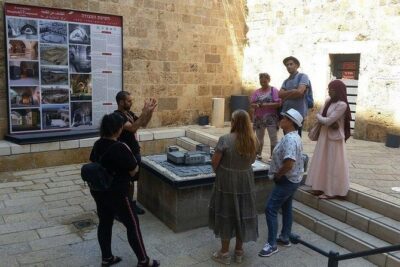
Dr. David Gurevich is particularly well suited to this portion. His doctoral work in archaeology gives him a way to explain construction, political changes, and the forces that shaped Caesarea. The tone can suit a university group, but his family tours have also worked for people ranging from children to older adults.
Admission is not included, so check the current fee before you go. The tour includes guiding, but not the entrance ticket.
More days up the coast to Caesarea and Acre:
- From Tel Aviv: Caesarea, Haifa and Akko Day Trip
★ 4.4 · 744 reviews - Caesarea, Rosh Hanikra and Acre Day Trip from Tel Aviv
★ 4.5 · 406 reviews - Walking Tour of Akko (Half-day)
★ 5.0 · 84 reviews
The ancient harbor and newly opened museum
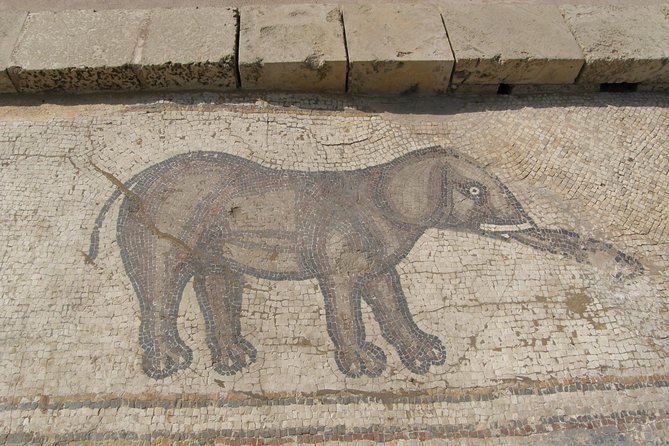
After the main archaeological area, you spend another 30 minutes at the ancient harbor and newly opened museum. The harbor is one of Caesarea’s defining features. It explains why Herod invested so heavily in the city and why this location mattered beyond its attractive shore.
I would treat these 30 minutes as a focused continuation rather than a second full visit. The first part gives you the larger ruins and their setting. The harbor and museum then help connect the city’s public buildings to its role as a working port.
The museum may be most useful for putting objects and remains into a clearer setting. A short stop also keeps the day moving, since Haifa and Mount Carmel still lie ahead. If you prefer a slow museum visit, ask how much time can be shifted from another stop.
The two Caesarea segments together make the first part of the tour feel substantial. You are not simply stopping to see a theater and leaving. You get the city’s civic buildings, royal coastline, racecourse, port, and museum in one visit.
Haifa’s Bahai Gardens and the city view
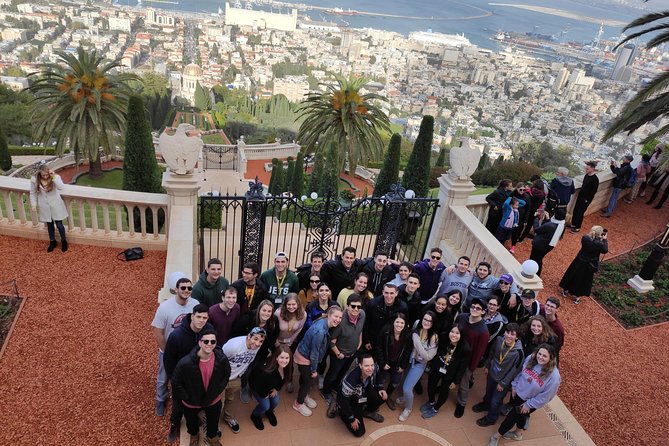
The drive continues to Haifa, where you visit the Bahai Gardens for about 40 minutes. The gardens are a UNESCO World Heritage site and the center of the Bahai faith worldwide.
This is a sharp change from Caesarea. Instead of broken stone and archaeological interpretation, you see carefully arranged terraces and a major living religious center. The visit offers a quiet visual pause, with Haifa spread around the hillside and the Mediterranean beyond.
The time is short, so I would think of this as a viewpoint and garden visit rather than an extensive examination of the site. The tour description lists admission as free, but you should still follow local instructions and dress modestly for religious sites.
The gardens are one of the day’s strongest scenic moments. They also show why the private format helps. Some groups may want time for photographs and views, while others may prefer to move on quickly to lunch. Your guide can adjust the pace within the day’s limits.
Druze food in Daliat El Carmel
The stop at Daliat El Carmel lasts about an hour and gives the route a more local feel. This Druze village is known here for traditional Middle Eastern cuisine, making lunch part of the cultural program rather than just a break between monuments.
Lunch is not included in the price, so plan to pay separately. The exact meal is not fixed, which fits the tour’s flexible approach but means you should ask your guide what options are available that day.
I like this stop because it breaks up the ancient sites with food and community life. It also gives you a chance to experience a Druze village rather than spending the entire day at formal attractions. The timing is enough for a meal, but not necessarily for a long, unhurried restaurant visit if the group has already used extra time in Caesarea.
For families, this can be one of the easiest parts of the day. Everyone gets a chance to sit down, eat, and reset before the final mountain stop. For a group with dietary needs, raise the issue before departure, since no menu or meal arrangement is specified.
A few more Tel Aviv trips worth weighing up
- From Tel Aviv: Masada & Dead Sea Full Day Tour with Pick Up
★ 4.5 · 1,496 reviews - From Tel Aviv: Jerusalem and Bethlehem Guided Day Trip
★ 4.3 · 1,316 reviews - Masada and the Dead Sea Day Trip from Tel Aviv
★ 4.5 · 1,014 reviews - Tel Aviv: Jerusalem, Bethlehem & Dead Sea
★ 4.0 · 881 reviews
Mount Carmel and Muhraqa Monastery
The final major stop is the Discalced Carmelite Order Muhraqa Monastery on Mount Carmel. The visit lasts about an hour and includes a view over the Jezreel Valley, along with the monastery dedicated to Elijah the prophet.
This stop combines religious history with one of the day’s broadest views. After the close-up work of the archaeological park and the ordered terraces of Haifa, Mount Carmel opens the scene. The Jezreel Valley view gives you a sense of the region’s scale and geography.
The monastery is also a Holy Site, so modest clothing is important. That is worth planning from the start, not trying to fix at the last stop. Wear practical clothes that respect the site and still work for a full day of walking and sightseeing.
The Carmel stop gives the tour a fitting finish, but it also depends on the day’s timing. Caesarea has enough material to absorb extra minutes, especially with an archaeology-focused guide. If your group wants a relaxed lunch and plenty of photographs, ask early how the schedule will be managed.
Optional Megiddo and Akko additions
Megiddo and Akko are named as optional locations. The route does not promise that both will be added to this standard day, so treat them as possible custom choices rather than guaranteed stops.
This flexibility is useful if your group has a clear priority. A history-focused party might prefer more archaeology. Another group may value food, views, and a slower visit to the listed sites. Ask about distance, admission fees, and what would need to be shortened before committing to additions.
Trying to force every location into eight or nine hours could make the day feel rushed. I would choose one extra site at most, and only after discussing the driving time and the effect on Caesarea, Haifa, or Mount Carmel.
What the $475 price really buys
At $475 per group of up to 15, the price is easiest to justify with a larger party. A group of ten would pay about $47.50 per person before transport, food, and admissions. A group of five would pay $95 each before those extras, while a couple would carry the full cost between two people.
The value comes from the guide and the private structure, not from included attractions. You are paying for a dedicated day with a flexible route and the chance to ask questions throughout. Dr. Gurevich’s archaeology background may be especially valuable if Caesarea is a main reason for booking.
The lack of included transportation deserves attention. Pickup is offered, but private transportation is listed as not included. Confirm exactly how pickup and vehicle arrangements work before booking, and ask what additional transport cost you should expect.
The same goes for entrance fees. Caesarea’s admission is not included, and the monastery admission is also listed as not included. Lunch at Daliat El Carmel is separate as well. These costs will not ruin the value, but they should be part of your day’s budget.
Who will get the most from this day
I would recommend this tour most strongly to families, private groups, university groups, and anyone who prefers questions and conversation over a fixed script. The reported group sizes range from families with children to a party of ten, and the guide has also handled a University of Chicago group studying Israel.
The route works well for mixed ages because it changes pace often. You get ruins, views, gardens, food, and a monastery rather than eight hours of one type of sightseeing. The private setup also lets your guide explain difficult subjects at a level your group can follow.
It may be less suitable if you want a low-cost excursion, a slow day at one site, or a tour with all expenses included. It is also not the best choice if you dislike early starts. Meeting at 8:00 am is necessary to fit the north coast and Mount Carmel into one day.
The tour is near public transportation at its starting point, and most people can participate. Still, the itinerary includes several outdoor sites and walking areas, so ask about the walking demands if anyone in your group has mobility concerns. No specific accessibility details are provided.
Practical tips before you go
Wear modest clothing from the beginning, since the route includes the Bahai Gardens and Muhraqa Monastery. Bring shoes suited to archaeological ground and outdoor paths.
Keep your schedule open for eight to nine hours, including the return to Tel Aviv. The tour ends where it begins, at Tel Aviv Savidor Train Station.
If you want Megiddo or Akko, discuss it before the day begins. Additions can change the balance of the route, and the main stops already fill a full day.
Confirmation is sent within 48 hours of booking, subject to availability. Free cancellation is available if you cancel at least 24 hours before the local start time. Changes or cancellations made later do not qualify for a refund.
Should you book this Caesarea and Carmel tour?
Book it if you want a private, history-focused day and can split the cost among several people. The combination of Caesarea’s Roman remains, Haifa’s Bahai Gardens, Druze food, and Mount Carmel gives you a useful cross-section of the region in one outing.
I would book it especially for a family or group that values a guide who can explain archaeology in depth. Dr. David Gurevich’s training is the strongest reason to choose this experience over a basic sightseeing drive.
Skip it if your budget depends on an all-inclusive price, or if you would rather spend a full day in Caesarea alone. Before paying, confirm the private transport arrangement, expected admission fees, and whether your preferred optional stop can fit without making the day rushed.
FAQ
Where does the tour begin?
The tour begins at Tel Aviv Savidor Train Station in Tel Aviv-Yafo.
What time does the tour start?
The scheduled start time is 8:00 am.
Where does the tour end?
The activity ends back at the meeting point at Tel Aviv Savidor Train Station.
How long does the tour last?
The full experience takes approximately eight to nine hours.
Is this a private tour?
Yes. Only your group participates, and the group can include up to 15 people.
Is pickup available?
Pickup is offered, but private transportation is listed as not included. Confirm the exact pickup and vehicle arrangements before booking.
Are entrance fees included?
No. Entrance fees are not included in the tour price.
Is lunch included?
No. Lunch at Daliat El Carmel is not included.
Is admission to the Bahai Gardens charged?
The Bahai Gardens visit is listed with free admission.
Can the itinerary include Megiddo or Akko?
Megiddo and Akko are possible optional locations, subject to the customized itinerary and available time.
Just added around Tel Aviv
- 4-Day Christian Israel Tour from Tel Aviv★ 5.0 · 3 reviews
- Palm Sunday in Jerusalem: Mass at Bethpage and Via Dolorosa Procession with Transport from Tel Aviv★ 5.0 · 3 reviews
- Tel Aviv to Tel Aviv Airport (TLV) – Departure Private Transfer★ 5.0 · 3 reviews
- Masada and Dead Sea from Tel Aviv★ 4.5 · 3 reviews
- Private Transportation From / To Ben Gurion Airport to Tel Aviv Hotels★ 5.0 · 3 reviews
- Jerusalem and Dead Sea Tour from Tel Aviv★ 4.5 · 3 reviews
- Tel Aviv: Carmel Market & Neighborhood Guided Walking Tour★ 4.7 · 3 reviews
- Holyland Tour :Jerusalem & Bethlehem from Jerusalem or Tel Aviv★ 5.0 · 3 reviews
Caesarea, Haifa & Acre Day Trips, compared.
Caesarea, Rosh Hanikra and Acre Day Trip from Tel Aviv
Read our review →
Haifa Shore Excursion: Nazareth and the Galilee – for cruise ship guests only
Read our review →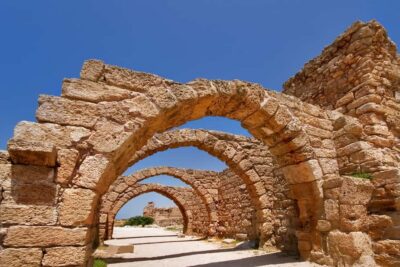
Caesarea, Acre & Rosh Hanikra Day Trip from Jerusalem
Read our review →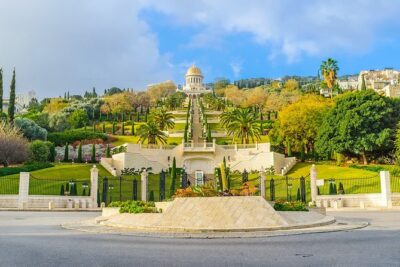
Unforgettable Tour to Caesarea, Haifa, Acre and Rosh HaNikra from Tel Aviv
Read our review →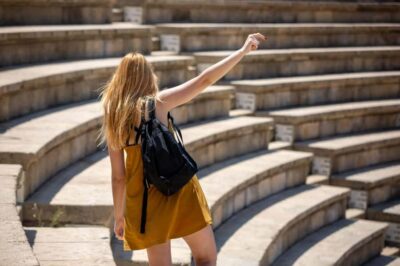
Tel Aviv/Jerusalem: Caesarea, Haifa & Akko Day Tour
Read our review →Browse the lists this tour appears in