
Review · JERUSALEM OLD CITY TOURS
From Tel Aviv: Highlights of Jerusalem’s Old City
Jerusalem rewards a full day. This tour gives you a broad first look at the city, from the Mount Scopus panorama to the narrow lanes of the Old City, with major Christian and Jewish sites packed into one guided route. I especially like the mix of landmark stops and neighborhood walking, plus the convenience of hotel pickup, air-conditioned transport, and included entry fees. The main drawback is the pace: ten hours is a long day, and the Old City portion includes plenty of walking over uneven ground.
I also like that the route reaches places many first-time visitors want to see, including the Western Wall, Via Dolorosa, Church of the Holy Sepulchre, Room of the Last Supper, and King David’s Tomb. Just check the day of the week before booking, since Monday and Thursday departures follow a different plan and visit the Holocaust Museum instead of several Mount Zion and Garden of Gethsemane stops.
In This Review
- Key points to know before booking
- Why this Tel Aviv to Jerusalem day trip works
- Mount Scopus gives you Jerusalem in one wide view
- Zion Gate leads into the Armenian Quarter
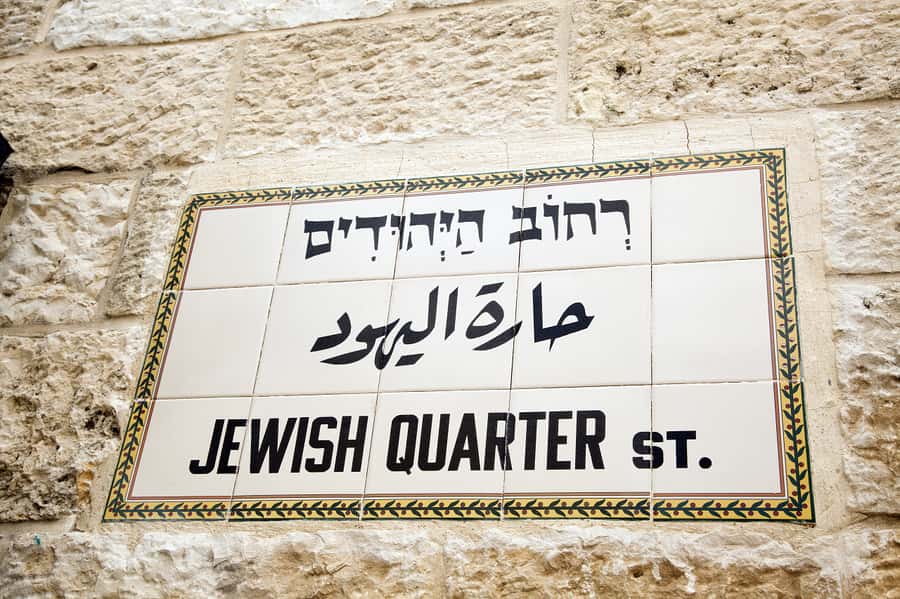
- Byzantine Cardo and the Jewish Quarter
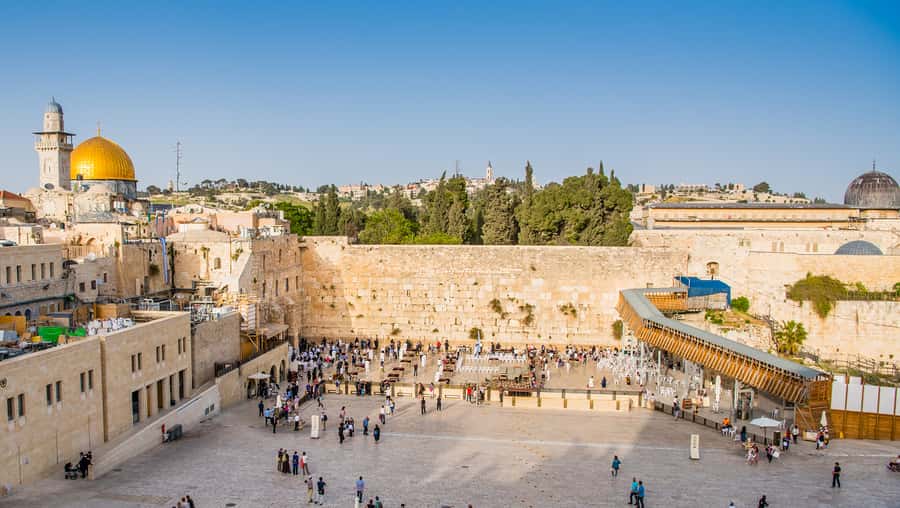
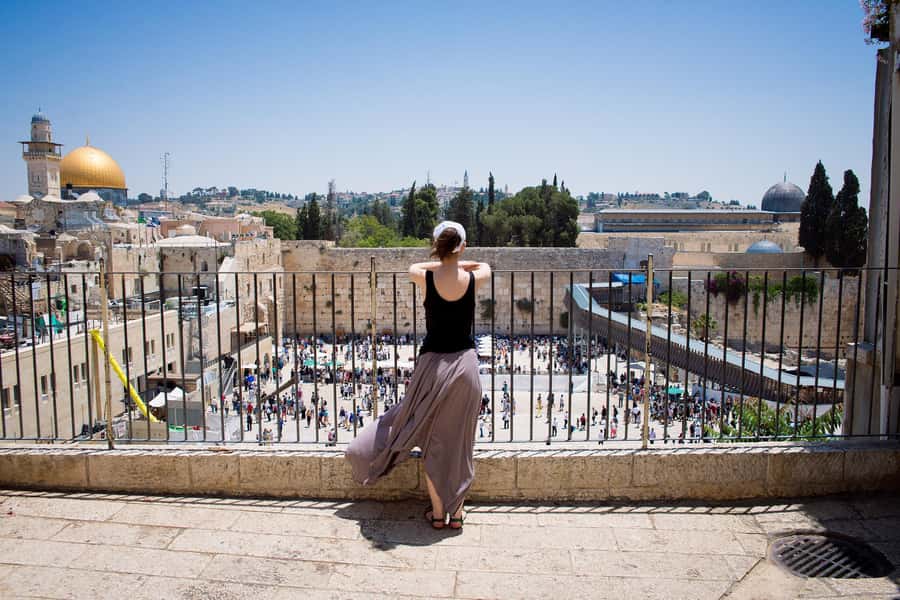
- The Western Wall is the emotional center of the route
- Via Dolorosa and the Church of the Holy Sepulchre
- The Old City bazaar adds color and noise
- Garden of Gethsemane and the Church of All Nations
- Mount Zion connects Christian and Jewish traditions
- The Monday and Thursday version is a real variation
- Price, transport, and what you need to bring
- Who should book this Jerusalem tour?
- Should you book it?
- FAQ
- How long does the Jerusalem tour from Tel Aviv last?
- What languages are available?
- Is hotel pickup and drop-off included?
- What sites are visited on the standard route?
- Does the itinerary change on Mondays and Thursdays?
- Are food and drinks included?
- What clothing is required?
Key points to know before booking
- Mount Scopus opens the day with a citywide view, giving you a useful sense of Jerusalem before entering its crowded lanes.
- The Old City route crosses several distinct quarters, including the Armenian and Jewish quarters, rather than treating Jerusalem as one single historic area.
- Major sacred sites are included, from the Western Wall and Via Dolorosa to the Church of the Holy Sepulchre.
- Mount Zion adds important Jewish and Christian sites, including King David’s Tomb and the Room of the Last Supper.
- Monday and Thursday tours change course, replacing Mount Zion sites and the Church of All Nations with the Holocaust Museum, except during Jewish holidays.
- Modest clothing is required, and the day is not suitable for children under four or wheelchair users.
Why this Tel Aviv to Jerusalem day trip works
At $94 per person, this is a practical way to cover Jerusalem if you are based in Tel Aviv and have only one open day. You get transport, a guide, hotel pickup and drop-off, and entry fees in one price. That matters here because Jerusalem’s sights are spread between viewpoints, hilltop areas, and the Old City, where independent navigation can eat up valuable time.
The tour lasts about ten hours. That sounds long, but the distance between Tel Aviv and Jerusalem, combined with the number of stops, makes a full day reasonable. I would think of this as an introduction rather than a slow, scholarly visit. You will see the city’s headline sights and get enough context to decide where you want to return.
The trade-off is control. A guided day trip keeps the route moving, but you will not have unlimited time at every church, wall, tomb, or market stall. If you prefer lingering over details, photographing every doorway, or stopping for a long meal, an independent visit may suit you better.
Pickup is included, but the final pickup time and hotel come by email from Bein Harim Israel Tours. Read that message closely. If it does not arrive, contact the supplier at [email protected] before the day of the tour.
More City Tours in Tel Aviv
- From Tel Aviv: Jerusalem Old & New City Bus Tour
★ 4.2 · 824 reviews - From Tel Aviv: Jerusalem Old City & Dead Sea Guided Day Tour
★ 4.4 · 389 reviews - From Tel Aviv: Jerusalem Old City Guided Tour
★ 4.6 · 59 reviews
Mount Scopus gives you Jerusalem in one wide view
The day begins with a panoramic view from Mount Scopus. This is a smart first stop because Jerusalem can feel confusing when you enter it at street level. From above, you can begin to understand the relationship between the Old City, Mount Zion, the Kidron Valley, and the surrounding hills.
I like this opening because it slows the start of the day before the tighter streets begin. You can take in the city as a whole, then spend the rest of the tour examining the places you saw from above.
Do not expect this to replace a dedicated viewpoint visit. It is an orientation stop, not a long scenic session. Your guide uses it to frame the day, so keep your camera ready and listen for the basic geography.
Zion Gate leads into the Armenian Quarter
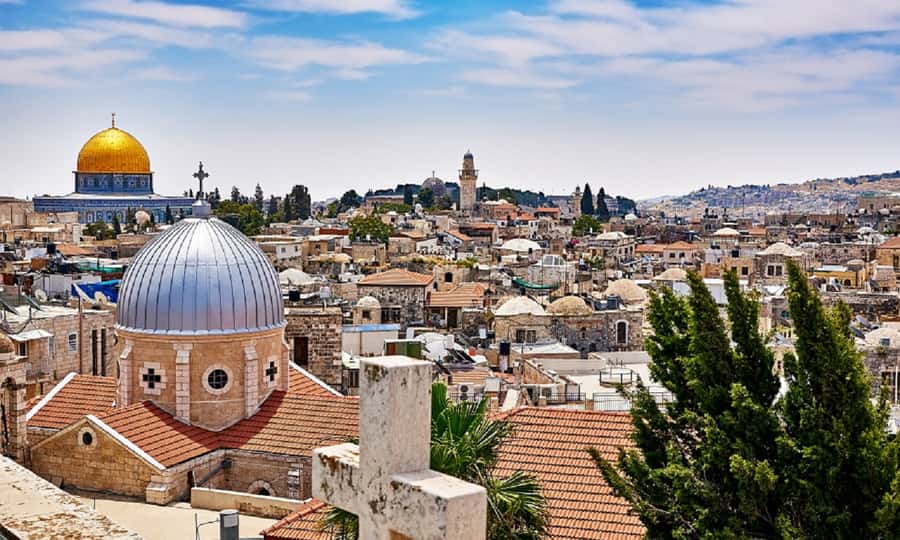
The route enters the Old City through historic Zion Gate and continues into the Armenian Quarter. This gives you a less direct start than walking straight to the Western Wall, and that is a good thing. The Old City is divided into quarters with different religious and cultural identities, and the Armenian Quarter helps show that Jerusalem is not one uniform district.
The gate itself also sets the tone. Once you pass through, the city becomes a place of stone lanes, enclosed passages, and sudden turns. I find guided walking useful here because the streets can be difficult to follow on a first visit.
Wear shoes that can handle a long walk. The tour includes the Old City bazaar, sacred compounds, and historic lanes. Even without a stated distance, you should expect steady walking and some uneven surfaces. This is one reason the experience is not suitable for wheelchair users.
Byzantine Cardo and the Jewish Quarter
From the Armenian Quarter, the tour moves into the Jewish Quarter and stops at the remains of the Byzantine Cardo. The Cardo offers a change from the religious focus of the day. Instead of looking only at active places of worship, you see part of an older urban street system and get a sense of how Jerusalem changed over time.
I like having this stop before the Western Wall. It gives the Jewish Quarter some physical and civic context, rather than reducing it to one famous site. The contrast between the exposed remains and the living streets around them is part of what makes Old City walking rewarding.
The Jewish Quarter can also feel more orderly and open in places than the market lanes that come later. Pay attention to how the route shifts from archaeological remains to present-day religious life. This is a short stop within a packed program, so you will get an introduction rather than a detailed archaeological lecture.
More walks through the Old City:
- Jerusalem Half-Day Tour from Tel Aviv: Holy Sepulchre and Western Wall
★ 4.0 · 61 reviews - Jerusalem Old City from Tel Aviv
★ 5.0 · 39 reviews - Jaffa: Old City, Port & Shuk Hapishpishim Walking Tour
★ 4.8 · 33 reviews - City of David and Underground Jerusalem Day Trip from Tel Aviv
★ 4.0 · 32 reviews
The Western Wall is the emotional center of the route
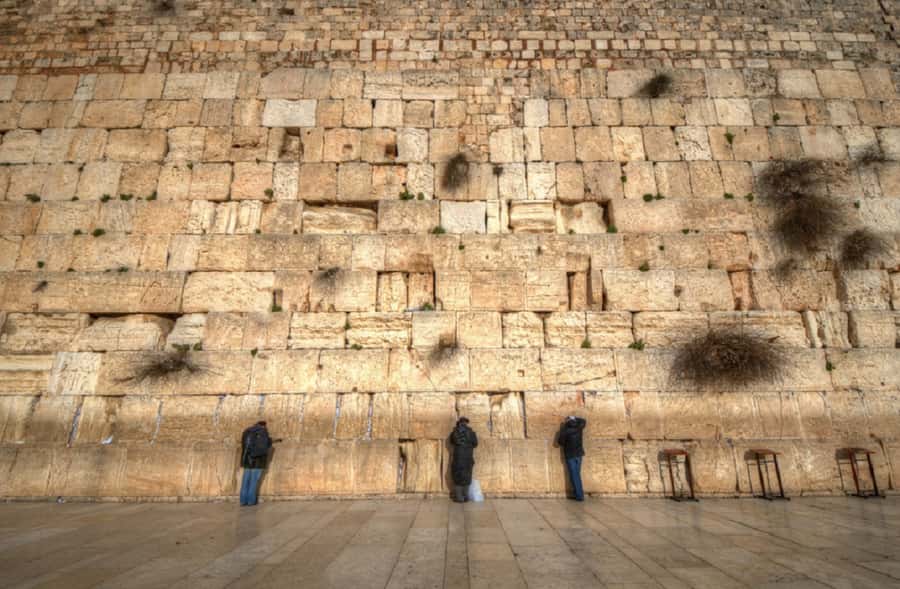
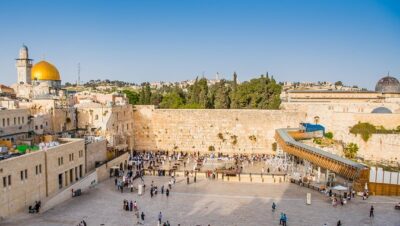
The Western Wall is one of the tour’s essential stops. It is a place of prayer and reflection, and the setting makes it different from a normal sightseeing viewpoint. You will have time to observe the wall, the prayer area, and the people who come here for deeply personal reasons.
Your behavior and clothing matter. Dress modestly, and follow your guide’s instructions at the site. The supplied rules specifically prohibit shorts, short skirts, and sleeveless shirts. It is best to arrive dressed for all the holy sites on the route rather than plan to change later.
The Western Wall visit may feel brief if you want a quiet, personal moment. That is a limitation of a full-day group itinerary. Still, including it alongside the Christian sites gives the tour a useful balance and helps explain why Jerusalem matters to several faiths.
Via Dolorosa and the Church of the Holy Sepulchre
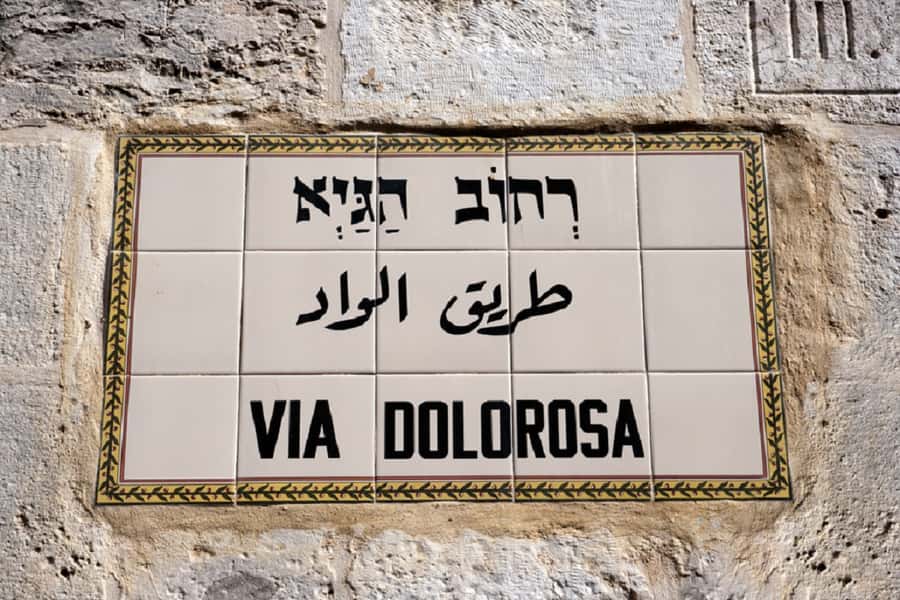
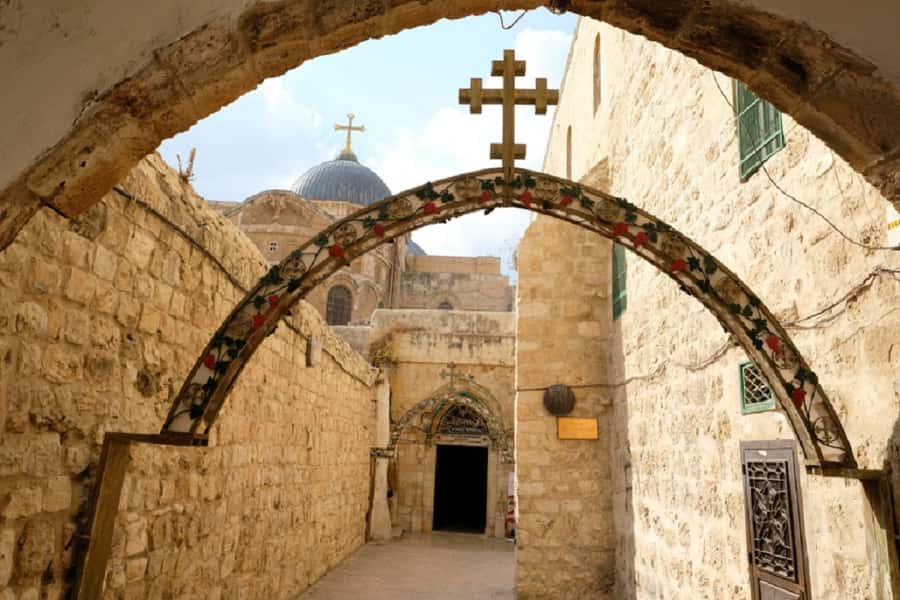
The walk along the Via Dolorosa follows the traditional path associated with Jesus. This is one of the route’s most atmospheric sections. You move through the Old City while passing places marked by centuries of devotion, interpretation, and pilgrimage.
The walk leads to the Church of the Holy Sepulchre, a major Christian site connected with the crucifixion and tomb of Christ. The church contains sacred spaces and religious treasures built up over many centuries. Even if you are not visiting for religious reasons, the site has unusual weight because it combines active worship with layers of tradition.
Go in with realistic expectations. A church of this importance can be crowded, and the tour cannot guarantee a long or private visit at each point inside. Your guide helps you understand what you are seeing, but the experience may feel busy rather than peaceful.
I think this is where the walking route earns its place. You do not simply arrive at a church by coach. You approach it through the lanes and traditional path linked to the story, which gives the visit more meaning.
The Old City bazaar adds color and noise
After the major sacred sites, the route passes through the Old City bazaar. This is the more everyday side of Jerusalem, with stalls, goods, and shopfronts filling the narrow passages. It is a welcome change from formal religious sites and archaeological remains.
You may want time to browse, but keep the tour’s schedule in mind. This is not presented as a dedicated shopping stop, so you should treat it as a chance to see the market rather than a long buying session.
The bazaar also gives you a useful reminder that the Old City is lived in, worked in, and visited for ordinary reasons as well as sacred ones. I like this balance. A day made entirely of monuments can feel flat; the market brings street life back into the picture.
Garden of Gethsemane and the Church of All Nations
The tour then heads to the Garden of Gethsemane and the Church of All Nations. This part of the day moves away from the enclosed Old City and into a quieter religious setting near the Kidron Valley.
The Garden of Gethsemane is associated with the final hours of Jesus, while the Church of All Nations is known for its connection to that story. The stop gives Christian visitors another important place for reflection and gives everyone a chance to see a different part of Jerusalem’s sacred geography.
The Kidron Valley view includes ancient Jewish tombs. This adds a strong visual and historical contrast to the church and garden. You are not just moving from one famous building to another. You are seeing how the valley, hills, walls, and burial sites fit together.
This section is not included on Monday and Thursday departures, except during Jewish holidays. On those days, the itinerary instead includes the Holocaust Museum. Check your date carefully if the Garden of Gethsemane and Church of All Nations are priorities for you.
Mount Zion connects Christian and Jewish traditions
The standard route continues to Mount Zion, where you visit the Dormition Church, the Room of the Last Supper, and King David’s Tomb. These stops work well together because Mount Zion carries meaning in both Christian and Jewish traditions.
The Dormition Church gives the tour another major Christian setting, while the Room of the Last Supper connects with the New Testament story. King David’s Tomb adds a Jewish focus and keeps the tour from presenting Mount Zion through only one religious lens.
I like this part because it shows how close different traditions sit beside each other in Jerusalem. It also rounds out the day. After the Western Wall and the Church of the Holy Sepulchre, Mount Zion adds two more important strands to the city’s religious identity.
Again, Monday and Thursday tours do not include these Mount Zion sites, except during Jewish holidays. Instead, the program visits the Holocaust Museum. Children under ten are not permitted to visit Yad Vashem because of the sensitive content, so families should pay close attention to the schedule before reserving.
The Monday and Thursday version is a real variation
The weekday change is more than a minor adjustment. On Mondays and Thursdays, the tour visits the Holocaust Museum instead of the Church of All Nations, King David’s Tomb, and the Room of the Last Supper. The change applies except during Jewish holidays.
That alternate route may be very meaningful, but it creates a different kind of day. The standard itinerary emphasizes sacred places tied to Christianity and Judaism. The museum adds a difficult modern subject and requires emotional preparation.
If you are traveling with children, note the age rule: children under ten cannot visit Yad Vashem. The overall tour is also not suitable for children under four. Families with older children should decide if a ten-hour day and the museum’s sensitive material fit their plans.
Price, transport, and what you need to bring
The $94 price includes air-conditioned coach transport, a guide, entry fees, hotel pickup, and hotel drop-off. I consider that fair value for a long day from Tel Aviv, especially if you want the main Jerusalem sites without arranging intercity transport and admissions yourself.
Food and drinks are not included. Plan to bring water and budget for meals or snacks, although the provided details do not specify a scheduled meal stop. A ten-hour outing can feel much harder if you begin it without something to eat.
The tour is offered with live guides in English, Spanish, and French. No group size is provided, so you should not assume a private or small-group experience. The format is best for you if you value structure, transport, and a guide’s explanation more than setting your own pace.
Dress modestly from the start. Shorts, short skirts, and sleeveless shirts are not allowed, and modest clothing is required at holy sites. Comfortable walking shoes are just as important. A coach handles the longer road segments, but the Old City is explored on foot.
Free cancellation is available up to 24 hours before departure for a full refund, and you can reserve now and pay later. Those policies help if your Tel Aviv plans are still shifting, but the practical step remains the same: confirm the pickup email and final hotel details before the tour date.
Who should book this Jerusalem tour?
I would choose this tour if you are staying in Tel Aviv and want one organized day covering Jerusalem’s biggest religious and historic sights. It is especially useful for a first visit, since the route links viewpoints, quarters, archaeological remains, sacred buildings, a market, and the Kidron Valley.
It also suits you if you want help with logistics. Hotel pickup and drop-off remove much of the planning, while the included entries make the $94 cost easier to judge.
I would hesitate if you need a slow pace, have limited mobility, or dislike long guided days. Wheelchair users cannot take this tour, and the amount of Old City walking may be tiring even for otherwise fit visitors.
Should you book it?
Book this tour if you want an efficient first look at Jerusalem from Tel Aviv, with the Western Wall, Church of the Holy Sepulchre, Via Dolorosa, Mount Zion, and the Old City bazaar in one day. Its strongest feature is the range of sights, and the positive rating of 4.8 from three ratings supports the impression that the route leaves a strong first impression. One verified booking from Greece summed up the appeal simply: the visitor wanted to return to the Old City.
Check the calendar before paying. If you want Garden of Gethsemane, the Church of All Nations, King David’s Tomb, and the Room of the Last Supper, avoid Monday and Thursday departures unless a Jewish holiday changes the schedule. If the Holocaust Museum is important to you and everyone in your party is at least ten, those days may be the better choice.
FAQ
How long does the Jerusalem tour from Tel Aviv last?
The tour lasts 10 hours, including transportation and sightseeing.
What languages are available?
The live guide is available in English, Spanish, or French.
Is hotel pickup and drop-off included?
Yes. Hotel pickup and drop-off are included. Bein Harim Israel Tours sends a confirmation email with the final pickup time and pickup hotel.
What sites are visited on the standard route?
The standard route includes a Mount Scopus viewpoint, Zion Gate, the Armenian Quarter, the Jewish Quarter, the Byzantine Cardo, the Western Wall, Via Dolorosa, the Church of the Holy Sepulchre, the Old City bazaar, the Garden of Gethsemane, the Church of All Nations, the Kidron Valley, and Mount Zion sites including the Dormition Church, Room of the Last Supper, and King David’s Tomb.
Does the itinerary change on Mondays and Thursdays?
Yes. On Mondays and Thursdays, except during Jewish holidays, the tour visits the Holocaust Museum instead of the Church of All Nations, King David’s Tomb, and the Room of the Last Supper on Mount Zion.
Are food and drinks included?
No. Food and drinks are not included in the price.
What clothing is required?
Modest clothing is required at the holy sites. Shorts, short skirts, and sleeveless shirts are not allowed.
Just added around Tel Aviv
- 4-Day Christian Israel Tour from Tel Aviv★ 5.0 · 3 reviews
- Palm Sunday in Jerusalem: Mass at Bethpage and Via Dolorosa Procession with Transport from Tel Aviv★ 5.0 · 3 reviews
- Tel Aviv to Tel Aviv Airport (TLV) – Departure Private Transfer★ 5.0 · 3 reviews
- Masada and Dead Sea from Tel Aviv★ 4.5 · 3 reviews
- Private Transportation From / To Ben Gurion Airport to Tel Aviv Hotels★ 5.0 · 3 reviews
- Jerusalem and Dead Sea Tour from Tel Aviv★ 4.5 · 3 reviews
- Tel Aviv: Carmel Market & Neighborhood Guided Walking Tour★ 4.7 · 3 reviews
- Holyland Tour :Jerusalem & Bethlehem from Jerusalem or Tel Aviv★ 5.0 · 3 reviews
Jerusalem Old City Tours, compared.

Jerusalem Half Day Tour: Holy Sepulchre and Western Wall
Read our review →
Jerusalem Half-Day Tour from Tel Aviv: Holy Sepulchre and Western Wall
Read our review →
City of David and Underground Jerusalem Day Tour
Read our review →Browse the lists this tour appears in