
Review · JERUSALEM OLD CITY TOURS
Jerusalem: Old City Private Walking Tour of Religious Sites
Jerusalem’s sacred core rewards a careful guide. This five-hour private walk brings you through the Old City’s most important Jewish, Christian, and Muslim sites, from the Church of the Holy Sepulcher and Via Dolorosa to the Western Wall, Temple Mount, and Mount Zion. I like the private format, which lets you adjust the pace and spend more time on the places that matter most to you.
I also like the tour’s broad reach. You can stand among pilgrims at the Holy Sepulcher, view the Dome of the Rock and al-Aqsa Mosque, then finish near the room associated with the Last Supper. The main drawback is that the schedule can become tight, and Temple Mount access is restricted on Fridays, Saturdays, and Jewish or Islamic holidays. The interior of the Dome of the Rock is not included.
In This Review
- Key points at a glance
- Why a private five-hour walk makes sense
- Starting at Jaffa Gate
- Entering the Church of the Holy Sepulcher
- Following the Via Dolorosa to the Western Wall
- Seeing the Temple Mount from above and below
- Mount Zion, King David, and the Last Supper room
- The guide can make or break the day
- Clothing, timing, and practical limits
- Who should book this Jerusalem walking tour?
- Should you book it?
- FAQ
- How long does the Old City walking tour last?
- Where does the tour begin?
- Is this a private tour?
- Which language is the tour conducted in?
- Does the tour enter the Church of the Holy Sepulcher?
- Is entry to the Western Wall included?
- Can you visit the Temple Mount every day?
- Can you enter the Dome of the Rock?
- What should you wear?
Key points at a glance
- A five-hour walk across the Old City: The route links the Christian Quarter, Jewish Quarter, Muslim holy sites, and Mount Zion.
- Private means flexible: Your guide can adapt the pace and site choices to your interests, including family needs.
- The Holy Sepulcher comes early: You enter one of Christianity’s most important pilgrimage churches before moving along the Via Dolorosa.
- Temple Mount access has limits: You can admire the Dome of the Rock and al-Aqsa Mosque from the outside, but the Dome’s interior is closed to guests.
- Dress rules are strict: Knees, shoulders, arms, and neck coverage matter, with the Temple Mount requiring full coverage in opaque clothing.
- Guide quality matters here: Guides including Eva, Shlomo, Nadia, Chava, and Gavriel Dov Barkai have been praised for clear explanations, warmth, and flexibility.
Why a private five-hour walk makes sense
Jerusalem’s Old City is compact on a map but difficult to read on your own. A few minutes on foot can carry you from a Christian shrine to a Jewish prayer site and then into a Muslim sacred precinct. The streets, gates, traditions, and access rules can feel confusing without someone to explain the setting.
A private guide gives you room to ask direct questions. If you want more time on religious history, the guide can focus there. If your group includes children, you can slow down. One family with three small children, including a child in a stroller, was able to adjust the pace and take turns visiting sites while still covering a great deal of ground.
The tour lasts five hours, so you should expect a serious walking outing rather than a quick orientation. The route includes several uphill or uneven sections, and religious sites may require pauses for lines, prayer, or crowd movement. Wear shoes you trust and bring water, since food and drinks are not included.
The advertised price is $450 per group up to one person. That is a high price for a solo guest, but the value changes if the booking arrangement allows the same private guide and itinerary for additional members of your party. Confirm the group pricing before paying, especially because the listed wording says up to one person. The main advantage is not a ticket bundle alone. It is the chance to shape a demanding day around your own interests.
More City Tours in Jerusalem
- Jerusalem: Guided Walking Tour of the Old City
★ 4.7 · 386 reviews - Full Day City Tour of Jerusalem
★ 4.1 · 367 reviews - From Jerusalem Small group tour Old&New City ENTRY FEES INCL
★ 4.0 · 135 reviews
Starting at Jaffa Gate
The usual meeting point is Jaffa Gate, the main tourist entrance to the Old City. You can also meet the guide at your hotel in central Jerusalem. Starting at Jaffa Gate makes practical sense because it gives you a clear landmark and places you near the first major sights.
Your guide should help you get your bearings before the route begins. From here, the Old City opens into a maze of lanes divided into four traditional quarters: Christian, Muslim, Jewish, and Armenian. The boundaries are not always obvious, which is one reason a local guide adds real value.
Because this is a private walk, tell your guide at the start what matters most. You might want to focus on Christian pilgrimage, Jewish history, Islamic architecture, or the political and religious tensions tied to these places. The experience is designed to respond to guest preferences, although the number of stops you cover depends on your pace.
Entering the Church of the Holy Sepulcher
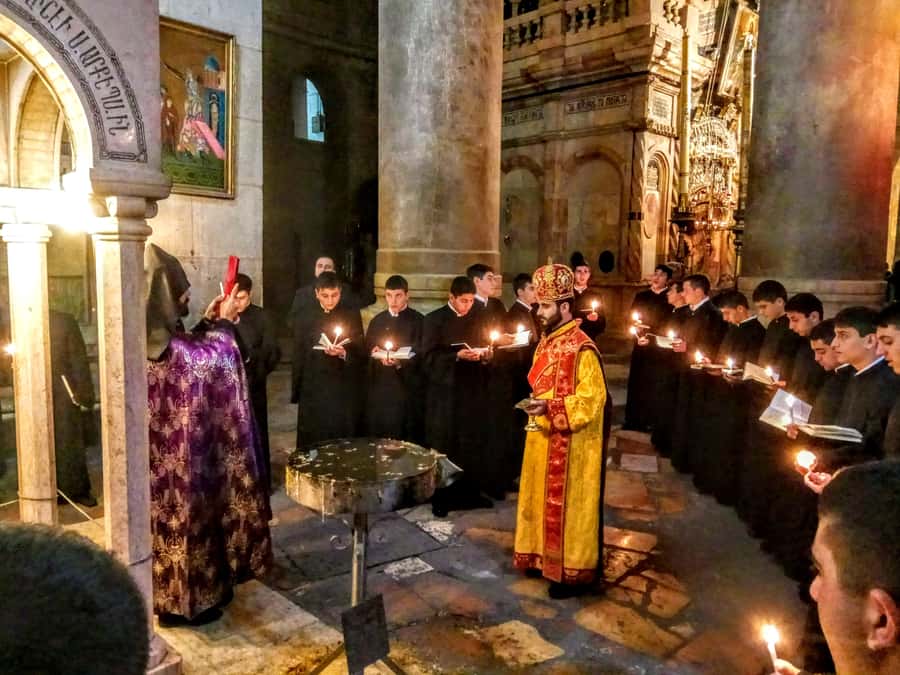
The Church of the Holy Sepulcher is the emotional center of the Christian portion of the tour. It is associated with Golgotha, the place of Jesus’s crucifixion, and with the tomb connected to his burial and resurrection. Christians from around the world come here to pray, light candles, and follow long-standing devotional traditions.
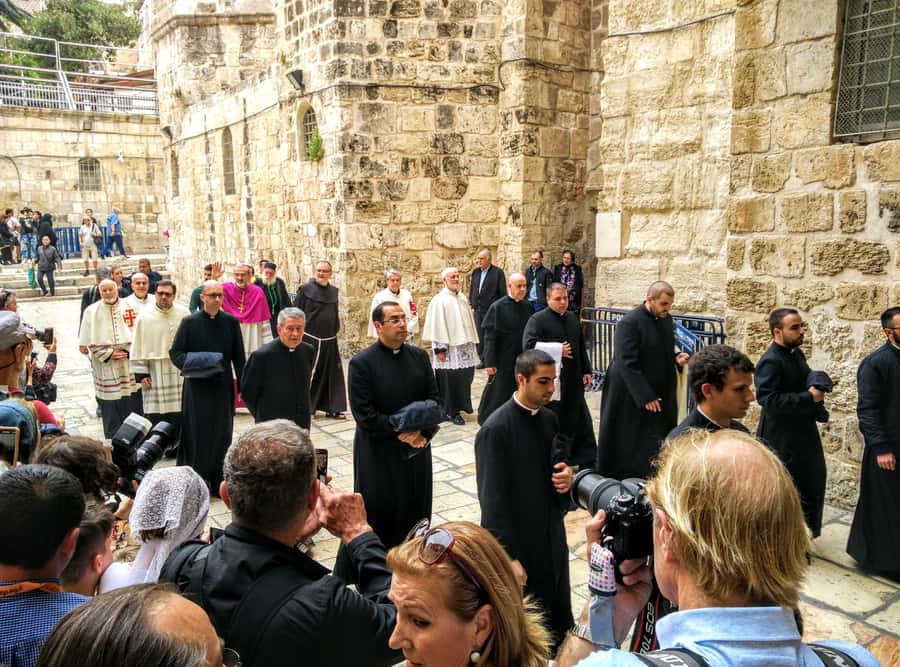
This is not a quiet museum visit. You may find pilgrims kneeling, clergy conducting services, and people waiting to touch or pray at sacred points. That activity is part of the meaning of the church, but it can also make the visit feel crowded and less orderly than a typical historic building.
A guide helps explain why different Christian communities share responsibility for the church and why particular chapels and objects matter. The building can be hard to understand at first glance, since layers of worship and rebuilding have created a complex interior. Give yourself time to absorb the setting rather than rushing from one point to the next.
The tour includes entry to the Holy Sepulcher. Exact time inside depends on the pace of your group and conditions at the site. If this is your main reason for booking, tell the guide early so the visit receives proper attention.
Following the Via Dolorosa to the Western Wall
The route then follows part of the Via Dolorosa toward the Western Wall. This path is linked to the final journey of Jesus and passes through streets where religious devotion and everyday commerce share the same narrow space.
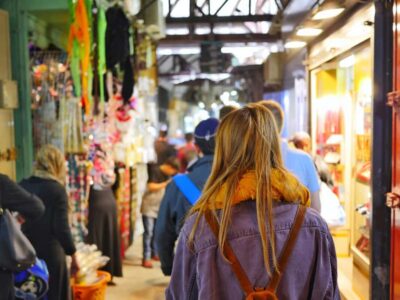
You will not experience the Via Dolorosa as a preserved stage set. It is a working part of the Old City, with shops, residents, worshippers, and changing access conditions. That mixture is useful because it shows how sacred tradition remains part of daily life rather than being separated behind museum glass.
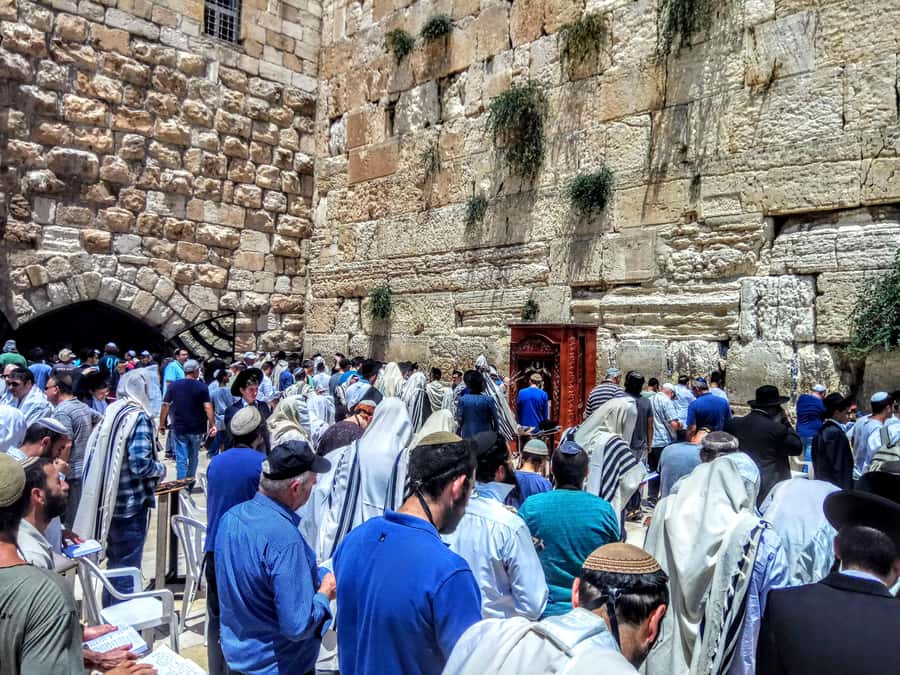
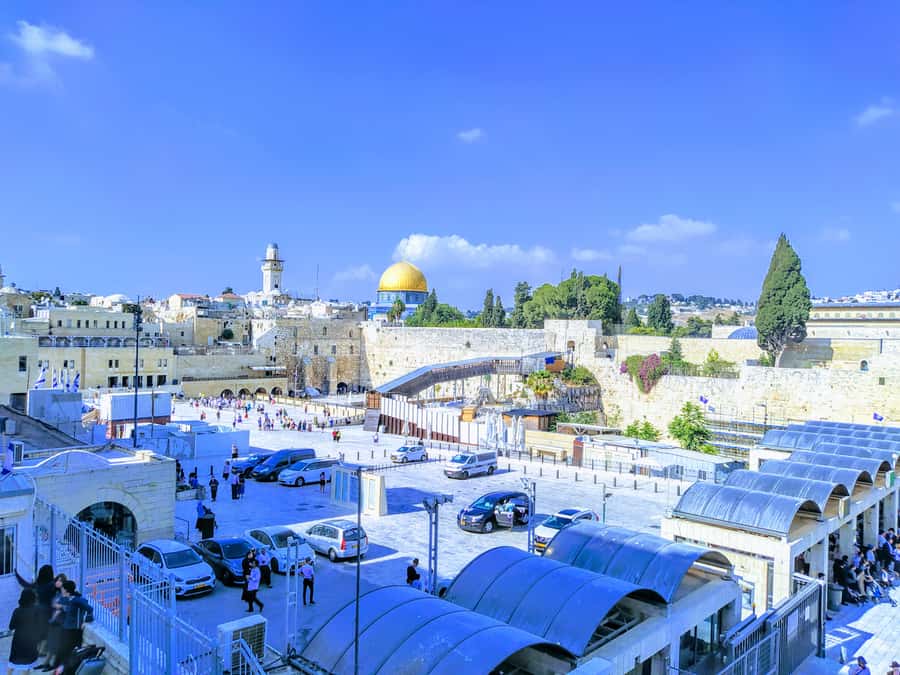
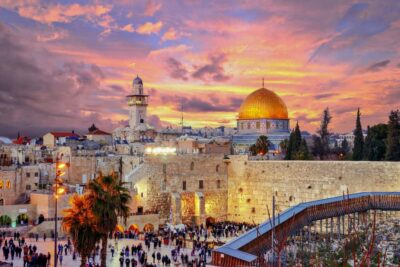
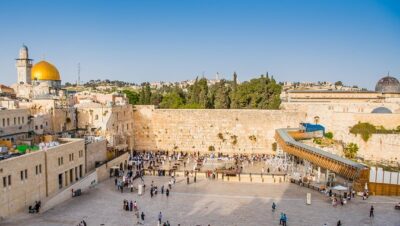
At the Western Wall, you see a surviving section of the retaining wall associated with the Second Temple complex built and expanded under King Herod. The wall is one of Judaism’s most important prayer sites, and the atmosphere changes quickly as you approach the plaza.
The included entry ticket makes this stop straightforward, but dress and behavior still matter. Men should wear pants or shorts covering the knees, with a short-sleeved shirt or longer. Women should wear clothing covering the knees and sleeves reaching halfway between the shoulder and elbow or longer. Modest clothing is the safe choice throughout the day.
The Western Wall is especially useful for understanding Jerusalem’s layered past. The site is not simply an old wall. It connects the present-day city to the ancient Temple period and to centuries of Jewish prayer and memory.
More Walking Tours in Jerusalem
- All Inclusive Walking Tour Old City Jerusalem
★ 5.0 · 83 reviews - Jerusalem Walking Tour: In the Footsteps of Jesus
★ 4.5 · 67 reviews - Boutique Walking Tour of Jerusalem
★ 5.0 · 64 reviews - Old City of Jerusalem Guided Walking Tour
★ 5.0 · 47 reviews
Seeing the Temple Mount from above and below
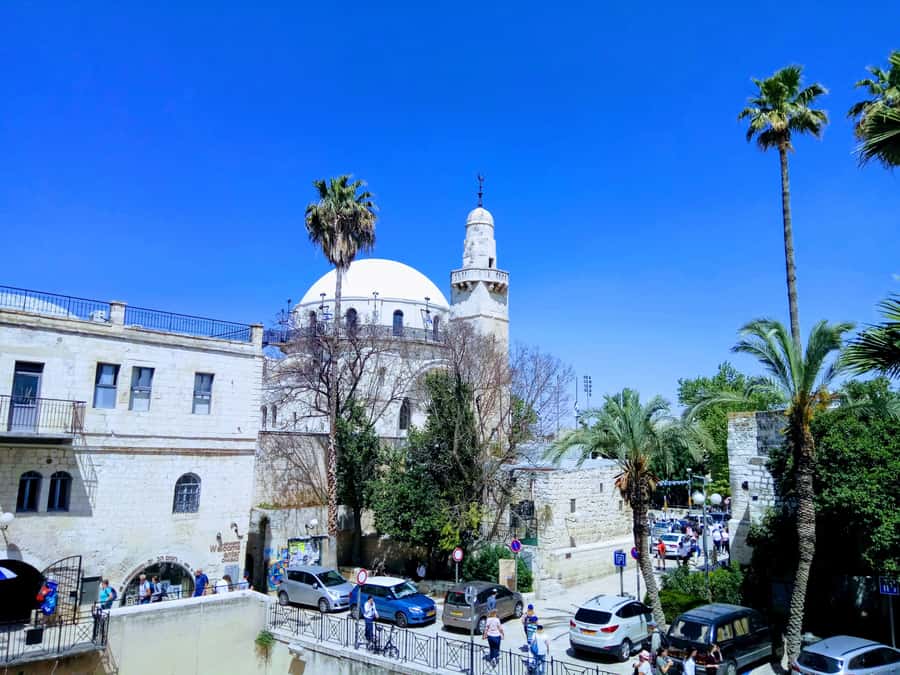
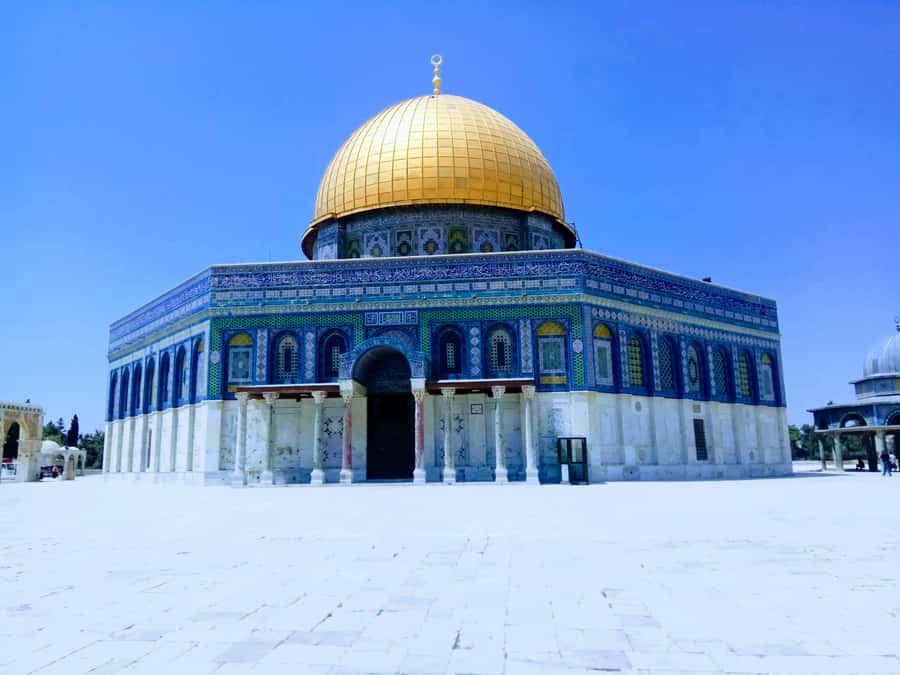
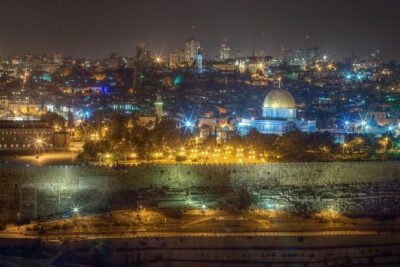
The Temple Mount is the tour’s most sensitive and visually striking section. From the area, you can admire the exterior of the Dome of the Rock and al-Aqsa Mosque, two landmarks with major importance in Islam. The same precinct also carries deep importance in Jewish history and tradition, while the surrounding Old City connects it to Christian pilgrimage routes.
Your guide can explain these overlapping meanings without reducing them to a simple timeline. That matters because Jerusalem’s religious sites are rarely important to only one community. The Temple Mount is a place where history, faith, architecture, and modern politics meet.
The tour includes a Temple Mount entry ticket, but access is not guaranteed every day. The site cannot be visited on Fridays, Saturdays, or Jewish and Islamic holidays. Check the date carefully before booking if this stop is a priority.
The interior of the Dome of the Rock is not accessible to guests on this experience. You should book this portion for the setting, exterior architecture, and explanation, not for an inside visit. The gold-covered dome is the visual focus, but the surrounding courtyards and the relationship between the buildings are also important.
Temple Mount clothing rules are stricter than at the Western Wall. Legs, arms, and the neck must be fully covered with opaque material. Exposed midriffs and low necklines are not allowed. Plan your outfit before leaving the hotel, since an otherwise acceptable sightseeing outfit may not meet the rules here.
Mount Zion, King David, and the Last Supper room
After the central Old City sites, the route moves toward Mount Zion. This gives the walk a different feel and adds several locations tied to biblical and Christian traditions.
The tomb associated with King David is one of the stops. The site’s importance comes from its religious tradition, not from a simple archaeological certainty that settles every question. A good guide can explain the difference between belief, tradition, and historical evidence without taking away from the site’s meaning.
Nearby is the room traditionally identified as the place where Jesus and his disciples held the Last Supper. The room is included in the tour, but you should understand that the identification is based on tradition. Its value comes from the long connection between the space and Christian memory.
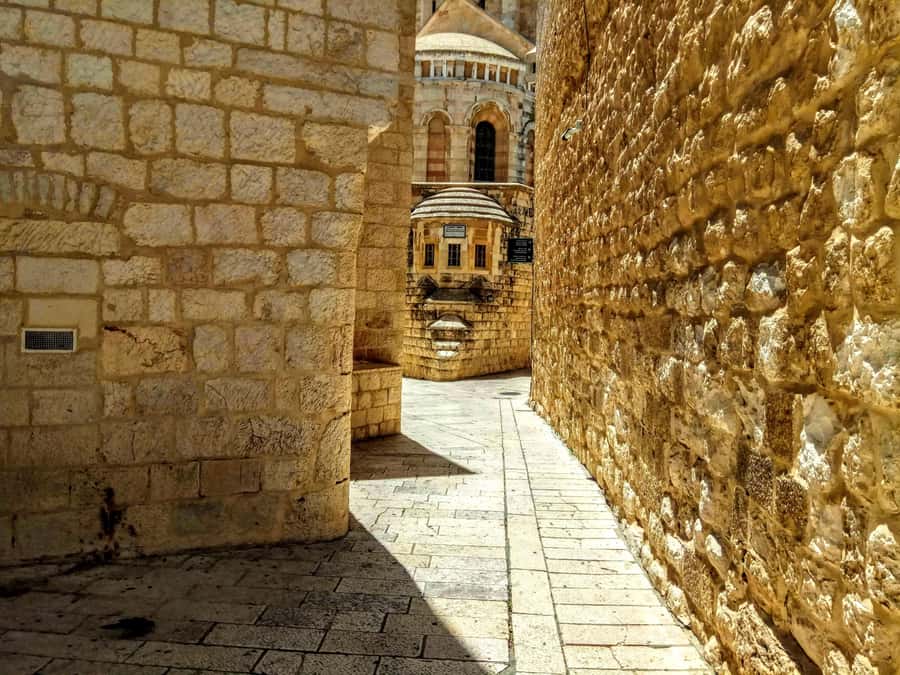
The Abbey of the Dormition is another Mount Zion highlight. Its tall architecture gives the final part of the tour a strong visual marker, and it adds another layer to the area’s Christian identity. You will see how a relatively small part of Jerusalem can contain sites linked to several different periods and traditions.
The tour ends with a return to the Jaffa Gate area. That round-trip structure is convenient if you have plans elsewhere in Jerusalem, though you should allow extra time if your group pauses often or chooses longer explanations at key sites.
The guide can make or break the day
This experience depends heavily on the guide. The strongest guide feedback centers on clear historical explanations, openness to questions, and an ability to connect Jewish, Christian, and Muslim traditions without making the walk feel like a lecture.
Shlomo has been praised for his wide understanding of Israel’s history, his friendly manner, and his willingness to answer questions even during a lunch break. He also adjusted the timing for a family and added an extra hour at no charge so the group could cover more of what mattered to them. That kind of flexibility is particularly valuable on a private tour.
Eva has been described as warm with children and willing to adapt the pace for a family using a stroller. Nadia has been praised for her passion and for pointing out details that would be easy to miss without a local guide. Chava has been noted for explaining architectural, religious, and political tensions in an entertaining way.
These names do not guarantee your guide assignment, but they show the kind of service you should hope for: a person who can explain difficult subjects clearly, listen to your questions, and adjust the day instead of simply reciting a script.
Clothing, timing, and practical limits
Dress is the most important preparation point. For the general holy sites, men need shorts covering the knees or pants and a shirt with short sleeves or longer. Women need shorts or skirts covering the knees, or longer pants, plus sleeves reaching halfway between the shoulder and elbow or longer.
For the Temple Mount, cover your legs, arms, and neck completely with opaque fabric. Avoid exposed midriffs and low necklines. It is better to dress modestly for the entire tour than to depend on finding a cover-up at the last moment.
The itinerary is not fixed down to every minute. Sites visited depend on the pace of the tour and your preferences. A group that asks many questions may see fewer locations in greater detail, while a faster group may cover more ground.
Families can benefit from the private setup, but five hours is a long time for young children. The experience can be adapted, though the Old City’s religious importance may be more interesting to adults and older children. If you have a stroller, tell the guide at the beginning so the pace and site visits can be handled sensibly.
Temple Mount scheduling requires special care. It is unavailable on Fridays, Saturdays, and Jewish and Islamic holidays. If those days are part of your Jerusalem stay, you may need to accept a route that focuses more heavily on the other sites.
The tour is conducted in English. Food and drinks are not included, so plan your own refreshment break or ask the guide how to fit one into the day. The private format makes that easier than it would be in a large group, but the five-hour duration still requires some planning.
Who should book this Jerusalem walking tour?
I would recommend this tour to a first-time visitor who wants the major religious sites explained in one day. It is also a strong choice for families, couples, and small groups who prefer questions and conversation over a fixed group schedule.
It suits you especially well if you want to compare the importance of sites to Jews, Christians, and Muslims. The route does not treat Jerusalem as a single-faith destination. Instead, it shows how the city’s sacred places overlap, compete, and share the same tight streets.
I would think twice if you want a relaxed day with long breaks. Five hours on foot, strict dress codes, possible waits, and changing access rules make this a full program. I would also reconsider if you mainly want to enter the Dome of the Rock, since its interior is not available.
The price makes the most sense when the private service, guide flexibility, and personalized pacing are central to your plans. For a solo visitor, $450 is a substantial spend. For a private party, confirm exactly how the group price is calculated before booking.
Should you book it?
Book this tour if you want Jerusalem’s religious heart explained by one guide rather than pieced together from separate visits. The Church of the Holy Sepulcher, Western Wall, Temple Mount, and Mount Zion create a demanding but meaningful five-hour route.
Choose it with realistic expectations: the day is walking-heavy, the schedule can shift, the Dome of the Rock is viewed from outside, and Temple Mount access depends on the calendar. If you arrive dressed modestly, tell the guide your priorities, and allow the city to be complicated, this can be an excellent introduction to the Old City.
FAQ
How long does the Old City walking tour last?
The tour lasts five hours.
Where does the tour begin?
You can meet the guide at Jaffa Gate, the main tourist entrance to the Old City, or at your hotel in central Jerusalem.
Is this a private tour?
Yes. It is a private walking tour with a personalized itinerary.
Which language is the tour conducted in?
The live tour guide speaks English.
Does the tour enter the Church of the Holy Sepulcher?
Yes. Entry to the Church of the Holy Sepulcher is included.
Is entry to the Western Wall included?
Yes. The tour includes a Western Wall entry ticket.
Can you visit the Temple Mount every day?
No. The Temple Mount cannot be visited on Fridays, Saturdays, or Jewish and Islamic holidays.
Can you enter the Dome of the Rock?
No. The interior of the Dome of the Rock is not accessible to guests on this tour.
What should you wear?
Men should wear pants or shorts covering the knees and shirts with short sleeves or longer. Women should wear clothing covering the knees and sleeves reaching halfway between the shoulder and elbow or longer. At the Temple Mount, legs, arms, and the neck must be completely covered with opaque clothing.
More Walking Tours
- Jerusalem: The Center of the Universe – Walk the “Holy City” with GaryTheGuide
★ 5.0 · 38 reviews - Magical Walking Tour in Old City of Jerusalem
★ 5.0 · 27 reviews - Jerusalem Jewish Orthodox Neighborhood Walking Tour
★ 4.0 · 21 reviews - Jerusalem Half Day Walking Tour (3 hours) from Jerusalem
★ 4.5 · 20 reviews
More Jerusalem Old City Tours
- Best seller! Jerusalem old city four quarters tour
★ 5.0 · 123 reviews - Private Tour Jerusalem Old City
★ 5.0 · 118 reviews - Jerusalem Half Day Tour: Holy Sepulchre and Western Wall
★ 4.5 · 80 reviews - City of David and Underground Jerusalem Day Tour
★ 4.5 · 53 reviews
Just added around Jerusalem
- Private Walking Tour in Jerusalem’s Old City★ 5.0 · 3 reviews
- jerusalem classic tour★ 5.0 · 3 reviews
- Jerusalem and the Dead Sea★ 5.0 · 3 reviews
- Jerusalem Running Tour-Experience the unique vibes of Jerusalem in your sneakers★ 5.0 · 3 reviews
- Jerusalem of 3 Religions in Russian★ 4.4 · 3 reviews
- From Jerusalem: Masada Sunrise, Ein Gedi & Dead Sea★ 5.0 · 3 reviews
- Christian Jerusalem in Russian★ 5.0 · 3 reviews
- Hebron & Ramallah Full-Day Guided Tour from Jerusalem★ 5.0 · 3 reviews
Jerusalem Old City Tours, compared.
Jerusalem Half Day Tour: Holy Sepulchre and Western Wall
Read our review →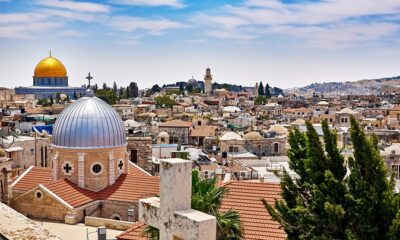
Jerusalem Half-Day Tour from Tel Aviv: Holy Sepulchre and Western Wall
Read our review →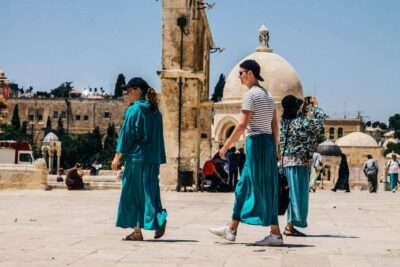
City of David and Underground Jerusalem Day Tour
Read our review →Browse the lists this tour appears in