
Review · JERUSALEM OLD CITY TOURS
Tel Aviv & Old City of Jaffa – Tiny group from Tel Aviv
Start with Tel Aviv’s oldest streets. This 3-hour walking tour links Neve Tzedek, the White City, and Jaffa in one compact route, giving you a clear introduction to the city’s modern character and its much older roots. With no more than 10 people, the guide can spend less time rounding up a large group and more time explaining what you are seeing.
I especially like the visit to HaTachana, a 19th-century railway station turned cultural area, and the stop at the Suzanne Dellal Centre. The route also does a good job of connecting Tel Aviv’s recent story with Jaffa’s Ottoman-era buildings and ancient port setting. The main drawback is the price: at $139 per person, this is not a cheap orientation walk, especially since food, drinks, and transportation are not included.
In This Review
- Key points to know before booking
- Why this route works for a first look at Tel Aviv
- Neve Tzedek and Tel Aviv’s early personality
- The Suzanne Dellal Centre and a neighborhood reborn
- HaTachana, the old railway station
- Tel Aviv’s White City and Bauhaus context
- Walking into Jaffa’s ancient port setting
- The Clock Tower and Ottoman Seraya building
- What the small group changes
- Is $139 a fair price?
- Who will enjoy this walking tour most?
- Practical details for a smoother morning
- Should you book Tel Aviv and Old City of Jaffa?
- FAQ
- How long is the Tel Aviv and Jaffa tour?
- What time does the tour begin?
- Where does the tour start?
- Where does the tour finish?
- How many people can join the tour?
- What places are visited?
- Is food included?
- Is transportation included?
- What should I wear?
- Can I cancel for a full refund?
Key points to know before booking
- Small groups of up to 10 people make it easier to hear the guide and ask questions.
- Neve Tzedek provides the clearest look at early Tel Aviv, with distinctive local houses and a strong neighborhood identity.
- HaTachana adds a useful historical layer, showing how the old railway helped connect Jaffa with the wider region.
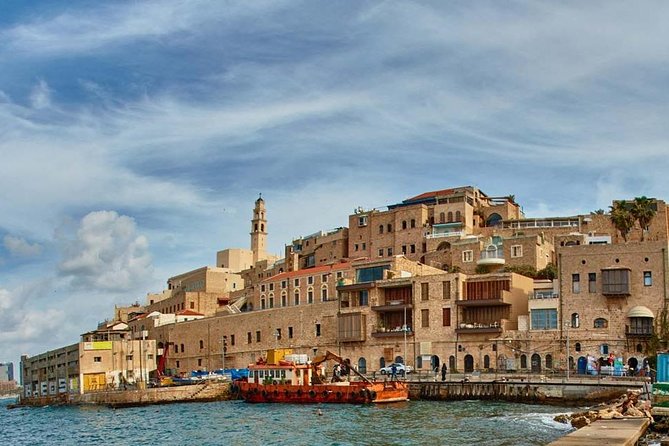
- Jaffa is the grand finale, with the Clock Tower, Ottoman Seraya building, and Old City streets.
- The tour ends at Jaffa’s Clock Tower, so you can continue exploring the area on your own afterward.
- The $139 price buys context and convenience, but the value depends on how much you want a guided introduction rather than a simple walk.
Why this route works for a first look at Tel Aviv
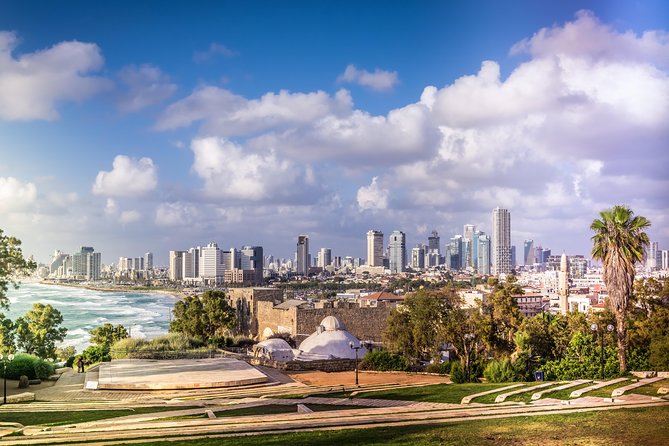
Tel Aviv can feel like several cities joined together. It has early Jewish neighborhoods, modern streets, Bauhaus apartment blocks, cultural centers, beaches, and the ancient port city of Jaffa at its southern edge. Seeing these places separately can leave you with disconnected impressions.
This tour gives you a useful thread. You begin with the city’s early neighborhood development, move through buildings linked to culture and transportation, then finish in Jaffa, where the story reaches much further back. I like that structure because it helps you understand why Tel Aviv feels young while Jaffa feels ancient only a short distance away.
The experience lasts about three hours, though the general tour window is listed as three to four hours. It is a walking tour, so you should be comfortable on your feet and wear sensible shoes. There is no meal included, and you should plan your own drinks and snacks.
The departure point is outside the Dan Panorama Tel Aviv at Kaufmann Street 10. The tour begins at 10:00 am and finishes at the Clock Tower on Yefet Street in Jaffa. That one-way design is useful. You do not need to return to the hotel area, and you finish in a district worth exploring after the guide leaves.
More City Tours in Tel Aviv
- From Tel Aviv: Jerusalem Old & New City Bus Tour
★ 4.2 · 824 reviews - From Tel Aviv: Jerusalem Old City & Dead Sea Guided Day Tour
★ 4.4 · 389 reviews - From Tel Aviv: Jerusalem Old City Guided Tour
★ 4.6 · 59 reviews
Neve Tzedek and Tel Aviv’s early personality
The first major stop is Neve Tzedek, described as Tel Aviv’s first neighborhood on the southern side of the city. This is where the tour begins to feel personal rather than purely chronological.
You will look at the neighborhood’s houses and hear how their design reflects the early character of Tel Aviv. The point is not simply to admire old facades. The guide uses the streets to explain how the city began as a smaller residential area before growing into Israel’s main cultural and commercial center.
Neve Tzedek is a good place for a guide to set the tone because the buildings have a different scale from the larger urban streets nearby. You might find the neighborhood more intimate and visually varied than the modern city center. This also gives you a useful contrast for the Bauhaus architecture you will see later.
One practical note: this is not a museum visit with a long indoor stop. Much of the experience takes place outside, so the weather matters. In winter, bring warm clothing and an umbrella. In warmer months, comfortable shoes remain important because the tour covers several areas on foot.
The Suzanne Dellal Centre and a neighborhood reborn
The route continues to the Suzanne Dellal Centre, a cultural center in the old neighborhood. This stop helps show how parts of Neve Tzedek have been given new life without losing their connection to earlier buildings.
The center is important within the tour because it links architecture with present-day culture. You are not only seeing where people lived in the past. You are also seeing how an older part of Tel Aviv became a place for performance and public life.
I find this kind of stop more useful than a string of dates. A guide can point out the building’s setting, explain its role in the neighborhood, and show how Tel Aviv uses older spaces for modern purposes. It is one of the places where the tour’s theme becomes clear: the city keeps changing, but it often does so by reusing what came before.
The supplied information does not promise admission to a performance or interior tour. Treat the Suzanne Dellal Centre as an exterior and cultural landmark stop unless your guide tells you otherwise. That distinction matters if you expect paid entry or a long indoor visit.
HaTachana, the old railway station
HaTachana is one of the more unusual stops on the route. It is a 19th-century railway station with distinctive structures, now converted into a public and cultural area.
This site adds transportation history to the tour. Railways may sound less romantic than old ports or historic towers, but they explain how places grew and connected. Here, the guide can show you a piece of infrastructure that once served a practical purpose and now has a different role in the city.
The contrast between old railway buildings and their current use makes HaTachana worth your time. You get a direct look at how Tel Aviv preserves selected historic structures while adapting them for present-day use.
It is also a good photo stop, though the value is not only visual. I would pay close attention to the explanation here, since the station helps bridge the gap between Jaffa’s older port economy and Tel Aviv’s later urban development.
As with the other stops, admission is listed as free, but the tour price covers the guide rather than a set of paid attractions. You are paying for the route, interpretation, and small-group format.
More of old Jaffa on foot:
- Tel Aviv Jaffa Guided Bike Tour
★ 4.5 · 178 reviews - Tel Aviv: Jaffa Half-Day Walking Tour
★ 4.5 · 70 reviews - Tel Aviv: Jaffa & Carmel Market Walking Tour
★ 4.7 · 60 reviews - Best of Tel Aviv and Jaffa Walking Tour – 1 Day
★ 4.5 · 53 reviews
Tel Aviv’s White City and Bauhaus context
The tour introduces the Bauhaus architecture that helped Tel Aviv earn its UNESCO World Heritage status. This is one of the central reasons to take a guided walk rather than simply stroll through the streets with a phone.
White City buildings can look simple at first. Their pale facades and clean lines are easy to photograph, but the important details are often less obvious. A guide can point out the features that make the architecture distinctive and explain why this part of Tel Aviv received international recognition.
The experience does not promise entry into a particular Bauhaus building, so expect to learn from the streets and exterior views. That is still valuable. Tel Aviv’s architectural story is spread across the city, and a guide helps you notice what might otherwise look like an ordinary apartment block.
This section also gives you a better sense of modern Israel. The city’s architecture reflects a planned, relatively young urban identity, while the route later shifts to Jaffa’s Ottoman remains and much older streets. That comparison is one of the strongest features of the day.
Walking into Jaffa’s ancient port setting
The route proceeds to Jaffa, one of the oldest cities in the world. The change is immediate in terms of atmosphere and subject matter, even though Tel Aviv and Jaffa are physically close.
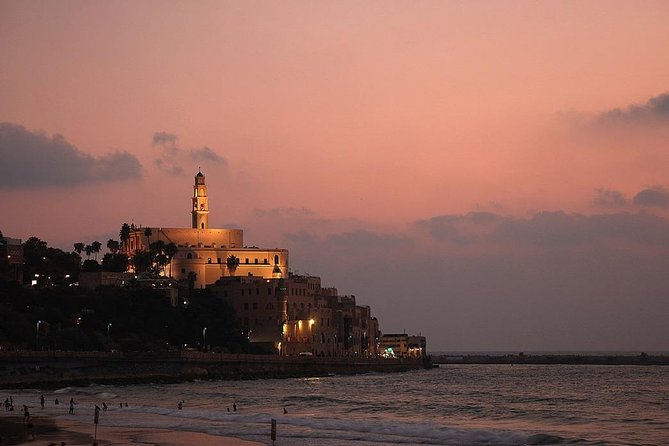
Jaffa is the part of the tour most likely to appeal to anyone interested in old ports, religious history, and Ottoman-era urban details. The walk focuses on the Old City, the Clock Tower, and the Seraya building, an Ottoman government structure.
The guide’s role matters especially here. Jaffa’s streets contain layers from different periods, and a quick walk can become a blur of stones, arches, and scenic viewpoints without explanation. The strongest feedback about this tour praises the historical content and the way the guide connects Israel’s recent story with the region’s much longer past.
You should also listen for practical suggestions about what to see after the tour. The guide may point out parts of Jaffa worth exploring independently, which is helpful because the official route ends right in the middle of an area that deserves more time.
The Clock Tower and Ottoman Seraya building
The Clock Tower is both a landmark and the official endpoint at Yefet Street 14. It gives the tour a clear finish and makes it easy to continue on your own afterward.
The nearby Seraya building adds Ottoman context to the walk. This is the kind of detail that can be easy to miss without a guide. Rather than treating Jaffa as a pretty old quarter, the tour explains how it functioned as a regional center under Ottoman rule.
The itinerary does not promise interior admission to the Clock Tower or Seraya building. You should expect exterior viewing and commentary. That is worth knowing if you prefer tours with long indoor visits or museum entry.
Ending at the Clock Tower is convenient, but it also means you should plan your onward route. The tour does not return you to the Dan Panorama. If you are staying elsewhere, check your transportation plans before setting out, though no transportation service is included in the tour.
What the small group changes
The maximum group size is 10 people. That is small enough for a guide to answer questions without turning every pause into a negotiation with a crowd.
A small group also reduces the time spent collecting people from different locations. The tour starts at a fixed meeting point rather than advertising a long hotel pickup process, which helps keep the morning focused.
There was one reported problem involving a 30-minute late start. The operator said it had tried to notify the participant and that the booking was handled as a private tour despite being reserved as a group tour. This suggests you should check your phone messages before the start time and keep your morning schedule flexible.
That issue appears separate from the main experience, but it is worth considering if you have a timed reservation afterward. Confirmation is sent within 48 hours, subject to availability, and the tour requires at least three people to operate.
Is $139 a fair price?
At $139 per person, this tour asks you to pay for a guided introduction rather than admissions or a meal. The price may seem high for a three-hour walk, especially because the itinerary covers places that you can visit independently.
The value improves if you want historical explanation, a compact route, and a group capped at 10 people. The guide brings together Neve Tzedek, HaTachana, the White City, and Jaffa in a way that can save you planning time. The strongest praise focuses on the guide’s ability to explain modern Israel in the context of the region’s long past.
The value is weaker if you already know Tel Aviv and Jaffa, prefer self-guided walks, or mainly want to take photographs. Since food, drinks, and admission fees are not included, budget for your own refreshments and any extra sights you choose to visit after the tour.
I would compare the price with the value of your first morning in Tel Aviv. If this is your first visit and you want the city explained rather than simply seen, the cost can make sense. If you are traveling on a tight budget, you may prefer to walk Neve Tzedek and Jaffa independently.
Who will enjoy this walking tour most?
I would recommend it most strongly to first-time visitors who want an overview with real historical context. It suits people who enjoy architecture, city development, old ports, and guided storytelling.
It is also a good choice if you have only a short time in Tel Aviv. The route gives you several major themes in one morning and ends in Jaffa, where you can continue exploring.
You should think twice if walking for three hours is difficult. The required fitness level is moderate, and comfortable shoes are specifically recommended. The experience also depends on good weather, so outdoor conditions can affect the day.
Families and independent-minded visitors may like the small group, but the tour’s value depends on your interest in the guide’s explanations. It is not designed as a food tour, shopping tour, or beach outing.
Practical details for a smoother morning
Meet at the Dan Panorama Tel Aviv, Kaufmann Street 10, at 10:00 am. Bring a mobile ticket, comfortable shoes, and clothing suited to the weather.
There is no food or drink included. Carry what you need for the morning, since the tour keeps moving between neighborhoods and landmarks.
The start and end points are different. You finish at the Clock Tower in Jaffa, so this is a useful tour to schedule before an afternoon spent in Jaffa rather than before an appointment back near the hotel.
Free cancellation is available if you cancel at least 24 hours before the start time. Changes or cancellations inside that window are not refunded. Poor weather or failure to reach the minimum group size can lead to a different date, another experience, or a full refund.
Should you book Tel Aviv and Old City of Jaffa?
Book this tour if you want one well-organized introduction to two very different sides of the city. The small group, one-way route, and historical links between Tel Aviv and Jaffa are its best features.
I would be more cautious if $139 feels steep for a walking tour or if you are happy reading plaques and exploring on your own. The tour does not include meals, transportation, or paid attraction entry, so its worth depends heavily on the guide’s ability to make the buildings and streets meaningful.
For a first visit, I think the route is persuasive. You get early Tel Aviv in Neve Tzedek, reused railway architecture at HaTachana, Bauhaus context in the White City, and Ottoman-era Jaffa before lunch. That is a lot of useful orientation in three hours, with enough time afterward to explore Jaffa at your own pace.
FAQ
How long is the Tel Aviv and Jaffa tour?
The tour lasts approximately three hours, with the general duration listed as three to four hours.
What time does the tour begin?
The start time is 10:00 am.
Where does the tour start?
The meeting point is the Dan Panorama Tel Aviv at Kaufmann Street 10, Tel Aviv-Yafo, Israel.
Where does the tour finish?
The tour ends at the Clock Tower on Yefet Street 14 in Jaffa.
How many people can join the tour?
The tour has a maximum of 10 participants.
What places are visited?
The route includes Neve Tzedek, the Suzanne Dellal Centre, HaTachana, Tel Aviv’s White City and Bauhaus areas, and Jaffa’s Old City, Clock Tower, and Ottoman Seraya building.
Is food included?
No. Food and drinks are not included.
Is transportation included?
The provided tour details list a professional licensed guide but do not include transportation.
What should I wear?
Comfortable shoes are recommended because the tour involves walking. In winter, bring warm clothing and an umbrella.
Can I cancel for a full refund?
Yes, if you cancel at least 24 hours before the experience’s start time. Cancellations or changes made less than 24 hours in advance are not refunded.
More Jerusalem Old City Tours
- Jerusalem Half-Day Tour from Tel Aviv: Holy Sepulchre and Western Wall
★ 4.0 · 61 reviews - Jerusalem Old City from Tel Aviv
★ 5.0 · 39 reviews - Jaffa: Old City, Port & Shuk Hapishpishim Walking Tour
★ 4.8 · 33 reviews - City of David and Underground Jerusalem Day Trip from Tel Aviv
★ 4.0 · 32 reviews
Just added around Tel Aviv
- 4-Day Christian Israel Tour from Tel Aviv★ 5.0 · 3 reviews
- Palm Sunday in Jerusalem: Mass at Bethpage and Via Dolorosa Procession with Transport from Tel Aviv★ 5.0 · 3 reviews
- Tel Aviv to Tel Aviv Airport (TLV) – Departure Private Transfer★ 5.0 · 3 reviews
- Masada and Dead Sea from Tel Aviv★ 4.5 · 3 reviews
- Private Transportation From / To Ben Gurion Airport to Tel Aviv Hotels★ 5.0 · 3 reviews
- Jerusalem and Dead Sea Tour from Tel Aviv★ 4.5 · 3 reviews
- Tel Aviv: Carmel Market & Neighborhood Guided Walking Tour★ 4.7 · 3 reviews
- Holyland Tour :Jerusalem & Bethlehem from Jerusalem or Tel Aviv★ 5.0 · 3 reviews
Jerusalem Old City Tours, compared.


Jerusalem Half Day Tour: Holy Sepulchre and Western Wall
Read our review →
Jerusalem Half-Day Tour from Tel Aviv: Holy Sepulchre and Western Wall
Read our review →
City of David and Underground Jerusalem Day Tour
Read our review →Browse the lists this tour appears in